The Imminent Threat of a Massive Nankai Trough and Tokyo Earthquake as Japan Enters Disaster Season


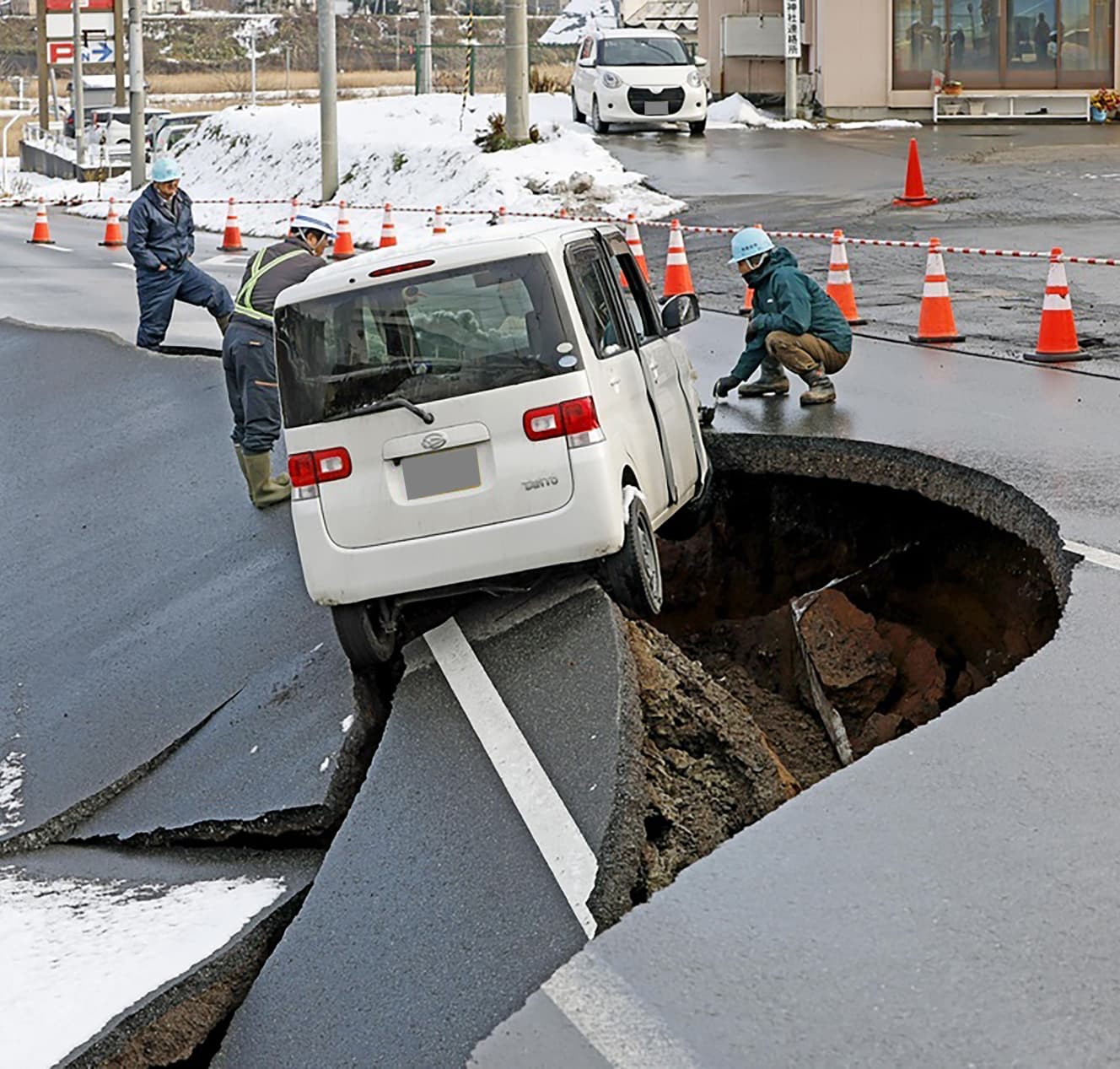
This year could be a year of major earthquakes
“2026 will require particular vigilance for large-scale earthquakes. Japan has entered an era of unprecedented extremely severe disaster seasons,”
warns Hiroki Kamata, emeritus professor at Kyoto University and a specialist in geoscience.
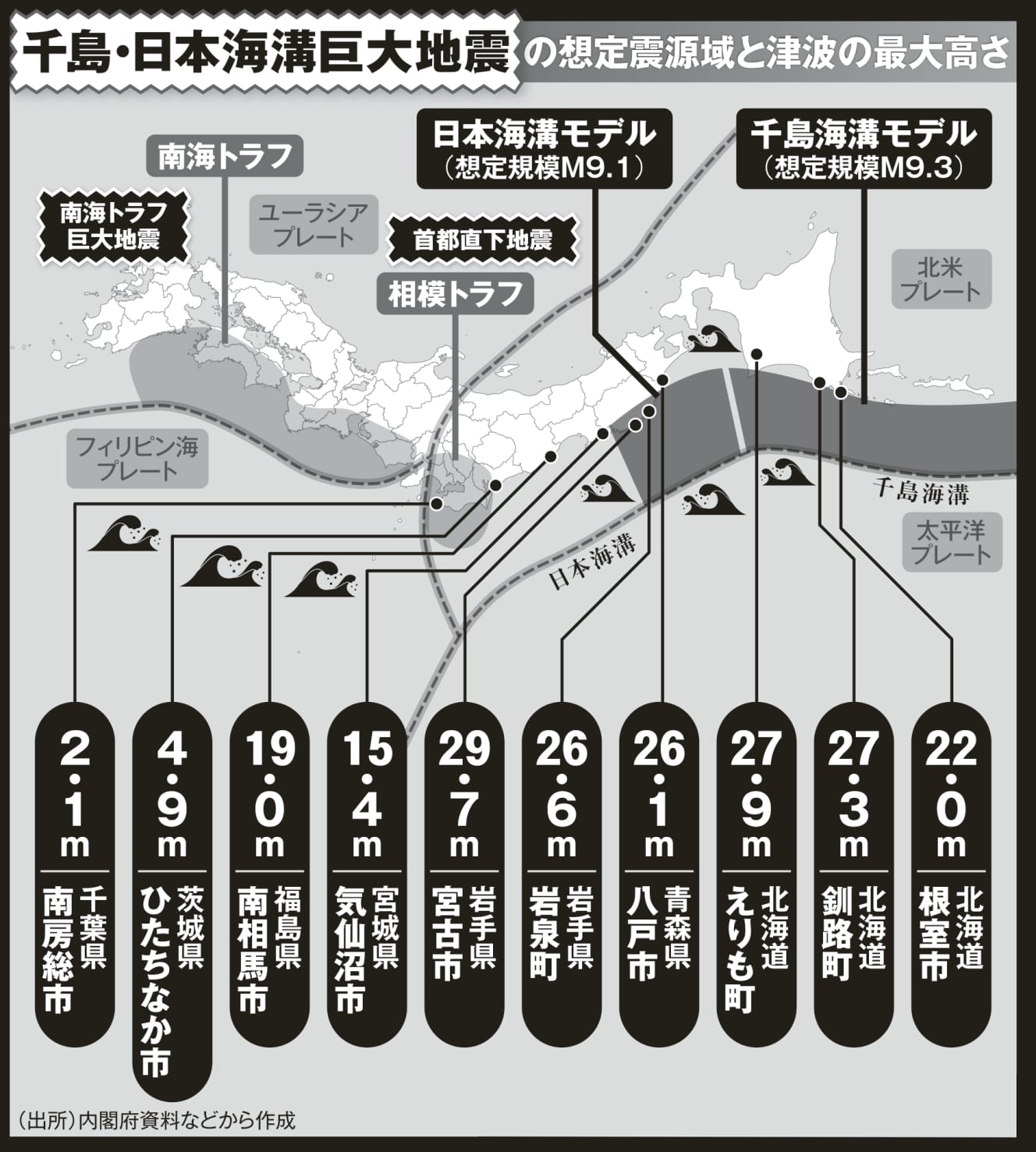
When talking about major earthquakes, the recent memory is likely the M7.5 earthquake that struck off the eastern coast of Aomori Prefecture on December 8 last year. A major concern is the possibility of triggered catastrophic earthquakes. In the Kuril Trench off Hokkaido and the Japan Trench off Tohoku, earthquakes with a maximum magnitude of 9 or higher occur periodically. Kamata continues:
“Before a massive Kuril Trench–Japan Trench earthquake occurs, M7-class earthquakes often happen nearby. For example, before the 1963 Etorofu Island offshore earthquake (M8.5), an M7 earthquake occurred just before. Last December’s Aomori offshore earthquake could also have been a foreshock.
Past earthquakes along the Kuril Trench and Japan Trench have generated enormous tsunamis simultaneously, hitting wide areas of the Pacific coast from Hokkaido to the Kanto region. Sediment surveys along the coast suggest that in Miyako City, Iwate Prefecture, tsunamis could reach up to 29.7 meters, and over 26 meters in Erimo Town, Hokkaido, and Hachinohe, Aomori Prefecture (see second image),” Kamata commented.
Additionally, this year attention is needed for the expected Tokyo metropolitan earthquake, with a roughly 70% chance of occurring within the next 30 years. On December 19 last year, Japan’s Central Disaster Management Council released an estimate of the damage if an M7-class earthquake struck directly beneath the capital. Up to approximately 18,000 people could die, disaster-related deaths could reach around 40,000, around 400,000 buildings could be destroyed or burned, and total damage could reach roughly 83 trillion yen, effectively crippling Tokyo’s functions.
“One-third of Japan’s total population lives in the Tokyo metropolitan area, spanning Tokyo and three surrounding prefectures. According to a scenario released by Tokyo in May 2022, supply shortages would begin three days after the earthquake, and one month later, people overflowing into shelters would start to suffer serious physical and mental effects.
During the 2011 Great East Japan Earthquake, lifelines were disrupted for an extended period, but in the metropolitan area, it is possible to experience an equally desperate life without water, electricity, or food.”
Can the timing of the next Nankai Trough megaquake be pinpointed?
Currently, the most serious potential disaster is a magnitude-9-class Nankai Trough megaquake. The epicenter would involve four linked zones—“Tokai,” “Tonankai,” “Nankai,” and “Hyuga-nada”—and casualties could exceed 290,000. The government estimates the probability of a Nankai Trough megaquake occurring within the next 30 years at 60–90% (or 20–50% under alternative calculations). According to Professor Hiroki Kamata, however, the timing of the next quake can be quite precisely estimated.
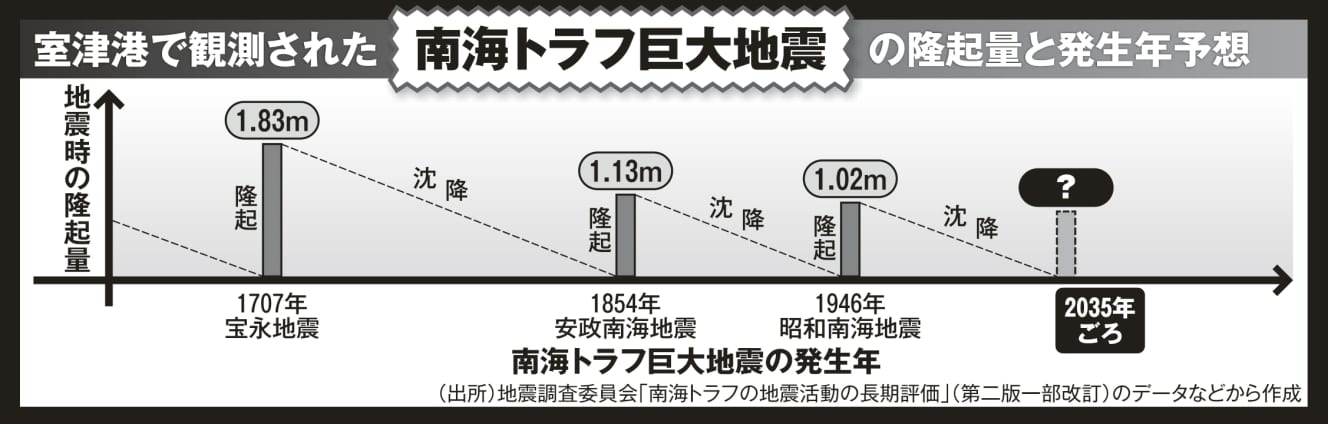
“In a Nankai Trough megaquake, the ground experiences a rebound uplift as it rises during the event. The amount of uplift has been measured at Murotsu Port in Kochi Prefecture since the Edo period. The higher the uplift, the longer the period until the next quake.
By estimating from the heights of the penultimate (1854) and last (1946) events, we can predict the next occurrence. In other words, the next Nankai Trough earthquake is expected around 2035, give or take five years.
Historically, about 40 years before a Nankai Trough megaquake, inland shallow earthquakes occur frequently. Recent examples include the 1995 Great Hanshin-Awaji Earthquake, the 2016 Kumamoto Earthquake, and the 2018 northern Osaka Prefecture earthquake. As a result, the risk of an inland, directly beneath the capital earthquake is also increasing day by day.”
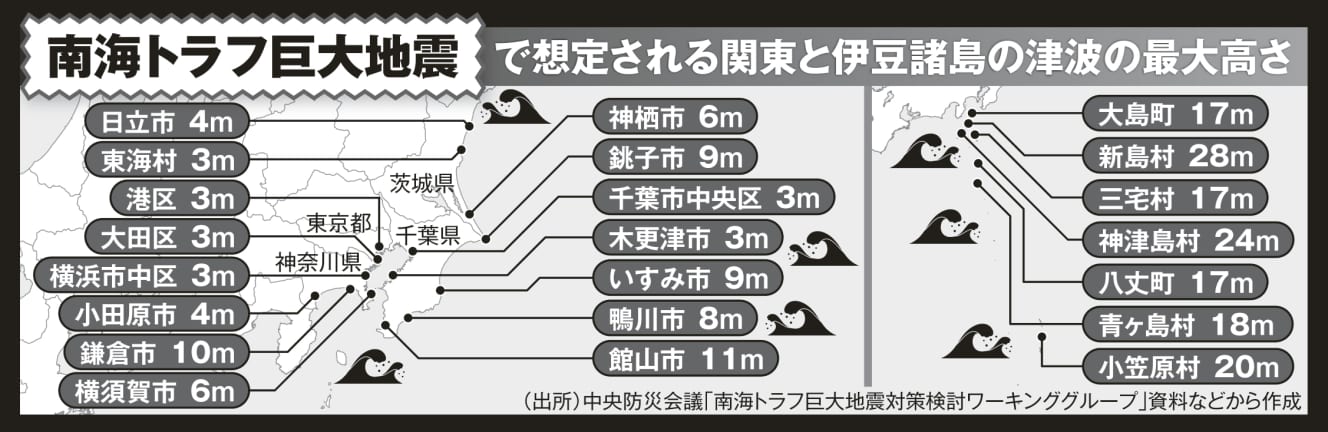
The Tokyo metropolitan area is not only at risk from direct earthquakes. The government’s Central Disaster Management Council also warns of tsunamis caused by a Nankai Trough megaquake.
“Kanto and the Izu Islands would be hit by massive tsunamis exceeding 10 meters. Many underground shopping areas in Tokyo would be submerged in just about 15 minutes.”
Kuril Trench–Japan Trench megaquake, Tokyo metropolitan direct earthquake, and Nankai Trough megaquake Japan has entered a season of disasters, facing unprecedented earthquakes one after another.
From the January 23, 2026 issue of “FRIDAY”
PHOTO: Kyodo News