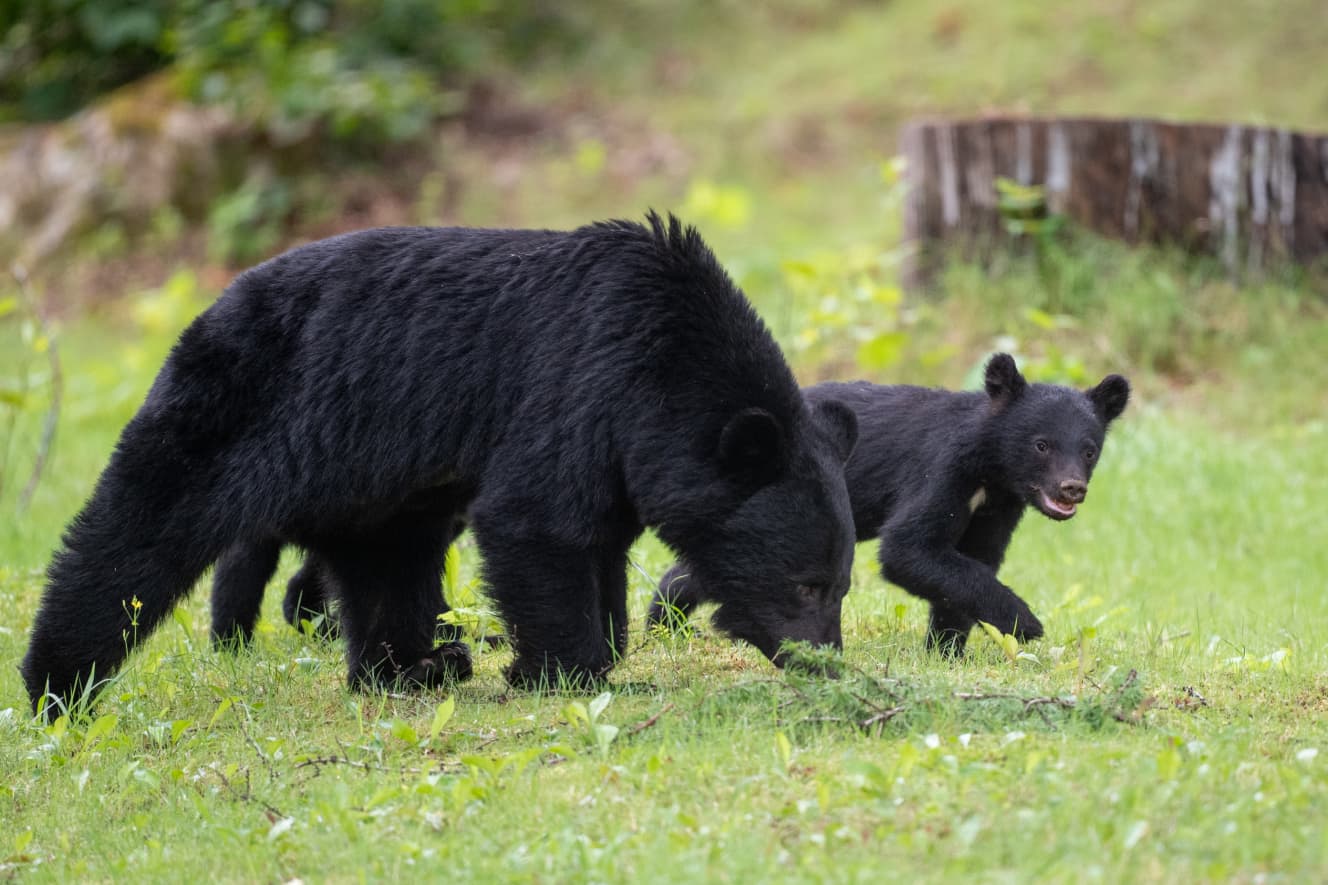
“Cubs spend their first year and a half with their mother, learning many things during this time,” says Shinsuke Koike, a researcher of Asiatic black bears (Tsukinowaguma) at the Graduate School of Agriculture, Tokyo University of Agriculture and Technology. Why Can Bears Eat Poisonous Mushrooms Without Harm? The Key Lies in Learning Ability and Sense of Smell This fall, mushrooms are proliferating in large numbers. In addition to autumnal poisonous mushrooms, some that didn’t appear in the summer due to extreme heat are now thriving, prompting experts to warn of a dangerous situation. Mushrooms are a favorite food of bears. But can bears safely eat poisonous mushrooms? “Whether bears actually eat poisonous mushrooms is unknown. Sometimes mushrooms are found in their feces, but it’s unclear if they were poisonous. Even examining bears that have died in the mountains is difficult, because very few people ever see bear carcasses,” says Professor Koike. Although bear sightings near human settlements have become a problem: “Even so, their numbers are overwhelmingly smaller compared to deer or wild boar. Bears live in forests and are not in groups, so it’s almost impossible to observe them in the wild,” he explains. If bears do avoid poisonous mushrooms, two possible reasons are suggested: “First, they might use their sense of smell to distinguish what’s safe to eat from what’s not. Second, they might learn to identify them from their mother. Bears have an extremely keen sense of smell and always sniff their food before eating. They may sense danger from the odor beforehand, or if they mistakenly eat something harmful, they remember the smell and avoid it in the future. They then pass this knowledge on to their cubs.” Bears’ sense of smell is extraordinarily sharp—some estimates suggest it is 7 times to 100 million times more sensitive than a dog’s. It’s highly likely that they can distinguish poisonous mushrooms from edible ones by scent, even in cases where AI cannot.
 Share on SNS