The Beer Industry in Midsummer: The Heated Battle of the Four Forces “The Trend is Back to Bitterness and Kire” – Asahi, Kirin, Suntory, and Sapporo
Asahi, Kirin, Suntory, Sapporo: "Distinctive second brands" hold the key


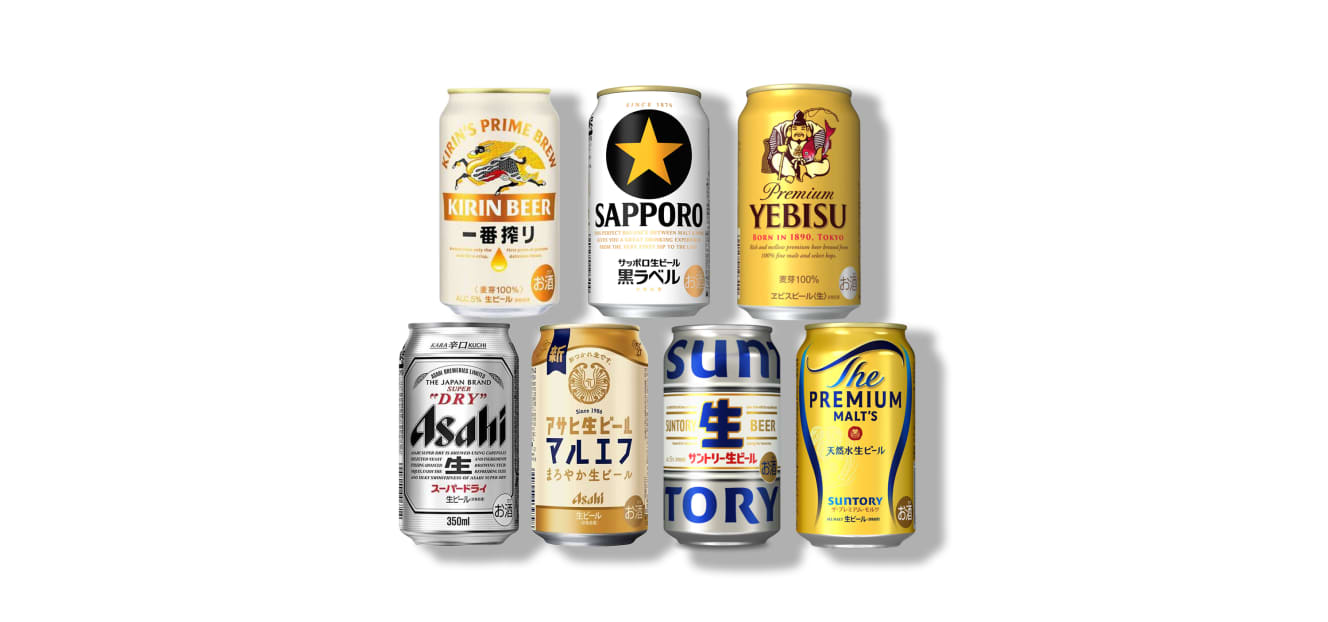
Asahi records another explosive hit
Japan has been hot this year. The end of the rainy season, the earliest in recorded history, has already arrived in western Japan, and the Japanese archipelago has been hit by a heat wave with temperatures exceeding 30°C every day since as early as June.
As if in response to this heat, the Japanese beer market is booming. Asahi Beer, which has the number one brand Asahi Super Dry with annual sales of 7.334 million cases (one case is equivalent to 20 large bottles of 633 ml), launched Asahi The Vitalist in April this year, and it has been an explosive hit. Beverage expert Takahiro Ezawa says, “As the name suggests, it pushes out bitterness.
As the name implies, this product is a product that pushes out bitterness. It features a combination of two types of hops, Talas and Hellsbrucker, which are the source of the bitterness and aroma of the beer.
The American hop “Talas” enhances bitterness and has a fruity, citrus-like aroma. The German hop “Hellsbrucker” has a spicy aroma typical of conventional beer. In addition, the use of “318 yeast,” which is also used in “Super Dry,” produces a sharp aftertaste. With just one sip, you can enjoy a refreshing bitterness, a citrus-like aroma, and a pleasant aftertaste.
As of June, sales of “Vitalist,” which is highly praised by experts, exceeded 1 million cases. In just two months since its launch, it has cleared half of Asahi’s initial annual sales target of 2 million cases. Why did Asahi launch a new brand at this time? The reason is the revision of the Liquor Tax Law. Uncle Strong,” a beverage researcher who also provides product development support to beverage manufacturers, explains.
In October 2014, the revision of the Liquor Tax Law, which has been carried out in stages, will be completed. The revision will lower the liquor tax on beer, while raising the tax on happoshu and “third-category beer,” which had a lower tax rate than beer, and unifying the liquor tax rates for the three categories.
In other words, consumers who have been choosing happoshu and “third beer” because of their lower price due to the lower tax rate will have more chances to choose regular beer. We are preparing our brand so that we do not miss this opportunity.
The key to the survival of the Asahi dynasty is “Maruef,” or Asahi Draft Beer, which was launched in 2009 (estimated at about 6 million cases per year).
In 2010, Asahi renewed “Super Dry” to make it even more refreshing and dry. With competitors launching new products one after another, it was important to give the beer a distinctive flavor, but there was also a possibility that fans who prefer the traditional beer taste would leave.
We therefore introduced “Asahi Draft Beer” with a full-bodied flavor in the previous year to achieve a balance. This year, we introduced “Vitalist,” which has an even more distinctive bitter taste. Asahi’s current president, Kazuo Matsuyama, is from P&G and was the head of the Marketing Division from ’21 to ’22. This personnel move also shows the company’s focus on marketing,” he said.


Light and dark in the sub-weapon.
Dry, bitter, and rich. Asahi’s dominance is likely to continue, with a lineup of products that satisfy fans of each of these.
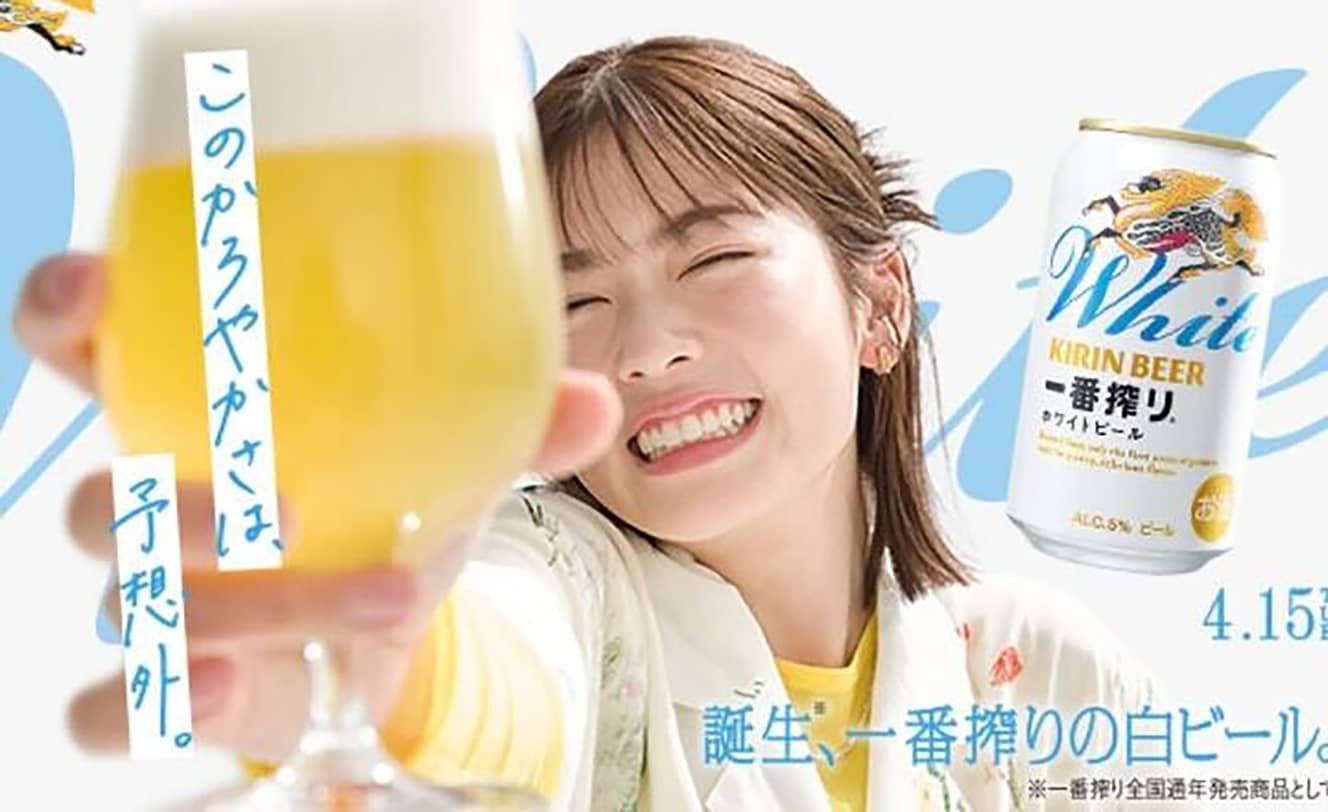
However, rivals are not sitting idly by. Kirin Brewery, whose number two brand, Kirin Ichiban Shibori Draft Beer, sells 29.6 million cases annually, launched a new product, Kirin Ichiban Shibori White Beer, in April of this year, the same month as the launch of Asahi’s Vitalist.
Kirin Beer, which has “Kirin Ichiban Shibori White Beer” and Asahi’s “Vitalist,” launched the new product in April of this year. Perhaps the differentiation from “Vitalisto” was successful, as we sold 900,000 cases, 40% of our annual target, in the first month of sales.
Harukaze” (5.76 million cases), launched in April 2012, has grown to become Kirin’s second largest brand in just one year since its launch. It is a beer made from 100% malt, created by a young brewer, and has a refreshing aroma of citrus fruits from the Japanese hop ‘IBUKI.
Suntory, the number three company in the beer industry behind Asahi and Kirin, with sales of about 14 million cases of “The Premium Malts,” is probably the company most affected by the revision of the Liquor Tax Law.
Suntory’s “Kinmugi,” classified as a “third beer,” is a blockbuster product that has sold approximately 30 million cases, the same as Kirin’s “Ichiban Shibori,” but the revision of the Liquor Tax Law will inevitably increase its price.
There is another brand that is just as important as Kinmugi for Suntory to increase its market share. Suntory Draft Beer” (6.26 million cases) is second only to “Premium Malts. Launched in April 2011, this product recorded a 157% year-on-year increase in sales volume in 2012. Sales volume for the period from January to May of this year also grew steadily, up 127% from the previous year. Suntory’s mid-term target of 10 million cases of Sunsei is now a reality,” said economic journalist Takai Naoyuki.
Sunsei” is characterized by both drinkability and mouthfeel, which is achieved through the “triple decoction” process, in which the process of boiling the wort in the brewing kettle is repeated three times. By chilling it to a crisp, you can enjoy the refreshing taste and sharpness of the beer. The company has succeeded in differentiating itself from “Premium Malts,” which is characterized by its aromatic flavor, and its future prospects are bright.
On the other hand, Sapporo Beer, the fourth largest beer company in the industry, has two major brands, “Sapporo Draft Beer Black Label,” which sells 17.21 million cases annually, and “Evisu Beer,” which sells 6.32 million cases annually, but lacks sub-weapons.
The “Sapporo Draft Beer Nanamaru,” launched in October ’23, was initially talked about as Japan’s first draft beer with 70% off purine and sugar, but it was not a big hit due to its halfway positioning amidst the preceding sugar-free beers. Evisu Beer,” which used to be synonymous with high-priced beer, has long since been surpassed by “Premium Malts. Furthermore, with rivals such as Kirin’s Spring Valley and Asahi’s Shokusai appearing one after another in the same price range, the number two position in the premium beer category is not secure,” said Uncle Strong.
While non-alcoholic beers and sugar-free beers have certainly become popular due to consumers’ health consciousness, consumers are still looking for products with distinctive bitterness and sharpness.
Super Dry,” which sells 70 million cases a year, is by far the strongest, followed by Ichiban Shibori with approximately 30 million cases. However, the battle for the sub-brands, which are all clustered around the 6 million case mark, is likely to be fierce.
Asahi’s “Maruef” supports “Super Dry” with its full-bodied flavor, Kirin’s “Haruekaze” is aimed at young people with its refreshing and easy-to-drink taste, and Suntory’s “Sansei” is both refreshing and drinkable. In the midst of this competition, a new variant, “Vitalist,” with its bitter taste, has also appeared. Full-bodied, sharp, bitter, and aromatic. If a new brand emerges that can distinguish itself in each of these elements and break out of the great competition, the Asahi dynasty may one day be shaken. The heated battle among the four beer giants will only get more exciting.



From the July 18-25, 2025 issue of FRIDAY