40% of Companies Monitor Job Seekers’ Social Media!?… “Reverse SEO”: The Essential Technique to Protect Yourself from “Online Embarrassments” That Never Disappear



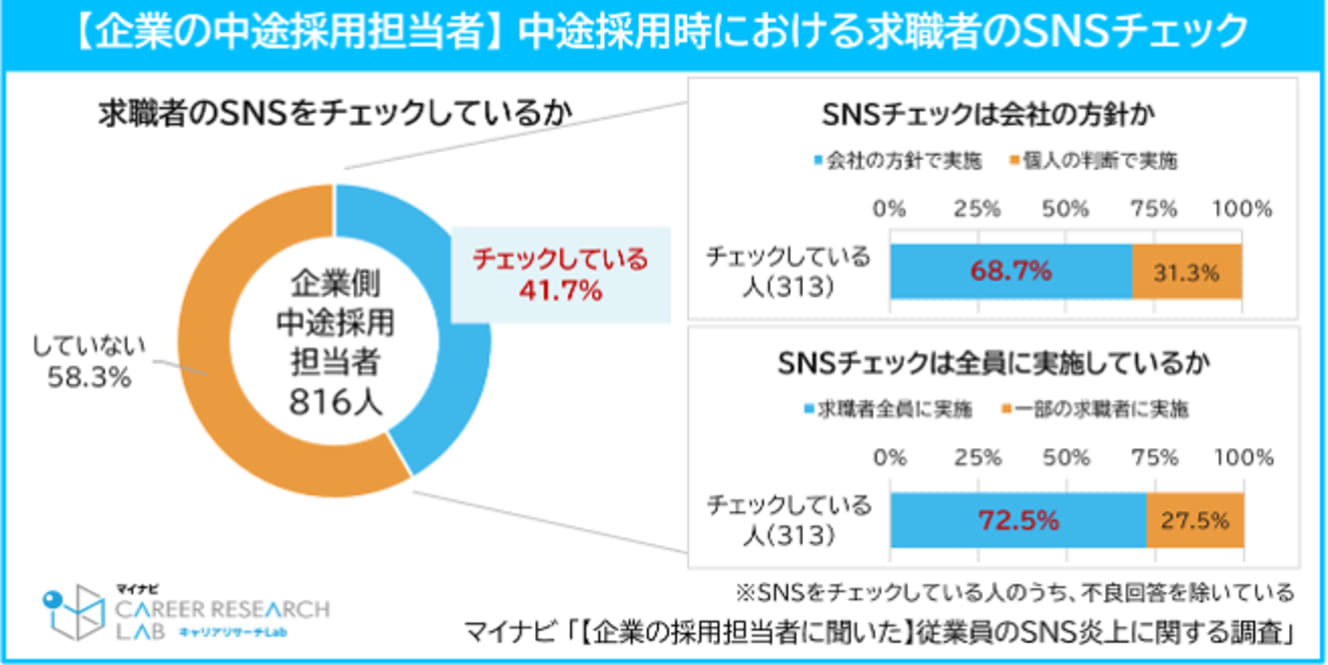
According to a survey released by Mynavi in July 2026, 41.7% of mid-career hiring managers said they “check job seekers’ social media.” Careless posts from college days, negative comments about former employers, or scandals involving someone else with the same name—if such information appears in search results, it’s undeniable that it could put you at a disadvantage in the hiring process.
On the other hand, there is a man whose arrest record from over 10 years ago continued to appear online, leading him to successfully sue Google in court to have it removed. To what extent can you erase your “dark past” from the internet? We explored the steps individuals can take—and the limits of those measures.
40% of Hiring Managers “Check Social Media”
The survey was conducted among 816 mid-career hiring managers nationwide, among others.Among the recruiters who check job seekers’ social media, 68.7% do so as part of “company policy,” and 72.5% report checking “all job seekers.” This indicates that it is not merely tech-savvy recruiters acting on their own initiative, but that some companies have incorporated this practice into their standard selection procedures.
This trend appears to stem from companies’ wariness. Thirty-three point one percent of companies have suffered damage due to an employee’s social media scandal, and when narrowed down to companies with 301 or more employees, that percentage rises to 45.1 percent.
However, this survey only reveals that “social media is being monitored.” It does not indicate whether candidates were rejected based on these results, so it cannot be said that “if your name is searched, you’re immediately out.”
Incidentally, the Ministry of Health, Labor and Welfare has requested that companies refrain from collecting information—such as political views, religious beliefs, or permanent residence—that could lead to employment discrimination, as well as from conducting background checks. Companies are not permitted to investigate just anything and use that information in the selection process. That said, the honest truth is that companies would prefer to avoid any risks they can identify through a preliminary search.
“Reverse SEO” to Protect Yourself from Negative Reputation
So, how should job seekers deal with this reality? The first step is to search for your own name and see what information comes up. You should check not only search engines like Google but also searches within social media platforms like X.
If it’s a post you wrote yourself, you can usually delete it right away. However, if you’ve ever been involved in an online backlash, there’s a high chance screenshots or summaries have been reposted on aggregation sites. In that case, even if you delete the original post, the reposts will remain. It’s difficult to remove these immediately.
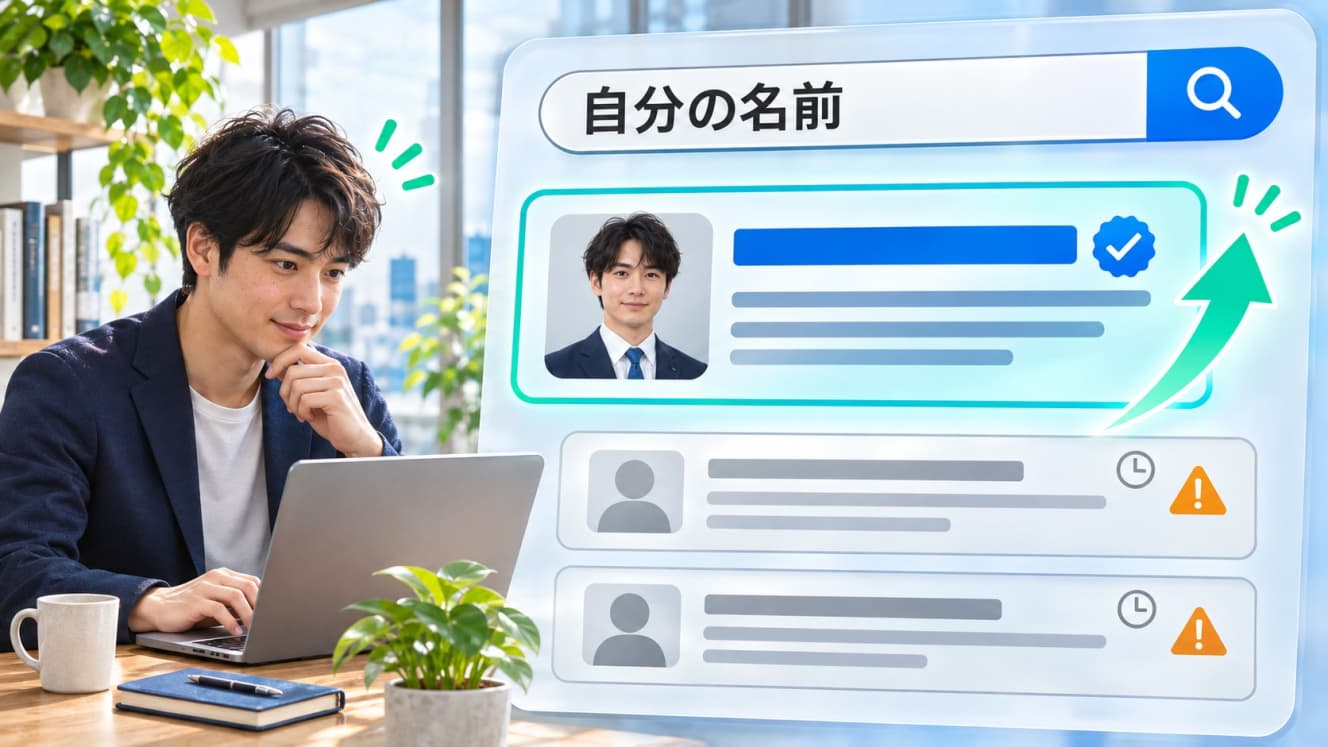
Therefore, the first step is to establish an accurate profile for yourself. Rather than trying to remove negative information, create a page with accurate information so that it appears higher in search results, making the negative content less noticeable by comparison. This is similar to the concept of “reverse SEO.”
For individuals, this could include business-oriented social media platforms like LinkedIn, Facebook profiles, portfolio websites, and work-related posts under your real name. Especially when multiple profiles of people with the same name appear at the top of search results, having a profile page that clearly shows your affiliation, work history, and photo will make it easier for hiring managers to distinguish you from others.
That said, search engines are the ones that determine search rankings. It’s impossible to know when or how quickly the rankings will change. Since this process takes time, it’s a priority to address this issue early on if you plan to clean up your search results.
Can You Erase Your Past “Embarrassing Moments” from the Internet?
The next step is to have posts written by others or reposts removed. First, be sure to save a screenshot and the URL of the relevant page.
For social media or blogs, you can use this as evidence to report the content to the platform operator for removal. Under the Act on Measures Concerning Information Distribution Platforms, which took effect in April 2025, large-scale operators such as X and Meta are required to publicly disclose a removal request contact point and, in principle, notify users of their response within seven days. However, the decision on whether to remove the content is made by the operator based on its own criteria.
Regarding search results, there is also a system in place to request removal from Google. However, this is limited to non-public personal information—such as addresses, phone numbers, ID numbers, bank account information, and medical records—as well as cases of “doxxing” intended to harass others.
Therefore, cases such as “old controversial posts resurfacing” or “being slandered” are, in most instances, not covered by this system. Furthermore, only the search results are removed; the original page remains online.
If you find it difficult to file a report yourself, there are official consultation services available. The “Illegal and Harmful Information Consultation Center,” commissioned by the Ministry of Internal Affairs and Communications, provides guidance on how to request removal on your own. Through the Ministry of Justice’s Human Rights Consultation Service, the Regional Legal Affairs Bureau may sometimes request removal from the service provider on your behalf. Even so, filing a report does not guarantee that the content will be removed.
Embarrassing Past That Won’t Disappear Even After Winning a Lawsuit
If the content does not disappear through these voluntary reporting processes, you can hire a lawyer to file a petition with the court for a provisional order of removal. According to an explanation from a law firm, the estimated legal fees for a provisional order of removal against X—including the initial retainer and success fee—range from approximately 200,000 to 400,000 yen.
Surprisingly, even if a removal order is issued, the content may not be completely erased. According to the same explanation, X may not actually delete the post but simply block access to it from within Japan. In such cases, the content may remain visible to users overseas or in search engine results.
Furthermore, obtaining the removal of search results is a high hurdle even in court. In 2017, the Supreme Court established strict criteria, stating that removal would be permitted only when the interest in privacy “clearly” outweighs the reason for providing the search results.
Nevertheless, this does not mean removal is impossible. In the lawsuit mentioned at the beginning, a court ordered the removal of Google search results displaying a history of arrest for an obscenity case, ruling that more than 10 years had passed since the arrest and “the degree of relevance to the public interest has diminished.”That ruling became final on October 14, 2026. However, please note that this was a case-by-case determination based on factors such as the number of years that had passed, and it does not guarantee that similar information will always be removed.

The key to protecting yourself lies in the information you share
As we’ve discussed, not all of your “dark past” on the internet can be erased. Removal takes time and money, and even if the content is deleted, it may still remain through reposts or be accessible from overseas.
That’s precisely why, in addition to making efforts to remove content, it’s important to maintain a positive online presence. Recruiters don’t just look at a single post—they review the entire set of search results. Having an accurate profile can reduce the risk of misunderstandings due to people with the same name or being judged based solely on outdated information.
The process of having content removed may not be completed in time if you wait until right before a job interview. If you’re thinking about changing jobs or looking for work, try searching for your own name at least once before you start your job search.
Reporting and Text: Shuji Shinohara
Born in 1983. Resides in Fukuoka Prefecture. Since 2007, he has been working as a freelance writer specializing in verifying online controversies and hoaxes, with a focus on the internet.
PHOTO: AI-generated image; courtesy of the author