“Dragon Hosoi”: “There Is a Clear Line Between What Is and Isn’t a ‘Shadow Doctor'”—An Outspoken Cosmetic Surgeon Explains
[Part 2] Patients who come to me for “correction” are often in serious condition


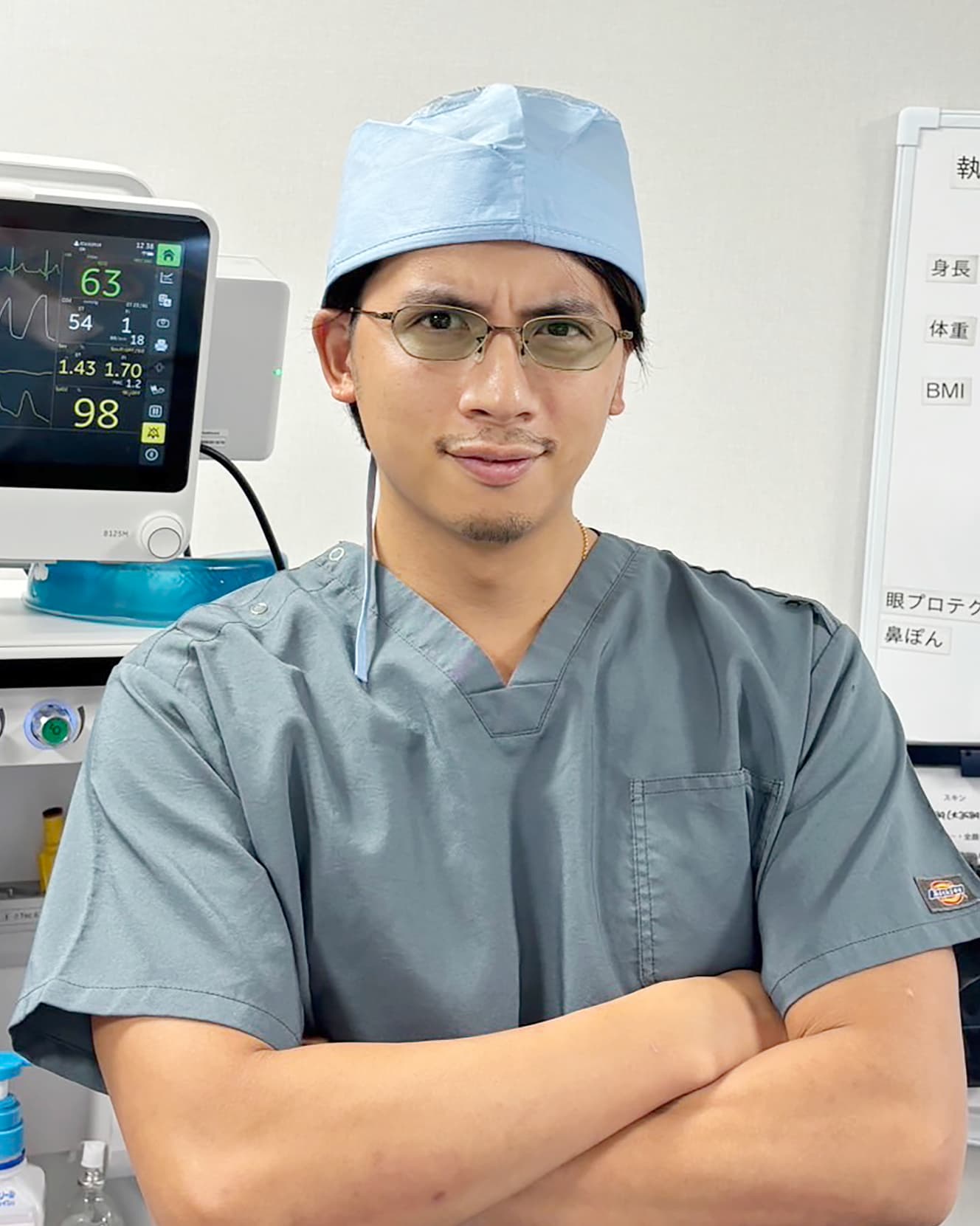
A popular plastic surgeon whom patients finally chose after repeatedly comparing case photos on social media and researching reviews. Even if the fees are high, patients specifically request him, thinking, “If it’s this doctor, I’ll go ahead.” But what if, while you were asleep under anesthesia, a different doctor was actually performing the surgery?
Dr. Ryu Hosoi (38), known as “Dragon Hosoi,” is the director of the cosmetic surgery clinic “Amasora Clinic.” He has been active in ways that defy conventional boundaries, such as serving as one of the “Tigers” (investors) on the popular YouTube show “Reiwa no Tora” and opening a cram school for medical school entrance exams.He has frequently raised questions about the dark side of the cosmetic medicine industry, such as “upselling”—a practice where patients are lured in by advertisements touting low prices, only to have additional procedures added one after another during consultations and be pressured into signing expensive contracts.
[Click here for Part 1] “Shadow Doctors Do Exist”: The Confession of “Dragon Hosoi,” the Outspoken Cosmetic Surgeon
The “Hiding Places” of Shadow Doctors
From the perspective of patients who have paid high fees to request a specific surgeon, the existence of “shadow doctors” is simply unacceptable—yet Mr. Hosoi states, “There is a clear line distinguishing whether someone is a shadow doctor or not.”
“If I explain in advance, ‘I’ll be the primary surgeon, but this doctor will assist me,’ introduce that doctor on the day of the surgery, and clearly state what tasks they’ll be responsible for—and if the patient agrees to that—then it doesn’t qualify as a ‘shadow doctor.’”
So where are these “shadow doctors”? Dr. Hosoi focuses on revenue per doctor and the number of surgeries performed.
“I hear stories about top doctors at major cosmetic surgery clinics who claim ‘monthly revenue of 200 million yen,’ but if they were performing surgeries alone, that figure would be impossible to achieve no matter how you look at it. If they charge 1 million yen per incisional facelift, they’d have to perform 200 procedures just to reach that amount.An incisional facelift is a time-consuming procedure that involves making an incision in the tissue beneath the skin, dissecting it, lifting it, and securing it in place. If a doctor claims, ‘I perform four of these a day by myself,’ there’s a good chance they’re using a ‘shadow’ doctor.It’s simply not feasible to perform four surgeries a day that each take five to six hours. To increase the turnover rate, the only option is to perform multiple surgeries simultaneously.”
Mr. Hosoi explained this using the analogy of a “restaurant with a famous chef.”
“Customers go to the restaurant to eat the famous chef’s food, but the chef himself isn’t the one going out to buy the potatoes, peeling them, cutting them, and boiling them, is he? The parts that anyone can do should be left to other doctors, while the popular doctor handles the more difficult tasks and the final touches.If a single surgeon takes one hour per surgery, they can handle at most seven cases a day. But if three surgeons divide the work and proceed in parallel, it’s theoretically possible to complete 21 cases in seven hours.The clinic director bears responsibility and performs the final check, but the intermediate steps are handled by other doctors. Whether you call that a “team” or a “shadow” depends on whether the patient is aware of it—the meaning changes depending on that.”
In Japan, where the cosmetic medicine market is expanding, competition is so fierce that clinics not only compete with each other but also vie for patients with other branches within the same group. While a renowned doctor’s fame determines patient turnout, there is a limit to the number of surgeries a single doctor can perform. These circumstances likely explain why surgeries are divided among doctors without the patients’ knowledge.
To Shine
Mr. Hosoi, who has performed over 10,000 procedures—including minor ones—how did he view “downtime”?
“My impression is that it’s a work that blends elements of cosmetic surgery into a human drama.A ‘Botox Champagne Tower’—where Botox poured into a champagne glass is drawn up with a syringe and injected into a person—is simply impossible as a medical procedure from a hygiene standpoint. I’ve also never heard of a nasal implant popping out. While complications related to implants are possible, they wouldn’t pop out and cause a bloody mess just from a bump.”
Nevertheless, Dr. Hosoi praised the show, noting that the widespread recognition of the term “shadow doctor” “served as a public warning.” This is because he himself has seen and heard many instances in the cosmetic medicine industry where patients obsessed with beauty and doctors alike disregard safety.
“There’s a procedure where hyaluronic acid is injected behind the eyeball to push it forward—the so-called ‘bulging eyes’ procedure—but I thought that was an extremely dangerous surgery.I’ve also heard of doctors providing estimates that include inserting 20 thread lifts into the face or injecting 10 vials of hyaluronic acid. If they don’t actually use those materials but still charge exorbitant fees, that’s fraud. I’m concerned that fraudulent practices may be rampant at clinics that only offer procedures like hyaluronic acid injections or thread lifts.
Patients who come to me for “correction” after botched cosmetic surgeries at other clinics are often in serious condition. Sometimes the very structure of their eyelids or noses has been damaged, or foreign objects have been inserted into their breasts, causing tissue necrosis. I even saw a video online of someone who had their forehead narrowed by cutting a nerve—it’s just unthinkable.”
On the other hand, it’s also true that some people’s lives begin to shine after undergoing cosmetic surgery.
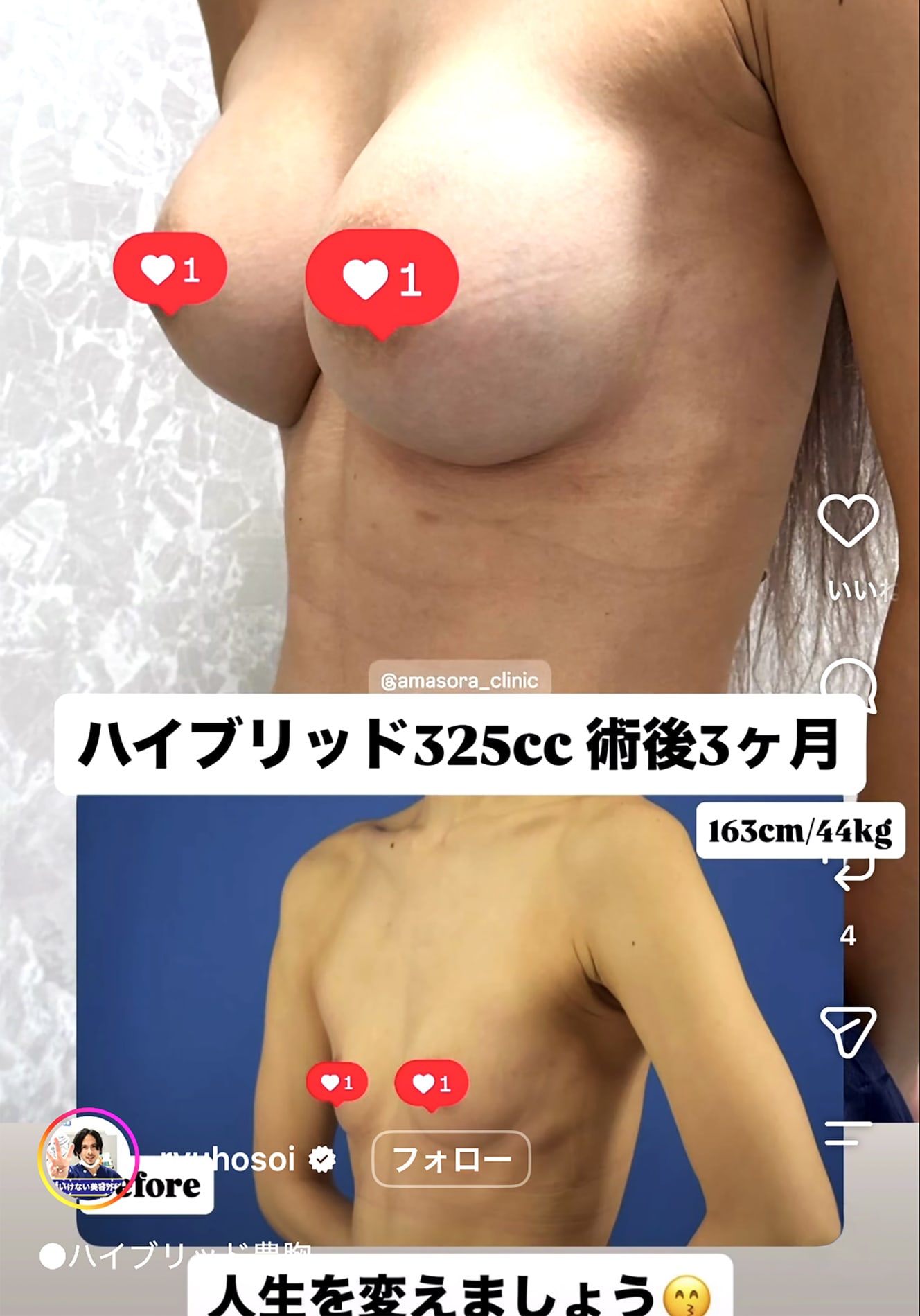
“I once performed breast augmentation on a patient with pectus excavatum—a condition where the center of the chest is sunken from birth. I filled the depression with fat harvested from other areas of her body, but I had to predict how much of the injected fat would take hold in order to determine the appropriate amounts to harvest and inject. This is a procedure where results can vary significantly depending on the surgeon.Afterward, I inserted silicone implants to create a natural breast contour. Post-surgery, the patient began to hold her head high, and her rounded shoulders also improved. This was a case where we saw positive changes not only in the patient’s state of mind but also in her posture.
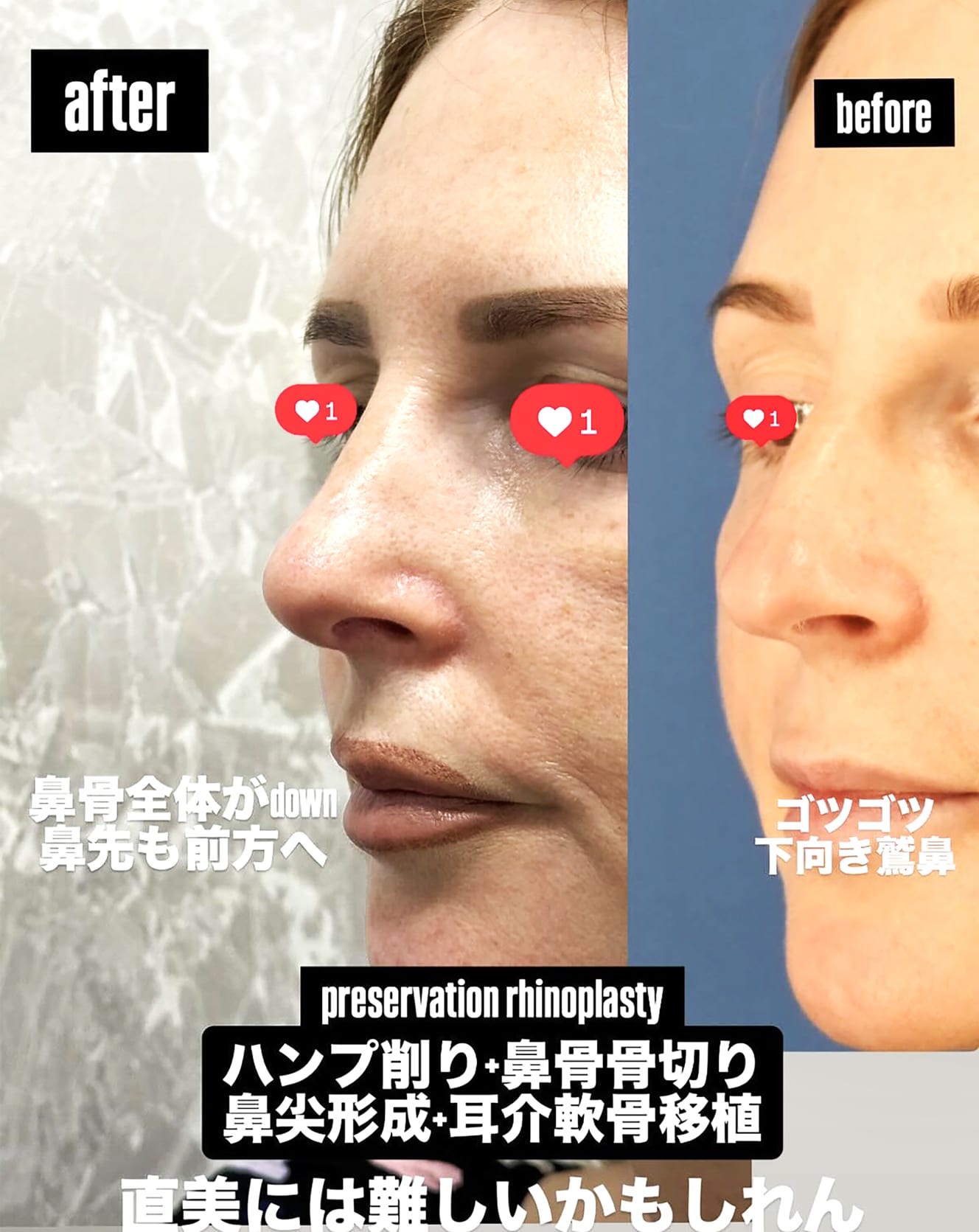
There was a patient with foreign roots who felt self-conscious because her nose was too high and the tip pointed downward. We adjusted the nasal bone and the cartilage at the tip of the nose, but “nose surgery is difficult unless performed by a doctor with sufficient skill and experience.”
The success of “Downtime” is likely proof that cosmetic medicine has become more accessible. Precisely because we live in an era where doctors themselves have become brands, carefully assessing “who to entrust with what, and to what extent” is essential for your own protection.
From the November 27, 2026 issue of *FRIDAY*