[The Tsutomu Miyazaki Case] “A Rat-Man Appeared…” Strange Behavior and Unresolved Mysteries Witnessed by a FRIDAY Reporter During the Trial


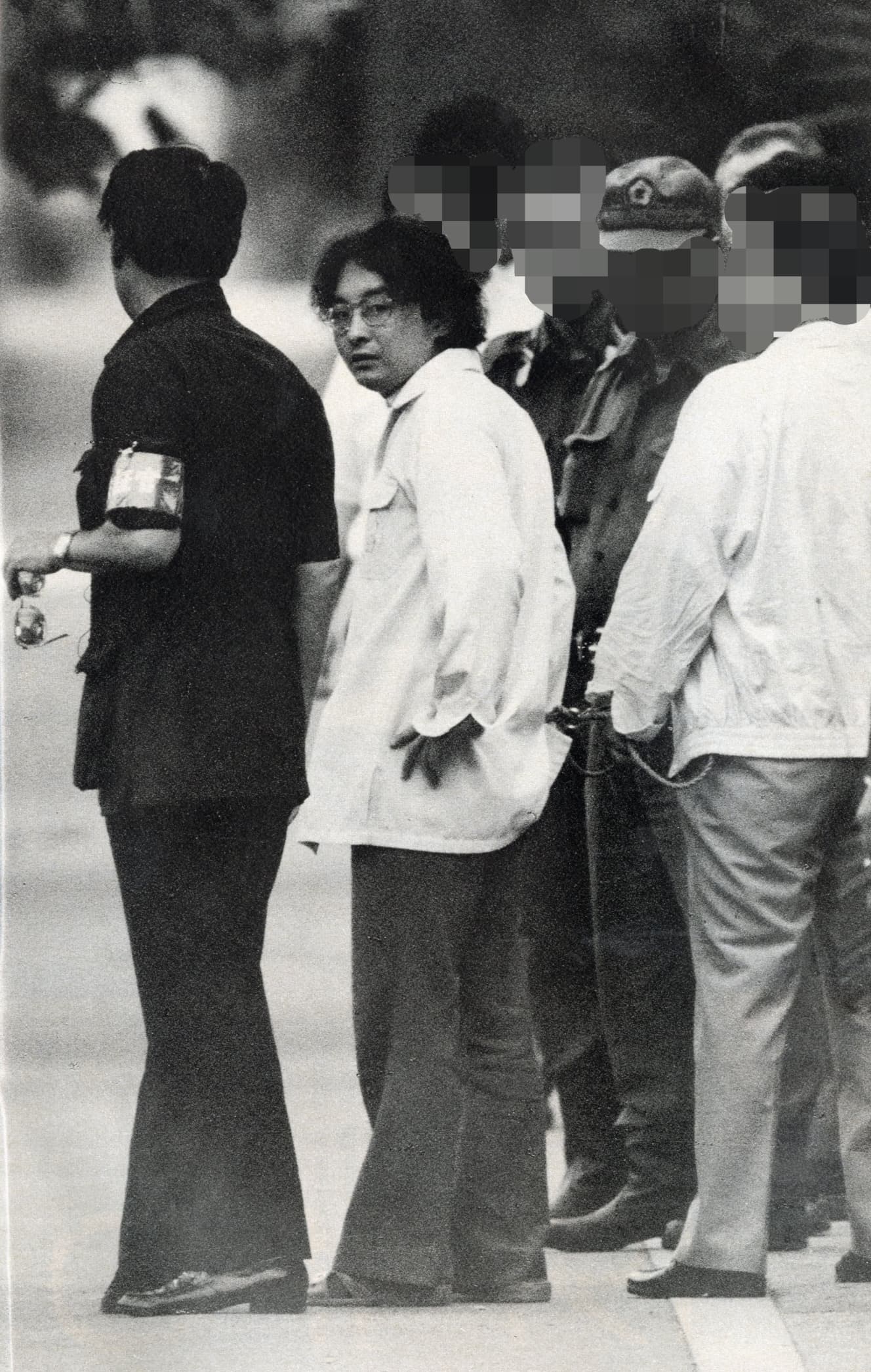
Miyazaki’s Words and Actions That Baffled the Court
From 1988 to 1989, four young girls—referred to as “A-chan” through “D-chan”—went missing and were subsequently found dead one after another in the “Tokyo-Saitama Series of Kidnappings and Murders of Young Girls,” also known as the “Tsutomu Miyazaki Case.”
In July 1989, Tsutomu Miyazaki (then 26), who had been arrested for indecent acts against another young child, confessed to the murder of “D-chan.” On August 11, he was re-arrested on charges of kidnapping a minor, murder, and abandonment of a corpse, and the case rapidly moved toward resolution.
By August 13, Miyazaki had confessed to the murders of “A-chan” and “C-chan,” and on September 5, he also confessed to the murder of “B-chan”—who had been reported missing—and revealed the locations where he had abandoned her body. He admitted to all four murders.
On March 30, 1990, Miyazaki’s first trial began at the Tokyo District Court.Although Miyazaki admitted to the acts of murder as stated in the indictment, he denied any premeditation or intent to kill. He consistently made baffling statements, such as, “I feel like I was in a dream that never ended.” As a result, the question of his criminal responsibility arose, and the trial was suspended for a total of three years and four months to allow for two psychiatric evaluations.
Toshiyuki Kobayashi, a reporter for *FRIDAY* who had been covering the case from the very beginning, attended several court sessions as an observer. He describes his impression of Miyazaki at the time as follows (quotes in “ ” are Mr. Kobayashi’s remarks).
“I particularly remember the time I attended the trial in April 1992. I couldn’t see him from the front from the gallery, but he had put on some weight.
Even during the trial, he would twirl a pencil between his fingers, and at times he looked as if he were dozing off—his demeanor made me wonder if he was actually paying attention. Even when he was asked questions, it felt as if he were conversing with a robot; there was absolutely no sense of reality or humanity about him.”
It also came to light during that day’s trial that Miyazaki had stated regarding the four crimes, “A rat-man appeared, and I didn’t know what was going on; before I knew it, something like a mannequin had fallen.”
“When I heard that, I thought, ‘What on earth is he talking about?’ I think everyone in the room felt the same way. ‘What’s going on?’”
The psychiatric evaluation pointed out that “his grandfather’s death” had affected Miyazaki’s mental state. Here’s how I view this:
“I’ve heard in interviews that Miyazaki was exceptionally close to—or rather, deeply respected—his grandfather. When his grandfather passed away in May 1988, Miyazaki reportedly recorded the barking of his beloved dog, Pes, and played it back, saying it was to bring his grandfather back to life. After that, he ate the ashes he had brought back from the crematorium.
When asked in court why he ate A-chan’s ashes, Miyazaki said, ‘It was a ritual to burn and eat them, and send them to my grandfather to bring him back to life.’ The series of incidents began three months after his grandfather’s death. So, it felt as though some kind of ‘restraint’ had been lifted, so to speak…I got the impression that her relationship with her grandfather influenced the incidents.”
On April 14, 1997, Miyazaki was sentenced to death. Miyazaki sent a letter to a monthly magazine expressing his feelings, in which he wrote, “(The death sentence) is some kind of mistake. (The four young girls) still appear in my dreams, saying ‘thank you’ and looking happy.” The defense filed an appeal on the same day, citing factual errors and an inappropriate sentence.
“He had gotten fat and was going bald.”
What was Miyazaki’s situation like inside the Tokyo Detention Center? Mr. Kobayashi interviewed a man who had worked as a laborer there from 2012 through the following year to gather information on Miyazaki’s daily life.
“I heard he used to deliver books and other items requested by inmates. There were rules regarding the number of books allowed in the cells, so any books that wouldn’t fit were kept by the detention center. The maintenance workers would take those books to the inmates upon request, but‘Miyazaki had a lot of lolicon magazines. He read regular manga as well, but that’s the impression that stuck,’ the source said. Since Miyazaki had published two memoirs, it seems he had some money.”
At that time, Miyazaki was extremely overweight and completely bald. The hair he had left was a mess. He always wore glasses and a sweatshirt, and the reporter said, ‘He looked like such an ordinary man that I found myself wondering, “Why is this person here?”’”
The case went all the way to the Supreme Court, but in January 2006, Miyazaki’s appeal was rejected, and his death sentence was finalized in February. The sentence was carried out on June 17, 2008—two years and four months later. The true motive behind the crime was never revealed by Miyazaki himself.Mr. Kobayashi says, “The execution was carried out too soon.”
murder
“This was a case that had such a profound impact on society that it even helped popularize the term ‘otaku.’ Since he’s a man who wrote two books, he should have been capable of writing coherent prose. I don’t think the psychiatric evaluation fully revealed his inner thoughts. To prevent future crimes, they should have let him speak for himself.”
I don’t think he was always like that from childhood. As he matured into an adult man, he must have gone through several stages. What happened that turned him into a criminal? It’s a shame we’ll never know.”
The Tsutomu Miyazaki case plunged the public into such terror that people said, “Children have vanished from the parks.” However, the mystery of what Miyazaki was thinking and why he committed his crimes remains unsolved to this day.
On the YouTube channel “FRIDAY TV,” Mr. Kobayashi discusses the trial and Miyazaki’s behavior in detention in even greater detail.
PHOTO: Shinya Inui