“As I Get Older, I Lose My Patience…” The “Star of the Middle-Aged” in the Shogi World Who Faced Sota Fujii Deeply Feels the “Struggles of Being a Late Bloomer”


The “Star of Middle Age” Who Shone Brightly
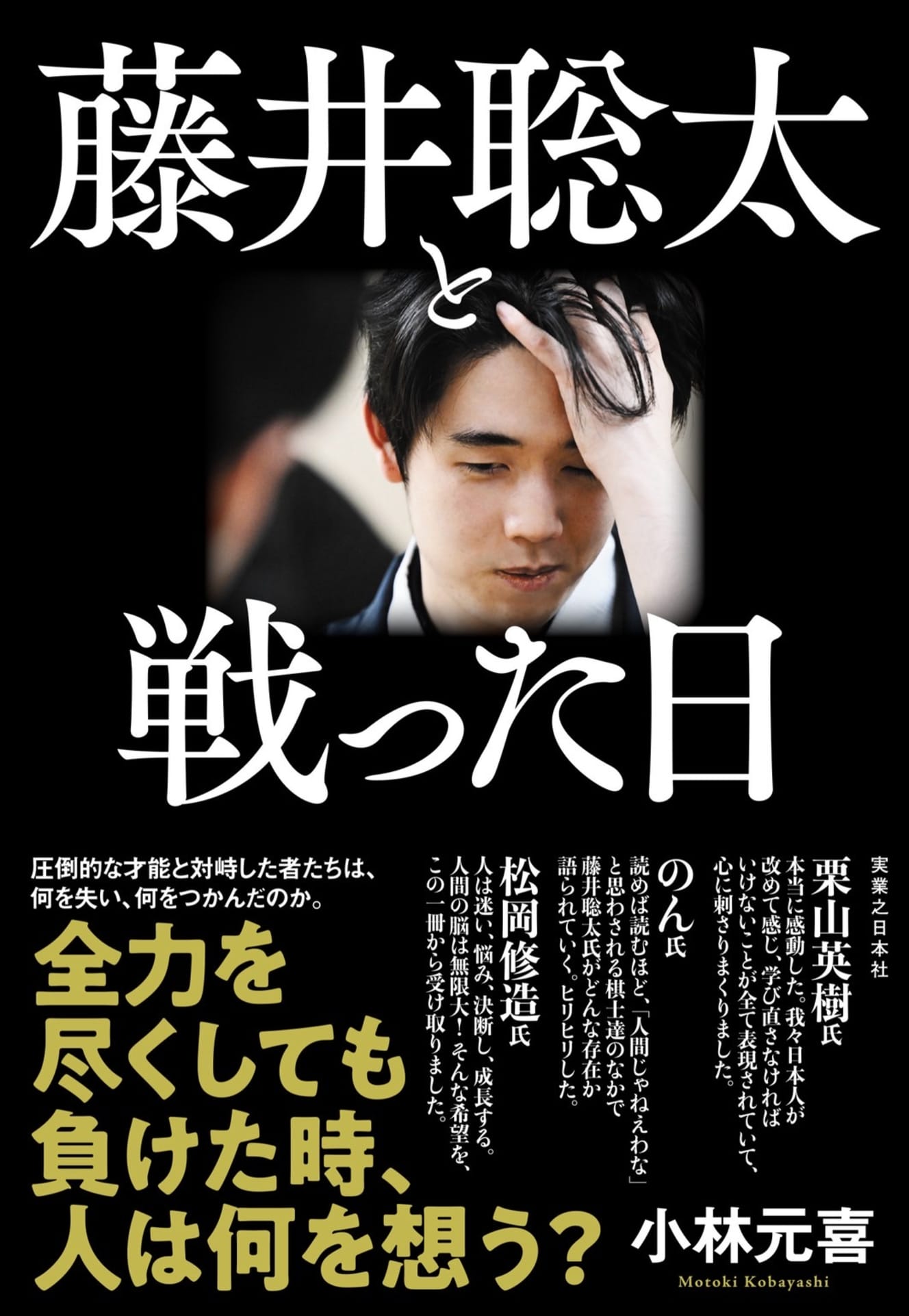
Sota Fujii (24) made his debut as a professional shogi player in 2016 as the youngest in history and has set numerous records, including simultaneously holding all eight major titles in the shogi world. What did the players—who had devoted their lives to shogi since childhood—see in Fujii when they faced him? What did they gain from their defeats?The nonfiction book *The Day I Faced Sota Fujii* (written by Motoki Kobayashi, published by Jitsugyo no Nihon-sha), which examines the lives of the eight players who faced off against Fujii, will be released on November 12. What were the life stories of those who were defeated by his overwhelming talent, and how did their lives unfold after those defeats?From *The Day I Fought Sota Fujii*, we are publishing an excerpt and re-edited version of the section featuring Kazuki Kimura.
[Click here to order *The Day I Fought Sota Fujii*!]
In 2019, Kimura turned 46. That year, he secured his seventh title challenge.The stage was, once again, the Oi Title Match. His opponent was Masayuki Toyoshima, 17 years his junior—the strongest player at the time, at the peak of his powers. No player had ever made a seventh title challenge without holding a title. Given his age, everyone thought this might be his last chance.
The match dragged on until the seventh game. The venue was the City Center Hotel. This was the ninth time in his career that Kimura had faced a game where “one more win would mean the title.”
“It feels like, ‘Has it really been nine times?’ But I’ve never actually kept track of that. I didn’t really feel much pressure at that point,”
he says calmly.
“Once you’re past your mid-40s, anyone has passed their peak. My opponent, Toyoshima, had won the Meijin title with a 4-0 record and was in great form.I didn’t even know if I had a chance. I just thought, ‘I’ll give it my all.’ It wasn’t really about winning the title or anything like that; I was able to focus solely on the technical aspects throughout all seven games.”
The night before the final game, Kimura had a strange experience. He slept very well. If he relied on medication, it would affect him the next day. If he exercised too much, he’d get too excited to sleep. Insomnia had always been a constant struggle for Kimura. Why was he able to sleep that night?
“I don’t know why. If I did, I’d do it all the time (laughs). I usually don’t sleep very well, you could say. I’d start thinking about my strategy the day before, endlessly wondering, ‘Is this really the right approach?’ But this time, I slept soundly.
The position was a tough one, so I guess the only explanation is that I didn’t let my mind wander… But I don’t really try to remember every little thought I had at the time, and I certainly don’t keep a diary about it (laughs).
So, when I look back without getting bogged down in the details, all that remains are feelings like, ‘Strangely enough, I slept really well that night,’ or ‘I was able to focus on the game.’ That’s about all that’s left.”
The final game. Kimura won. Four wins, three losses. He won his first title at the age of 46 years and 3 months. He broke the record for the oldest title winner by a wide margin and achieved a long-cherished goal after 22 years as a professional shogi player. It was the moment the “Star of Middle Age” shone brightly.
The Relationship Between Shogi and the Body
Winning the title at the age of 46. While this was a remarkable achievement, Kimura was also coldly confronting his own “decline.”Generally speaking, shogi is considered a “battle of wits.” That is precisely why, when the sports magazine *Sports Graphic Number* ran a special feature on shogi as a “mind sport,” the public was surprised—asking, “Shogi is a sport?”—and I believe that very unexpected angle made a huge impact.
I, too, used to think that way.I was convinced that shogi was akin to “art” or “philosophy,” and that the more one aged and accumulated life experience, the more one would mature and grow stronger. However, as I continued my research, I began to realize that this might not be the case. Could it be that shogi is, in fact, a world dominated by physical stamina?
I asked Kimura: What does it mean to grow older in the world of shogi? Does the act of “thinking” itself, after all, require the kind of robust physical stamina you’d expect from an athlete?
“Yes, physical stamina is definitely necessary. As you say, I think there are aspects that are very similar to those of professional athletes. In my case, when I was in my mid-thirties, I became anxious, wondering, ‘Can I keep playing shogi at this level?’ and was overcome by a sense that my abilities were gradually declining.
People generally tend to think that ‘experience is everything,’ but in shogi, you have to keep reading the board and keep pushing through. In today’s world, where technical research is advancing by leaps and bounds, past experience can even end up getting in the way. When you think about it that way, it’s certainly true that the downsides of getting older outweigh the upsides.When I was in my thirties, I didn’t think much of it, but now I’m acutely aware of things like my “reading speed” slowing down.
Amid this decline, another thing I feel strongly is that I’m losing my ability to “be patient.”When things don’t go my way and I find myself at a disadvantage, trying to force a decisive move only makes matters worse and hastens my defeat. In such situations, it’s sometimes better to remain patient and wait for my opponent to make a mistake. However, this act of “waiting” requires an enormous amount of physical and mental stamina.
I must muster all my physical and mental strength to endure patiently.Whereas normally one might think, “There’s no way a professional player would make a mistake,” I continue to be patient, believing that “since my opponent is human too, an opportunity will surely come.” That is what “patience” means. However, as I get older, I inevitably become more detached, and I find it harder to maintain that patience. That’s where I feel the physical decline the most.”
The brain is also a physical organ made up of cells. Just as muscle strength declines, do we also begin to feel the brain deteriorating? Specifically, what kinds of changes occur?
“If a slump continues, that’s your true ability.”
“The number of possible moves you can anticipate decreases. When you’re planning ahead—‘like this, and then like that…’—whereas in the past you might have checked five or six times, asking, ‘Is that really right? Are there any mistakes?’, now it’s down to two or three times, and eventually just once.”
That’s not overconfidence. It’s a lack of mental stamina.
“I end up taking the easy way out, thinking, ‘It’ll probably be fine’ or ‘It’s the same as before.’ If I were constantly on guard—thinking, ‘My opponent doesn’t want to lose either, so there’s no way they’ll play so predictably’—it would be different, but I end up taking it a little too easy. That’s a sign of decline, and it leads to mistakes.”
Once you’ve learned the hard way, you reflect on it. But before you know it, you’re repeating the same mistakes.
“If a slump lasts for years, that becomes your true ability.”
Enduring a disadvantageous position is humiliating and agonizing. Kimura once wrote the following in a specialized magazine:
“Knowing I’m going to lose, yet still playing moves that make me want to cover my eyes and fighting on—it’s quite painful, and I resist doing it. But if I were to lose that resolve, I’m sure I’d spiral downward, just like rolling down a steep slope.”
When asked about the true meaning behind these words, he nodded deeply.
“It’s about perseverance, isn’t it? As I mentioned earlier, I believe that ‘since my opponent is human, they’re bound to make mistakes,’ and I keep fighting based on that belief. That’s why I’ll play even a humiliating move. If my opponent becomes complacent after seeing how I’m playing, that creates an opportunity.
By persistently playing those tenacious moves without giving up, I can make my opponent think, ‘It’s going to be tough to beat this person.’ Once they think that, it puts pressure on them. I believe that building up these small victories will pay off in the long run as I continue my career as a player, so I’ve made it a habit to ‘never give up.’
When playing a game, there are inevitably times when my position looks bad. I wouldn’t go so far as to say that my true worth is judged by how hard I fight during those tough moments… but I do believe it definitely makes a difference in my results.It’s precisely when things aren’t going well that you must remain patient and wait for your chance. I believe that approach leads to better results as a professional player. Of course, it’s incredibly difficult, but I think it’s necessary as long as I’m playing.
I don’t give up easily. If I can make my opponent think, “This person is hard to beat,” then I think I’ve done well in the world of one-on-one competition. I still firmly believe that it’s not enough to just strive to win—you also have to make an effort “not to lose easily.” Though, as I get older, that’s becoming harder to do.
Ultimately, once I seize an opportunity, I have no choice but to hold on to it and turn the game into a close contest. No matter how hard I try, if my opponent continues to play accurately, I usually can’t turn the tide. The gap shouldn’t narrow. For the gap to narrow, my opponent must make some kind of mistake.
So, if you get frustrated and play a risky move at that point, it actually makes the position easier to read and hastens your defeat. Instead, you have to figure out how to patiently create a “confusing situation” where your opponent is likely to make a mistake. That’s what I think about when things get tough.”
In the next article, “‘It’s Too Fast for Me to Keep Up Right Now…’ Kazuki Kimura, the Man Who Beat a Genius, Reveals ‘The Secret Behind Sota Fujii’s Strength,’” we’ll delve into the secret behind Sota Fujii’s strength as perceived by Kimura through his actual games against him.