“It’s too fast right now—I can’t keep up…” Kazuki Kimura, the Man Who Beat a Genius, Reveals “The Secret Behind Sota Fujii’s Strength”


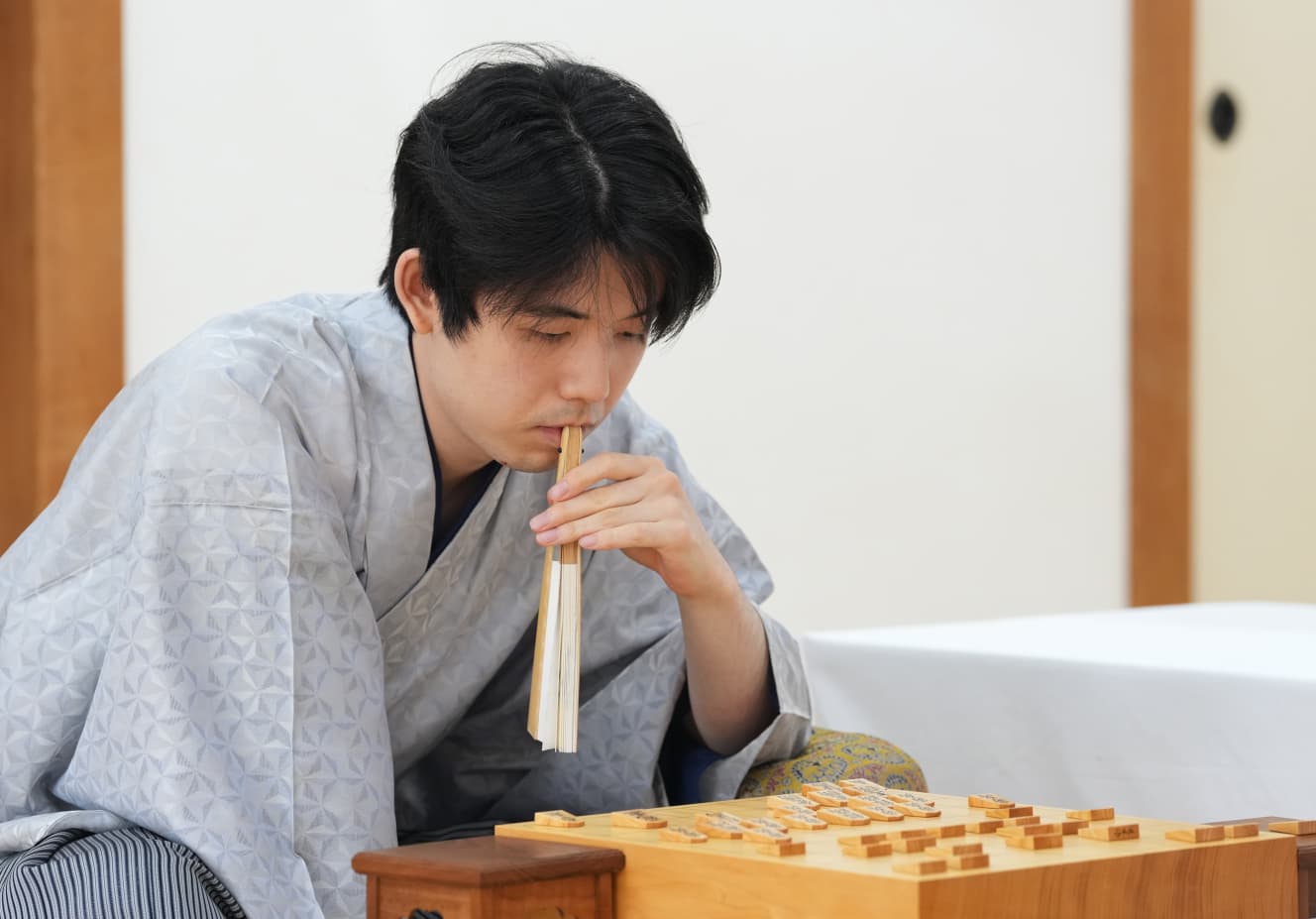
“Speed of Analysis” and “High Accuracy”
Sota Fujii (24) made his debut as a professional shogi player in 2016 as the youngest in history and has set numerous records, including simultaneously holding all eight major titles in the shogi world. What did the players—who had devoted their lives to shogi since childhood—see in Fujii when they faced him? What did they gain from their defeats?The nonfiction book *The Day I Faced Sota Fujii* (by Motoki Kobayashi, published by Jitsugyo no Nihon-sha), which examines the lives of the eight players who faced off against Fujii, goes on sale November 12.
featured the struggles of Kazuki Kimura as a “late bloomer.” In this second part, we delve into the secret behind the strength of the genius Sota Fujii, as revealed by Kimura, who actually faced him on the board. (Excerpted and re-edited from the section on Kazuki Kimura in *The Day I Faced Sota Fujii*.)
He had fought hard to claim the Oi title. But the opponent who appeared for his first title defense was a figure who turned the shogi world’s conventional wisdom on its head. Summer 2020. The 61st Oi Title Match, a best-of-seven series. The challenger was 18-year-old Sota Fujii. He had just captured the Kisei title shortly before, becoming the youngest title holder in history.
The result was brutal. Zero wins, four losses. Kazuki Kimura failed to secure a single victory and lost his title.
“Of course, no one likes to lose a title,”
Kimura says candidly.
“But I lost it without winning a single game. That’s what really bothered me. I thought, ‘I really need to win at least one game.’ Thanks to some luck, I was fortunately able to win the title, but when I looked at the other title holders at the time, they were all not only holding their own titles but also challenging for other titles or competing for championships.
In contrast, I was doing my best just to defend my own title. With results like that, aiming for two titles was a hopeless endeavor. I really feel that there’s something missing in my game.”
How did Kimura view Sota Fujii’s strength? He says it lies in his “speed of reading” and “high precision.”
A Battle That Left Him Battered and Bruised
“His ‘speed of reading’ has always been outstanding. It’s not just in shogi problems—his reading speed in actual games is simply incredible. Since there are established patterns in the opening stages of shogi, the difference in skill between players really becomes apparent from the middle game onward, once they move beyond those patterns.
Now that AI is in use, ‘bad moves’ stand out more than good ones. A negative evaluation appears the moment a move is made. Modern shogi has evolved into a style of play where players score points by capitalizing on their opponent’s mistakes.Mr. Fujii specializes in the “Kakugawari Koshigake-gin” strategy, which is currently the most popular, and his mastery of it was simply overwhelming. I tried to counter it, but I was completely outmatched. That single strategy had already become a formidable weapon.
Although I didn’t win a single game in the Oi Title Match, there were some games where I had the first move and used a different strategy that nearly led to a victory. “But in the end, he always managed to turn the tables on me. As I mentioned earlier, it takes an enormous toll on your stamina just to get to a position of advantage against Mr. Fujii. By the time I’d gained the upper hand, I was already exhausted. That led me to make mistakes in the crucial endgame. There were even times when fatigue and errors combined to cause me to lose after leading.”
A few months after losing the title in a straight-set defeat, the two faced off again in the second round of the 70th NHK Cup Tournament. Kimura emerged victorious. It was a heated battle lasting 135 moves. The indomitable man showed his true grit.
“That was like a reward for giving it my all—it was really just a fluke.”
Kimura is modest, but his analysis is sharp.
“I put a lot of thought into my strategy and had planned out the sequence of my moves to a certain extent, and it just happened to work out. However, I wouldn’t say the strategy itself was a complete success. My opponent also made a mistake.”
Sota Fujii is human, too. He makes mistakes.
“We were able to capitalize on that mistake, and that’s how the victory came our way. Which means, ultimately, you can’t win unless your opponent makes a mistake somewhere.”
He then adds:
“If you ask whether I’ll make a mistake next time, the answer is, of course not. That’s the difficulty of winning the next game and going on a winning streak.”
In a single-elimination tournament, you might have one chance. But a best-of-series title match is different.
“Winning just once is only a ‘minor setback’ for your opponent. You have to win multiple times—four wins in a row—to claim the title. I think that’s why people say it’s so hard to beat Mr. Fujii.”
A Pace I Can’t Keep Up With
Sota Fujii continues to evolve. Compared to five years ago, when Kimura competed in the Emperor’s Title Match, it’s said that Fujii no longer has any weaknesses.
“Five years ago, I think I still had weaknesses when playing strategies other than my own specialties. There were times when I’d get caught up in my opponent’s pace. But now, I have no weaknesses in any strategy.”
Against such a Fujii, Yuki Sasaki managed to secure two wins in the 2024 Ryuo Title Match. His victory in Game 4, held at “Onikuru” in Ibaraki City, Osaka Prefecture, sent shockwaves through the shogi world.
“Mr. Sasaki extracted possibilities from incredibly minute details and turned them into a win. That’s quite an impressive feat, but if you asked me if I could do that right now, I’d have to say no. Most professional players would probably say it’s impossible.”
To beat Fujii, ordinary effort isn’t enough.
“I think Mr. Sasaki nurtured ideas that most people wouldn’t notice and had been thinking about them ever since the challenge was confirmed. He creates a gap by going one step further than what Mr. Fujii is predicting—‘If I do this, he’ll respond like that.’”
Even so, Sasaki fell short of capturing the title. Fujii’s speed of reading the board is said to be on a whole other level, even from the perspective of other professional players.
“During the post-game analysis for the Oi Title match, when I asked, ‘What would you do if I played this way?’, he’d respond using notations—like addresses that record which piece moved to which position on the board—but he speaks so fast I can’t make it out. In the past, his voice was too soft to hear, but now he’s just too fast to keep up with (laughs).It’s really hard to understand.”
In that case, if it were explained later, would a professional player be able to understand the meaning of that move?
“Yes, I understand that.Nowadays, commentators are also looking at the software (AI), so they can explain the logic. But if you were told, ‘Explain the variations for the next ten moves on your own,’ that would be impossible. If someone could do that, they wouldn’t be sitting in the commentary booth. They’d be competing in a title match, on the side being analyzed (laughs). So, I think there’s a significant gap in skill there.”
In other words, are the two players battling in a realm that no one can grasp in real time?
“Commentators can watch the game casually, thinking, ‘No matter who wins, I don’t lose anything,’ but the players are constantly thinking, ‘I have to play the very best move myself.’ The intensity is completely different.Ultimately, even if it’s the same ‘30-minute thinking time,’ the implications are completely different. There’s the 30 minutes spent thinking under extreme pressure—‘If I don’t play the best move here, I’ll lose’—and the 30 minutes spent thinking while commentating from a safe zone, thinking, ‘No matter who wins, I don’t lose anything.’ The difference in intensity is clear.”
They’re exchanging moves in real time, under extreme pressure, over something no one can predict. That is what takes place in the sacred realm of title matches.
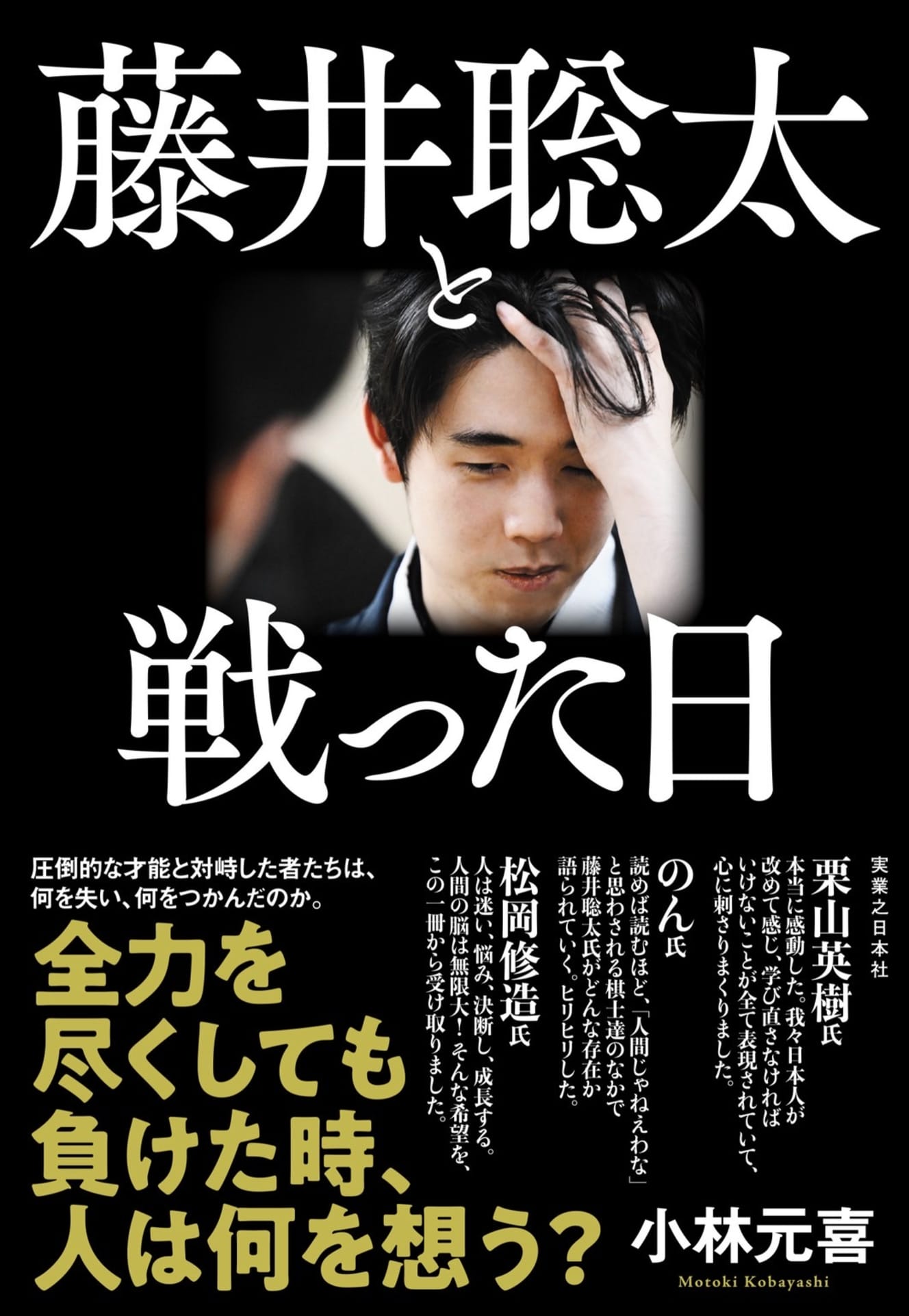
The nonfiction book *The Day I Played Against Sota Fujii* (by Motoki Kobayashi, published by Jitsugyo no Nihon-sha), which delves into the lives of the eight shogi players who faced off against Fujii, goes on sale November 12. Click here to order!