“I Just Couldn’t Stop Crying”: Keiko Matsuzaka, Recipient of the Order of the Rising Sun, Gold Rays with Rosette, Tells the Author About Her “Turning Point” in the “Tora-san” Movies


The Strictest Among Directors
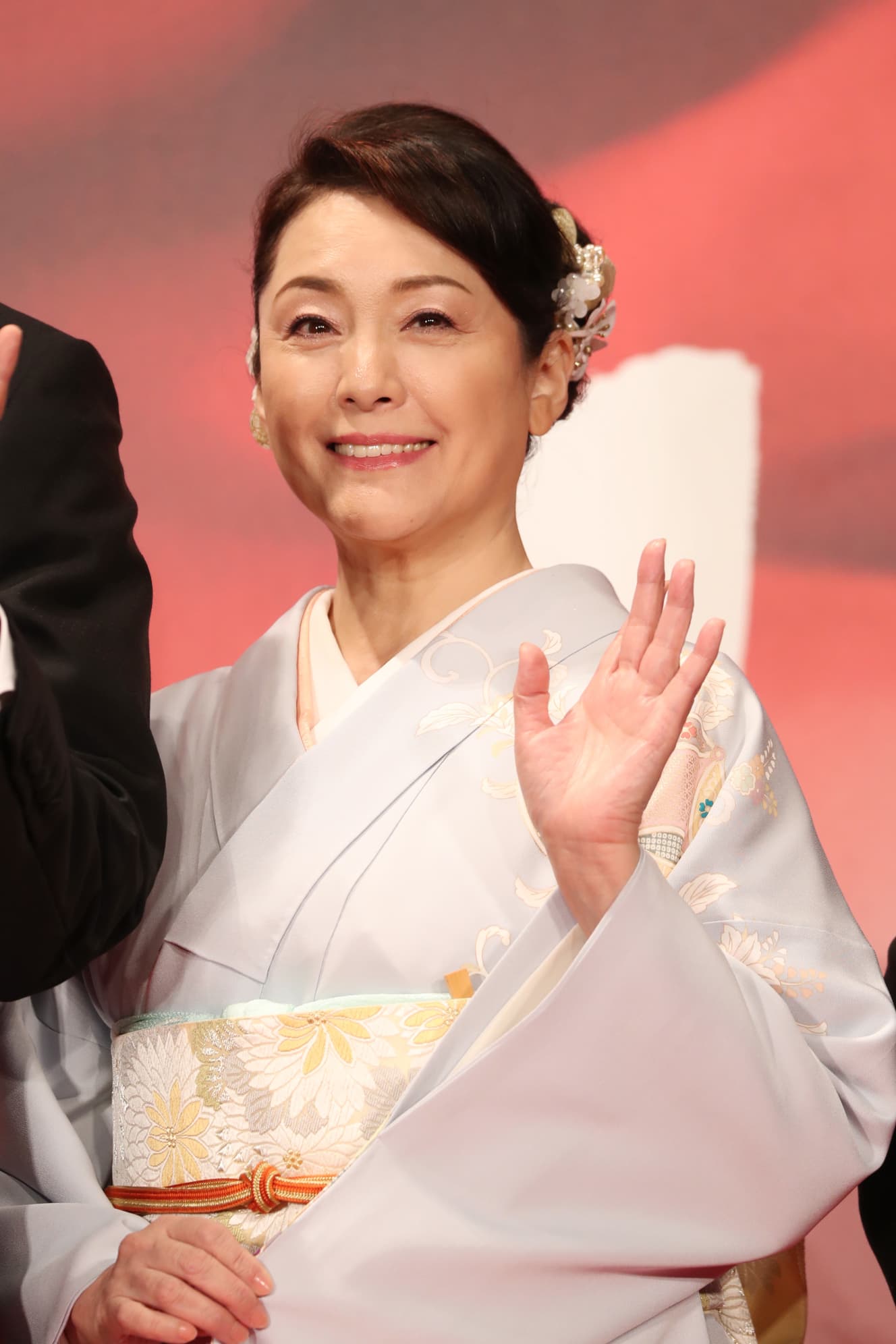
The recipients of the fall decorations were announced on November 3, and actress Keiko Matsuzaka (74) was selected to receive the Order of the Rising Sun, Gold Rays with Rosette. Matsuzaka said,
“Thanks to everyone who watches my work, I have been encouraged and have been able to continue my career as an actress with vigor,”
and added,
“I will continue to strive for excellence without forgetting my original aspirations,”
in a statement.
Matsuzaka joined the “Himawari Theater Troupe” in 1966, when she was in her third year of junior high school. She made her debut in 1967 in the TV drama *Ninja Hattori-kun + Ninja Kaiju Jippou* (TV Asahi).After joining Daiei’s Tokyo Studio in 1970, she made her film debut in 1971 with *The Night Clinic*.
In 1972, Daiei went bankrupt, and she transferred to Shochiku.That same year, she gained widespread recognition for her role as Nohime in the NHK Taiga drama *Kuni-torimono Monogatari*, and went on to star in films such as *Tsuji-ga-hana* (1972), *Aoi yori Aoku* (1973), and *Jiken* (1978), becoming Shochiku’s leading actress.In 1979, she starred in the TBS drama *Flowers Underwater* and released the theme song “Love’s Flowers Underwater,” which became a huge hit.
The work that truly marked Matsuzaka’s blossoming as an actress was likely the 27th installment of the “Tora-san” series, *It’s Tough Being a Man: Torajiro’s Love in Naniwa*.In July 1981, while Matsuzaka was playing the role of the leading lady, I had the opportunity to conduct an exclusive interview with her during a break in filming at the location in Ikoma City, Nara Prefecture.
She was 28 at the time. She played Fumi, an Osaka geisha with whom Tora-san is infatuated, but during filming, she struggled with the “strict acting direction” of director Yoji Yamada (95). She said,
“He’s the strictest director I’ve ever worked with. His approach to filmmaking is also rigorous. He kept telling me to be ‘natural.’ I tend to act awkwardly (laughs). I feel fortunate to have been given the opportunity to appear in Director Yamada’s film at just the right time,”
she said.
It’s hard to make a fun movie
“On the first day of filming in the Seto Inland Sea, I was feeling down on the ferry, wondering what to do, when Director Yamada came over and said, ‘We all make this movie together, so you don’t have to worry about it all by yourself.’ When he said that, I just burst into tears,”
she said with a wry smile.
“Just realizing how tough it is to make an entertaining movie was a huge learning experience in itself,”
Her words left a lasting impression.
Playing the role of Fumi, the geisha played by Madonna, was a turning point in her career as an actress.
“I really feel like it will be a source of support for me going forward. I learned so many things—how to fully immerse myself in a role, how to perceive things, how to deliver lines, what acting is all about… There were so many moments where I thought, ‘Oh, so that’s how it is.’”
To Matsuzaka, Director Yamada remarked,
“I’m finding it challenging to bring out a side of Matsuzaka that’s more captivating than ever before,”
, expressing his high hopes, while Kiyoshi Atsumi remarked,
“She has an amateurish quality—in a good way. She doesn’t come across as a seasoned actress whose charm is all surface; she’s fresh and innocent. She makes you want to protect her,”
he remarked.
Buoyed by the power of the “Tora-san Family,” Matsuzaka delivered a passionate performance in the film, showcasing her elegance as a geisha.She captivated audiences and, alongside the film *The Gate of Youth*, which was released the same year, won the Best Actress Award at the 5th Japan Academy Film Awards, the Blue Ribbon Award for Best Actress, and the Hochi Film Award for Best Actress, marking her major breakthrough as an actress.
She continued to solidify her status as an actress by winning awards such as the Best Actress Award at the 6th Japan Academy Film Awards for the films *Kamata March* and *Dotonbori River*, both released in 1982.She has starred in masterpieces that have left their mark on film history, such as *The Man in the Burning House* (1986) and *The Thorn of Death* (1990).
More recently, in *If I Could Meet You Again on the Hill Where Those Flowers Bloom*” (2023), in which she played the owner of a diner who served as a mother figure to the kamikaze pilots portrayed by Koji Mizukami (27), and won the Best Supporting Actress Award at the 47th Japan Academy Film Prize. She continues to demonstrate her vitality by expanding her range as an actress who commands the screen even in supporting roles.
Having been active in the Japanese film industry for many years as one of the country’s most glamorous leading actresses, she is expected to take on leading roles as well—just as Kaoru Yachigusa (who passed away in 2019 at the age of 88) starred in *The Time of the Yuzuriha* (2015) at the age of 84—rather than just supporting roles.Following her recent award of the Order of the Rising Sun, Gold Rays with Rosette, all eyes are on what kinds of roles she will take on in films and TV dramas to showcase her masterful acting.
Reporting and Text: Ryo Sakamoto (Former Head of the Culture and Society Department at “Tokyo Sports”) PHOTO: 2017 TIFF/Aflo