The Movie “First Voice,” Starring Haruka Ayase: The Producer’s Thoughts on Adapting “Japan’s First Sexual Harassment Trial” for the Screen
Special Interview [Part 1]


An actress who publicly revealed her experience as a victim of sexual violence interviews a producer
“Ms. Asahi is the person I’ve always wanted to meet in my life.”
Kaori Sakano (47), producer of the film *First Voice*, said this while looking the author straight in the eye.
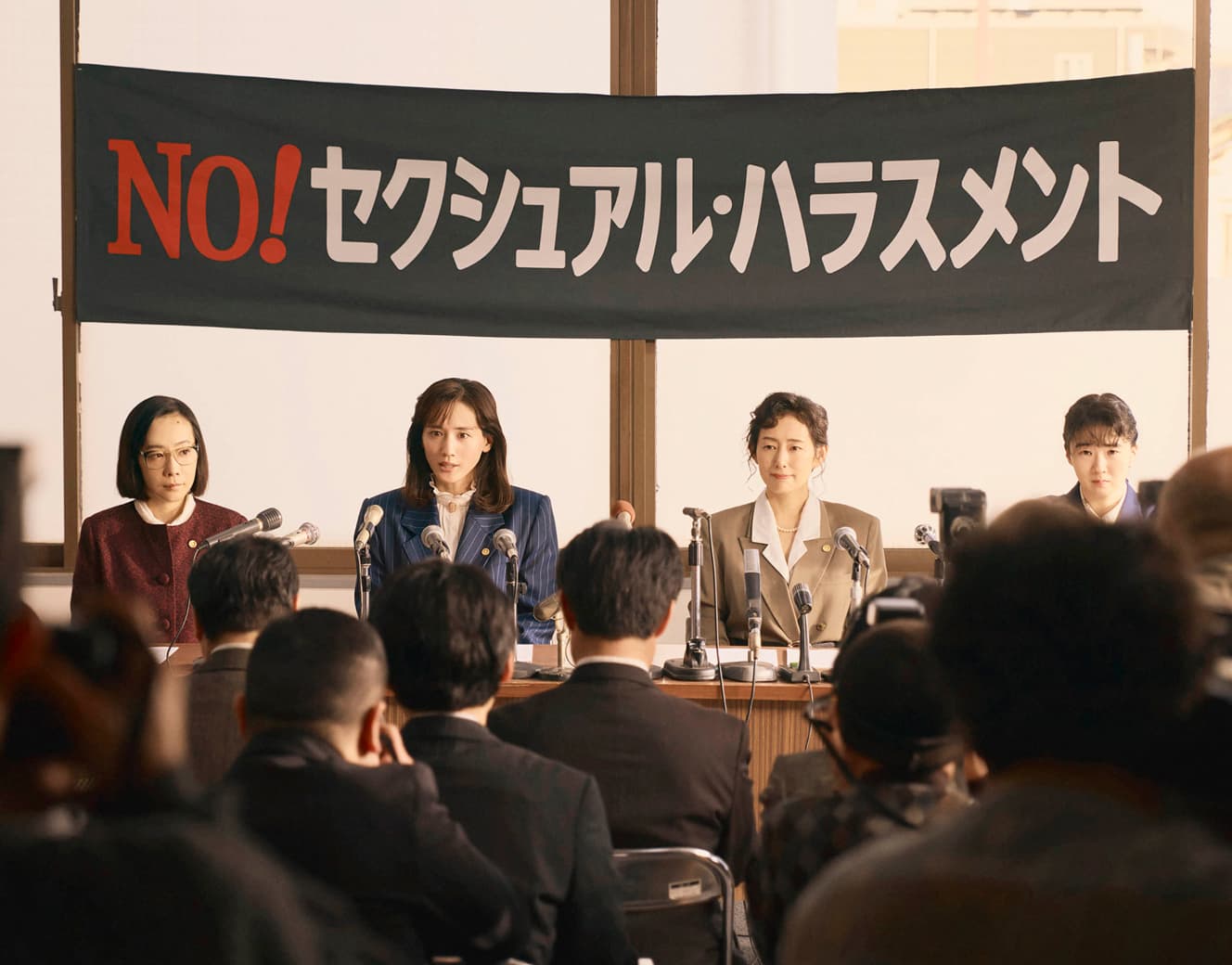
In this film, inspired by the 1989 Fukuoka sexual harassment trial, Haruka Ayase (41) plays Michiko Asahi, a good-natured lawyer who keeps taking on cases that aren’t profitable.Then, Megumi Uehara (First Summer Uika, 36)—who was stripped of her beloved job after baseless rumors, such as being called a “promiscuous woman,” were spread about her at work—comes to Asahi, saying, “I want to sue my company and my boss.”
In an era when the term “harassment” had not yet taken root in society, Asahi and her fellow female lawyers take on a case that everyone else had given up on, believing they had “no chance of winning”—all while working out of their own pockets.
Ms. Sakano visited the plaintiffs and lawyers who spoke out at the time repeatedly, striving to bring their struggle to the screen.
As someone who has publicly spoken out about experiencing sexual violence in the film industry, I couldn’t view the issues depicted in this film as someone else’s problem. I wanted to ask her what drove her to bring this story to the screen.
“I first learned about this lawsuit from an online article with the headline, ‘She was ostracized precisely because she tried to work as an equal.’ That was in 2018. I was shocked to discover that there was a hard-hitting drama behind the incident that helped popularize the term ‘sexual harassment,’ so I read the book *Changing Workplace “Common Sense”* (Impact Publishing), which compiles the trial records.
That’s when I understood why it had gone to trial. The plaintiff was fighting with the strong conviction that ‘this isn’t just my problem—there are others who feel the same way.’ Since she was also giving interviews, I sent her a message on social media, and we arranged to meet the following January.”
Ms. Sakano herself had experienced unfair treatment simply because she was a woman. At her former workplace, there was still a custom where only female employees had to arrive early in the morning to brew coffee. At company parties, she was forced to pour drinks for her male superiors. She was also the target of baseless sexual rumors spread within the company.
Even before her work could be fairly evaluated, she was viewed through a sexual lens and subjected to baseless slander simply because she was a woman. “Would I have faced the same treatment if I were a man?”
With that sense of injustice deeply ingrained in her, Ms. Sakano could not read the article about the trial from decades ago as merely a story from a bygone era. Even during the period after giving birth when she was away from the workplace for a while, her interest in this subject never waned. Upon learning that the lawyer who handled the case was coming to Tokyo, she went to meet him despite being only one month postpartum.
“Hearing that she fought this case pro bono while raising three children was a source of encouragement to me personally. I heard she would go home for just two hours in the evening to make dinner, or bring a sleeping bag to the office to take a nap. She couldn’t work remotely like we do today. I vowed to make sure the depiction of her family life was included in the film. I thought it would be an inspiration to women who are working while raising children.”
Sakano’s interest expanded from the plaintiffs to the attorney handling their case.
“Above all, I wanted to preserve the legacy of what these people did.”
Reporting and Text: Midori Suiren / An actress and writer born in Yokohama in 1987. In addition to her work in film and theater, she writes film reviews for *Kinema Junpo* and serializes film introductions and columns in *Shimbun Akahata*.In the spring of ’22, after publicly accusing a film director of sexual assault using her real name,

From the November 13–20, 2026, combined issue of *FRIDAY*
Reporting and Text: Midori Suiren Photography: Miyuki Suemitsu