“Miyagi 25-Year-Old Woman Abandonment Case”: Man Re-Arrested on Murder Charges—Characteristics of a “Man Who Controls Women Through Violence”


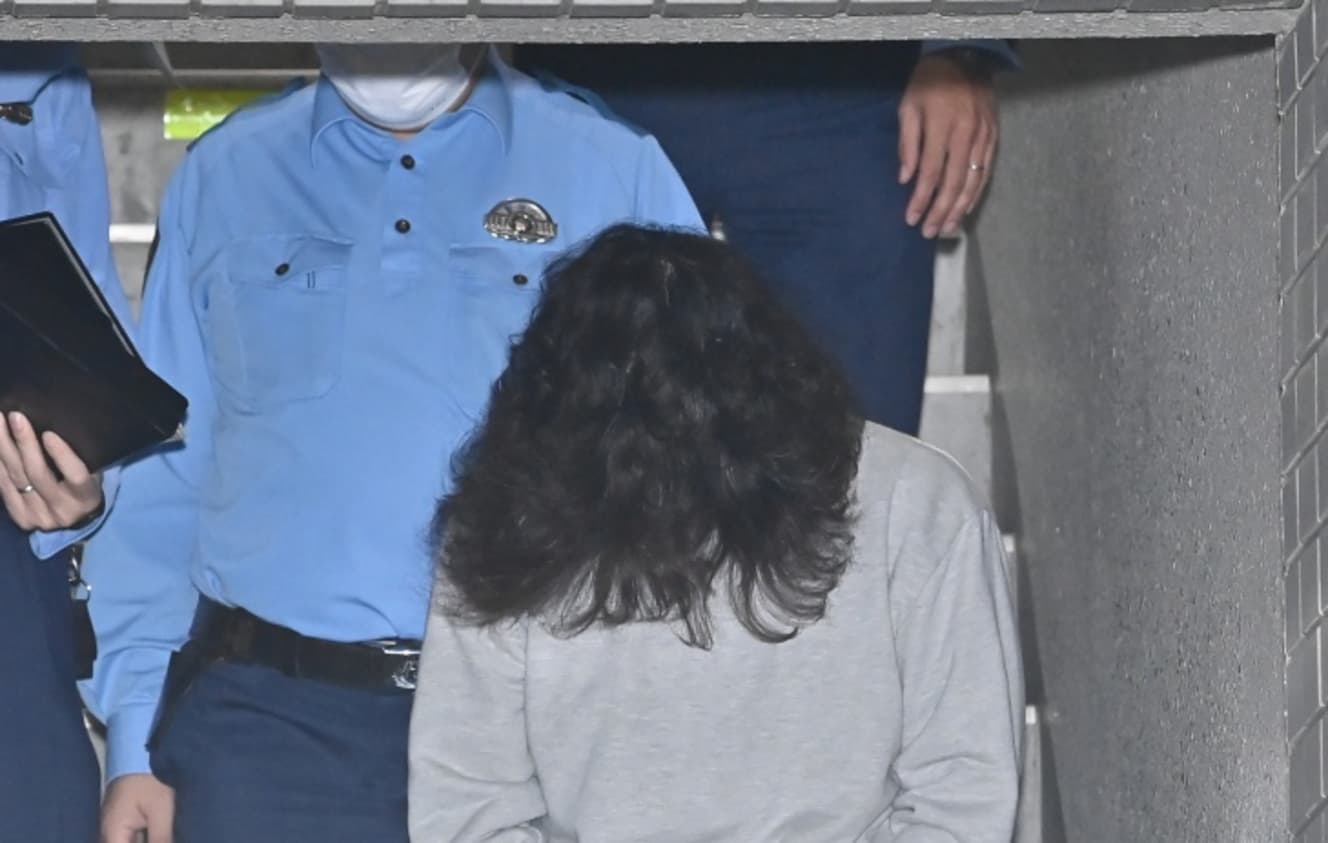
The suspect kept his face hidden behind his bangs the entire time
A man with unkempt, long hair hanging down in front of his face, deliberately concealing his face as he descended the stairs at the police station—this is Takuya Miura (36), a bar owner who was re-arrested on October 28 on suspicion of murder in connection with the case where a woman’s body was found in the mountains of Kurihara City, Miyagi Prefecture.
“Suspect Miura had been arrested on October 5 on suspicion of abandoning the body of his girlfriend, part-time worker Maho Muroga (25), in the mountains near Lake Hanayama in Kurihara City, Miyagi Prefecture, on September 28.
During voluntary questioning prior to his arrest, he stated, ‘When I came home from work on the morning of the 28th [of September], Ms. Muroga wasn’t there,’ ‘I went to Miyagi alone,’ and ‘I don’t remember.’ However, as the investigation progressed, several inconsistencies began to emerge.
It emerged that Miura was in possession of Ms. Muroga’s cell phone at the time of his arrest, raising the possibility that he had staged the scene to make it appear as though she were still alive. “The Tokyo Metropolitan Police Department was conducting its investigation with murder as a possibility,” said a reporter from the crime desk of a national newspaper.
It is believed that Mr. Muroga and Suspect Miura met when Mr. Muroga visited the bar Suspect Miura operated in Nakano Ward, Tokyo, as a customer; the two had been living together at Suspect Miura’s residence in Nerima Ward, Tokyo, since around September of ’25.
However, multiple testimonies reveal that there were constant disputes between them. In fact, between March and June of this year, there were a total of four reports to the police regarding domestic violence and other incidents. On July 21, Ms. Muroga’s mother contacted the police after learning that Ms. Muroga had been beaten by suspect Miura and suffered a broken nose.On September 2, Miura was referred to the Tokyo District Public Prosecutors’ Office on suspicion of assault.
“However, when Ms. Muroga met with police officers on September 25, she explained, ‘We’ve made up and are living together again.’ In the end, the two resumed living together, and the murder occurred just a few days later,” said the reporter mentioned earlier.
According to the Tokyo Metropolitan Police Department, suspect Miura is believed to have killed Ms. Muroga by applying pressure to her neck in some manner. During questioning,
“I came home tired to find the room a mess, and we got into an argument. I lost my temper over the victim’s attitude,”
However, regarding the murder charge,
“I never intended to kill her,”
. Crime journalist Taihei Ogawa spoke about the characteristics commonly seen in domestic violence crimes as follows:
“Men never change.”
“On September 2, before the murder took place, suspect Miura was referred to prosecutors on charges of assault for punching Ms. Muroga in the nose. It’s unheard of to simply refer a case to prosecutors when the victim’s nose was broken—this is clearly an arrestable offense. Yet he was not arrested.
Presumably, the woman did not file a police report. She sought counseling, but she didn’t want him punished. Domestic violence tend to think, ‘We’re dating and living together, so I know he has good qualities too. That’s why I wouldn’t go so far as to have him arrested…’ Suspect Miura is skillfully exploiting this mindset.”
According to Mr. Ogawa, who has investigated numerous similar cases in the past, men like Suspect Miura—who use violence to control women—exhibit typical characteristics.
“They deceive you with kindness and tears. They’re usually very gentle. And after they’ve been violent, they apologize, saying, ‘I’m sorry,’ while shedding tears. That’s why women are deceived, but men like this never change.”
If you feel your life is in danger, you should report it without hesitation.


[YouTube] On “FRIDAY TV,” crime journalist Taihei Ogawa discusses this case, exploring why it could not have been prevented. He also speaks in detail about a certain characteristic commonly seen in similar cases.
PHOTO: Shinji Hasuo