Talent? Luck? The Amount of Effort!? Meiji University Professor Shugo Hotta Reveals the Surprising Common Traits of “People Who Succeed in Life”
His Books Have Sold Over 1.85 Million Copies in Total! Japan’s Best-Selling University Professor of Practical Books Shares His Secrets


“I’m working my hardest, but for some reason, I’m not getting the results I deserve.”
“People who I don’t think are any more capable than I am keep seizing opportunities one after another”
“I have things I want to do, but I’m too afraid of failure to take that first step.”
Have you ever felt this way?
There are people who, even though they’re putting in just as much effort, seem to have work come their way one after another, are blessed with supportive people, and seize opportunity after opportunity. On the other hand, there are those who, despite working hard and sincerely, just can’t seem to turn their situation around.
Is this difference due to talent? The amount of effort? Or is it simply good luck from birth?
“If there were just one rule for success… it would be whether you take action or not. I think that’s all there is to it.”
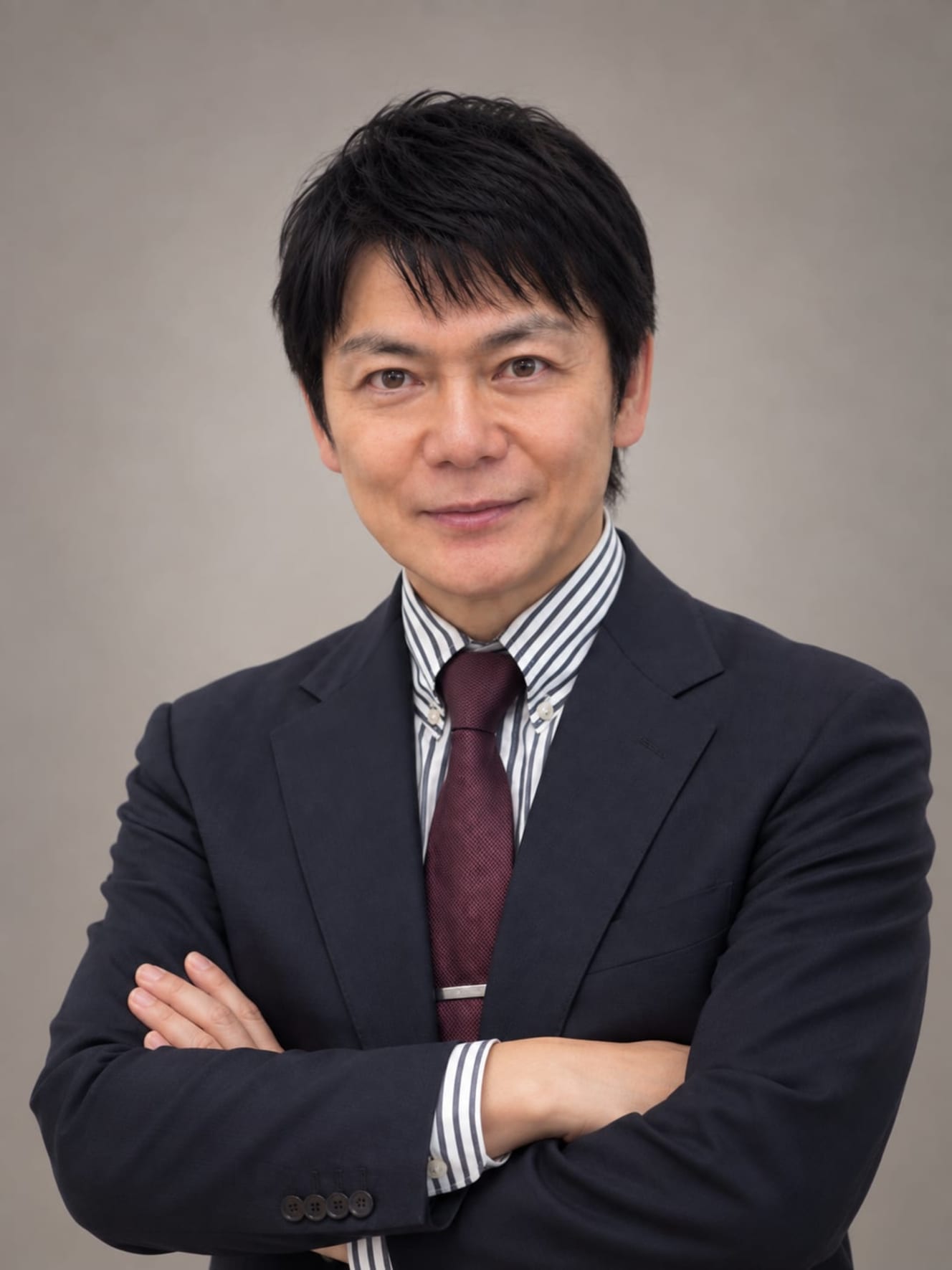
These are the words of Shugo Hotta, a professor at Meiji University who has garnered attention as “Japan’s best-selling author of practical self-help books.” His writing covers an astonishingly wide range of topics, from stress relief and communication to work strategies, saving money, and even dieting.
He calls himself an “evidence craftsman,” poring over research papers from Japan and abroad to translate scientific findings into practical methods anyone can apply in their daily life. His books have been published in 24 countries overseas, and since last year’s hit, he has received over 60 publishing offers.
His latest book has sold over 770,000 copies. While his total book sales boast 1.85 million copies, despite this level of success, he lacks what is often called the “arrogance of success.”
“I’m not the type to set big goals and charge headlong toward them. I just do my best with whatever’s right in front of me. That’s all there is to it.”
What does Mr. Hotta—who has produced numerous bestsellers—have to say about “the difference between people whose lives go well and those whose don’t”? (Quotes below are from Mr. Hotta)
“If You Think About It, You’ve Already Lost”—Don’t Look for Reasons Not to Do It
“I’ve been saying this a lot lately: ‘If you think about it, you’ve already lost.’”
When Mr. Hotta says “don’t think,” he doesn’t mean to abandon thinking altogether.
“When people find something they want to do, they’re incredibly good at looking for reasons not to do it. What if I fail? Isn’t there a risk? Is this even possible for me? The more you think about it, the more paralyzed you become.”
Of course, considering risks isn’t bad in and of itself. The problem is when “thinking” becomes an “excuse for inaction.” Mr. Hotta also has a perspective on failure itself that differs from the common perception.
“Edison failed 10,000 times, yet he said, ‘I’ve never failed.’ He put it this way: ‘I’ve discovered 10,000 ways that don’t work.’”
Just because you fail doesn’t mean all your previous efforts were wasted. If you learn one method that didn’t work, you can try a different one next time.
“Since we only live once, I think you should try anything you want to do.”
The “Encounter in Vegas” That Changed My Life
Mr. Hotta himself has always put the principle of “acting before thinking” into practice.
He went to the University of Chicago Graduate School intending to earn a master’s degree, but on the first day of orientation, he learned something unexpected. The presentation focused entirely on the doctoral program. He waited for an explanation of the master’s program, but the session ended without one.
“When I went to the office and said, ‘I’m Hotta from the master’s program,’ they told me, ‘We don’t have a master’s program here. You’re in the doctoral program.’ I was like, ‘What?!’”
Initially, he had planned to earn his master’s degree in about a year, but the doctoral program takes an average of seven years. Although this was an unexpected turn of events, Mr. Hotta pressed on.
“Luckily, I was able to get a scholarship, so I figured I just had to go for it.”
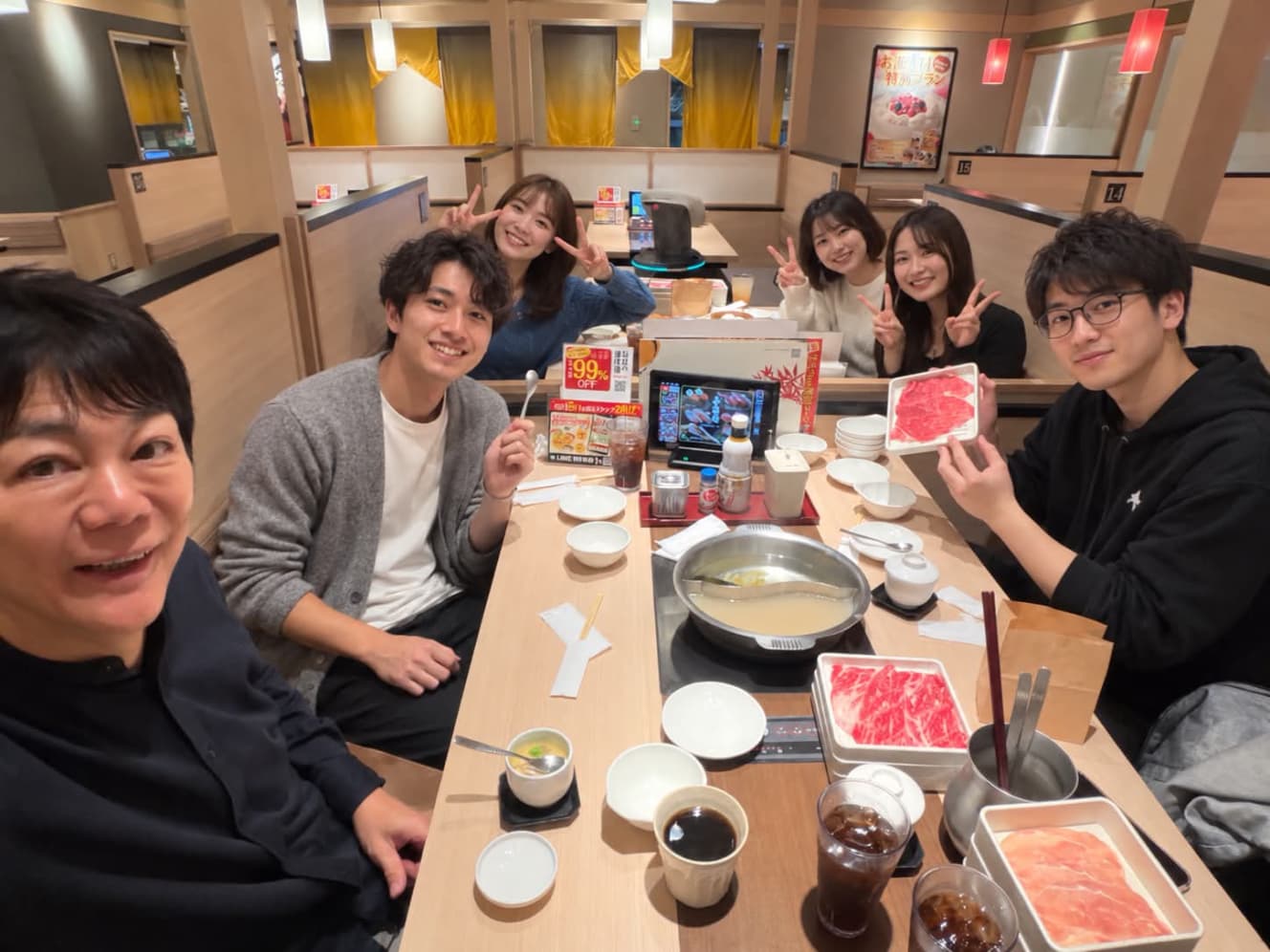
In an environment where outstanding students from all over the world gathered, he keenly felt his own lack of ability. But he turned even that into a positive.
“In the U.S., I met some truly astonishing geniuses. I realized just how shallow my knowledge was. I think that’s exactly why I was able to study so hard—to the point of exhaustion.”
He returned to Japan after earning his Ph.D. At the age of 31, he was appointed as an assistant professor (equivalent to a current associate professor) at Ritsumeikan University. After earning his Ph.D. in linguistics, he went on to pursue a Ph.D. in law.
“Normally, someone who’s already earned a Ph.D. wouldn’t think of entering another Ph.D. program, right? But I just went for it. It was reckless. I’m the type who takes action first and makes adjustments later. If there’s no path, I’ll just make one myself. Even in a field of grass, if you step into it, the grass bends down and a path forms, right? I think life is the same.”
For some reason, people are drawn to those whose lives go well, and unexpected opportunities come their way. Mr. Hotta says , “Anyone can expand their opportunities depending on their mindset.” The key to this is “an attitude that values encounters with others.”
“What I can do on my own is actually quite limited. But by teaming up with others, those possibilities expand infinitely. I always say, ‘What I can do is the product of my efforts multiplied by those of others.’”
An incident in Las Vegas symbolizes this perfectly.
“One of my current research collaborators is someone who happened to be dining next to me in Las Vegas. I mustered up the courage to strike up a conversation with him there. That encounter has led directly to my current research activities.”
At the time, the field of “law and language” still had very few researchers in Japan. That chance encounter sparked the expansion of a network among researchers, leading to collaborative research with leading scholars active both in Japan and abroad.
“If I hadn’t spoken to that person back then, I don’t think I’d be where I am today. With our limited experience and knowledge, it’s absolutely impossible to predict what kind of possibilities the person sitting next to you might bring into your future.”
This mindset has also contributed to his success as a writer of practical guides. One day, the aforementioned collaborator introduced Mr. Hotta to a friend from his high school days. The person was a romance columnist—a man with long hair and a laid-back demeanor, according to Mr. Hotta.
“Normally, you wouldn’t expect a scholar to want to write a book with a romance columnist, would you? But when I met him, I found him incredibly interesting to talk to.”
Mr. Hotta proposed a co-authored book to the man, but at first, publishers weren’t interested. However, there was one young editor who saw potential in their project.
“I heard the president told him, ‘There’s no way this will sell.’ But that editor persisted, saying, ‘I guarantee we’ll sell 100,000 copies.’”
The result was a hit, selling 160,000 copies. After that, I continued to work with the same editor, and we went on to produce a string of bestsellers in the 100,000-copy range.
“It was clearly thanks to that editor. I couldn’t have done it on my own.”
Neither the person sitting next to him in Las Vegas, nor the romance columnist he was introduced to by chance, nor the young editor was someone whose success was a foregone conclusion. Instead of judging people solely by their titles or appearances, he decided to engage with them first. That small action led to unexpected results.
Pitfalls That “People Who Have Succeeded Once” Are Prone to Fall Into
What struck me most while listening to Mr. Hotta was that, no matter how successful he became, he never considered it something he had “achieved on his own.”
Mr. Hotta compared the publishing business to film and theater.
“Publishing editors are producers, stage directors, and filmmakers all in one. The final work turns out completely different depending on how that person chooses to ‘produce’ me. So, I’m really just an actor.”
Before a book becomes a bestseller, many people are involved—not just editors, but sales representatives, marketing staff, bookstore clerks, and even readers.
“Everyone involved with a book is a player. I believe a bestseller can’t be created unless everyone’s hearts are in sync.”
Mr. Hotta says he makes a point of personally expressing his gratitude, whenever possible, to readers who post about his books on social media.
“I want to treat my readers with the utmost respect. Whenever I see a post on social media saying someone read my book, I reply, ‘Thank you!’ Many people are happy to hear that, and sometimes that leads them to read my next book as well.”
He also makes a point of not limiting his relationship with his editors to just work. He values the time spent sharing meals and getting to know each other on a personal level.
“I think we can create better books once we get to know each other as people.”
Mr. Hotta also comments on how people behave after achieving success.
“Some people get a big head just because one book sold well, but when that happens, the people around them lose the desire to work with them again. They’re limiting their own potential.”
This isn’t limited to the publishing industry. Rather than a single success, it’s about making people want to work with you again. That accumulation of trust forms the foundation for a long-lasting career.

Mr. Hotta has another philosophy he holds dear.
“Don’t limit yourself, and don’t limit others.”
Without even realizing it, people tend to make assumptions about their own and others’ potential.
“I don’t have any talent.”
“It’s too late to start at this age.”
“There’s no way that person can do it.”
But is there really any solid basis for those judgments?
“Whether they’re students or anyone else, everyone has unlimited potential. They might have talents you don’t even know about. Isn’t it far more embarrassing to underestimate someone from the start and then have to apologize later when you realize just how amazing they are?”
Mr. Hotta actively creates opportunities for students to experience the outside world, such as by having them accompany him to media appearances and meetings with publishers.
“Above all, I tell them to meet as many different people as possible. Those encounters and experiences become their greatest treasures.”
As people get older, they tend to limit themselves to their areas of expertise and the people they associate with. They have jobs they’ve held for many years. They have relationships they’ve built up. It seems pointless to start something new at this stage. It’s only natural to think that way.
However, Mr. Hotta doesn’t think, “Since I’m a linguist, I won’t write a book on stress relief,” or “I’ll turn down books on saving money or dieting because they’re outside my area of expertise.”
“Since I can read academic papers, I think, ‘If it’s an interesting field, I’ll give it a try.’”
He uses his expertise as a strength, but he doesn’t let it confine him.
“Putting things off until later is for fools.”
There’s another phrase Mr. Hotta has been saying a lot lately.
“‘I’ll do it later’ is for idiots.”
When asked what he meant by that, he replied immediately.
“Basically, I act as soon as I decide to do something. For example, when I receive a proposal from a publisher, I reply within two or three days saying, ‘Let’s go with these points’ or ‘Let’s move forward in this direction.’ People are really surprised, and everyone is really happy about it.”
Mr. Hotta’s approach to work is consistent. He doesn’t keep people waiting. He does his best to fulfill any requests. And he always listens to ideas that sound interesting.
People who attract work don’t necessarily have special talent.
“If I ask this person, they’ll get right on it.”
“It’s a pleasure to work with this person.”
It is this accumulation of trust that leads to the next request. That is likely the reason why offers constantly come pouring in for Mr. Hotta.
So why can’t most people act as effortlessly as Mr. Hotta?
In response to that question, Mr. Hotta points to a problem unique to modern society.
“People these days overthink things. Since we’ve entered the information age and are bombarded with all kinds of information, we end up overthinking even more.”
When you open your smartphone, the successes and glamorous lifestyles of others constantly catch your eye: people who earn more than you, those living fulfilling lives, and people your own age who have achieved great things. It’s now easy to see aspects of other people’s lives that you would never have known about in the past.
“When there’s too much information, people start comparing themselves to others and get exhausted just trying to make choices.”
We feel anxious when we see others’ successes and get scared when we read about their failures. Even when we try to start something new, the more we research it, the more we notice the pros and cons. And in the end, we don’t start anything at all. On the other hand, Mr. Hotta is proactive when it comes to new technologies.
He says he’s also teaching students and editors how to make the most of AI.
“ The results are completely different between those who use AI to cut corners and those who use it to expand their own potential. We’re entering an era where AI will be able to do everything that people can do. That’s precisely why we must use it to enhance our own abilities.”
Instead of fearing new technology, try it out first.
“People often tell me I’m like a young boy. I’m curious about everything and dive right in without overthinking it. Now that you mention it, I think I’ve been that way my whole life.”

He never lets opportunities that present themselves slip away, values his encounters with people, and dives headfirst into whatever piques his interest. It is this accumulation of experiences that has ultimately shaped the man Mr. Hotta is today. Mr. Hotta has a motto that he lives by.
“If you work hard, you can climb the stairs. And when you climb the stairs, you’ll see a different view.”
“If you keep putting in the effort where you are now, you can climb the stairs little by little. And once you reach the next step, you’ll see a new view that wasn’t visible before. My life has been nothing but a repetition of that process.”
In everyone’s life, there is a staircase right in front of them.
You won’t know what view lies ahead until you climb them.
Today might be the day you take that first step.