Online Harassment on Social Media Wasn’t Driven by a Sense of Justice—It Was “Pleasure”! A Renowned Doctor Who Has Studied the Brains of 10,000 People Reveals the True Nature of the “Bullying Brain”



“It’s fun to bully people, isn’t it?”
Those words, accompanied by laughter, drifted out of the classroom when I was a teenager, and they still ring in my ears today. I was simply stunned—stunned that someone could find joy in seeing others hurt, and that such a person existed right in my own circle.
The year before last (Reiwa 6), the number of reported bullying cases at elementary, junior high, high, and special needs schools nationwide reached a record high.Power harassment, verbal abuse, child abuse, domestic violence, and defamation on social media also continue unabated. Why do people attack others simply because they’re “irritated” or “pissed off,” or just to uphold their own sense of justice?
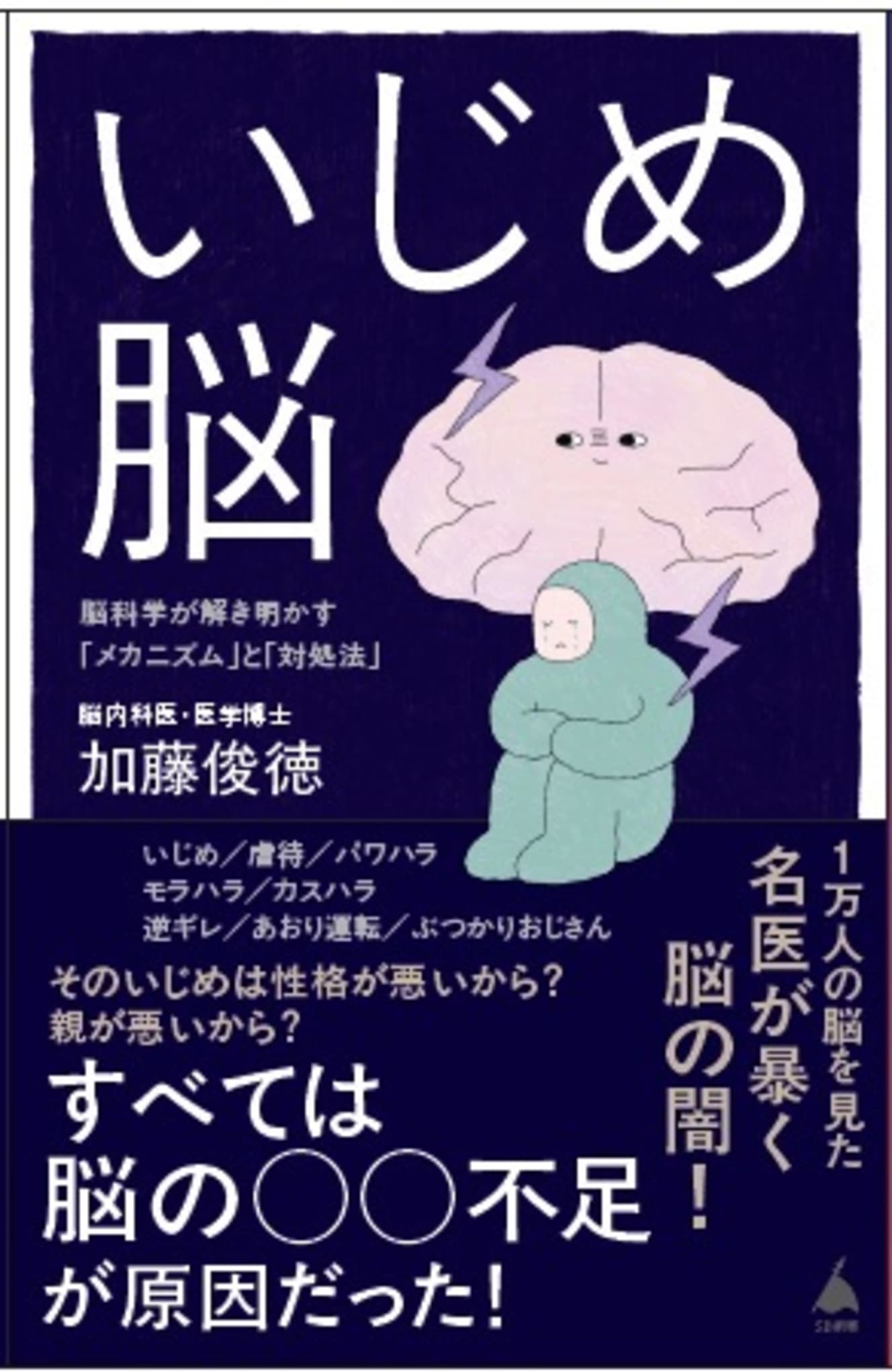
There is a book that examines the essence of bullying from the perspective of how the “brain” works. It is *The Bullying Brain* (SB Shinsho), written by Dr. Toshikatsu Kato, a neurologist who has examined the brains of 10,000 people.
According to the book, bullies fall into a “state where they have no choice but to act that way” due to brain dysfunction, leading them to attack others. Dr. Kato collectively refers to this state as the “Bullying Brain” and explains that anyone is at risk of falling into it.
Why do people fall into the “Bullying Brain”? We asked Dr. Kato about the mechanisms behind it and how to break free from—or prevent—the “Bullying Brain.”
Attacks on Others Are Caused by “Brain Fatigue”
From a neuroscientific perspective, what is the state of a bully’s brain? What does it mean to be in a “state where one has no choice but to act that way”?
“Simply put, it’s a state where the brain is tired and not functioning properly. A tired brain is the same as being sleepy. Your level of alertness—your functioning and performance—declines,” explains Dr. Toshitoku Kato (hereinafter the same).
Brain fatigue is said to reduce motivation and concentration because it causes a decrease in the secretion of “dopamine,” a neurotransmitter that governs pleasure, drive, and motivation, effectively causing the brain to run out of fuel.When dopamine levels are sufficient, the brain can generate its own motivation; however, when the brain is fatigued and arousal levels drop, it becomes unable to stimulate motivation on its own and take action.
However—
“The brain ultimately craves ‘motivation.’After all, the dopamine associated with motivation is the brain’s source of vitality. When a state of dopamine deficiency—in which the brain cannot generate any motivation—persists, the brain grows bored and seeks a trigger for motivation. That trigger is stimulation. In an attempt to obtain stimulation by any means necessary, the brain ends up attacking others unreasonably. That is the mechanism of the ‘bullying brain.’”
The behavior of modern people writing provocative comments—such as slander and insults—on social media day and night is nothing more than an attempt to stimulate their own brains. A brain whose arousal level has dropped is searching for material to raise its arousal to a certain level, so once a target is found, it pounces on it to get that stimulation.”
The fact that the brain must seek out external stimuli to achieve arousal indicates that it is in an unhealthy state and has fallen into the “bullying brain” pattern—yet the individual is unaware of this. That is why it is so problematic.
Once the brain is aroused by the stimulus of “attacking others,” it perceives that state as enjoyable and seeks even stronger stimuli, causing the behavior to escalate.
“The brain has a tendency to perceive the very state of being actively engaged (aroused) as ‘enjoyable.’ For example, people are drawn to scary or shocking news. This is because it heightens the brain’s arousal level; regardless of whether the content is good or bad, or whether it’s morally right or wrong, the brain perceives that state as pleasurable.”
Repeatedly engaging in slander and defamation on social media also provides strong stimulation that arouses the brain, so it is pleasurable regardless of whether the act is right or wrong. Therefore, from the perspective of the brain’s state, the statement (mentioned at the beginning)—‘It’s fun to bully people, isn’t it?’—can be considered an honest expression.”
The “Bullying Brain” That Cannot Control Emotions
The “bullying brain” is also a “state in which the brain’s networks are not functioning normally.” The teamwork among the “brain regions” that normally work together breaks down.
“Brain Zones” is a concept proposed by Dr. Kato, which broadly categorizes brain functions into eight systems based on their roles: the visual system, memory system, thinking system, comprehension system, communication system, emotional system, and motor system (there are a total of 16 zones, as they exist symmetrically in the right and left hemispheres).
These “brain zones” work together to activate the entire brain. For example, “appreciating a painting” involves the visual system; feeling joy or sadness while doing so involves the emotional system; and analyzing why one feels that way is the responsibility of the thinking and comprehension systems. In this way, the brain continues to grow through the functioning of these networks.
For instance, everyone has probably felt angry while browsing social media, but most people do not post that anger directly on social media. Even when anger arises, the typical pattern for many people is that while they are thinking, “Why do I feel angry?” or “Is it appropriate to vent my anger here?”, they get caught up in their daily tasks and end up forgetting the anger itself.
The fact that we can distance ourselves from the source of our anger in this way means that we are able to convert the anger generated in the emotional brain regions to the thinking or understanding brain regions—a process known as a “brain region shift.”
“The human brain is wonderfully designed; rather than impulsively expressing emotions, we can control them by shifting them to the appropriate brain regions,” says Dr. Kato.
However, when arousal levels drop, the brain’s neural networks weaken, making this “brain region shift” impossible. As a result, emotions are expressed impulsively.

The Key to Preventing the “Bullying Brain” Is Sleep
To break free from the “bullying brain,” it is necessary to raise the brain’s arousal level and enhance the functioning of its neural networks. But what specific steps can be taken?
Dr. Kato emphasizes that the most important thing is to maintain good-quality sleep.
“Ensure at least eight hours of sleep and high-quality rest. If you can maintain a healthy daily routine—such as walking for at least one hour a day—your brain’s arousal level will definitely increase.”
To give you an example from my own experience, I began treatment for sleep apnea and started walking 5 to 6 kilometers a day. As a result, I was able to get more than 8 hours of high-quality sleep per day, and my alertness level increased. I currently work about 10 hours a day, and I’m able to maintain that high level of alertness throughout the entire time.”
Also, the other day, I re-experienced the process of waterfall ascetic practice for the first time in 45 years. When I was 19, I undertook 38 consecutive days of practice—starting with my first attempt—to overcome severe depression and sleep disorders. This time, just as I did back then, I walked more than 10 kilometers a day, and simply walking the mountain trail to the waterfall made my mind incredibly clear.”
In Japan, there are still people clinging to the mistaken dogma from the Showa era that “people who sacrifice sleep to work hard are cool,” but that’s a problem. I hope people will discard all such dogmas and focus on the importance of raising the brain’s level of alertness.”
Furthermore, to enhance the functioning of the brain’s neural networks, it is necessary to strengthen weaker brain regions so that they can coordinate more smoothly with one another. The “bullying brain” needs to train the “emotional, visual, and cognitive regions of the right brain.”
“From the moment we’re born, clear differences begin to emerge among the brain’s regions. If you have a habit of drawing, the visual regions of the brain are strengthened, and if you’re raised listening to others speak, the auditory regions are trained. Conversely, this means that people who are unable to listen to others have weak auditory brain regions.”
Bullies have weak functions in the right brain—particularly in the emotional system—that allow them to “grasp the emotions of others and the atmosphere of a situation.” They cannot understand the other person’s feelings and cannot visualize the hurt expression on their face. That is why they are able to attack without hesitation. Of course, there are people who attack even when they can imagine how the other person feels, but those cases involve criminal behavior and should be distinguished from this discussion.”
Furthermore, the “bullying brain” also has weak visual and comprehension systems in the right brain. While the visual and comprehension systems in the left brain are responsible for “reading and understanding (verbal information),” those in the right brain are responsible for “intuitively understanding the situation and facial expressions of others through visual perception.”
“If you train these areas of the brain, the right-brain network—which involves observing changes in a person’s facial expressions and eye contact (right-brain visual system), sensing their feelings based on nonverbal information received through the eyes (right-brain emotional system), and deciphering why they feel that way (right-brain comprehension system)—will work in tandem, allowing you to imagine and understand the other person’s feelings.”
For example, there are many training methods you can practice in daily life: looking around a cluttered room and tidying it up while mentally organizing it; looking at the sky to judge today’s weather; reading the actors’ facial expressions when watching TV dramas or movies; or going shopping with a set budget, then deciding what to buy while judging whether you can carry it home and whether it fits within your budget.

How to Protect Your Child: Preventing the “Bullying Brain”
Finally, Dr. Kato shared methods for preventing the “bullying brain” in children.
“One key factor is sleep. If your child is bullying others at school or has a short temper, first make sure they get at least 10 hours of sleep. If they snore even once, you should consider the possibility of sleep apnea. I believe that by improving the duration and quality of their sleep, you can prevent the ‘bullying brain’ with a high degree of certainty.”
Second, parents should avoid exposing their children to their own ‘aggressive conversations.’ Growing up witnessing aggressive conversations imprints those neural pathways onto a child’s brain.Children will naturally begin to use aggressive language, and the neural pathways associated with a “bullying mindset” will become reinforced. In that sense, people who experienced bullying in early childhood may still have those neural pathways intact. That said, the brain continues to develop, and it is possible to break those patterns.
Third, listen to your child’s stories with a relaxed attitude, responding with phrases like, “I see.” In other words, this means accepting your child (input).
Normally, the brain manages information by balancing input and output, but the brains of bullies tend to become skewed toward output. This is because they have had few experiences of being accepted themselves. Since children inevitably imitate someone, parents simply need to show their children the right way to receive input. In other words, it means accepting them.
“If spouses listen carefully not only to each other but also to their children, and patiently watch over them, the children will come to accept this as natural. I think it’s far more important for parents to set the right example than to establish strict rules.”

▼ Toshikatsu Kato: Neurologist, M.D., Director of Kato Platinum Clinic, Representative of “Brain School” Co., Ltd. Expert in MRI brain imaging diagnosis, neuroscience, developmental disorders, ADHD, and dementia. Has diagnosed and treated over 10,000 patients ranging from children to the very elderly.Currently, at Kato Platinum Clinic, based on the principle that the brain continues to grow throughout one’s entire life—regardless of age—the clinic uses the proprietary “Kato Method” of MRI brain imaging to diagnose a patient’s stage of brain development, as well as their strengths and weaknesses in specific brain regions. The clinic provides treatment that does not rely solely on medication and offers neuroscience consulting services to business executives.His published works include *How to Keep Getting Smarter for Life: The Amazing Way to Use Your Brain*(Sunmark Publishing), *The Mood-Boosting Guide: Discovered by a Renowned Doctor Who Has Examined 10,000 Brains* (SB Creative), *8 Types of Children’s Brains*, and *The Bullying Brain: The “Mechanisms” and “Coping Strategies” Unveiled by Neuroscience* (both SB Shinsho).
Reporting and Text: Keiko Tsuji PHOTO: Afro