Under Pressure from Trump, U.S. Potatoes to Be Allowed into Japan… Farmers Facing Ruin Due to Pests and Diseases; The Day Domestic Potato Chips and Nikujaga Disappear from Our Tables


The Looming Threat of Pests and Diseases from Import Liberalization
Imports of fresh U.S.-grown potatoes—currently banned in Japan—may be permitted as early as next year.
The final decision on lifting the import ban—which was initially expected to take two to three years—may be brought forward due to pressure from the Trump administration. Kyodo News reports that, depending on the U.S. government’s response, “there is a growing view that the Ministry of Agriculture, Forestry and Fisheries will decide whether to lift the ban within about a year.”
At its plenary session on the 2nd of this month, the Hokkaido Prefectural Assembly passed a resolution by a majority vote calling on the national government, regarding the procedures for lifting the import ban, to take “strict measures to prevent the introduction of pests and diseases” and to provide “thorough explanations to producers.”Hokkaido accounts for approximately 70 percent of Japan’s potato cultivation area and about 80 percent of its production. For farmers in the prefecture, the move toward lifting the ban on imports of fresh U.S. potatoes is, without exaggeration, a matter of life and death that could lead to the introduction of pests and diseases and the collapse of the local agricultural industry.
“ The biggest concern for farmers in Hokkaido is the introduction of pests and diseases,”
says Associate Professor Shunsuke Miyake of Obihiro University of Agriculture and Veterinary Medicine, an expert on field crop management in “Tokachi,” Hokkaido’s largest potato-producing region.
Discussions on lifting the import ban began in 2020 following a formal request from the United States. Until now, Japan has, in principle, prohibited the import of fresh potatoes from overseas due to the risk of pest and disease infestation. However, under World Trade Organization (WTO) rules, Japan is required to engage in consultations when a member country requests the lifting of an import ban.
On the 18th of last month, the Ministry of Agriculture, Forestry and Fisheries (MAFF) identified 21 types of pests and diseases that pose a risk of introduction upon import. Now that the review process has entered its final stage, MAFF is discussing specific risk mitigation measures with the United States.
“ Among the 21 types of pests and diseases identified by MAFF, the ones farmers are particularly wary of are the ‘potato cyst nematode’ and the ‘potato white cyst nematode.’“Because they parasitize potato roots and suck out nutrients, the plants weaken and die, resulting in a significant drop in yield. While they pose no harm to humans, they deal a devastating blow to crops and production sites, ” said Associate Professor Shunsuke Miyake (hereinafter the same).
The threat posed by the potato cyst nematode (hereinafter referred to as the cyst nematode) lies in the difficulty of detecting it and the challenge of eradicating it once it has invaded. Because it is difficult to detect by visual inspection, there are reportedly many cases where, by the time it is noticed, it has already spread throughout an entire region’s farmland.
In Hokkaido, the potato cyst nematode was first detected in 1972, and the white cyst nematode in 2015. In the Abashiri region, where the white cyst nematode was confirmed, strict measures—such as a ban on potato cultivation and movement restrictions—were implemented; even now, more than 10 years later, these restrictions remain in place in some areas.
“ Once cyst nematodes or white cyst nematodes invade a field, it is extremely difficult to eradicate them. There is also a high risk that the infestation will spread to surrounding areas through farm equipment and human movement. It doesn’t stop at a single farm—it becomes a crisis for the entire region.”
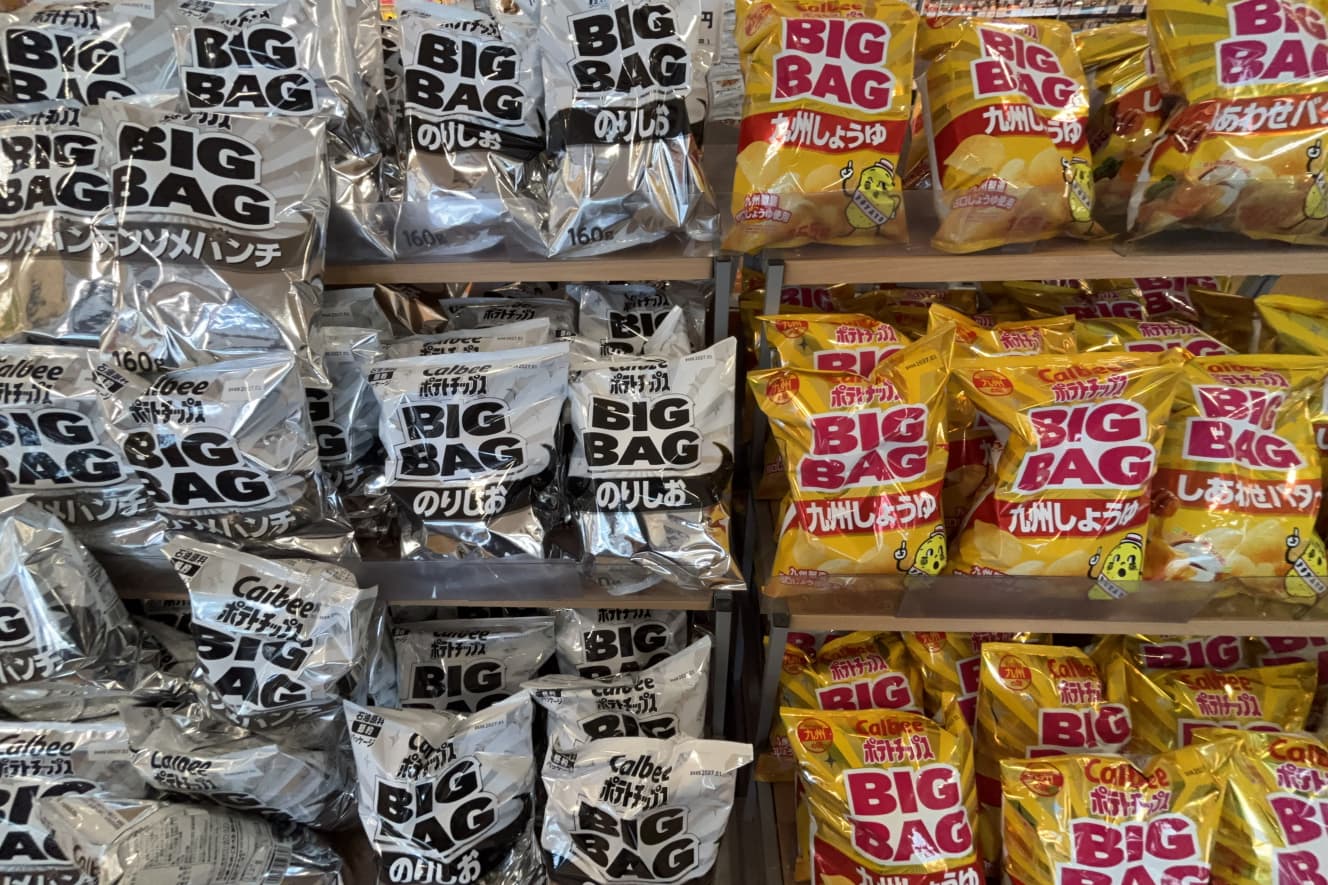
The Day Domestic Potatoes Disappear
The damage caused by pests and diseases is not a problem limited to potatoes alone.
“For example, crop farming in the Tokachi region is based on ‘crop rotation,’ where a single farmer simultaneously cultivates four crops—potatoes, sugar beets, wheat, and legumes—across multiple fields, and rotates these four crops to different fields each year.Crop rotation is a means of preventing the outbreak of pests and diseases, and it also serves to diversify risk by allowing a poor harvest of one crop to be offset by the yield of another.
Although potatoes require manual sorting at harvest—which is labor-intensive—they are the most profitable crop among the four.”
Since cyst nematodes do not parasitize sugar beets or soybeans, crop rotation is also said to be effective in reducing the density of pests and diseases. However, if pests or diseases invade a field, potatoes must be excluded from the crop rotation system, resulting in the loss of a pillar of the farm’s operations.
If pests or diseases occur at a “seed potato” production site, the impact is even more severe.
“Since potatoes are grown from seed potatoes rather than seeds, their propagation efficiency is low, requiring a constant supply of dedicated farmland of a certain size.About 10 percent of Hokkaido’s cultivated area consists of seed potato fields, but if pests or diseases were to invade those fields, there is a risk that seed potato production would become impossible. If seed potatoes can no longer be produced, potato production itself would become difficult, ”
Hokkaido, which supplies the nation’s seed potatoes, is home to farmers who specialize in seed potato production. According to Associate Professor Miyake, this work is more labor-intensive than growing potatoes for consumption, and the number of seed potato farmers has declined by about 30 percent over the past decade.
“ The multiplication rate for seed potatoes is about 10-fold. If, for example, a 50-hectare seed potato field were rendered unproductive due to infection, potato production equivalent to 500 hectares would come to a halt.
Once cyst nematodes invade, the damage isn’t limited to a single seed potato farm. There is a risk that not only the production base throughout Hokkaido but Japan’s entire potato supply could be jeopardized.”

Cheap U.S. Potatoes Eroding the Potato Salad Market
According to “Kōhō Hokuren,” a publication by the Hokuren Agricultural Cooperative Federation, as many as 50 varieties of potatoes are produced in Hokkaido.Among these, the varieties that account for the largest share of the fresh potato market are “Danshaku” (hereinafter “Danshaku”), a staple in croquettes and potato salad, and “Meiquin,” which is well-suited for nikujaga and curry. Danshaku accounts for about 40 percent of the total area planted for fresh consumption in Hokkaido, while Meiquin accounts for about 20 percent.
However, Associate Professor Miyake reveals that these two major varieties, which support the domestic fresh potato market, “have a major weakness.”
“ Danjō was introduced during the Meiji era, and Makein during the Taishō era; they are old varieties, and neither is resistant to cyst nematodes. The most popular and widely cultivated potatoes actually carry the risk of being the most vulnerable to pests and diseases.”
In Hokkaido, the cultivation of “resistant varieties” that are resilient to pests and diseases is currently on the rise. “Yumeikoro,” a variety developed in Hokkaido as a successor to Danshaku, is resistant to nematodes while offering the same flavor as Danshaku. In eastern Hokkaido, some regions are already moving toward a complete switch from Danshaku to Yumeikoro.
“ Potatoes are like rice—they’re crops that consumers specifically request by variety name, such as ‘Danshaku’ or ‘Meiquin.’ Even if a variety is easy for farmers to grow and resistant to disease, there’s no guarantee that a new, lesser-known variety will be immediately accepted by consumers. It will likely take some time for it to become established.”
While pest and disease control in Japan is no easy task, the lifting of import restrictions also presents the challenge of “price competition.”
The most widely produced variety in the United States is called “Russet.” While Russets, which are high in starch, are well-suited for French fries, they are considered unsuitable for nikujaga because they tend to fall apart when boiled.
Even if the lifting of the ban allows for the import of inexpensive Russet potatoes, it may not be easy to break the stronghold of varieties like “Danshaku” and “Meiquin,” which enjoy deep-rooted support among consumers.
However, the situation is different in the commercial sector, such as prepared foods and restaurants.If inexpensive U.S.-grown potatoes become available, food manufacturers will be able to mass-produce items like potato salad and croquettes at low cost. Even if consumers don’t select them directly from store shelves, these products could find their way onto Japanese dining tables through prepared foods and restaurants, posing a very real threat to the demand for domestically grown potatoes.
“Price competition with mass-produced U.S. potatoes is certainly one of the concerns for farmers.
Initiatives underway in the region, such as smart agriculture and the expansion of farm operations, are only viable because of the high profits generated by potatoes. If demand for this ‘cash cow’ shrinks and profitability declines, there is a risk that some farmers will give up on replacing expensive farm equipment and decide to downsize or leave the industry altogether.”
What will happen to the vast tracts of farmland abandoned by farmers who choose to leave the industry or scale back their operations? If no buyers or renters come forward, the only options will be to convert the land to pasture or leave it untended; if that happens, areas resembling abandoned farmland will spread rapidly. This could drastically alter the regional landscape and farming environment.”
Food Security Shaken by U.S. Pressure
On the 18th of last month, the Ministry of Agriculture, Forestry and Fisheries held an online nationwide briefing session regarding the lifting of the ban on potato imports. One might wonder about the ministry’s intent in scheduling the event during the harvest season—the busiest time of the year for farmers—but despite the timing, more than 700 people pre-registered, and the session was met with a barrage of tough questions from farmers and agricultural stakeholders increasingly concerned about the lifting of the ban.
Participants raised questions such as, “Is there an option to not lift the import ban?” and “Is there any technical basis for claiming the risk of infestation is zero?”
The Ministry of Agriculture, Forestry and Fisheries (MAFF) responded with explanations such as: “Trade will not take place unless there is an agreement on risk management measures for pests and diseases that pose a risk of invasion”; “We will discuss specific methods for soil removal and measures to prevent the introduction of pests and diseases”; and “We will engage in discussions with the partner country based on accumulated scientific data.”
“I also participated in the online briefing, and my impression was that many of the responses from MAFF were along the lines of ‘We are currently in discussions’ or ‘We will hold discussions with the U.S. in the future.’ I think it will be difficult to gain farmers’ understanding with this approach, ”
After making this point, Associate Professor Miyake spoke about the government’s response and future support measures as follows.
“For field crop farmers, potatoes are an extremely important crop.To ensure farmers on the ground are fully convinced, the government must first clearly demonstrate the evidence that the risks of pests and diseases can be reduced. Furthermore, if profitability is expected to decline, the government must implement support measures—not merely compensation payments—to help farmers maintain their crop rotation systems and increase the value of their produce.”
Japan’s potato self-sufficiency rate was once 100 percent. Although it has now fallen to around 70 percent, it remains at a relatively high level. Just as with rice, the government has a responsibility to protect the potato production system as a cornerstone of food security.
“ With global tensions escalating and the yen continuing to weaken, we are no longer in an era where we can simply ‘buy from overseas whenever we want by paying for it.’ If we cannot maintain the ability to produce food domestically, it will threaten the very existence of our nation. I hope the government will properly recognize the value of potatoes—a crop with a high self-sufficiency rate that has long supported the nation’s dining tables at affordable prices.”
Can it truly be called “in the national interest” to yield to U.S. pressure to open the market and rush toward lifting the ban while disregarding strong concerns from those on the ground and the risks posed by pests and diseases? A sincere decision that looks toward the future of Japan’s food security is required.
▼Shunsuke Miyake: Associate Professor , Department of Environmental Agricultural Sciences, Obihiro University of Agriculture and Veterinary Medicine; Part-time Lecturer, Obihiro Otani Junior College; Ph.D. in Agricultural Sciences. Graduated from the Faculty of Animal Science at Obihiro University of Agriculture and Veterinary Medicine in 2003; completed the doctoral program in Animal Science at the same university’s Graduate School in 2021.After working at the Hokkaido Tokachi Agricultural Experiment Station (now the Hokkaido Research Institute), he has held his current position since 2022. His areas of expertise include agricultural management, agricultural economics, and field crop management.
Reporting and Text: Sayuri Saito PHOTO: Afro