“Don’t Call Me ‘Taimy’—Call Me by My Name…” The Reality of the “Lowest Caste” as Seen by a Woman in Her 20s Who’s Worked at 300 Different Places


The part-time job app “Timee” is gaining popularity. As of the end of April ’26, registered workers exceeded 14.2 million, and registered business locations surpassed 465,000. According to the company’s data, the number of job postings from May to July ’26 increased by 13.1% compared to the same period the previous year.
While there are occasionally negative comments regarding how workers are treated or workplace relationships, these figures suggest that part-time jobs—which allow people to work whenever and wherever they like—are becoming a common way of life for modern workers.
One woman who has used Timee to work at 180 different locations in a single year—and approximately 300 in total—is Ruko, a resident of Aichi Prefecture.
“When I first started working part-time, a friend recommended it to me, and I tried it once and got hooked. Since then, I’ve kept using Timee, and before I knew it, I’d worked at 300 different locations.”
She also says she created her own rule—“never work at the same location twice”—and has moved from one job to another across various industries, including restaurants, logistics, and retail.
Why has she worked at so many different places? And what is the “reality” of Timee that only she—having seen 300 different workplaces—can truly understand?
No Repeats at the Same Workplace? Her Unique Approach to Job Selection
In ’22, Ruko graduated from an art university in Nagoya and started working as a medical administrative assistant right out of college, but she quit after 10 months. The reason was that the job just wasn’t a good fit for her.
“I enjoyed the work itself, but going to the same place every day, seeing the same people, and doing the same tasks just wasn’t for me. That’s when a friend recommended Timee to me. My first gig was washing dishes at a restaurant for just two hours, and I had a blast. From there, I went on a crazy streak of working through Timee (laughs).”
It’s said that many Timee users find it stressful to learn something new every time, so they tend to stick with their favorite places…
“I’d always prided myself on being the curious type, but after using Timee, I realized I loved learning new things even more than I’d imagined. At the same time, I thought that was one of my strengths, so I decided to make the most of it and set a rule for myself: ‘Never work at the same place twice.’ When it comes to chain restaurants, I make a point of applying to locations I’ve never worked at before.”
Most of the jobs I’ve taken so far have been at restaurants, but I’ve also done a variety of other work, such as grading tests at cram schools, working as a mascot, event staff, food truck work, light manual labor, and at karaoke cafes. My rule for choosing which part-time jobs to apply for is simply, “Do I want to try this?”
“As a part-timer, it’s more efficient to work at one place five days a week, but I quit my full-time job precisely because I’m not good at routine work—so doing that would defeat the purpose. Plus, since I live with my parents, I choose jobs based on whether I want to try them.”
She says that in the past, she’s even traveled to a job site that was more than an hour’s commute one way from her home. After deducting transportation costs, there have been times when she was left with only about 1,000 yen.
“One job that really stood out was accompanying a Santa Claus at a Christmas event. Around this time of year, shopping centers often hold events where you can take photos with Santa, right? The foreigner playing Santa wasn’t very good at Japanese, so they were looking for someone to help him get around by train to and from the event venue.”
The job posting stated “must be able to speak English,” but Ruko had only studied English during her school days.
“I figured whether or not I could speak English depended on how I viewed it, so I decided for myself that I was someone who could speak English and clicked the ‘Apply’ button. In the end, I managed to communicate just fine, and I felt a sense of accomplishment from safely delivering Santa to his destination—I thought to myself, ‘Way to go, me!’”
Later, a friend who heard this story reportedly said, “If it were me, I definitely wouldn’t have applied.” Incidentally, that friend is actually better at English than Ruko.
“In the end, I realized that your mindset is what matters most, no matter what you do. Since using Timee, I feel like I’ve developed a stronger sense of confidence—like, ‘I can do this!’—in everything I tackle.”
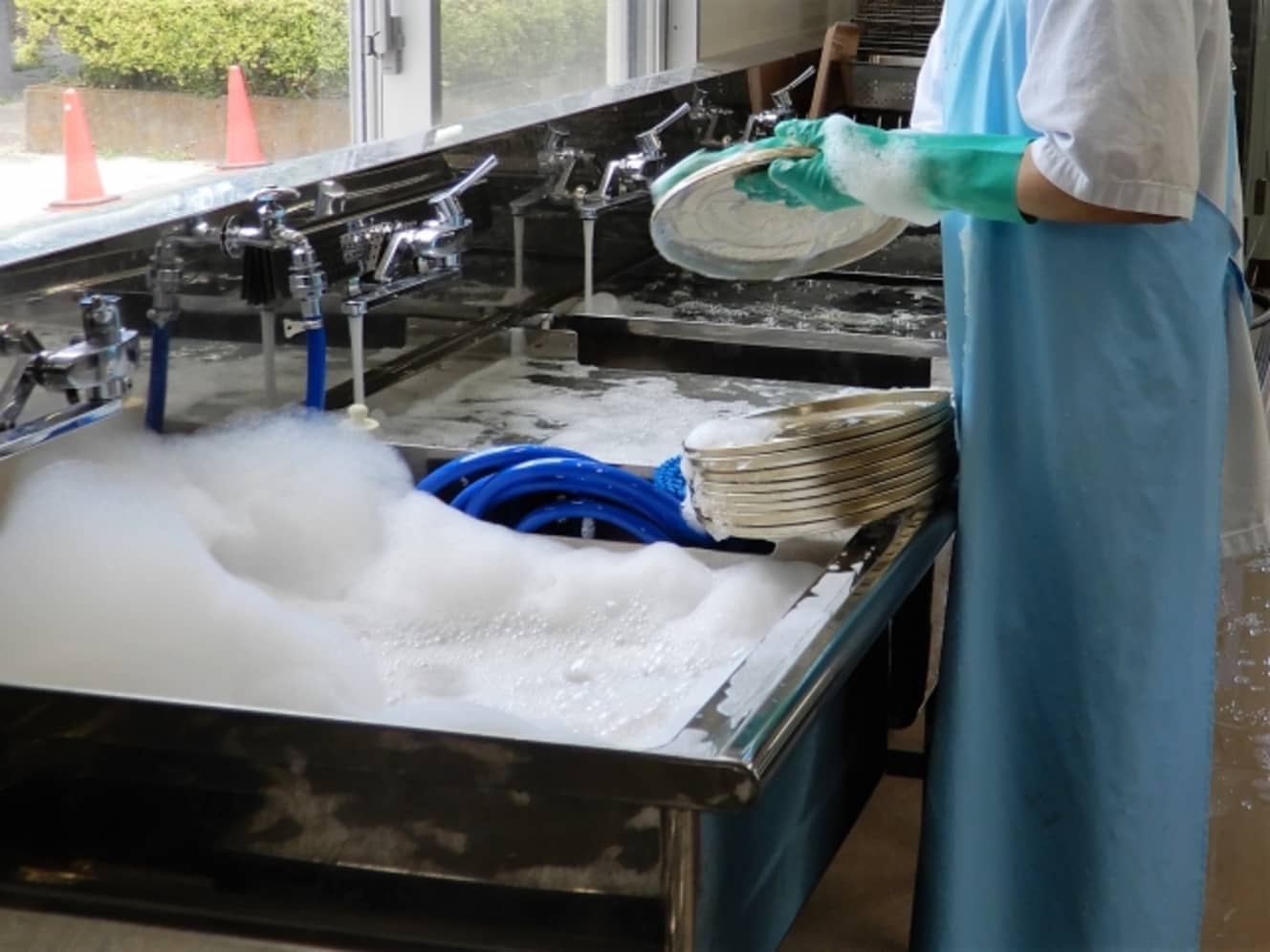
The reality of working on the front lines at the very bottom of the hierarchy
On the job, Ruko says she makes a point of striking up conversations with staff members she’s meeting for the first time. Meeting new people is one of the joys of working at Timee, and she explains, “It’s not that I’m looking for a cozy, family-like atmosphere on the job, but since I’m there anyway, I might as well chat.”
When asked about the common traits of workplaces where she feels comfortable, Ruko mentioned “names.”
“At work, I’m usually called ‘Timee-san.’ But hearing ‘Ruko-san, could you take care of this?’ rather than ‘Timee-san, could you take care of this?’ makes me feel a greater sense of responsibility and like I truly belong to that store.”
Even during a shift that lasts just a few hours, simply being called by name changes how she engages with the workplace. It may seem like a small thing, but apparently, there are very few workplaces where people who come through Timee are called by their first names.
Conversely, she finds it difficult to work when she feels a distance from the regular staff.
“These days, there’s a strict stance against harassment, so I haven’t really experienced anything blatantly unpleasant that made me think, ‘I can’t take this anymore!’ But since Timee workers are at the bottom of the hierarchy in the store, I’m often ignored.”
Once, when I approached someone to ask for help with a task—even though I’d only been there about five minutes—they said, ‘Huh? Why don’t you get it?’ There are a lot of those subtle, nagging moments.”
When I first started working as a Taimee worker, I took that kind of treatment very personally and was hurt every time it happened. But as I gained experience at various workplaces, my perspective began to change.
“The first time I was ignored, I was pretty sad, but as I went to various places, I started to think calmly, ‘Why is this person ignoring me?’ And lately, I’ve been able to accept it, telling myself, ‘It’s because they’re short-staffed, so I guess it can’t be helped.’”
Workplaces with Zero Leeway… Hiring Is Like a “Gacha”
Every workplace Ruko has worked at has been severely understaffed.
“This is just my theory, but I think for stores, spot part-time jobs through apps like Timee are a last resort.Every shop is happiest when their regular part-timers show up, right? But when they’re short-staffed for whatever reason and decide to hire through Timee out of desperation—they don’t know who’s going to show up, they have to train them, and the shop is already swamped… So I think it’s inevitable that they end up with no breathing room.”
Those few-hour shifts include time spent learning the job. During busy periods on weekends, you can’t just keep pulling existing staff aside whenever it’s convenient for you to ask questions. The store managers I met at these high-pressure workplaces all had one thing in common.
“They were completely exhausted—their eyes lacked any spark, so to speak… I think they’re constantly adjusting schedules on top of their daily work. At one place I visited before, I heard someone say, ‘The last person from Timee just stood there the whole time and didn’t do anything.’ That experience traumatized them, and they were afraid to post another job listing.”
Because of experiences like that, Ruko compares Timee to a “gacha.”
“From the store’s perspective, I think Timee is like a gacha. Sometimes you get someone who’s incredibly capable, and other times you get someone who doesn’t do anything. That’s exactly why I think it becomes harder to properly train new workers at locations that are already stretched thin.”
That lack of breathing room is reflected in how workers are treated, and the most obvious example of this is “names.”
“Calling them by their name instead of ‘Timee’ is something you can do right away—it’s way easier than raising their hourly wage—but I think they’re just too overwhelmed to even think of doing that.”

How to Spot a “Great Workplace” on the Job Listings Page
You can tell whether a store has room for new staff before you apply. The recruitment page is your key to finding this out.
“I noticed this while looking at various job listings: it seems there are pre-made templates for the descriptions, and lately, there’s been an increase in places that just post the templates as-is—it reads like text generated by AI.”
But every now and then, there are places that write everything themselves. Those places feel more human—and the fact that they’ve taken the time to do so makes me think they’re probably good places to work.”
Some shops even have the word “Copy” still visible in the job title. Also, whether they’re using stock photos can be a factor to consider.
And if you’re using Timee for the first time, you’ll want to check three things: the number of reviews, the working hours, and the job description.
“I think it’s best to choose a shop that’s used to hosting guests—one with 400 or 500 reviews. I’m addicted to the thrill of meeting new people, so I like going to places I’ve never used before, but when it’s the first time for both of us, there are a lot of unknowns, and I sometimes end up feeling flustered (wry smile).”
I prefer short shifts of about 2 to 3 hours, and back-of-house roles—like dishwashing—where I can work quietly and focus on the task at hand.
“For example, if you’re working in the dining room, you might get panicked when both staff and customers talk to you, so I recommend roles where you can focus on your work as much as possible.”
Also, it’s best to think of your first shift as an opportunity to learn how to use Timee. How do you clock in, and what’s the workflow like? Even if it’s just for a short time, give it a try once. I think that first step is the hardest—and the most important.”
By the way, if an existing part-timer suddenly calls in sick,
“Timee is a very dynamic platform. People often open the app occasionally, say, ‘There’s nothing good at all,’ then leave it alone, only to open it again after a long time. That’s why I think they don’t find any good matches. Personally, I have notifications turned on and check it about as often as I check social media. So if you want to find a part-time job on Timee, I think you should check it frequently.”
Why Customers’ “Kindness” Saves the Day
Another thing she realized after working at many different locations is that the problem often lies not just with the store, but with the customers as well.
“Especially in restaurants, there are customers who yell things like, ‘The beer I ordered still hasn’t arrived!’ I’d never personally gotten angry over having to wait just five minutes, so I was genuinely surprised to think, ‘Do people really expect staff to be this perfect?’Well, since I’m just here to work through Timee, I’m not really in a position to handle complaints directly, though.”
Even when faced with demands from customers that could be described as unreasonable, she felt a sense of frustration at being unable to do anything about it as a one-day spot worker.
Since then, Ruko says that when she visits restaurants in her personal time, she’s started making small adjustments to make things a little easier for the busy staff.
For example, she’d quickly take her food at the front of the table to make it easier for staff to serve—all very small gestures. However, in a staff-short environment where everyone is constantly racing against the clock, the effect was immediate.
“Having worked part-time at various restaurants through Timee, I know that when customers are kind, it gives the staff a little breathing room. In fact, ever since I started consciously showing consideration for staff in my personal life, I’ve found myself thinking, ‘That was a great restaurant,’ more often thanks to those considerate interactions. I think that’s where a positive cycle begins.”
Whether a staff member is called by their first name instead of ‘Taimy-san’ ultimately comes down to whether they have the mental and time flexibility to do so. That’s exactly why I think we, as customers, should make an effort to be kind first.”

▼ Ruko: From Aichi Prefecture. After graduating from an art university, she worked in medical administration before becoming a part-timer.She’s worked at about 300 different locations through the part-time job app “Timee,” and her zine *Labor Enthusiast ^-^♪*, which chronicles those experiences, has sold over 1,800 copies. On YouTube, she runs two channels—one focused on work and another on her hobby of reading. She also speaks at events centered on work-life balance.
Reporting and Text: Motiko Abe-gawa
Works as a freelance writer primarily for the web. She is also involved in the production of books and corporate PR magazines. Without a specific area of expertise, she covers a wide range of topics that pique her interest, including history, comedy, health, beauty, travel, food, and caregiving.