“Can’t Elect Council Members”: The Reality That “One-Third” of Town and Village Councils See Uncontested Elections… What’s Happening in Local Politics Right Now


They want to step down, but there are no successors.
An increasing number of towns are unable to elect the very council members who make decisions affecting their daily lives.
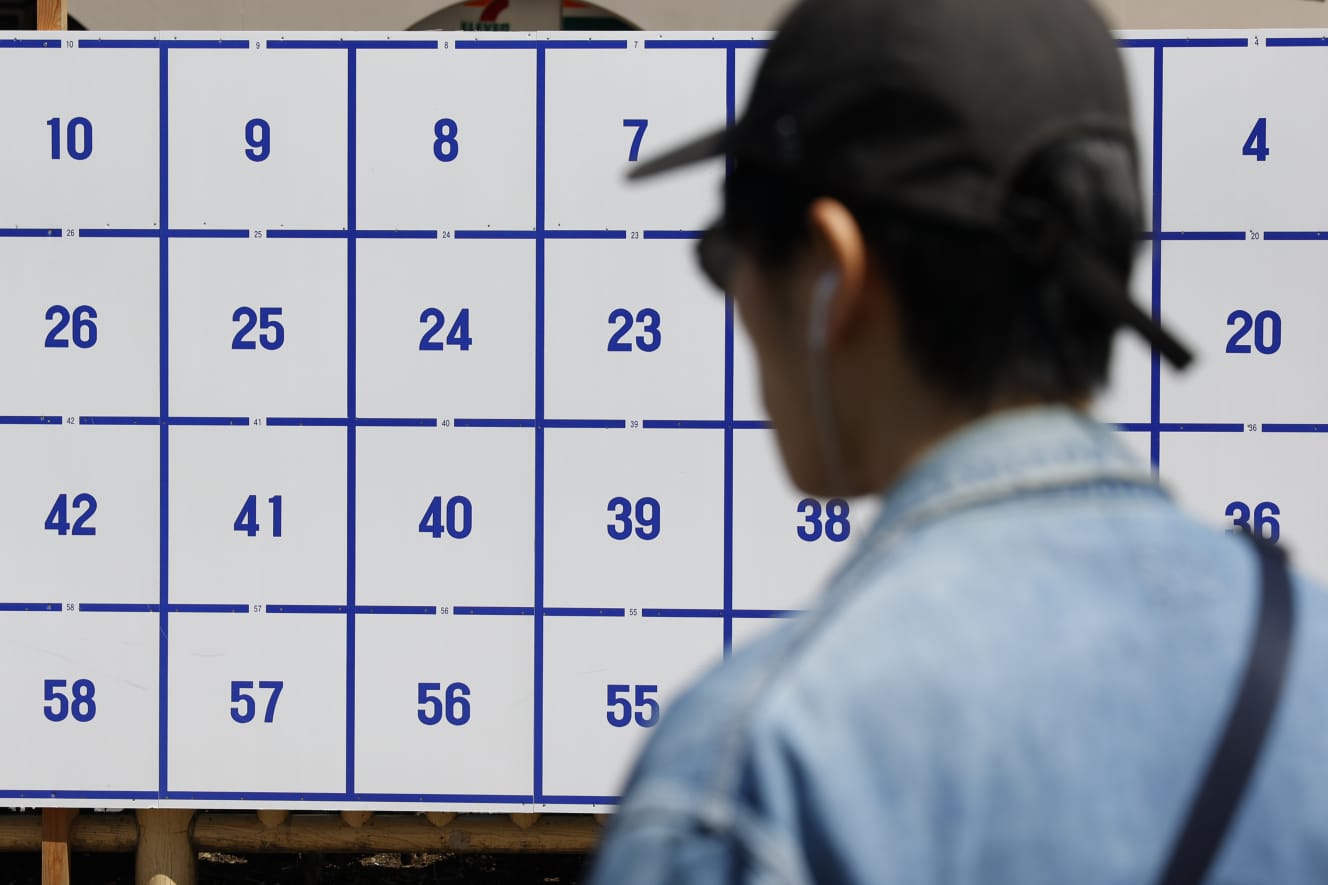
Shocking figures show that in the 2023 unified local elections, one-third of town and village council elections were uncontested. Ahead of next spring’s unified local elections, what is happening in local councils right now?
In the most recent unified local elections in ’23, 123 out of 373 town and village councils—a full 33 percent—had uncontested elections. The “shortage of candidates” in local politics has become a crisis for democracy itself.
The rate of uncontested town and village council elections rose slightly from 23.9% in 2015 to 24.8% in 2019. However, in 2023, it jumped sharply to 33.0%. In just eight years, the proportion of uncontested town and village council elections has increased from about one in four to one in three.
The primary issue behind this trend is the “entrenchment of incumbent council members.”
Council members who have served for 20 or 30 years, as well as candidates backed by specific political parties or organizations, hold onto their seats, creating an environment where it is difficult for newcomers to enter politics. However, the cause cannot be attributed solely to incumbent council members.
An elderly council member I interviewed in the Tohoku region, who has served for 40 years, said,
“I actually want to step down, but there’s no successor to take over my political base,”
I heard similar sentiments in the Kinki and San’in regions as well.
Quite a few lawmakers voiced the urgent reality that, due to a lack of successors, they cannot leave their seats even if they want to. This has created a vicious cycle in which generational turnover stalls, further exacerbating the entrenchment of incumbent lawmakers.
The next issue is the disparity between incumbents and newcomers.
Incumbent lawmakers enjoy overwhelming name recognition. Through four years of activity—distributing legislative reports, participating in local events, responding to residents’ inquiries, and attending weddings, funerals, and other ceremonies—they are able to make their names and faces well-known throughout the community.
However, even if a newcomer begins campaigning immediately before an election, it is difficult to close that gap in such a short period of time. Furthermore, candidates backed by support organizations—such as political parties, labor unions, industry associations, neighborhood associations, religious groups, and support committees—can count on a certain “base vote” in every election.
On the other hand, independent newcomers without such organizations must build everything from scratch—from a list of supporters to campaign staff to funding. Their starting points are fundamentally different.
Lawmakers are local power brokers
Furthermore, running for office requires both money and time. Significant preparations are necessary, including an office, printed materials, posters, publicity, vehicles, and staff. For salaried employees, losing the election means losing their income, and there is no guarantee they can return to their previous workplace. These financial and lifestyle risks are keeping salaried employees and parents with young children away from politics.
However, some companies have introduced “campaign leave systems” or “in-service candidacy systems” that allow employees to run for office while remaining on the company’s payroll.
Some companies not only allow employees to return to work if they lose the election but also treat the period after winning the election as a leave of absence, permitting a return to work upon the expiration of the term. In 2019, a ward assembly member was elected using this system. To the best of my knowledge, this was the first instance of this system being used nationwide.
When I spoke directly with this elected council member,
“This system, which alleviates the anxiety of immediately losing one’s job due to running for office, was a major source of support in enabling salaried employees to consider a run for political office as a realistic option. It was because of this system that I was able to run for office; it gave me the push I needed,”
he said.
However, these systems are still at the stage of being proposed bills in the Diet. As a result, few companies have adopted them, and even among those that do, it’s hard to say they are actively utilizing them.
If the government is serious about resolving the shortage of candidates, it will undoubtedly need to properly establish these measures as law. If such systems become widespread, running for office will no longer be a “do-or-die decision” that requires risking one’s entire life, and it will become easier for a diverse range of people—including company employees and parents raising children—to enter politics.
The third issue is likely that of compensation.
In small towns and villages, it is difficult to support oneself and one’s family on a council member’s salary alone. The monthly salary for a general council member ranges from 1,065,000 yen at the Tokyo Metropolitan Assembly—the highest in the country—to 109,000 yen at the Awashimaura Village Assembly in Niigata Prefecture, the lowest in the country. The difference is approximately tenfold.
With a monthly salary in the 100,000-yen range, it is difficult to make a living while devoting oneself fully to council work, which is a factor causing young people and parents raising children to hesitate about running for office.
Furthermore, population decline and an aging population are exacerbating the shortage of candidates.
As the younger generation itself is dwindling in local communities, the pool of potential candidates has shrunk. For the working-age generation juggling careers and child-rearing, there is neither the time nor the financial leeway to devote to political activities.
As a result, a structure has emerged in which seats tend to be concentrated among a select group of older individuals who have the time and local support bases.
Finally, there is the “barrier of political culture” that still persists in many rural areas.
When reporting in rural areas, I still encounter communities where the perception that “council members are supposed to be local power brokers” persists, and where long-standing personal connections run deep.
The burdens of housework, child-rearing, and caregiving, family opposition to political activities, and even harassment are all barriers preventing women and younger generations from entering politics.
However, it is not only the system and the lawmakers themselves that are contributing to the decline of politics. Voter apathy is also a contributing factor.
If we simply resign ourselves to the idea that “it doesn’t matter who becomes an elected official,”
—if we simply resign ourselves to this, politics will drift further and further away from the people.
The first step toward changing politics is to carefully evaluate candidates’ character and policies and to cast a vote that reflects your own will. I hope that the 2027 unified local elections will serve as an opportunity to reawaken interest in local politics and revitalize local democracy.
Reporting and Text: Mitsutoshi Abe (Former TV Reporter, Political Journalist) PHOTO: Rodrigo Reyes Marin/Aflo