“Dodopagaki” Is Also on the Rise!? What Are the “Addiction Symptoms” Experienced by People Who “Can’t Stop Watching Short Videos”?


We Asked Some “Dopagaki” People
The term “Dopagaki” is gaining attention in the public eye. It’s an abbreviated form of internet slang that derisively refers to young people who consume large amounts of information in a short time through social media and short videos as “dopamine-addicted kids.”
Having acquired a taste for the pleasure of dopamine released in the brain, they swipe through vertical videos on their smartphones one after another whenever they have a spare moment, seeking new stimulation. It’s said that continuing this habit leads to a decline in concentration and negatively impacts learning. Some also point out that it results in behaviors such as “being unable to stick with one thing for long” or “getting bored quickly and moving on to something else.”
People referred to as “Dopagaki” share a common habit: whenever they have a spare moment, they reflexively reach for their smartphones and open social media or video sites. We asked these individuals, who use their smartphones to an almost pathological degree, how their daily lives have changed.
Ms. A, a 20-year-old vocational school student, describes herself as a “smartphone-addicted Dopagaki” (apparently meaning a “super-level” Dopagaki). She recounts her astonishing day.
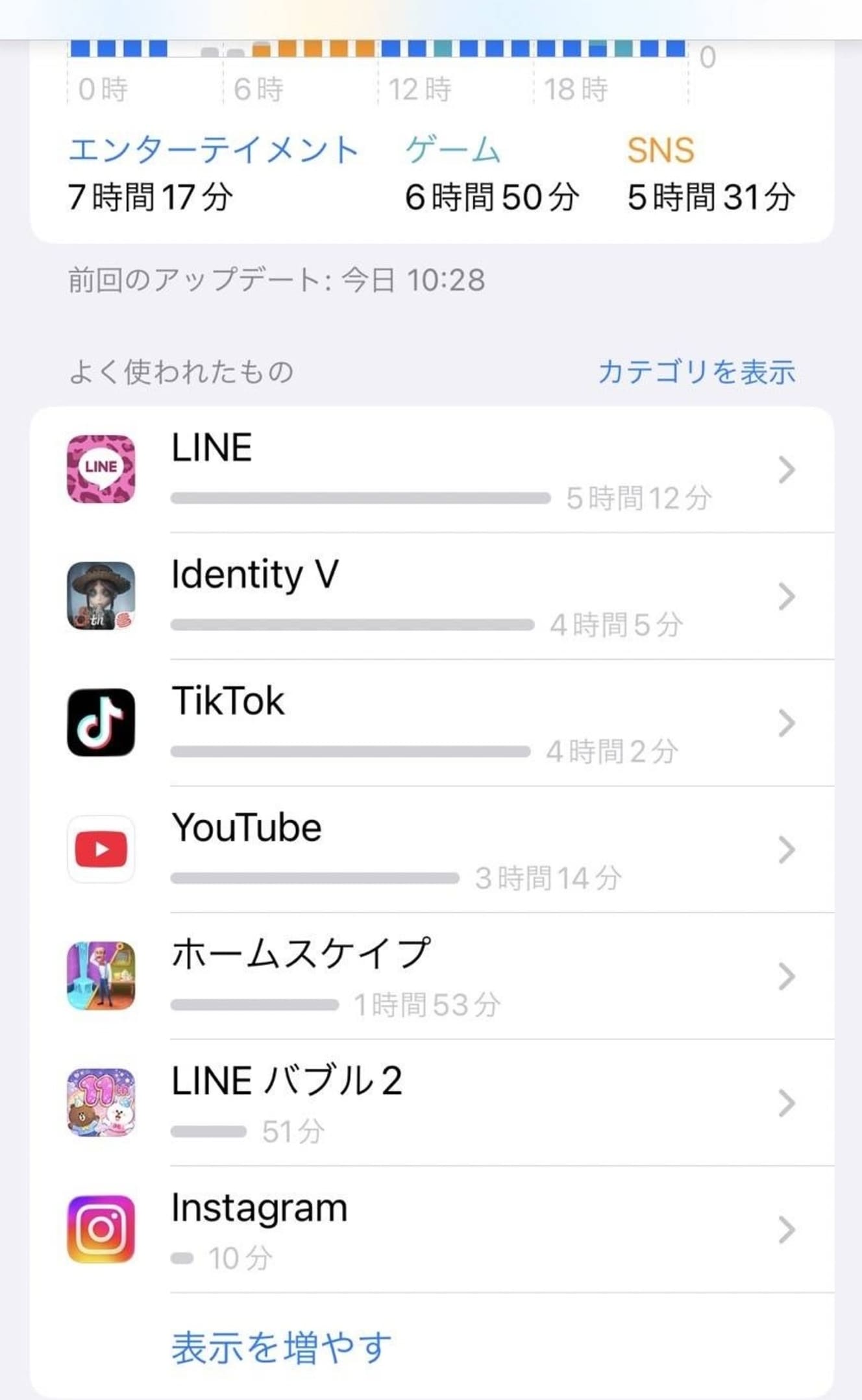
“When I have free time, I talk on the phone with friends, and even while doing that, I watch short videos or TikTok. Yesterday, I had absolutely nothing to do, so I really didn’t do anything else. When I checked my app usage time, it was seven hours. Watching that much YouTube and TikTok is pretty bad, isn’t it? On really bad days, I’m glued to my phone for about 15 hours.”
Although she feels a sense of unease about this lifestyle, she says she still can’t stop watching videos.
“When I watch this much, it loses its novelty—all the videos start to look the same and I get bored—but even so, I find myself searching for something new. I just keep repeating the cycle of playing a video for 5 to 10 seconds, and if there’s nothing new, I immediately skip to the next one. Before I know it, time has flown by. I’ll play a game for an hour, and then I’m back to searching for videos again…I feel uneasy and can’t settle down unless I’m doing something,” says Mr. A.
It’s not just students whose time is being swallowed up by short-form content. Mr. B (28), a male office worker, reveals his own signs of addiction, saying , “My motivation to do the things I used to be able to do has dropped.”
“I used to come home and watch anime while eating dinner, but lately I’ve been constantly streaming short videos with my phone in one hand.A 30-minute anime or drama episode feels like a real slog. The pauses in dialogue and scenes with little movement bore me, so I end up pausing it and watching short videos on my phone instead. The moment I realized things were seriously out of control was during a meeting at work—while looking at a PowerPoint presentation, my body started fidgeting unconsciously and I just couldn’t sit still.”
“It’s Possible There Are Effects on the Brain”
We asked Dr. Michihito Sugawara, director of the Sugawara Neurosurgery Clinic, about the effects on the brain of continuously watching short videos . “To put it simply, it’s reasonable to assume that there ‘could be’ an impact on the brain.It could affect daily life in terms of attention, sleep, and lifestyle habits. However, this does not mean that watching short videos causes irreversible damage to the brain,” he said.
“The brain has a mechanism that, when something better than expected happens, learns from that experience and prompts us to act by thinking, ‘Let’s try that again.’ Dopamine is the brain chemical deeply involved in this process.With short videos, you swipe your finger without knowing what will come next, so the uncertainty—‘the next one might be interesting’—is one factor that drives repeated viewing. It’s like continuously drawing small lottery tickets every few seconds.
In clinical practice, when I hear from people who say they ‘can’t concentrate,’ it’s not uncommon for the problem to stem less from the videos themselves and more from the fact that they keep looking at their smartphones right up until bedtime, cutting into their sleep.“Sleep deprivation impairs the function of the prefrontal cortex, which is responsible for attention, judgment, and self-control. In other words, rather than saying ‘videos damage the brain,’ it may be closer to the truth to consider that brain function is declining due to sleep deprivation” (Mr. Sugawara; same below).
This “state in which reward-seeking behavior has been strongly ingrained” is not a problem limited to children and young people. It is a state that anyone, regardless of age, can fall into when factors such as fatigue, sleep deprivation, and stress accumulate.
“The tendency to ‘keep watching’ short videos or social media can happen to adults as well. If we compare brain function to a car, the prefrontal cortex—which suppresses impulses—acts as the ‘brakes,’ while the drive for rewards and stimulation acts as the ‘accelerator.’Since these ‘brakes’ are still developing in young people, they are easily drawn into short, stimulating content. This cannot be explained simply by a lack of willpower.
Even in adults, while the ‘brakes’ may be mature, their ability to exercise control can be diminished by fatigue, lack of sleep, or stress. In actual clinical settings, I hear that even adults seek counseling because they find themselves looking at their smartphones late into the night.While there is a difference—young people have “brakes still in development,” and adults have “brakes that have become fatigued and less effective”—excessive consumption of short videos and social media is a problem that can occur regardless of age. It is medically inappropriate to use the term “brat” to frame this as a problem of the individual’s character or self-control.”
Short-form content—which delivers intense stimulation in a short time and provides a constant stream of new information—has become a force that cannot be ignored. This problem is by no means limited to children. Adults, too, risk becoming “Dopagaki” as they unconsciously continue to scroll through social media and short videos.
*“FRIDAY Digital” welcomes tips and information from our readers. Please submit information via the form below or through our official X account.
Tip Submission Form: https://friday.kodansha.co.jp/tips
Official X: https://x.com/FRIDAY_twit

Reporting & Text: Shirashi Midori