Enka Singer Akio Suga’s New Song “Kaze of Zao” Honors His Hometown 15 Years After the Great East Japan Earthquake


A Challenge from His Composer
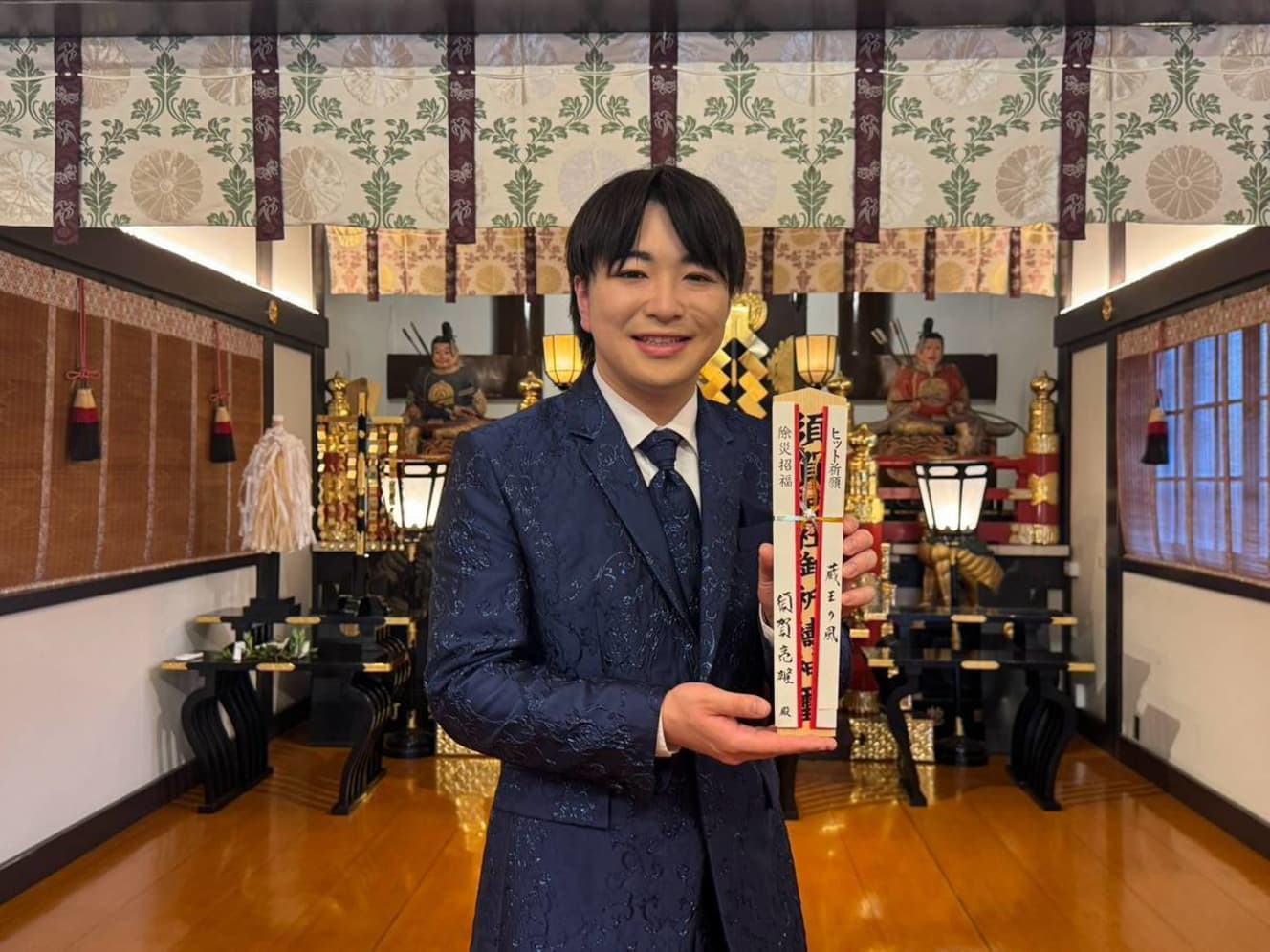
On May 21, 2025, young enka singer Ryo Suga (27) fulfilled his long-held dream of making his major-label debut with Nippon Columbia with the release of Furusato Shunju (Hometown: Spring and Autumn). A year later, he has steadily expanded his fan base through his assured vocals and down-to-earth personality. In July, he released his eagerly anticipated second single, Zao no Kaze (The Wind of Zao).
The promising newcomer is gaining momentum: the song debuted at No. 6 on Oricon’s weekly enka and kayō single chart in its first week, and he has appeared on numerous media outlets, including NHK.
We sat down with Suga for an in-depth conversation about the determination behind his new song, set in Zao, Miyagi Prefecture, his hometown; how his outlook has changed as he enters his second year since debut; and the mission he feels as a singer at the milestone marking 15 years since the Great East Japan Earthquake.
In contrast to the warm, emotionally rich world of his previous release, Furusato Shunju, his new song, Zao no Kaze, is a passionate number distinguished by a powerful, up-tempo rhythm and high notes. Suga recalled his first impression when he heard the song.
“When I first heard the melody on the demo tape, I noticed that the chorus hit three consecutive high notes. I thought, ‘This is quite a challenging melody.’ Honestly, the highest part of the chorus sounded so difficult that I even wondered, ‘Can I really sing this myself?’”
His gentle expression reflected the trust he has in composer Seita Minamino, who has warmly supported him since his debut single.
“Mr. Minamino and the people at my agency wanted to develop me for a while along the lines of nostalgia for home and family, and that has become part of my identity. My first song was about my grandfather, so for the second release, we decided to make the hometown itself much more prominent.
I took the challenging melody as a loving assignment from Mr. Minamino—a challenge that says, ‘You can handle something this difficult, can’t you?’—as well as a strong message of encouragement telling me to do my best. I’m sure he wrote it believing that I could master it.”
The most demanding part of the song is undoubtedly the chorus, with its high notes. However, Suga sees overcoming this challenge as an opportunity to demonstrate his abilities as a professional singer.
“After singing it, I realized that the chorus really was the hardest part. But precisely because it’s difficult, it’s also the highlight of The Wind of Zao—the part I most want people to hear. The Japanese word enka is written with characters that literally mean performing a song, but I don’t want to create an artificial persona or overact. I want to sing as my true, natural self.
Mr. Minamino created this song to suit who I am right now, so rather than trying to reach beyond my abilities, I sing by putting everything into it, using the voice and vocal power I can naturally bring out at this stage of my life.”
One year has passed since his debut, and as he travels around the country for promotional events and concerts, he says he has noticed definite changes within himself.
“I don’t know if I can call it growth, but lately, I’ve become a little more comfortable chatting with the people in front of me while signing autographs on colored paper (laughs). Right after my debut, I was so preoccupied with signing the autographs that there were many times when the interaction ended without me saying a single word to the fans who had gone out of their way to meet me.
Now, I can exchange a few words with them while signing. I feel that my perspective has gradually broadened—not just onstage, but when it comes to interacting with fans and showing my appreciation for their support, too.”
Meeting and connecting with fans throughout his travels across Japan has now become his greatest source of motivation.
Traditional Enka, True to Its Roots
“When I go on promotional tours and perform in regional concerts, I meet many fans whom I wouldn’t be able to meet in person unless I traveled to their area. Even when I see people from other regions after several months, I’ve become comfortable enough to recognize their faces and say, ‘It’s been a while!’ I’m genuinely happy to see these bonds spreading across the country.”
Even when people around him praise achievements such as ranking sixth on Oricon’s chart in his first week or appearing on television, Suga himself remains remarkably humble.
“If I were to rate myself on a scale of one to ten, I’d say I haven’t even reached a one yet. When I visit festivals and all sorts of other places for promotional events and performances, I sometimes ask, ‘If you know Ryo Suga, please raise your hand!’ The reality is that overwhelmingly more people don’t know who I am.
At this point, I’m recognized by only a small portion of enka fans, and my name recognition is still very low compared with the big dreams I have for myself. I feel a strong sense of urgency that I haven’t achieved anything yet.
Thankfully, I’ve been given a good start and the opportunity to perform on wonderful stages. But compared with the goals I have in mind, I’ve only just taken my first one or two steps.”
Zao, the setting of his new song, is also a special place where Suga’s childhood memories are deeply rooted.
“My maternal great-grandmother’s house was right at the foot of the Zao mountains. When I was little, I often visited her and went to pay my respects at the family graves. The Wind of Zao is a song about the harsh cold of midwinter, but in my own memories, I actually remember nothing but happy summers there (laughs).”
The Zao mountain range straddles Miyagi and Yamagata prefectures. It is not only a sacred mountain that represents his home prefecture of Miyagi, but also one of the symbols of the Tohoku region.
“For people in Miyagi, Zao brings to mind the harshness of winter, snowy mountains, and ski resorts. There’s also Okama Crater Lake, a volcanic lake that’s incredibly beautiful and mysterious.
For me, Miyagi—and the entire Tohoku region—is a place where I can truly relax and be myself. I usually live in Tokyo and speak standard Japanese, but as soon as I return home, my regional accent naturally comes back. I also love the comfortable atmosphere of Tohoku, where people can understand what each other means through the region’s distinctive nuances. The place where I feel most at ease is, after all, my hometown of Miyagi.”
In March 2022, after graduating from university, Suga moved to Tokyo at the age of 22 to pursue his dream of becoming a singer. He had been determined since high school that he would become a singer and move to Tokyo, but leaving his hometown brought its own bittersweet feelings.
“My grandfather was the inspiration for my debut song, and I’ve always been extremely close to both my grandfather and grandmother. When I lived back home, I visited them all the time, so the saddest part of moving to Tokyo was knowing that I wouldn’t be able to see them so easily anymore.”
With the hopes of his beloved family and hometown resting on his shoulders, he feels especially strongly about singing professionally about the place where he grew up.
“Being able to sing a song about the place where I was born and raised is deeply moving. Because of that, I feel the expectations from people in my hometown who have supported me for years, as well as those who discover this song through Zao, may be even greater than they were for my debut single.
When I think about it that way, rather than feeling pressure that I have to work even harder, I feel something hot rising up from within me, and it makes me even more fired up. My family and friends back home have also praised the song, saying that it really brings out the power of my voice. I want to sing robust, powerful enka that is true to the genre, so hearing people say that makes me feel that I’ve achieved what I set out to do. It makes me incredibly happy.”
There is one event that Suga, who was born and raised in Miyagi, could never forget: the Great East Japan Earthquake. This year marks the significant milestone of 15 years since the disaster.
Fleeing the Tsunami in Desperate Fear
“I was 11 years old at the time, in fifth grade. The signal for the start of our sixth-period class had just sounded, and the moment I raised my head, a powerful earthquake began. Above all, the shaking seemed to go on forever. I felt as though it continued for more than five minutes. The classroom was thrown into chaos, and when I finally managed to make it home safely, everything inside our house was scattered and in disarray.”
His home was soon threatened by the tsunami.
“After evacuating to the schoolyard, my mother came to pick me up, and we went home together. We were just about to start cleaning up when people in the neighborhood began raising the alarm that a tsunami might be coming. But the power was out, so neither the television nor the radio worked, and we had no way of checking what was happening.
While all this was going on, murky water suddenly came rushing into our driveway. I thought, ‘This is bad!’ We hurried into the car and fled inland in a desperate panic. Fortunately, our house was only flooded beneath the floor, but I will never forget the terror of that moment.”
Fifteen years have passed since then. Towns across Tohoku have been rebuilt and their streets modernized. Yet some feelings remain etched in Suga’s heart.
“Although the towns have been beautifully rebuilt, the reality is that the history and traces of everyday life left by people who lived there for many years have also disappeared. I am someone who was given the chance to live and survived that unprecedented disaster. That is why, as a singer from Miyagi and Tohoku, I have always carried a strong desire to become even a small source of emotional support for people back home.”
Those feelings extend beyond Tohoku. Deeply affected by the natural disasters that continue to strike communities across Japan, he has quietly reconsidered his purpose as a singer.
“It’s not just the March 11 disaster. Whether it’s the Kumamoto earthquake or the heavy rain, flooding, and droughts that occur throughout Japan, disasters are bound to happen when we live so closely alongside nature. Every time, there are always people who suffer and experience deep sadness. If I can offer comfort to those people through my singing and provide even a little support, then perhaps that is part of the reason we exist as singers.
Music isn’t an essential lifeline like electricity or running water. We can get by without it, and we won’t lose the ability to live if it’s absent. That’s precisely why I hope that when people who have endured painful experiences finally have a moment to catch their breath after life has settled down a little, they might listen to a song—and that it might give them the motivation and energy to take one step forward. I believe that is the greatest meaning behind my continuing to sing.”
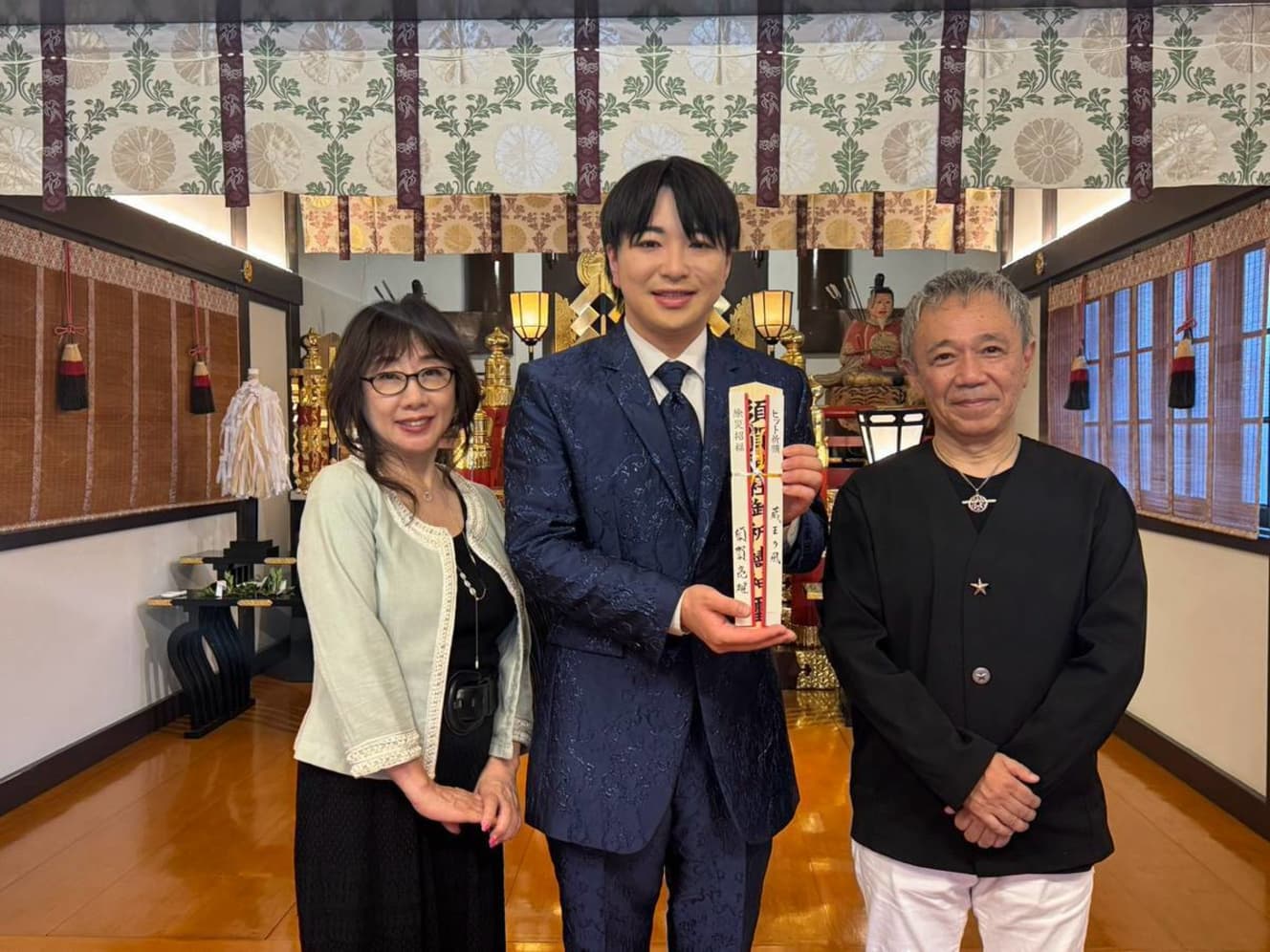
Suga sings The Wind of Zao with a heart full of gratitude. The journey of Ryo Suga, whose sincere voice reaches out to his listeners, has only just begun.
Reporting and Text: Norifumi Arakida (FRIDAY Digital Entertainment Desk)