Even the “Special Unit” Is Impressed! Former Public Security Police Officer and Author Yoshiyuki Hama Reveals the “Reality” of Japan’s Intelligence Agency, the “National Intelligence Service”


“There’s no point in just creating a shell.”
The currently airing drama *VIVANT* (TBS) is generating a lot of buzz.
The “Special Unit,” to which the protagonist Yusuke Nogi—played by Masato Sakai (52)—belongs, is depicted as a little-known unit within the Self-Defense Forces that carries out covert operations around the world. Operating separately from Nogi and conducting covert operations overseas is Mamoru Nozaki, played by Hiroshi Abe (62).
“Nozaki belongs to the Fourth Foreign Affairs Division of the Metropolitan Police Department’s Public Security Bureau. He independently contacts the CIA and Mossad to carry out intelligence operations.After joining the Metropolitan Police Department, he was assigned to the Third Division of the Public Security Department. He was later transferred to the Fourth Division of the Foreign Affairs Section and was also seconded to the Cabinet Intelligence and Research Office, commonly known as the ‘Incho.’ Some Metropolitan Police Department officials say this personnel history is very realistic and that the script was written after conducting considerable research into internal affairs,” said a reporter from the social affairs section of a national newspaper.
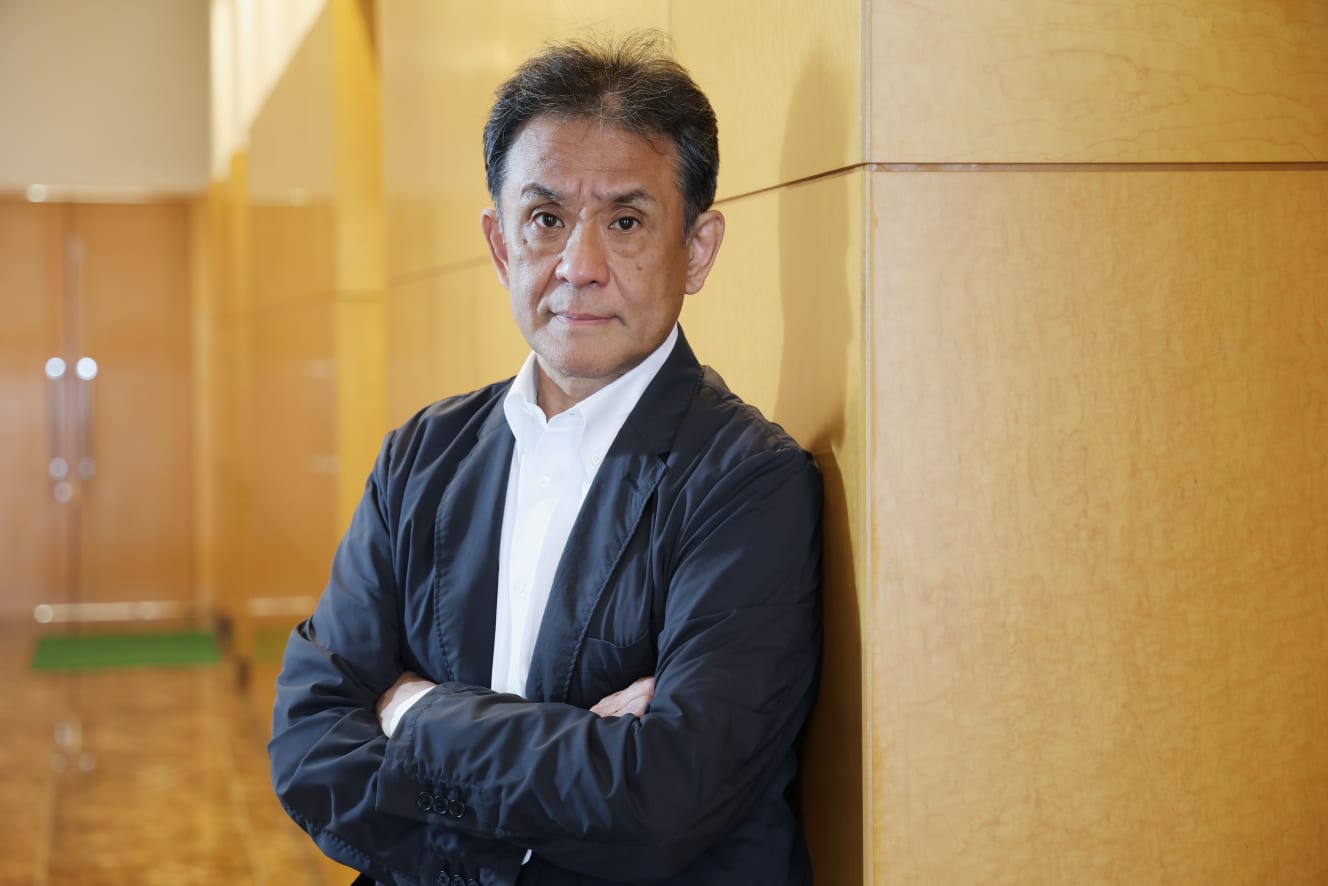
Like Nozaki, author Yoshiyuki Hama also has a background in the Tokyo Metropolitan Police Department’s Public Security Bureau and the Cabinet Intelligence and Research Office.
In May of this year, the Takagi Cabinet established the “National Intelligence Council,” chaired by the Prime Minister and composed of the Chief Cabinet Secretary and other relevant cabinet members. The “National Intelligence Bureau,” which serves as its secretariat, was established on July 31 through the elevation of the Cabinet Intelligence and Research Office (CIRO).
The Cabinet Intelligence and Research Office is a government intelligence agency that collects and analyzes information on key Cabinet policies and is part of the Cabinet Secretariat. The “National Intelligence Bureau” is said to handle critical information related to national security, counterterrorism, and espionage. However, Mr. Hama stated,
“There’s no point in just creating the structure; we must also develop the personnel,”
he cautioned.
“There may be a flow of personnel on paper, but those working at the National Intelligence Service hold concurrent positions in various other organizations. Not a single person has been recruited or trained independently by the agency itself. The cause of this is the so-called bloating of the Cabinet Secretariat.It has now become so large that even the Chief Cabinet Secretary cannot keep track of it. Since the personnel there are on secondment from other ministries and agencies, there are very few true experts.
For example, when I was transferred to the Domestic Security Intelligence Agency (DSIA) in the past, it was in the form of a secondment from the Tokyo Metropolitan Police Department to the National Police Agency, and then a dispatch from the National Police Agency. After serving there for two years as part of a rotation, I was transferred again. It’s extremely difficult to produce results in just two years. As for the handover of intelligence, it’s practically impossible.
Although people dispatched from various ministries and agencies come to the Internal Affairs and Intelligence Agency, the only ones actually conducting intelligence activities were people like me from a police background or those from the Public Security Intelligence Agency. In other words, the agency was an “Internal Affairs and Intelligence” agency in name only; it had virtually no intelligence capabilities.Things improved considerably under Abe’s second administration, but what about under the Takashi administration? As things stand now, I think it would be difficult to conduct intelligence operations like those of the CIA or Mossad.”
So, what is needed for the National Intelligence Service to function effectively?
“Although the staff is a hodgepodge of people from all sorts of ministries and agencies, coordination between them simply isn’t working.In the police force, officers learn every skill over many years as they rise through the ranks within a single organization. There is a solid training system in place to turn them into professionals in their field. However, if we look at the Self-Defense Forces, the Ground Self-Defense Force and the Maritime Self-Defense Force do not coordinate effectively. That is why we need to change things from the ground up.”
In other words, Mr. Hama strongly emphasizes that change must begin with the establishment of a proper educational institution.
“What we need are people, resources, and money.”
“Before recruiting new personnel, we must start by developing the people who will train them. At this stage, the only organization that is already doing this is the police. However, the Ministry of Foreign Affairs has its own training system, and the Ministry of Defense likely has its own as well. We must begin by aligning these systems. To do so, we need to rewrite the relevant laws. That alone will likely take three years.
Furthermore, we need to establish specialized schools. Since we must further develop personnel with strong communication skills to cultivate individuals capable of working overseas, in terms of language proficiency, they must be able to speak at least three languages other than Japanese—specifically, English, Chinese, and Spanish. We must gather such talent and provide them with proper education at these schools. From among them, we must select the most outstanding candidates and send them to study abroad.”
In the United States, there is an international exchange program called the “Fulbright Program.” It is a scholarship program aimed at scholars, educators, graduate students, researchers, and various experts from the U.S., but international students are no exception.
“Established in 1946 after World War II to strengthen relations with Western nations, this program has brought many outstanding individuals from around the world to the United States.Once their studies are complete, it is only natural that they would return to their home countries and contribute to their nations’ development; however, there are quite a few who remain in the United States and go on to play active roles in government agencies. As a result, outstanding talent from around the world is contributing to the United States. I believe Japan must learn from this approach as well.
If we’re going to make a plan, it has to be ambitious. What’s needed is people, resources, and money. We can’t do anything without first securing a budget. We must gather resources and funds from companies before securing talent. Then, we must nurture that talent. This isn’t something that can be accomplished in five or ten years. I believe it’s okay to make mistakes along the way to achieve success. After all, we can’t improve without making mistakes.”
[YouTube] On “FRIDAY TV,” former Public Security Police officer and author Yoshiyuki Hama discusses the world of intelligence he was involved in after the “9/11 terrorist attacks,” as well as “Putin’s Fearsome Strategy for Japan.”

Metropolitan Police Department Intelligence Officer: Under Inspector (Kodansha Bunko, No. 92-27)
PHOTO: Kazuhiko Nakamura