“I Didn’t Get a Single Yen”: Ueno ¥400 Million Robbery Driver Claims He Wasn’t Paid—Then Went on a Spending Spree


They were just ordinary people trying to act tough
The trial of Jinryu Kano (21 at the time of his arrest), who is charged with theft for allegedly stealing three suitcases containing a total of approximately ¥423 million in cash on a street in Ueno, Tokyo, was held at the Tokyo District Court on September 14.
“At around 9:30 p.m. on January 29, Defendant Kano conspired with his accomplices to steal three suitcases containing approximately ¥423 million in cash from a man on a street in Ueno and flee the scene. One of the perpetrators assaulted the man by spraying something resembling a spray into his face. Defendant Kano, who was involved in the crime as the driver, is the son of a yakuza boss affiliated with the Yamaguchi-gumi’s Kodo-kai faction, and he himself is said to be an executive of a Yamaguchi-gumi-affiliated yakuza group.
A total of seven people, including Tsuneji Koike (47 at the time of his arrest), an acquaintance of Defendant Kano who served as the person giving instructions and has been indicted for theft, have been arrested, but some accomplices are still reportedly on the run,” said a national newspaper social affairs reporter.
That day, Defendant Kano appeared in court wearing a gray suit without a tie. Though not particularly tall, he had a stocky build resembling that of a smaller sumo wrestler, and his eyes behind his silver-rimmed glasses were piercing.
During the witness examination held before questioning of the defendant, Kano’s uncle took the stand. When his lawyer asked, “What did you think when you learned about the incident through the media?” he replied:
“I was shocked, and I was angry because I thought he had been living quietly. Jin (Defendant Kano) is gentle by nature, and I think he is basically a serious person.”
Saying that he would support Kano after he finished serving his sentence, he continued:
“His biological father is a yakuza, so I want him to cut ties with that connection. I want to take care of him. I used to run a restaurant, although it went bankrupt, so I’m thinking of having him help me. I want him to live as an ordinary member of society. If he does something bad again, I may not be forgiven, but I intend to stop him even if I have to use force.”
The prosecution questioned the uncle about his background. He said that he had also belonged to a yakuza group in the past and had a criminal record, explaining, “I left the yakuza at 33 and have been a law-abiding member of society for more than 20 years. After serving my sentence, I worked at a nursing care facility, and I am currently a taxi driver.”
Regarding reports that Kano was a yakuza executive at the time of his arrest, he said, “The people in the media want to define him that way, I suppose, but he never formally pledged allegiance. This incident was just ordinary people trying to act tough.”
When the presiding judge expressed concern that his restaurant had gone bankrupt, he replied:
“I’m thinking of starting a new food business. I’m saving money for that while working as a taxi driver.”
The witness examination then concluded.
Buying a luxury watch and a high-end minivan after the crime
The defendant was then questioned. Asked by his lawyer to explain what happened, Defendant Kano began:
“I was instructed by two unidentified higher-ups (A and B) and participated as the driver.”
A and B are believed to be accomplices who have yet to be arrested.
In November last year, A approached him, saying, “There’s a group carrying a large amount of money in Ueno. Since it’s money they can’t report publicly, they can’t file a police report even if it’s stolen. So there won’t be any consequences.” However, Kano, who had been convicted in 2024 of aiding and abetting the transfer of illegal drugs and was serving a suspended sentence, initially turned down the offer.
“Since I was on probation, I thought this wasn’t something I should be doing, so I refused,” he said.
However, on January 29, the day of the crime, Defendant Koike asked him, “You don’t have to go to the scene. All you have to do is provide the car. It’s theft, not robbery, so no one will be hurt,” and Kano agreed. His reason was because Defendant Koike was an acquaintance of my father, and I had known him since I was a child.
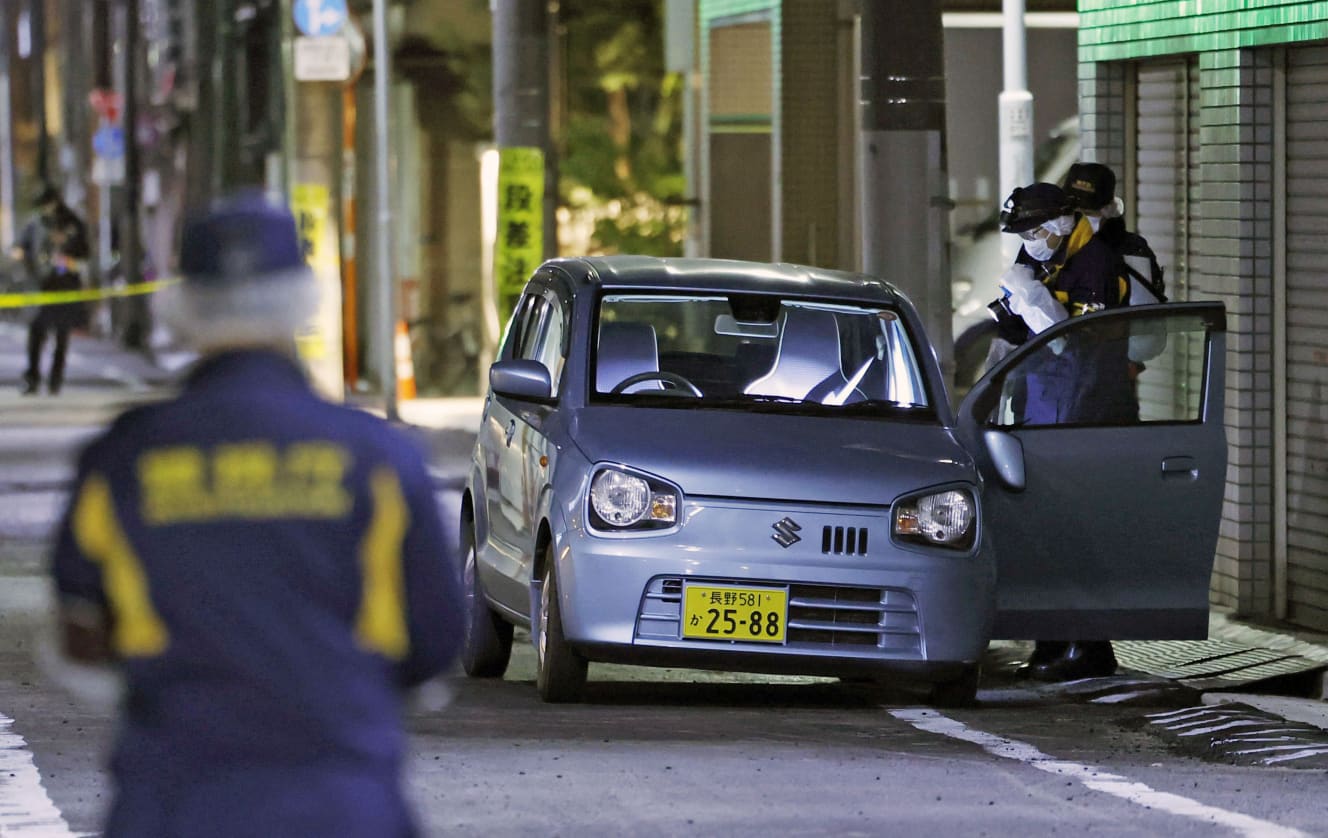
Kano drove Koike and three other perpetrators in an Alphard and dropped them off near the scene. The four then used another vehicle, a Suzuki Alto, to carry out the crime.
Kano claimed that “My role was to take them to a location near the scene,” but in reality, he waited in a convenience-store parking lot, picked up Koike and the suitcases after the crime, and drove with them to Chiba Prefecture and then Ibaraki.
When asked why he had waited in the convenience-store parking lot, Kano replied, “My role was finished, but I was worried about Koike.”
“The Alto (which Koike was driving) was swerving, and I thought, ‘Something must have happened.’ Koike told me, ‘Follow me,’ so I ended up picking them up. But I didn’t receive a single yen in compensation.”
After making that claim, Kano declared:
“I’m cutting ties with my father. I’m going to live a proper life with my mother (who is divorced from my father) and my uncle. I was reported as being in a yakuza group even though I’m not. I don’t want anything to do with my father until he leaves the yakuza. Being seen as a member of a yakuza group causes problems for me, and I don’t want people making assumptions about me.”
The prosecution questioned Kano about the unidentified higher-ups, A and B. Even when pressed, “Can’t you give us their names?”
Kano refused to disclose them, saying:
“In this case, it hasn’t been clearly established that they did anything wrong, so I can’t give you their names.”
The prosecution pointed out that most of the approximately ¥423 million stolen had already disappeared and condemned the crime as “a planned and organized offense carried out by a yakuza group, with a high degree of affinity [with such groups] and little prospect of his circumstances improving,” seeking a sentence of eight years in penal detention.
“It has been learned that after the crime, Defendant Kano purchased a luxury watch worth approximately ¥2 million and a high-end minivan worth approximately ¥10 million. Defendant Koike also purchased a vehicle worth approximately ¥3 million,” said a national newspaper social affairs reporter.
In light of this, it is difficult to take his declaration that he will sever ties with his father at face value.
The verdict will be handed down on October 5.
PHOTO: Kyodo News