Want 100 More X Followers? It’ll Cost Just ¥255—Inside the Smartphone Farms Manipulating Public Opinion


100 more X followers for ¥255, 1,000 TikTok likes for ¥55
“All right, let’s get started.”
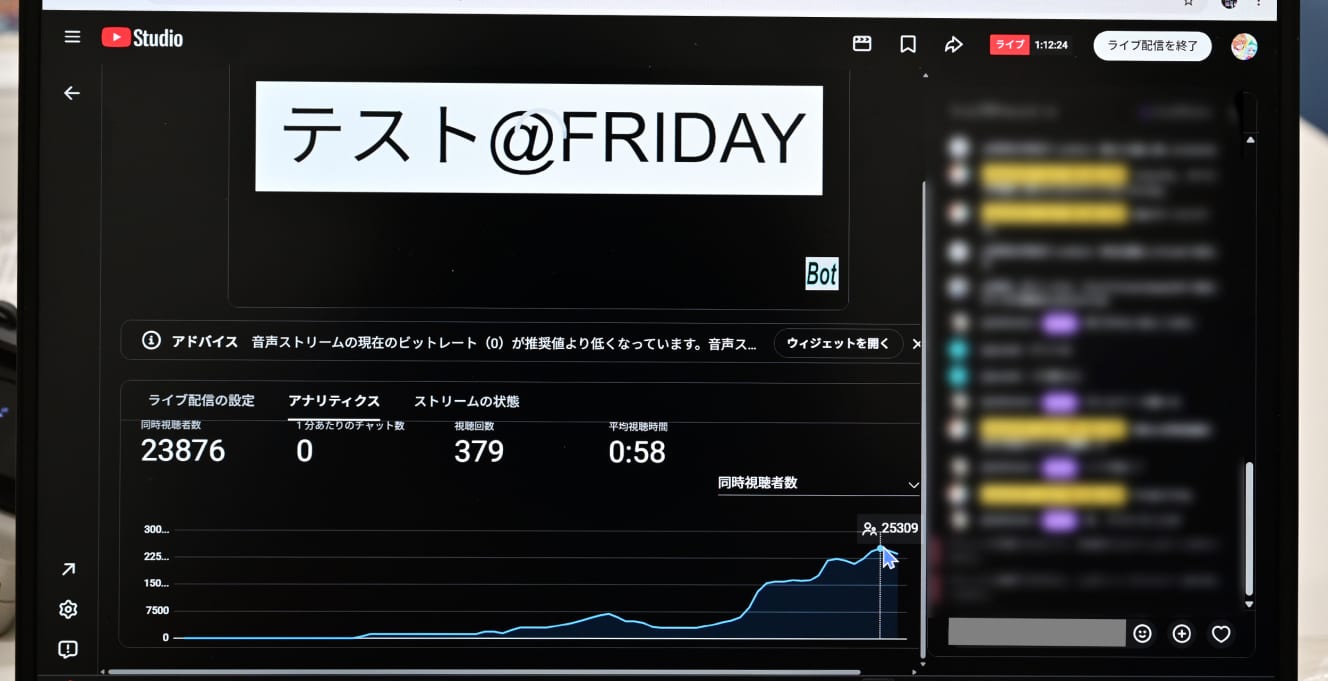
It was a YouTube livestream conducted from a brand-new account with zero subscribers. The stream had virtually no content—just the words “Test @ FRIDAY” displayed on a completely black screen—but the number of viewers steadily climbed. In less than 20 minutes, it surpassed 25,000 viewers, shooting to No. 1 in Japan for concurrent viewers during that time slot.
“This is what a smartphone farm can do.”
So says A, who says he has been attending a science and engineering university since this spring. He looks like an ordinary college student, but apparently he is the person in charge of operations at a smartphone farm.
In today’s world, social media is inseparable from everyday life. While it is flooded with all kinds of information of uncertain authenticity, many people probably look at factors such as how many likes a post has received or how many times a video has been viewed when judging its credibility.
But these figures, he says, can be manufactured. A explains how the farm works.
“We take the circuit boards out of a huge number of smartphones, connect them to power supplies and cooling systems, and manage them in a state where they can continue operating. After that, all we have to do is have them play videos or view posts according to the orders we receive, allowing us to artificially increase the numbers.
The name smartphone farm probably came from the way managing such a huge number of smartphones looks like tending crops. In the industry, managing three-digit numbers of smartphones is considered mid-sized, but we have more than 100,000 devices operating. There are only four farms this huge in Japan.”
Apparently, Japan has what could be called the “Big Four Farms.” A says the entire process, from receiving orders to carrying out the work, is automated.
“The unit prices are cheap. For example, increasing the number of followers on ‘X’ by 100 starts at just ¥255, while 1,000 TikTok likes start at ¥55, and 1,000 YouTube views start at ¥175. Even so, because we handle enormous volumes, our annual sales in recent years have been around ¥4.5 billion.
Incidentally, these prices are our upstream prices as the owners of the farm. On general sales sites that come up in internet searches, these services are traded for prices ranging from several dozen to several thousand times higher. Using a smartphone farm, we can increase any kind of number on social media. We’re entering an era in which public opinion is manufactured on farms.”
Why are they selling these services at such low unit prices? How can they generate ¥4.5 billion in annual sales from this alone? The questions are endless, but A also explained how the farm is operated.


Do politicians use them during elections?
To manage the enormous number of smartphones—100,000 in total—A’s farm is spread across four locations in Ibaraki Prefecture. In most cases, ordinary houses have been renovated for the purpose, making it impossible to tell from the outside what they are used for. A also explained, “Officially, we say we’re doing streaming. The farms themselves aren’t illegal, but it would be a hassle if the police came.”
So what kinds of people use smartphone farms?
“There have been people who use them to rack up impressions (number of views), and people who order comments to attack their antis. Come to think of it, I heard that during the House of Representatives election in February this year, a campaign team for a certain candidate asked us to like their posts.”
When it comes to politicians’ online manipulation, the case involving Prime Minister Sanae Takaichi (65) is still fresh in people’s minds. It was reported that during this year’s House of Representatives election and last year’s LDP presidential election, a team that created and disseminated negative campaign videos targeting rival candidates conducted online operations using large numbers of smartphones. When asked whether he had ever received an order from the Takaichi campaign, A replied, “I don’t know about what happened at the time. Political-related jobs carry the risk of criminal penalties, so we’ve set our system to filter them out using an algorithm now.”
At the end of the interview, A was asked why he was revealing so much about the inner workings of the business. He said, “Because I want to make the industry healthier,” but his true intentions remained unclear.
At the same time, A revealed that “We also sell the smartphone farm system itself.” Depending on the scale, he said, the price runs into the hundreds of millions of yen. It was hard to shake the suspicion that this might actually be his main business.
Behind social media—and the public opinion it creates—there are all kinds of shadowy forces at work.
From the September 25, 2026 issue of “FRIDAY”
PHOTO: Takeo Ketsu (1st and 3rd photos) Tsuyoshi Kinugawa (4th photo)