Former “Country Musume.” Idol Miuna Saito’s Journey From Hotel Room Masseuse to Minato Ward Socialite to Romance Expert


“When I heard FRIDAY wanted to interview me, I thought, ‘Wait, could it be about that?’ and it made my heart skip a beat. Well, I do have a few things that come to mind! (Laughs)”
The person laughing as she says this is 39-year-old Miuna Saito, who was formerly a member of “Country Musume.” Alongside the likes of Miki Fujimoto, 41, and Asami Konno, 39, she once stood on stage as an idol. After graduating from the group, she became an esthetician before changing careers and becoming a romance columnist. She now runs an online salon for women.
Why did an idol from an era when it was difficult to openly talk about romance end up making love and relationships her profession? We spoke with her about her unexpected career path from her days with “Country Musume.” through her graduation and up to the present.
“Ikkoku-do” at the “Hello! Project” audition
“When I was in elementary school, I watched Namie Amuro, 49, and SPEED on ‘THE Yoru mo Hipparé’ (Nippon TV) and thought they were so cool. I also bought ‘Myōjō,’ an idol magazine, every month and listened to songs while looking at the lyric cards that came as supplements.
Back then, great songs were being released practically every week, and finding good songs was a hobby of mine. My favorite was Hiroko Shimabukuro, 42, from SPEED. I also liked songs by aiko, 50, and Ringo Sheena, 47.”
Saito loved music and dreamed of becoming a singer. At 15, she applied for the sixth-generation audition for “Morning Musume.”
“I thought getting into ‘Hello! Project’ was probably harder than getting into the University of Tokyo, given how incredible the competition was. So when I passed, I thought, ‘Well, I don’t have to go to school anymore. I’ve secured my future early!’ (Laughs) I was the eldest daughter, and my parents were strict, so I was pretty good at studying. Even my parents told me, ‘You don’t need to study anymore.’”
For the audition, she submitted a video of herself singing “Morning Musume.’s” “Do it! Now,” the assigned song. But there was a little problem with the video.
“I decided to audition at the very last minute, so I frantically learned the song.. and recorded myself over a video we had at home of my younger brother’s kindergarten graduation ceremony. After I finished singing, the video just went on to show my brother’s graduation ceremony for ages. (Laughs) I was seriously messing around, wasn’t I? I never thought I would pass.
Then, after I debuted, that exact video somehow ended up being broadcast on TV. I thought, ‘Ahh, I should have recorded it on a new tape!’”
Saito placed third in the public vote in the “Morning Musume.” audition and made it to the final group of around 30 contestants, but she was not selected. Three months later, she learned that an audition was being held for new members of “Country Musume.” and decided to try again.
She has her own theory about why she was chosen.
“Ikkoku-dō was really popular at the time, and I used to imitate him at school all the time. I did that as my self-promotion at the audition. I didn’t take the audition itself very seriously, so ironically, I wasn’t nervous at all. I talked so much during my self-promotion that the judges actually had to stop me and say, ‘That’s enough.’ (Laughs) Maybe I got in because of my personality rather than my singing or dancing.”

But once she actually joined, all that composure disappeared.
“With AKB48, there’s a period when you’re a trainee, right? But “Country Musume.” didn’t have anything like that. You were expected to be ready to perform from the very beginning. I had been taking dance lessons back home, but until then, it had simply been a hobby. Even the dances that looked easy were actually subject to incredibly detailed criticism.
And on top of that, there were live performances, handshake events, acting, television, all kinds of work. The workload was completely different from that of an ordinary first-year employee, and we were expected to achieve a high level of quality at an incredible pace.
Everyone was desperate. But the senior members always looked so calm and never showed how hard they worked. And they were all people who actually delivered results. Everyone from that era was really on another level.”
Moreover, after Saito joined, a limited-time project called “Country Musume. ni Konno to Fujimoto (Morning Musume.)” began, with Miki Fujimoto and Asami Konno joining “Country Musume.”
“I suddenly found myself standing on the same stage as those two for our debut song. At first, I did have a bit of an attitude of ‘How hard can it be?’ But I had already quit school, so I couldn’t complain anymore. I had no choice but to make a living in show business. Maybe that’s precisely why I was able to desperately push myself and think, ‘I’ve got to somehow keep up.’”

Massaging customers from morning until 2 a.m.
However, Saito says, “Looking back, I wasn’t as successful as I had imagined I would be.”
“Mai Satoda, 42, who became a huge star as a ditzy celebrity, was in the group, and I myself wasn’t exactly the most prominent member. Looking back now, maybe I should have stayed in show business and given it more time. But back then, there were so many stars around me—Ayaya, Mikity, Goto.”
Saito graduated from “Country Musume.” at 20 and left the entertainment industry. After leaving that glamorous world behind, she entered a surprisingly different line of work.
“As a celebrity, basically all you can do is wait for offers to come from television, and if you get involved in a scandal, you can suddenly lose your work, right? So I admired jobs where you could have a skill to fall back on. I worked as an esthetician, going to hotel rooms to treat guests, and I also did traditional Thai massage.”
She kept her identity as a former nationally famous idol secret while working, but surprisingly, no one recognized her.
“The owner was Thai, the treatment rooms were dark, and I wasn’t wearing any makeup. Sometimes I worked from morning until 2 a.m., but none of the customers ever realized who I was. No one would imagine that a former idol was working there, right? (Laughs)”

When she was 24 and living this life, an unexpected opportunity led to a new career.
“After I left the idol world, I was betrayed by a man I was dating, and it was a painful experience. At the time, one of the older women at work told me, ‘You really have terrible judgment when it comes to men.’ (Laughs) I started asking the women there, ‘How can I get better at judging men?’ and I would post what they told me on Twitter so I wouldn’t forget it, basically using it as a notebook.
Then a female editor happened to see those posts and offered me a chance to write a romance column, asking, ‘Would you like to try writing one?’ She suggested I try two or three pieces as a test. When I submitted them, she praised me, saying, ‘You’re better than I expected! We can use these as they are.’ That’s how I started writing romance columns at 24. Of course, I also got caught up in some online backlash. (Laughs)”
She would discuss that backlash later, but around this time, her social circle began expanding dramatically.
“Back then, I just went back and forth between work and home. Then one day I realized, ‘I don’t have any friends. Is this really the kind of life I want?’ So I wanted to make friends, and I started going to drinking parties in Minato Ward.
Around the time of the 2008 Lehman Shock, I would go drinking with the Hills-zoku crowd of the time, and I’d go to members-only bars in Nishi-Azabu where you had to punch in a passcode to get inside. I went to tons of parties and drinking gatherings. I like meeting people for the first time.”
However, she emphasizes that this was different from what is commonly known as paid drinking.
“Young people these days try to sell their time for as much money as possible, right? But I wasn’t like that. I wasn’t going because I wanted money. I simply wanted friends. Work is work, and private life is private life. I think it’s better to keep those things separate.”


Let’s return to the backlash Saito mentioned earlier. As she began speaking candidly about romance, she says she received harsh criticism from some of her former fans.
“People got really angry with me, saying, ‘A former idol shouldn’t talk about romance! Don’t destroy our dreams!’ But even if they said that, I had continued to grow and change as a person, and my days as an idol were already a very long time ago. I thought, ‘I already quit, so what does it have to do with me?’
You don’t go around talking about your high school forever, either, right? People said all kinds of things to me, but I thought, ‘What’s wrong with it?’ Maybe it’s because being a former member of “Country Musume.” was such a prominent part of my background.”
Even so, she gradually became more conscious of communicating specifically with women.
“Male fans keep moving on to new idols, right? I felt that if I continued targeting them, the lifespan of that kind of work wouldn’t be very long. So I thought it would be better to build a female fan base.”
Saito has continued sharing her thoughts and experiences about romance, and she has now developed those experiences into a community of her own.
“I’m always in love”
She launched an online salon for women in 2023, and it is now in its fourth year. There are consistently around 150 members, and she says she is right in the middle of considering a revamp.
“At first, the salon’s goal was to meet high-spec men. But gradually, the women’s attitudes began to change. Instead of simply saying, ‘I want to marry a high-spec man,’ more and more women started saying, ‘I want to earn my own money’ and ‘I want to become high-spec myself.’”
In fact, quite a few women have seen their lives change through the salon.
“I’ve gotten quite a large number of salon members married. We hold drinking parties and classes. Every month, someone is getting married or having a baby. When you’re single, it’s difficult to imagine what marriage or life after having children will actually be like, right? So first, I help organize what’s in the members’ heads and apply a little pressure to create a path toward marriage.”
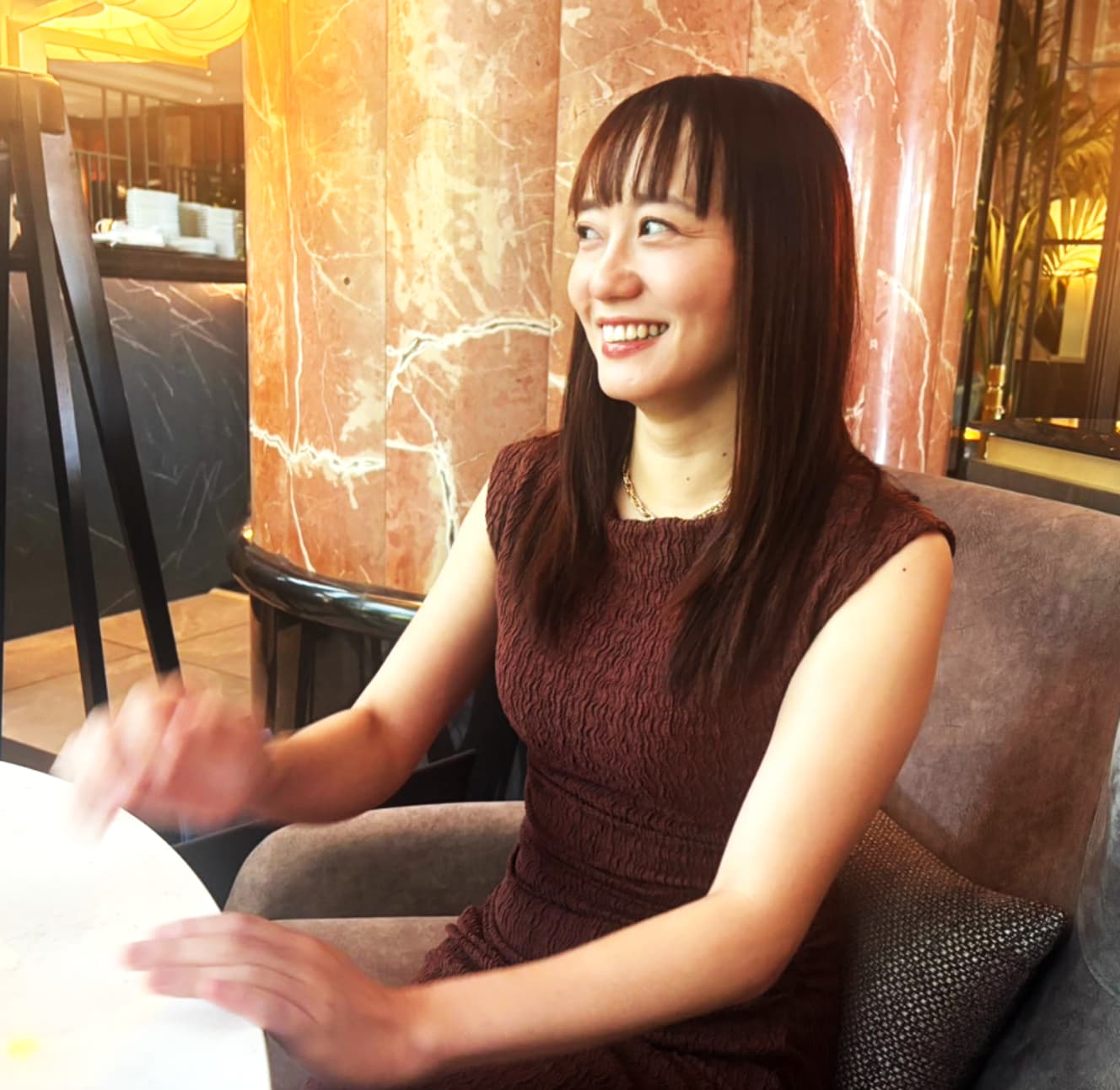
As she interacts with these women, she has also noticed changes in the environment surrounding marriage hunting.
“These days, everyone gets cosmetic surgery, so just having good looks isn’t enough. That’s already a given. On top of that, it’s about how you improve yourself.
Men have changed, too. I think they increasingly won’t see you as a serious prospect unless you have roughly the same level of specs as they do.
Apartment prices in Tokyo have also gone up, and your choice of partner can change your entire life.
Entertainment is a business where you sell yourself, and marriage hunting is the same. So I use my experience from the entertainment industry to provide individual consultations for each person.”
The salon holds activities such as social gatherings and classes around four to ten times a month. When asked about her own romantic life, Saito says—
“I’m always in love myself, too. That hasn’t changed at all since the old days. (Laughs)”
Her advice to women struggling with romance and marriage hunting is very much in her own distinctive style.
“You should think about when is the right time to sell yourself. If you have a woman in her 20s and a woman in her 30s with roughly the same level of finish, men will choose the woman in her 20s. There are celebrities who have successfully married later in life, but you shouldn’t look at them and think, ‘I’ll be fine, too.’
I think you should put yourself out there while you’re in your 20s, when your value is high. Even if it doesn’t work out, we’re living in an era when divorced people are still attractive. Simply having been married can even become a title of sorts, because it means someone chose you once. If you marry late, it’s a one-shot game and there’s no room left afterward. If you get married at 26 and divorce two or three years later, you’re still only 29.
Maybe I developed this way of thinking because I was in show business. Entertainers are in a profession where they continually hone their craft, so as they get older, they gain more depth and develop new things they can draw on. In other words, entertainers compete based on an appeal that transcends age, which is why it’s true that some people have good marriages precisely because they marry later.
But if you’re working an ordinary job, it’s difficult to approach things the same way as an entertainer. That’s why I tell the salon members to pursue marriage in their 20s and have their first child. Don’t miss your prime selling period.”
Nearly 20 years have passed since Saito graduated from being an idol. After taking many different paths in life, she was asked once again what “Country Musume.” meant to her.
“That’s a difficult question. If I had to put it one way, I’d say it was my starting point. This was my first career!”
Photography & Text: Chihiro Sato