Resting the Brain Is a Myth?! Even Brainless Jellyfish Sleep—Experts Warn That 3 Hours of Sleep Is Self-Harm


The decisive difference between rest and sleep
“Sleep has traditionally been thought of as a way to rest the brain, but recent research has shown that brainless creatures such as jellyfish and hydra also sleep.”
The person sharing this startling fact is Kazuhiko Kume, a professor at Nagoya City University who researches sleep. Until now, sleep had primarily been studied by measuring brain waves, but more recently, sleep has come to be defined based on behavior. This has broadened sleep research to include a wide variety of organisms.
So, what kinds of behavior are considered sleep? There are three specific criteria:
1_ There is a characteristic posture or location
For example, bats hang from ceilings, while ducks and other birds tuck their bills into their feathers and remain standing on one leg atop a perch. They also have designated places to sleep, such as safe nests or warm locations.
2_ Reduced responsiveness
If an animal is merely resting, it will respond to minor stimuli or answer when spoken to. During sleep, however, it does not wake up easily.
3_ There is a roughly determined amount of sleep needed
When sleep time is reduced, an animal will fall asleep during periods when it would normally be awake. There is also a roughly fixed time of day when it sleeps.
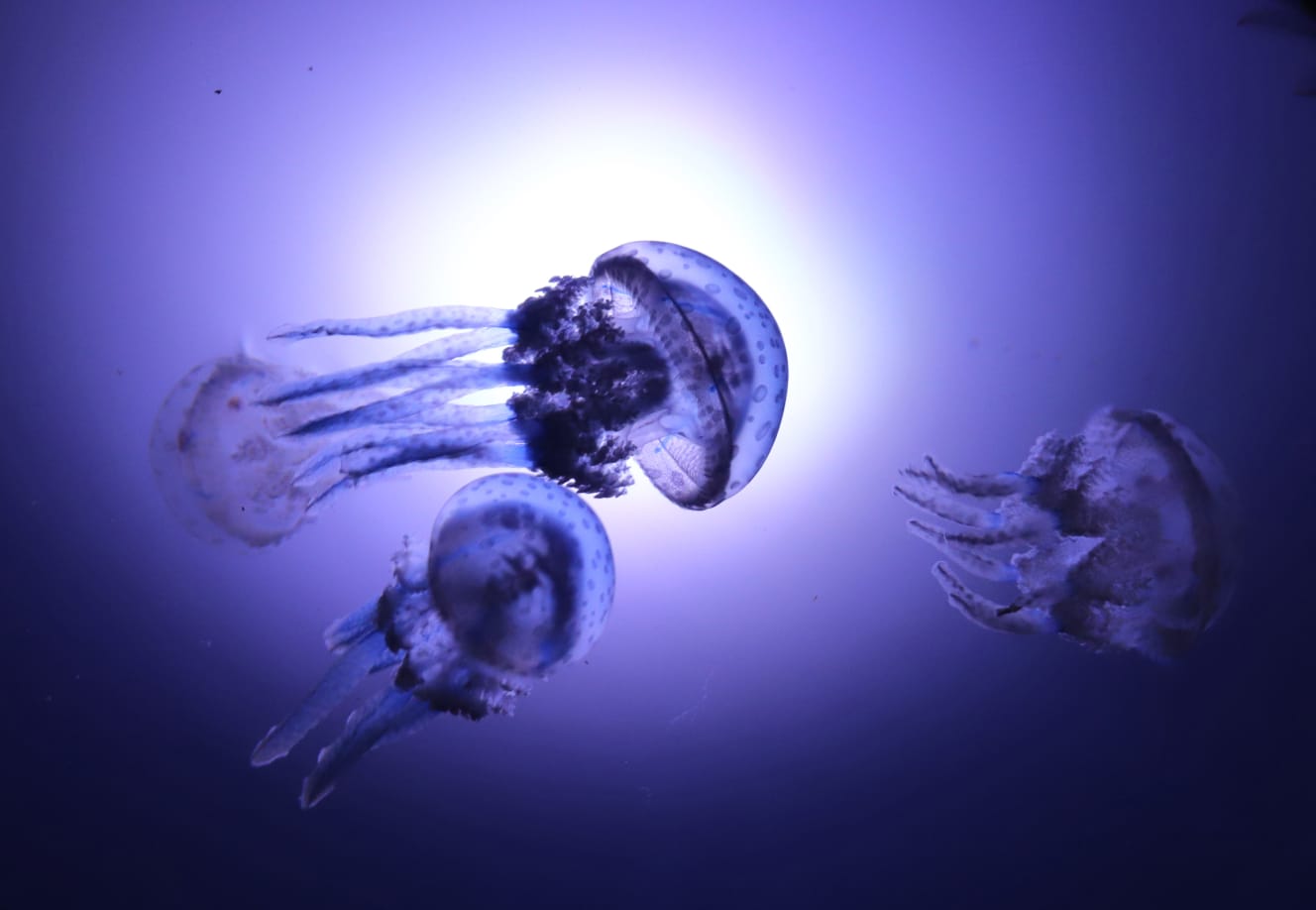
For example, upside-down jellyfish sink to the seafloor at night, and the number of times they open and close their bells decreases to about two-thirds of their daytime rate. Furthermore, when researchers continuously stimulated them during the nighttime hours, their activity levels during the day dropped markedly, apparently as a result of sleep deprivation. Based on these observations, jellyfish are thought to be not merely resting, but actually sleeping.
The organisms that mastered sleep survived
“Until now, sleep researchers believed that organisms with brains were the ones that slept. But we have learned that this isn’t the case.”
According to Professor Kume, the state of sleep is closely connected to the cycle of day and night.
“Life on Earth gradually evolved after the emergence of primitive organisms such as cyanobacteria, which appeared very early on and are similar to E. coli. The reason cyanobacteria were able to proliferate so extensively is that they made effective use of day and night.
Cyanobacteria use daylight for photosynthesis and make it their source of energy. During the lightless night, they prepare themselves so that they can immediately get to work when daytime comes. I believe that organisms capable of using the difference between day and night and utilizing sleep for survival are the ones that ultimately survived.”
As organisms evolved brains, they began using their sleep time to organize information.
“We have learned that even a tiny brain, such as that of a fruit fly, processes information while sleeping. In humans, when we do not get enough sleep, we cannot process information properly, and the brain becomes confused.”
Brainless jellyfish, on the other hand, presumably sleep in order to rest their bodies and conserve energy.
Three hours of sleep is nothing more than self harm
The amount of sleep needed and the way it is obtained vary from one organism to another.
Whales and dolphins use unihemispheric sleep, in which they alternate resting the left and right halves of their brains, allowing them to sleep while swimming. Migratory birds also use this form of sleep, enabling them to continue flying through the sky.
“But even when they alternate sides, they do so in intervals of 10 or 20 seconds, and apparently they sleep for only one or two hours while migrating. Once they finish migrating and build a nest, however, they sleep for around nine hours. I believe that is how they evolved.”
In humans, the amount of sleep needed changes with age. Children aged one to two need 11–14 hours, those around 15 need approximately eight hours, and around seven hours is considered appropriate for people in their 30s and 40s.
“However, there probably aren’t many people in their 30s and 40s who are getting enough sleep.”
According to Professor Kume, you can tell whether you are getting enough sleep by looking at how long you sleep on your days off.
“People who sleep more than two hours longer on their days off than they normally do are definitely sleep-deprived. However, if that condition can continue without putting too much strain on them, they can manage somehow.”
What is dangerous is when someone is normally sleep-deprived but eventually becomes unable to sleep even on their days off.
“When you are sleep-deprived, the parasympathetic nervous system becomes more active. The sympathetic nervous system also becomes more active because it has to counteract that. When chronic sleep deprivation continues, this elevated state remains constant, causing blood pressure to rise as well. If this condition continues for more than three months, the risk of developing depression increases.”
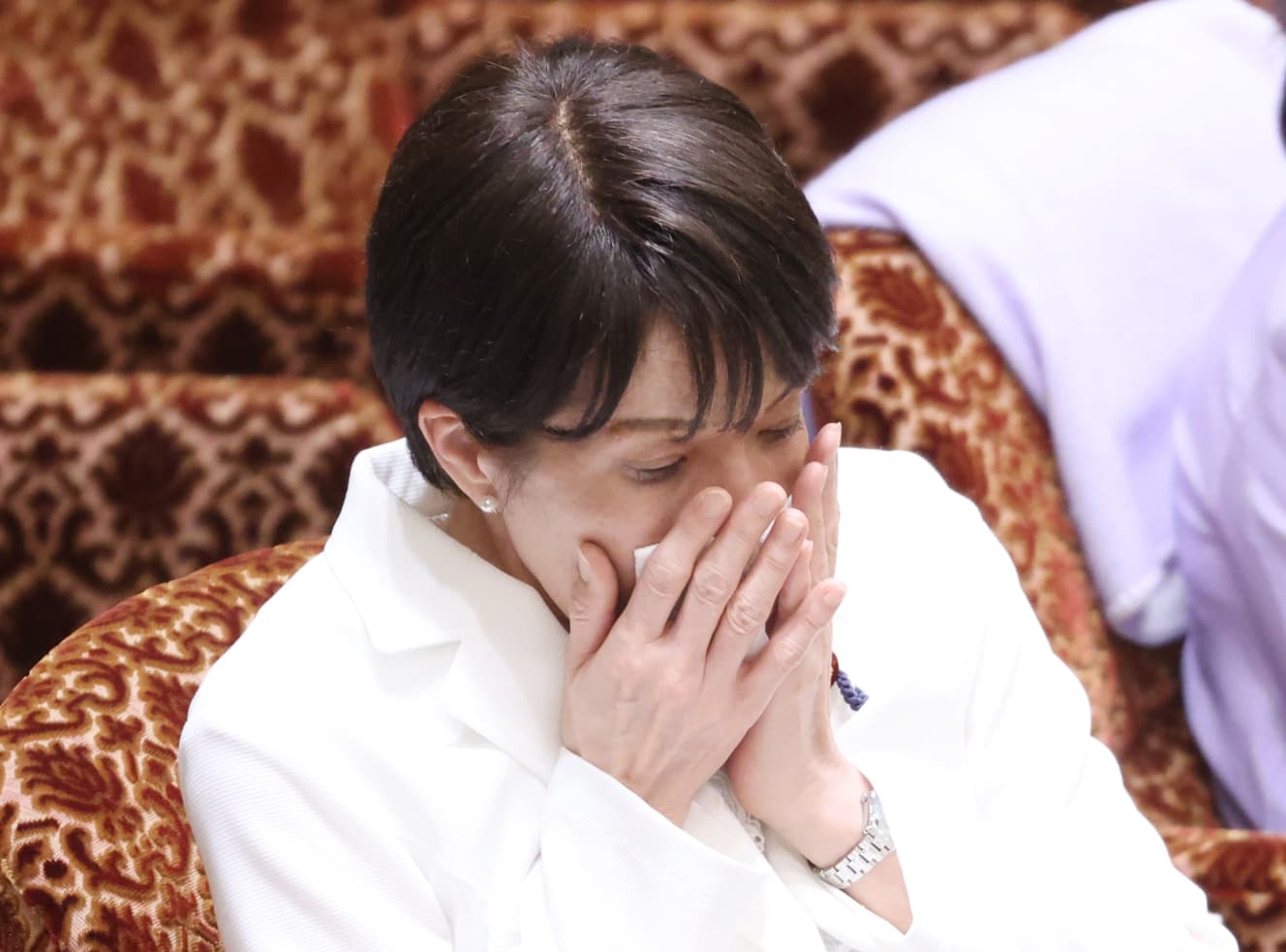
Prime Minister Takaichi has publicly stated that she only sleeps three hours, but this is precisely an act of self-harm. There is even a possibility that her brain could become confused and lead her to make incorrect decisions. First and foremost, she should get enough sleep.
▼Kazuhiko Kume — Professor at the Graduate School of Pharmaceutical Sciences, Nagoya City University. Molecular biologist and physician. After serving as a visiting researcher at Harvard University and Tufts University and as an associate professor at the Institute of Molecular Embryology and Genetics at Kumamoto University, he assumed his current position. His specialty is neuroscience. He researches biological clocks and the mechanisms of sleep. He also treats sleep disorders in internal medicine and psychiatry. His books include “Molecular Biology of Time” (winner of the Kodansha Science Publishing Award) and “Even Brainless Jellyfish Sleep” (Asahi Shimbun Publications).
Reporting & Text: Izumi Nakagawa PHOTO: Afro