Shinobu Nakayama on Life Alongside Her Sister Miho—and the Love She Found in the Shinobu File
Special Interview [Part 2]


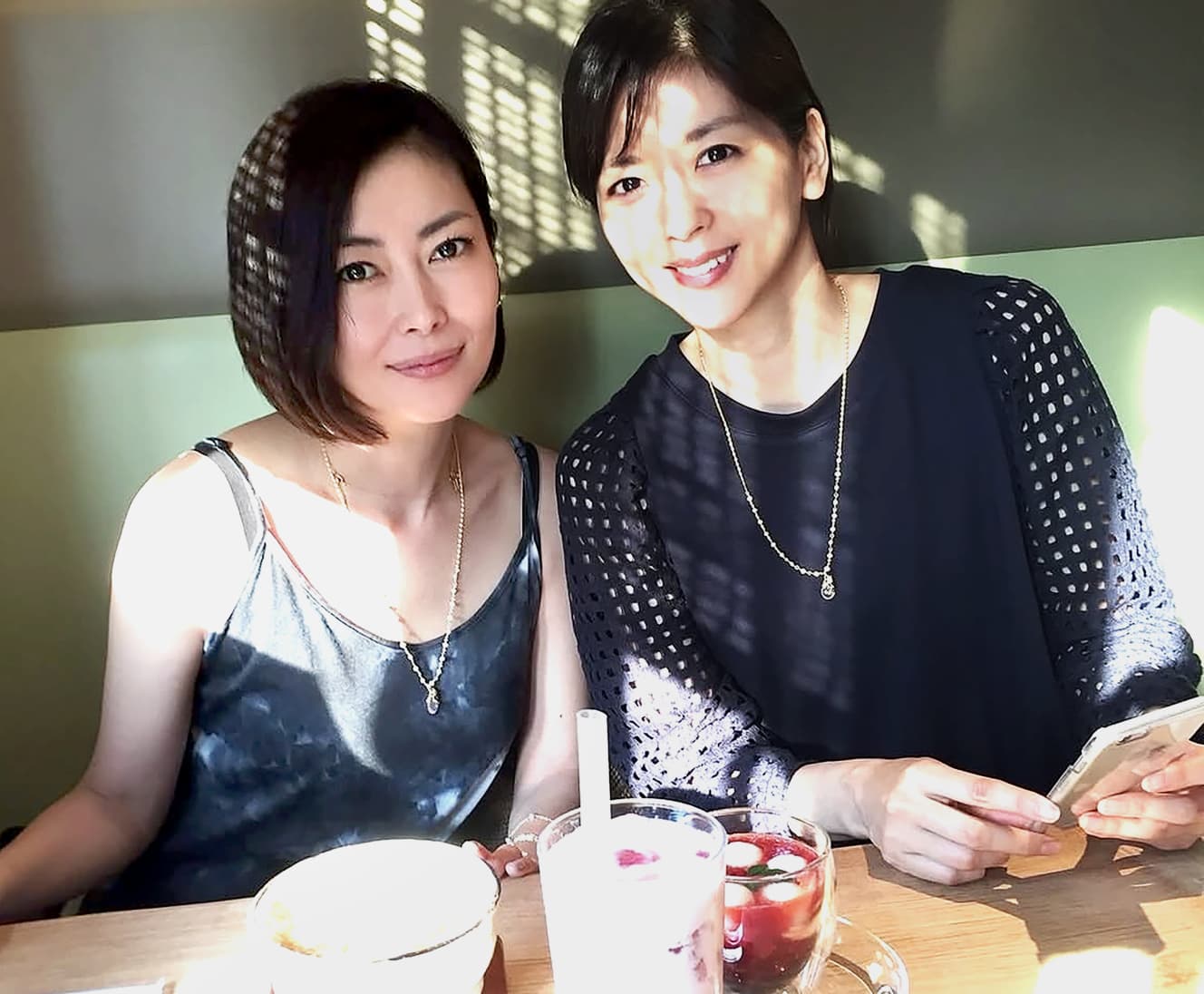
The time that stopped two years ago has begun moving again through the memories and love her sister left behind, and the support of her only son
Shinobu Nakayama, 53, plays Osaki, the proprietress of the restaurant frequented by the protagonist Hanbei, in the period-drama special series “Muyōan Inkyo Shugyō” (BS Asahi, airing September 22), which marks its 10th year this year. Now a veteran actress, she was extremely shy as a child and had absolutely no interest in the entertainment industry. She was the complete opposite of her older sister, Miho Nakayama, who was three years older.
However, when Shinobu went to Narita Airport to see Miho off as she traveled overseas for work, she was approached by director Keiichiro Yoshida, 79, who was one of the staff members. Afterward, word of “Miho’s younger sister” spread throughout the industry, eventually leading to an offer to appear in a television drama. Although she turned it down, saying, “Once I’m in high school,” she says that from there, she naturally ended up entering the entertainment industry.
[Interview Part 1] Shinobu Nakayama: “I Had Convinced Myself That I Was Simply Miho’s Younger Sister and Not an Important Person” — Stories From Her Debut
She never discussed entering the entertainment industry with her sister, who had become so busy that they barely had time to talk. They also never had any professional connection. Their only co-starring appearance came in 1995, when Shinobu won the Blue Ribbon Award and Yokohama Film Festival Award for Best Supporting Actress for “Gamera: Guardian of the Universe.” Miho won the Best Actress Award for “Love Letter,” and the sisters attended the awards ceremony together. Miho later married writer Hitonari Tsuji, 66, in 2002 and moved to France. She gave birth to a son in 2004. Shinobu remains unmarried.
“There was a time when I met someone I really liked and thought about getting married. But my manager told me, ‘You can’t do two things at once. If you’re going to get married, you should quit working and devote yourself to your family, like Momoe Yamaguchi (67).’ And I thought, ‘Hmm, I’m sorry, but I’ll keep working.’ There were also times when I would get dumped at just the right moment, when a major job was being decided. Apparently, I don’t work when I have someone I like. I’m hopeless (laughs).”
She says she also visited Paris several times to help her sister raise her child.
“I went to visit many times. Now, as I’m sorting through my sister’s photographs, I find pictures of her when she was heavily pregnant and pictures of my nephew just after he was born. They eventually got divorced, but there really were happy times. Looking at the photos, I think, ‘I’m glad you were happy, Sis.’”
It has been nearly two years since Miho died suddenly in December 2024. Shinobu took possession of the belongings from the apartment where Miho had lived alone.
“I’m nowhere near finished sorting through her belongings. I rented a storage unit near my house and put everything in there. All the dishes and shoes my sister used are in the storage unit. I wear her coats. My sister was a little smaller than me, so they’re a bit tight, but I wear them anyway.”
Among the many things Miho left behind were large quantities of printed photographs. One of them was labeled “Shinobu File.”
“Inside the file, there was a two-page spread with photographs of my sister when she was around 15 or 16, shortly after her debut, alongside publicity photos of me from before my debut. The photos were the same size, and we were both wearing hats. I laughed and cried at the same time, thinking, ‘Sis, you really did love me.’
I had thought that she probably wasn’t that interested in me as an entertainer. She had never asked what kind of work I was doing. But she had kept things like flyers from my stage performances. I realized, ‘You really were interested in what I was doing.’”
She had not known this while her sister was alive. They were close, but their tastes and interests were different. Miho liked contemporary art, while Shinobu studied tea ceremony and preferred looking at old tea bowls.
“We had sisterly arguments, too. We’d make plans to have dinner, and even when I sent her a message telling her what time I would come to pick her up, she would leave it on read. I would press her, saying, ‘Isn’t this a problem? What do you do when you’re working?’ And she would cry and say, ‘You’re right. It’s my fault, isn’t it?’ When I replied, ‘Well, yeah, I guess so,’ she would complain to my manager, saying, ‘Why did she talk to me like that?’
But when my manager got injured, my sister came all the way to Hakata to help me while I was performing in a stage production. She was a kind sister. Looking at the photographs she left behind, I feel happy realizing that she really did care about me. At the same time, I realize that my sister who cared about me like that is no longer here. It’s lonely.”
“For my sister’s sake, I have to stay well”
Just as she has not yet finished sorting through her sister’s belongings, Shinobu says she has not fully come to terms with her feelings either.
“I cried every day until the first anniversary of her death. I allowed myself to be comforted by people around me saying, ‘You don’t have to force yourself to be okay,’ and I cried even in front of other people. I was told, ‘By the time the first anniversary comes around, you’ll have calmed down emotionally,’ and I thought so myself. But when the day actually came, the sadness and loneliness hadn’t diminished at all. I realized that everyone must be like that—that they’re just trying not to cry in front of other people. So I started doing the same. Even after the 20th monthly anniversary of her death had passed, I was still just as sad and lonely, and I still think about my sister at least once a day. I realized that I’m still living through an extraordinary situation.”
Even so, Shinobu is gradually trying to look ahead.
“I realized that if I continued like this, my own life would come to a standstill, and that for my sister’s sake, I had to stay well. So recently, I started Pilates! I’ve only been three times so far, though. I hadn’t even been taking care of my nails, and they were starting to look like they might break, so I put some oil on them. I realized I needed to get myself back on my feet.”
A source of support for Shinobu is Miho’s only son, who turned 22 this year.
“In April this year, I was invited to Kyoko Koizumi’s concert, and I went with my nephew. On the drive home, he said, ‘I wish I could have seen Mom’s concert, too.’ He has grown into such a wonderful young man. He even worries about me, saying, ‘Boo-chan’—that’s my nickname—when you talk to me, doesn’t it make you remember Mom and feel sad?”
In June this year, more than 30 years after her days as an idol, she launched a fan club called “Yurikago.”
“I wanted to create a warm place where everyone could get together again and feel safe crying and laughing together.”
So where will Shinobu Nakayama go from here?
“When I decided that I wanted to become an actress, I thought I wanted to keep doing it even when I became an old woman. I’d be happy playing a criminal, but I’d also like to play the person who catches them. I want to play an angel or a demon. That hasn’t changed even now.
Director Izuru Narushima, whom I worked with on ‘The Last Station of Life’ (released in 2021), passed away in August. We had promised each other, ‘When the time comes when we can act without hiding our gray hair, let’s make another movie together.’ I hadn’t been in touch with him because of everything that had happened with my sister, and then he passed away. It was a huge shock. Life is a series of unexpected things, and I realized that I shouldn’t put off the things I want to do. I have to do the things I want to do and see the people I want to see. From now on, that’s how I want to live.”
As if reminding herself of her own words, Shinobu smiled gently.
〈Shinobu Nakayama: Born in Tokyo in 1973. Made her debut in the 1988 drama “Otoko Darou!.” After working as an idol and television personality, she went on to pursue a full-fledged career as an actress. In 1995, she won the Blue Ribbon Award for Best Supporting Actress and other honors for the film “Gamera: Guardian of the Universe.”〉
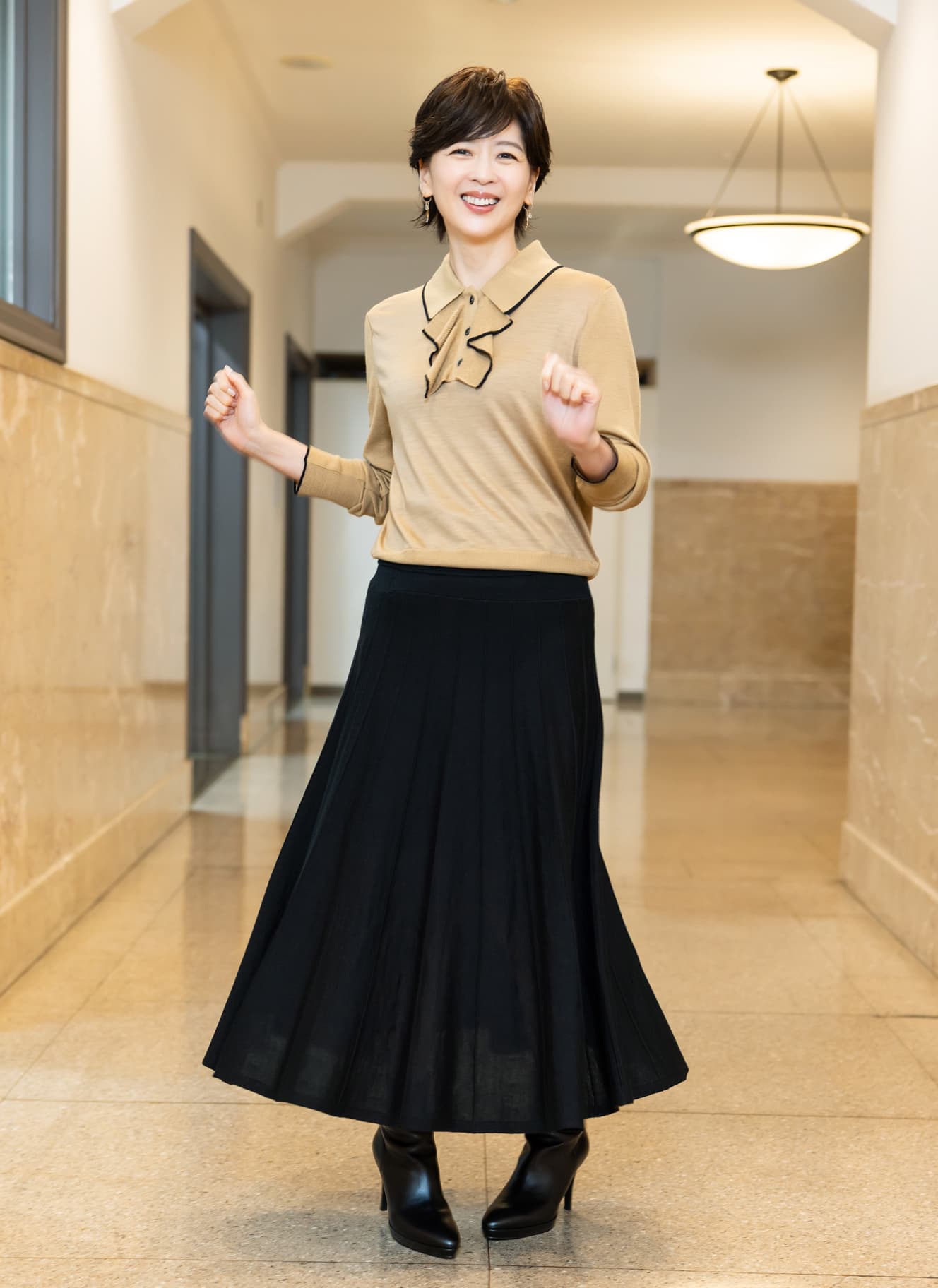



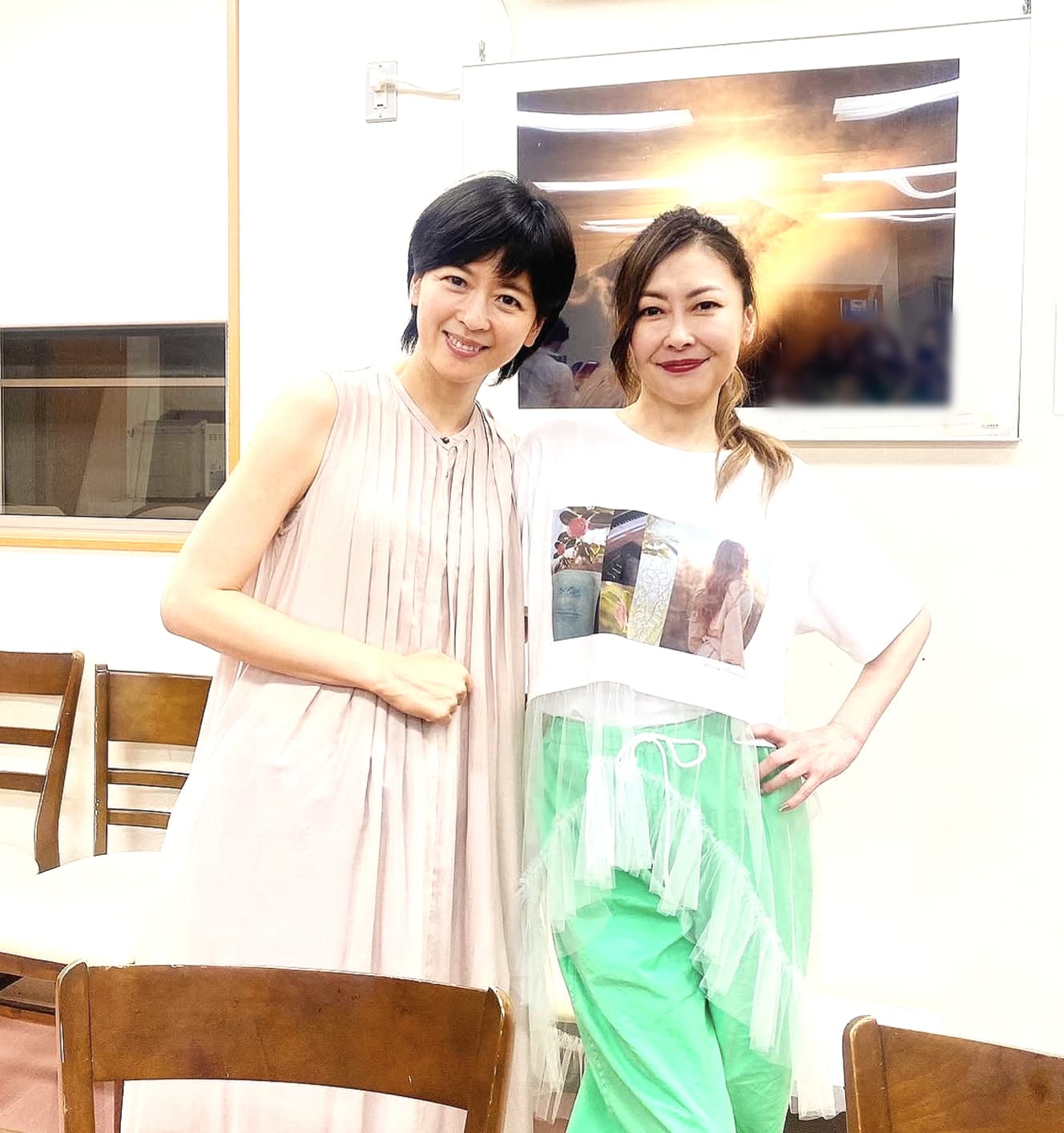
From the October 2 & 9, 2026, combined issue of “FRIDAY”
Interview and Text: Daisuke Takahashi PHOTOS: Hiroyuki Komatsu (2nd photo), Courtesy of Shinobu Nakayama