The “Bad Practice” Surrounding the Speaker’s Position Wasn’t Limited to the Fukuoka Prefectural Assembly… The Reality of “Cronyism in Personnel Appointments” Entrenched in the Yamanashi Prefectural Assembly


Hit-and-run accident involving an uninspected vehicle
“While the scandal involving the exchange of money over the positions of Speaker and Vice Speaker of the Fukuoka Prefectural Assembly is drawing attention, a malicious violation of the law by an incumbent LDP prefectural assembly member has occurred in Yamanashi Prefecture. He committed a hit-and-run in his own car—which had an expired vehicle inspection and was uninsured—and did not even report the incident to the police.
Even though the case was referred to prosecutors, the Prefectural Assembly’s punishment amounted to nothing more than a ‘reprimand,’ equivalent to a stern warning. Perhaps because media coverage has died down, there are even rumors that the assembly member himself plans to run in next year’s prefectural assembly election. This is absolutely unacceptable. As a fellow resident of Yamanashi Prefecture, I am deeply ashamed,”
These are the words of a source involved in Yamanashi prefectural politics. In Yamanashi Prefecture—often referred to, alongside Fukuoka Prefecture, as a “conservative stronghold”—a sense of pent-up anger is reportedly spreading among residents over the traffic accident caused by an incumbent LDP prefectural assembly member.
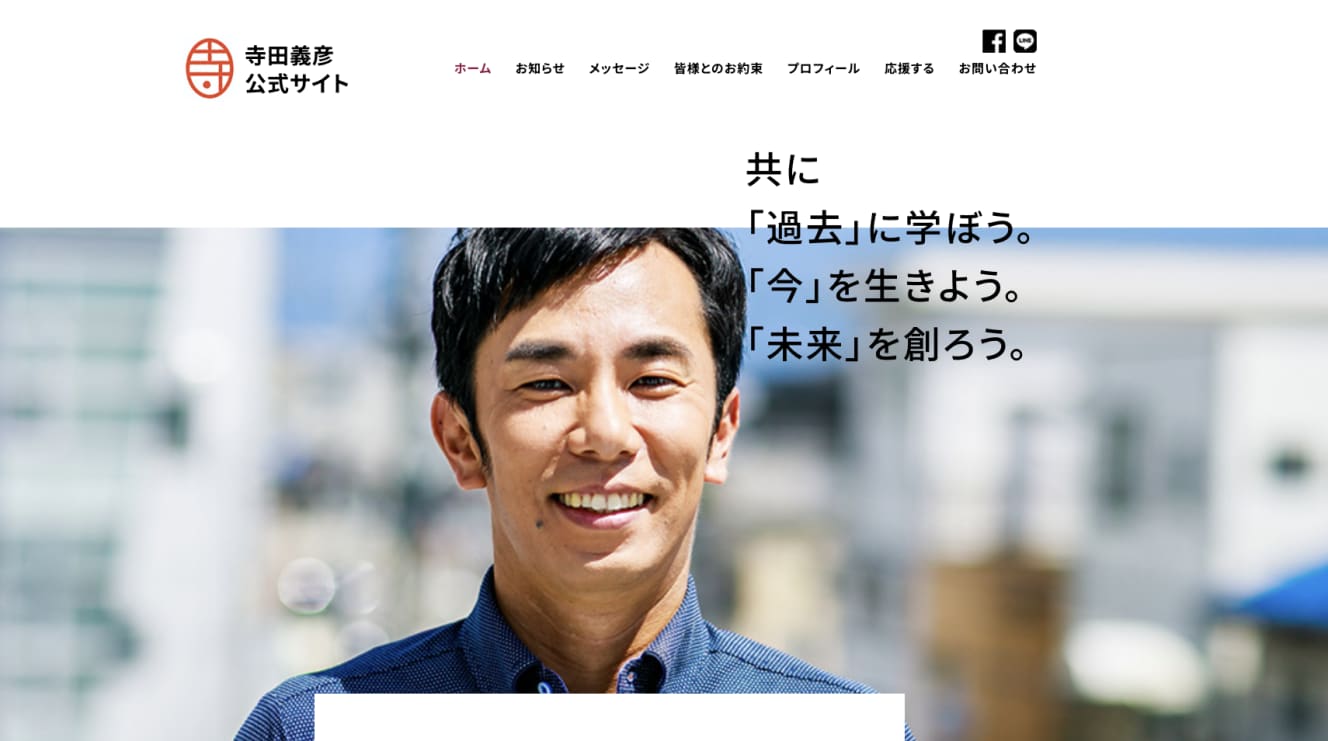
The person responsible for the “traffic accident” that sparked this controversy is Prefectural Assembly Member Yoshihiko Terada (46). After serving as a secretary to former House of Representatives member Noriko Miyagawa and holding two terms as a Kofu City Council member, Terada was elected to the Prefectural Assembly for the first time in the 2023 election without facing opposition.
According to media reports, the accident unfolded as follows: In the early hours of January 14 of this year, while driving on a prefectural road in Kofu City, Councilman Terada rear-ended a vehicle ahead of him at a low speed while in an intersection, causing minor neck injuries to the driver of the other vehicle.However, he did not report the incident to the police and drove away from the scene. Although the driver of the other vehicle reportedly pursued him in his car and a discussion took place between them, Councilor Terada still did not report the incident to the police. Ultimately, the police became aware of the incident after a passenger in the other vehicle filed a report.
During a voluntary police interview, it was revealed that the vehicle in which Councilman Terada was traveling had been without a valid vehicle inspection for three months, and his compulsory automobile liability insurance had also expired. Councilman Terada himself acknowledged these facts, stating, “I only realized this when it was pointed out during the investigation following the accident. I had truly forgotten about it.”
A prefectural assembly member—who is in a position to take the lead in upholding “laws and regulations”—caused a rear-end collision in a car with an expired vehicle inspection and failed to report it until the victim filed a report.The accident came to light in late March following a report in a local newspaper. Councilor Terada acknowledged the accident and apologized during the regular prefectural assembly session in late March after the report was published, but until then, he had remained completely silent.
On July 10,the Yamanashi Prefectural Police referred Councilor Terada to prosecutors on suspicion of violating the Act on Punishment of Motor Vehicle Drivers (negligent driving resulting in injury) and the Road Traffic Act (failure to report an accident), attaching a recommendation for “severe punishment” calling for an indictment—a move that underscores the “egregious nature” of Councilor Terada’s accident.
The Speaker’s Position Is Being Passed Around
Following the referral of Representative Terada’s case to prosecutors, Prefectural Assembly Speaker Hidenori Miyamoto (47) issued a stern warning dated July 10; however, the Prefectural Assembly has not imposed any disciplinary measures—such as a formal reprimand—that would require a formal resolution by the assembly.Hiroshi Moriya (69), chairman of the Yamanashi Prefectural Chapter of the Liberal Democratic Party, also expressed the view that “decisions regarding one’s political future are for the individual politician to make.” This approach—failing to impose disciplinary action and leaving the decision on whether to remain in office up to the individual who caused the incident—is beginning to inflame public sentiment among prefectural residents.
The source who made the initial statement continued, “There are quite a few residents who are outraged by this lack of transparency. Several supporters have said, ‘If Prefectural Assembly Member Terada runs for office next year, I will quit the LDP.’”
“Even before the case was referred to prosecutors, once the facts of the hit-and-run and failure to report the accident were confirmed, it would not have been unusual for him to be summarily dismissed in a private company. Yet, there has still been no movement to even call for a resolution urging his resignation.It’s a shameful situation, but a harmful practice known as the ‘passing around of the Speaker’s post’ is deeply entrenched in the Yamanashi Prefectural Assembly. Couldn’t it be that the culture of the Prefectural Assembly—which is deeply mired in this practice—has given rise to this response, which borders on irresponsibility? Given the lack of common sense displayed in this incident, I can’t help but think so.”
What does this mean?
“In the Yamanashi Prefectural Assembly, a system of cronyism has become the norm: as long as you belong to the largest caucus, the Speaker’s position will eventually come your way. Track record has nothing to do with it. As long as you’ve served three terms in the largest caucus—or four terms if your first election was a special election—the Speaker’s position automatically comes your way.The monthly assembly member’s stipend of 770,000 yen jumps to 910,000 yen for the Speaker. Above all, the distinction of having served as Speaker holds great value as a “badge of honor” even after retiring from the assembly.
“In 2024, it made headlines when the then-Speaker resigned after just 10 months in office. The stated reason—‘personal reasons’—was merely a pretext. Since the term for prefectural assembly members is four years, if each person serves as Speaker for one year, and assuming there are five members in their third term, one person would be left out. It is said that he stepped down after such a short tenure to accommodate this rotation.”
It is said that the Yamanashi Prefectural Assembly lacks a “boss” like former Fukuoka Assembly Speaker Isao Kurauchi (72). Instead, the source cited earlier criticizes the assembly, stating, “Because anyone can become speaker without having to do anything, it has become a clique that favors its own members.”Assemblyman Terada, who was involved in the recent incident, also belongs to the largest caucus.
Another prefectural government official familiar with the inner workings of the Prefectural Assembly continues:
“The current largest caucus is dominated by assembly members who support Governor Kotaro Nagasaki. The assembly member who served as speaker until very recently was once famous as part of the ‘anti-Nagasaki faction,’ but he assumed the speaker’s post after joining the largest caucus. One has to conclude that he has no political principles whatsoever.“Isn’t it the culture of the prefectural assembly—deeply entrenched in the internal logic that ‘if you’re elected three times, you get the speaker’s post’—that is causing them to lose sight of even basic social norms?”
In an interview with local media, Prefectural Assembly Member Terada stated, “I offer my sincere apologies to the other party involved in the accident. (Regarding my future in office,) I will provide an explanation after awaiting the judicial decision (on whether charges will be filed).”This magazine sent a written inquiry to Assemblyman Terada asking, “Why didn’t you report the incident to the police?” “Did you intend to conceal the fact that your vehicle inspection had expired?” and “Do you intend to run in next year’s prefectural assembly election?” We received the following response:
“As criminal proceedings are currently underway, I must refrain from answering the points raised in your inquiry.”
Does Assemblyman Terada—who claims he was unaware that his vehicle inspection had expired for three months and failed to report the “hit-and-run”—have the qualifications to remain in public office? His monthly assemblyman’s stipend of 770,000 yen continues to be paid to this day. What is also being called into question is the self-purification mechanism of the Liberal Democratic Party’s Yamanashi Prefectural Assembly.