Heavy Rains on the Noto Peninsula: A Walk Through the “Submerged Town” Hit by a Once-in-a-Millennium Downpour


Residents Once Again Plagued by Disaster
“We’d just started to settle down after being hit by the Noto Peninsula Earthquake. I never imagined this would happen…”
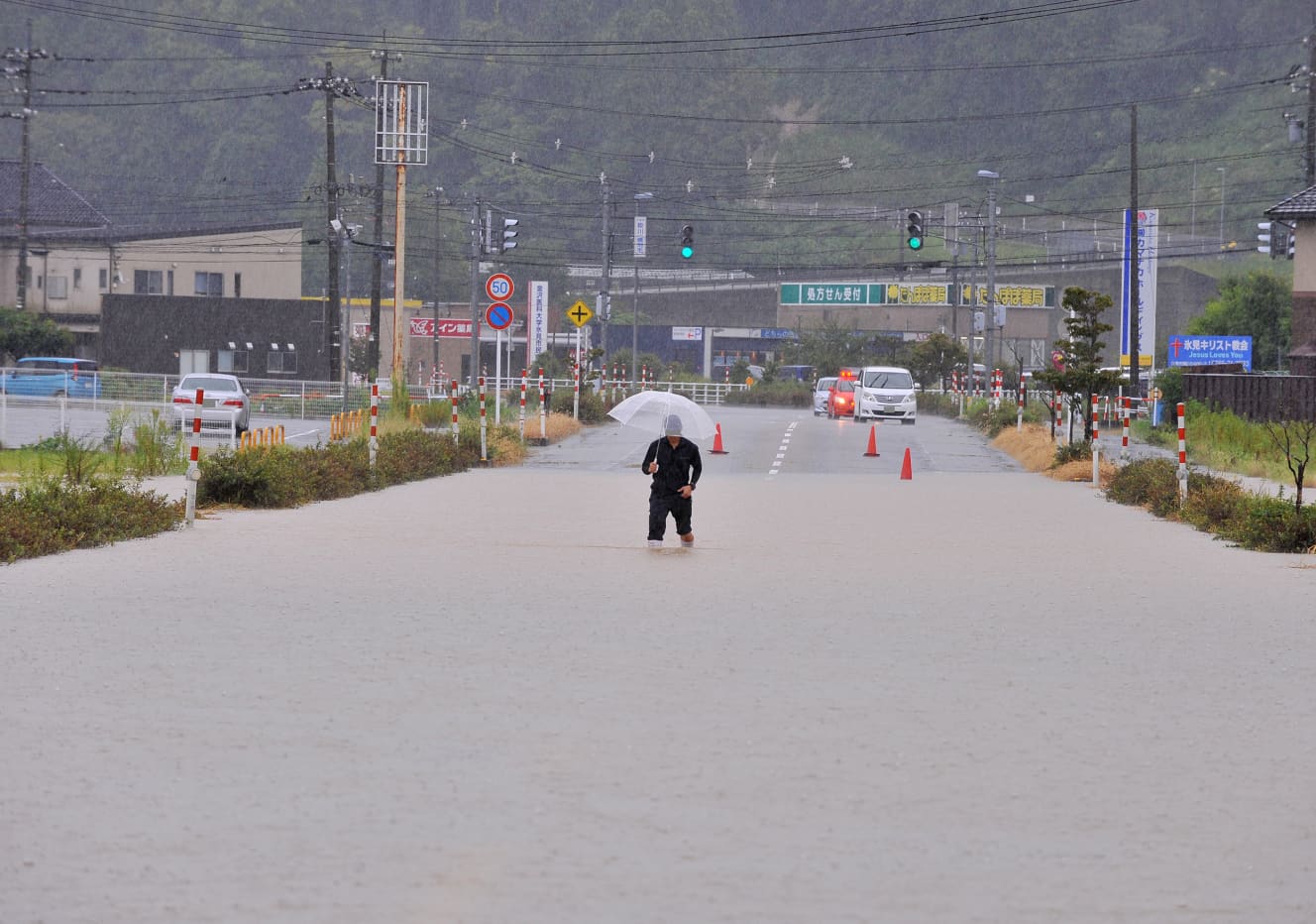
Standing knee-deep in water, a man in his 50s living in Himi City, Toyama Prefecture, muttered listlessly.
From August 26 to 27, Toyama and Ishikawa prefectures were hit by record-breaking torrential rain, prompting the issuance of a “Level 5 Special Heavy Rain Warning,” indicating an imminent threat to life.In Himi City, Toyama Prefecture, the 24-hour rainfall reached 362 mm, significantly surpassing the previous all-time record of 224.5 mm. Hakui City in Ishikawa Prefecture also recorded 343 mm.According to the weather information company “Weathernews,” this “Noto Peninsula Torrential Rain” represented an unprecedented rainfall level—a once-in-a-thousand-years event.
Amid the thunderous roar that seemed to split the earth, flashes of lightning, and the unceasing sound of rain, the reality was that not a single resident of the prefecture could get a good night’s sleep. Damage to homes exceeded 1,000 across both prefectures, and more than 60 people have been forced to live in evacuation shelters (as of September 6).
On August 27, a reporter from this magazine visited the disaster-stricken areas and witnessed the devastation firsthand.Rivers, rice paddies, roads… the boundaries between them had completely vanished, transforming the area into a “submerged town.” After speaking with the man mentioned at the beginning of this article, I met a man in his 70s who runs a farm in Himi City. “This whole area used to be nothing but rice paddies and fields,” he said quietly.
“The torrential rain—the likes of which I’ve never experienced—flooded my house and car. It’s as if I’ve lost absolutely everything. The rice and vegetables I’d nurtured with such care were submerged in muddy water… I guess they’re ruined.”
As he stood there, pelted by the rain that showed no sign of letting up, an indescribable sense of exhaustion and despair seeped from his demeanor.
On August 30—three days after record-breaking torrential rains struck Toyama and Ishikawa Prefectures—a Level 5 Special Heavy Rain Warning was issued in Fukui Prefecture as well. The warning covered Fukui City, Ōno City, and Katsuyama City. However, these three cities were not the only ones to suffer severe damage.Sakai City, where the rainfall index had not reached the threshold for issuing a special warning, also suffered significant damage.
Daily Life Disrupted by Torrential Rain
Major roads, including National Route 8, were all closed due to flooding. Rivers had burst their banks, and in some places, the water rose to knee or thigh level as people walked.
A father in his 50s and his daughter in her 20s, whom we encountered during our reporting, were holding a flashlight under the water and said with a look of confusion, “We’re looking for the license plate of a car that was swept away while the driver was on his way to work.” Furthermore, a dump truck driver, who had been suddenly given the day off due to the torrential rain, said with a look of anguish:
“Even dump trucks can’t handle water. There’s no way I can drive at this water level.”
What left a strong impression was a man in his 40s who could no longer live in his home, which had been flooded above the floor level. He was walking with his child, holding a large dog that looked to weigh at least 20 kg.
“We’re all going to evacuate to a relative’s house right now. The dog is part of the family, after all.”
More than two years have passed since the Noto Peninsula Earthquake on January 1, ’24, and the Hokuriku region—still in the midst of recovery—was struck by this record-breaking downpour. Why did such torrential rain, causing such extensive damage, occur? Professor Yoshihiro Tachibana of the Graduate School of Bioresource Sciences at Mie University explains.
“The underlying cause is the rise in sea surface temperatures due to global warming. This year, sea surface temperatures in the Sea of Japan were 3°C higher than average, supplying a massive amount of water vapor from the ocean. Furthermore, a weather front stalled near the Hokuriku region, and moist air flowed in continuously due to the influence of a typhoon and the Pacific high-pressure system, leading to these record-breaking downpours.
There is a possibility that torrential rain disasters caused by global warming will increase in the future. Particular caution is needed in regions like the Hokuriku region, which, like this recent event, have had little experience with heavy rainfall and are therefore not accustomed to dealing with it, raising the risk of significant damage.”
It would not be surprising to witness the same scene anywhere in Japan.


From the September 25, 2026 issue of *FRIDAY*
PHOTO: Junpei Kōta