Komeo’s Chilled Crab Ramen Linked to Mass Food Poisoning—Why Asakusa’s Kaniwo Faces No Issues


Considering closing the restaurant
Komeo (31), a former competitor on the one-minute combat sports event “BreakingDown” who later became a chef, has found himself at the center of controversy. An outbreak of mass food poisoning occurred after he served “Chilled Crab Ramen” at the “Azabu-Juban Noryo Festival,” held on August 22 and 23. A total of 78 men and women, ranging in age from one to 61, developed food poisoning, and three of them, including a one-year-old boy, were forced to undergo hospital treatment. Salmonella bacteria were reportedly detected in stool samples from the patients.
On September 3, Komeo posted the following on X:
“We will thoroughly implement measures to prevent anything like this from ever happening again. We will also proceed with compensation for those who have suffered health problems as a result of this food poisoning, on a case-by-case basis.”
Komeo’s restaurant “Kappo Komewo” in Azabu-Juban was ordered to suspend operations for seven days, from September 3 through September 9. A social affairs reporter for a national newspaper explains:
“Immediately after the festival, one person after another began reporting health problems, and the public health center has been conducting an investigation. Fortunately, no serious cases have been reported so far, but Komeo could potentially face claims for damages from the patients, including medical expenses, compensation for lost income due to being unable to work, and compensation for emotional distress.”
Under the Food Sanitation Act, prefectures and special wards are required to report cases of food poisoning to the Ministry of Health, Labour and Welfare when 50 or more people are affected. The reporter cited above says:
“In other words, it becomes a national-level matter. Going forward, if food poisoning occurs as a result of the provider failing to take the necessary hygiene and sanitation measures, causing health damage to customers, there is also a possibility that they could face charges of professional negligence resulting in injury.”
On his YouTube channel, in a video released on September 5, Komeo also suggested that he may close “Kappo Komewo:”
“Even after the period of suspension ends, we are considering closing Kappo Komewo. However, after thoroughly reviewing our hygiene management system and implementing measures to prevent a recurrence, I will reflect on what happened and decide whether or not to resume operations. At this point, no reopening date has been determined.”
Meanwhile, an apparently puzzling development has also emerged regarding the handling of the aftermath.
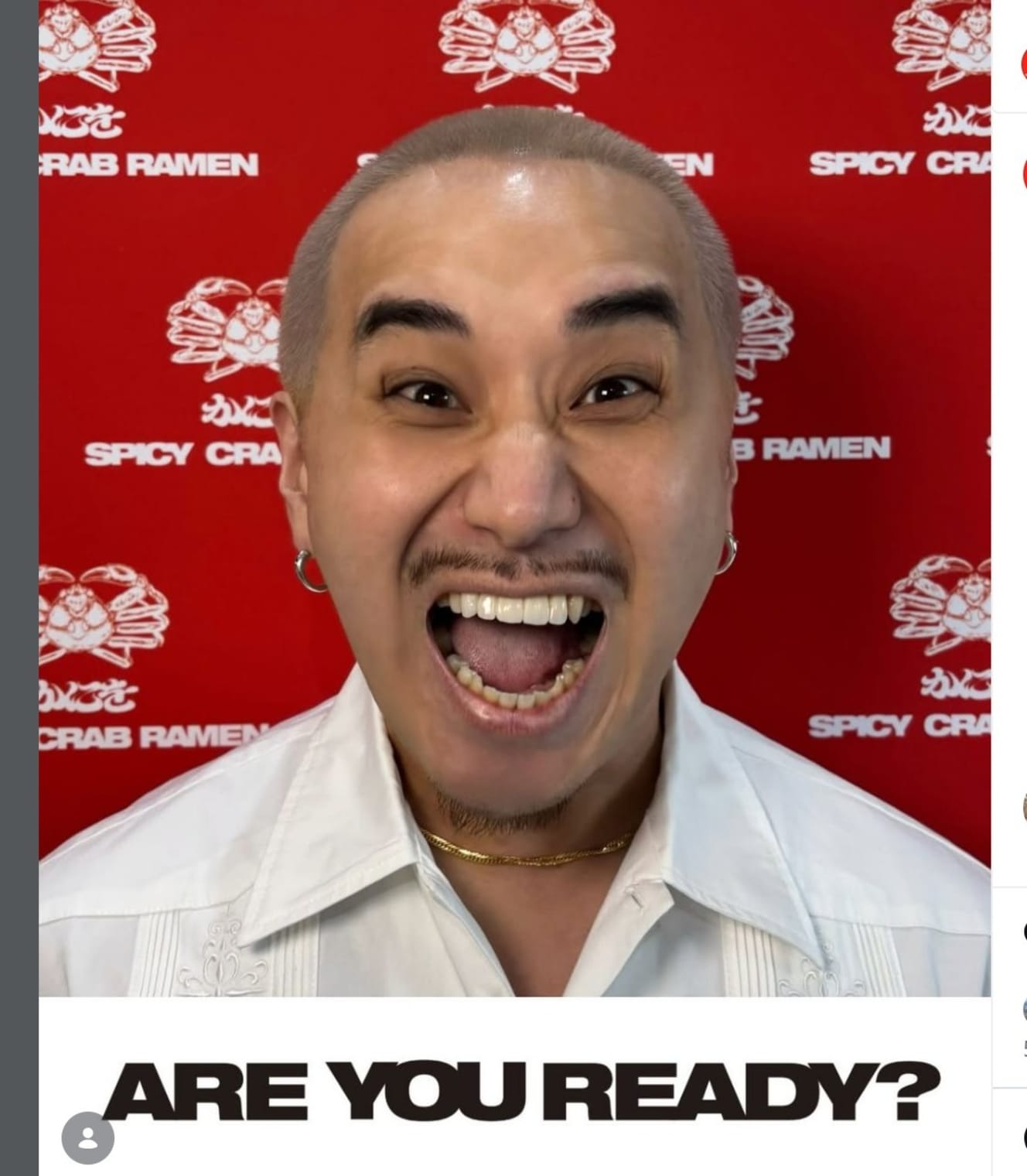
The product at the center of the incident was the “Chilled Crab Ramen,” but the restaurant specializing in crab ramen is not “Kappo Komewo;” it is “Kaniwo,” a ramen restaurant in Asakusa, Tokyo. The restaurant opened in May this year, and Komeo has revealed that he developed the ramen jointly with serial entrepreneur Yuji Mizoguchi (41). The restaurant has continued normal operations even after the food poisoning outbreak.
On social media, a flood of comments expressed confusion:
“It feels strange that Kaniwo, which serves the crab ramen, hasn’t been ordered to suspend operations.”
From there, some people went further, with comments such as:
“Is Komeo protecting Yuji Mizoguchi?”
Mizoguchi again
Mizoguchi’s detractors seem determined to somehow link him to the food poisoning incident, but in this case, it can be said that he is simply being caught up in the fallout. A director of a news program explains:
“The problematic Chilled Crab Ramen was prepared and served inside Kappo Komewo, which was located within the festival area, so responsibility lies with Komeo, the company president, and the restaurant itself. Because of the image associated with crab ramen, people tend to direct their anger toward Kaniwo, but that is not correct. I hear that even Mizoguchi is bewildered, saying, ‘Why is my name being brought into this?’”
That said, a September 4 article published by the “Sankei Shimbun,” after mentioning the relationship between Komeo and Mizoguchi, went out of its way to add the following explanation about Mizoguchi:
“He is known as a person involved in the planning of the cryptocurrency ‘Sanae Token,’ which bears the name of Prime Minister Sanae Takaichi.”
“It is certainly true that people in the industry are saying, ‘Mizoguchi again.’ There was the Sanae Token, and then the Mounjaro (a drug used to treat diabetes and obesity) issue. There have simply been too many troubles surrounding him.”
So says an entertainment reporter for a sports newspaper who spoke to this site.
Komeo, at the center of the controversy, is said to be questioning himself as a chef and deciding what course to take from here. The same reporter points out:
“The fact that he caused a mass food poisoning outbreak is extremely serious for a chef and is something that will follow him for the rest of his life. His crab ramen, which does not use pork, had apparently been well received in Muslim countries, and he had even been receiving offers to open overseas locations. Those plans will likely have to be reconsidered as well.”
Komeo now finds himself at a crossroads as a chef. At a time like this, one might expect his ally Mizoguchi to come up with a comeback story for him, but Attention is now focused on what Mizoguchi will do next.