The Dark Side of Online Sports Betting in Japan: The Operator Who Made ¥1.3 Billion During the North America World Cup


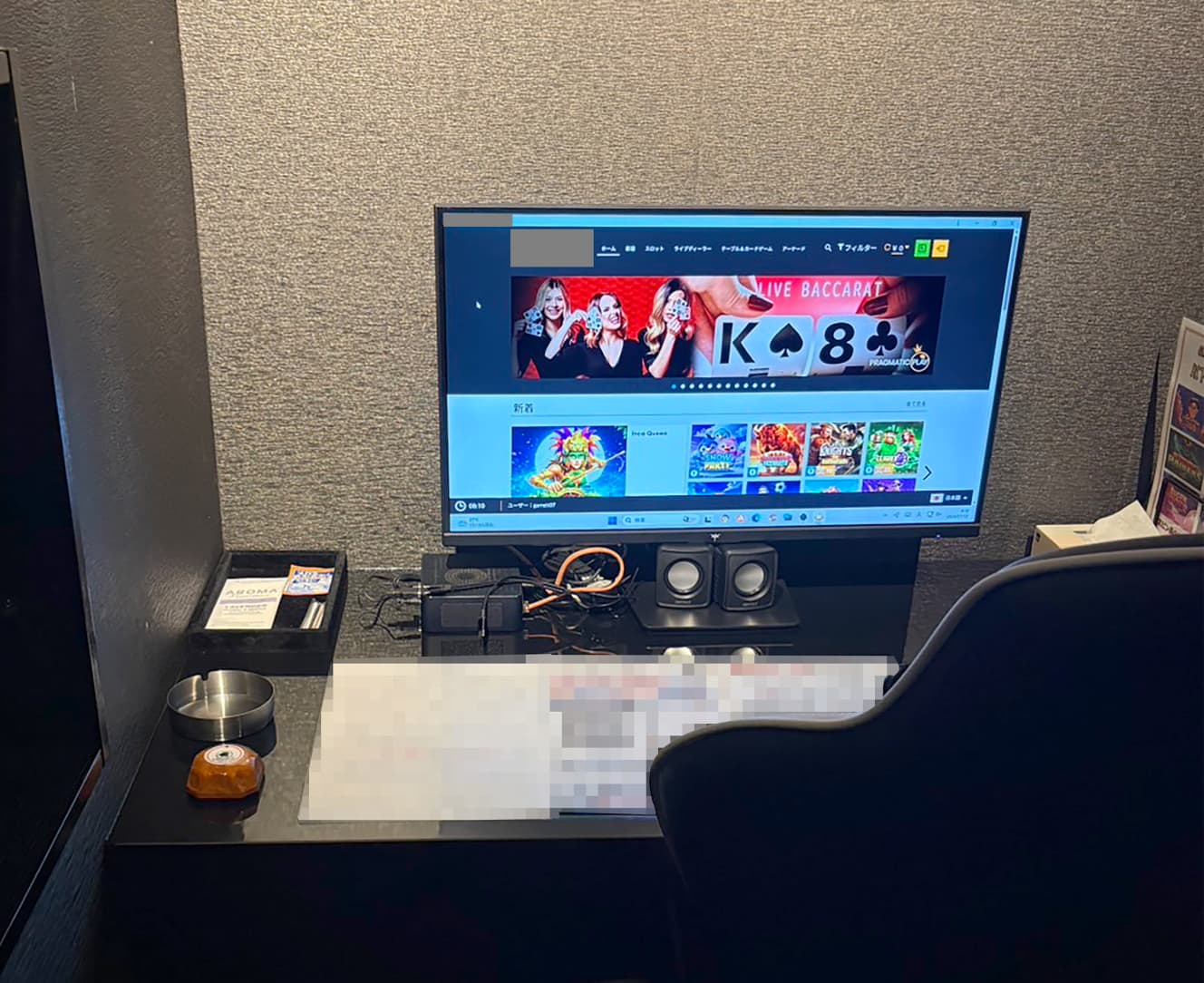
Players cash out their winnings through a separate operator. Illegal gambling is expanding among both young and elderly people
The reporter has a flyer in hand. At first glance, it appears to be nothing more than an advertisement for a smartphone game. But scanning the QR code in the center leads to a particular website. Clicking “Sports” in the tab brings up a long list of MLB and J.League games, each with odds attached to the possible outcomes. In reality, the flyer is a gateway to an online sports betting site.

Online sports betting was first legalized in the United Kingdom in 2005. Major European countries followed in the 2010s, while it became legal in the United States in 2018. Known overseas as sports betting, it covers a wide range of sports, including baseball, tennis, and golf. However, soccer is said to account for roughly half of the market, and the most recent North/Central American World Cup reportedly saw an unprecedented amount of money wagered.
“The North/Central American World Cup expanded to 48 participating countries, increasing the number of matches as well. The tournament became the largest ever in scale. Sports betting sites around the world were also extremely active, and the total amount wagered over the 39 days of the tournament is estimated to have exceeded ¥9.6 trillion. That is 1.7 times the amount wagered at the previous World Cup.” (National newspaper economics reporter)
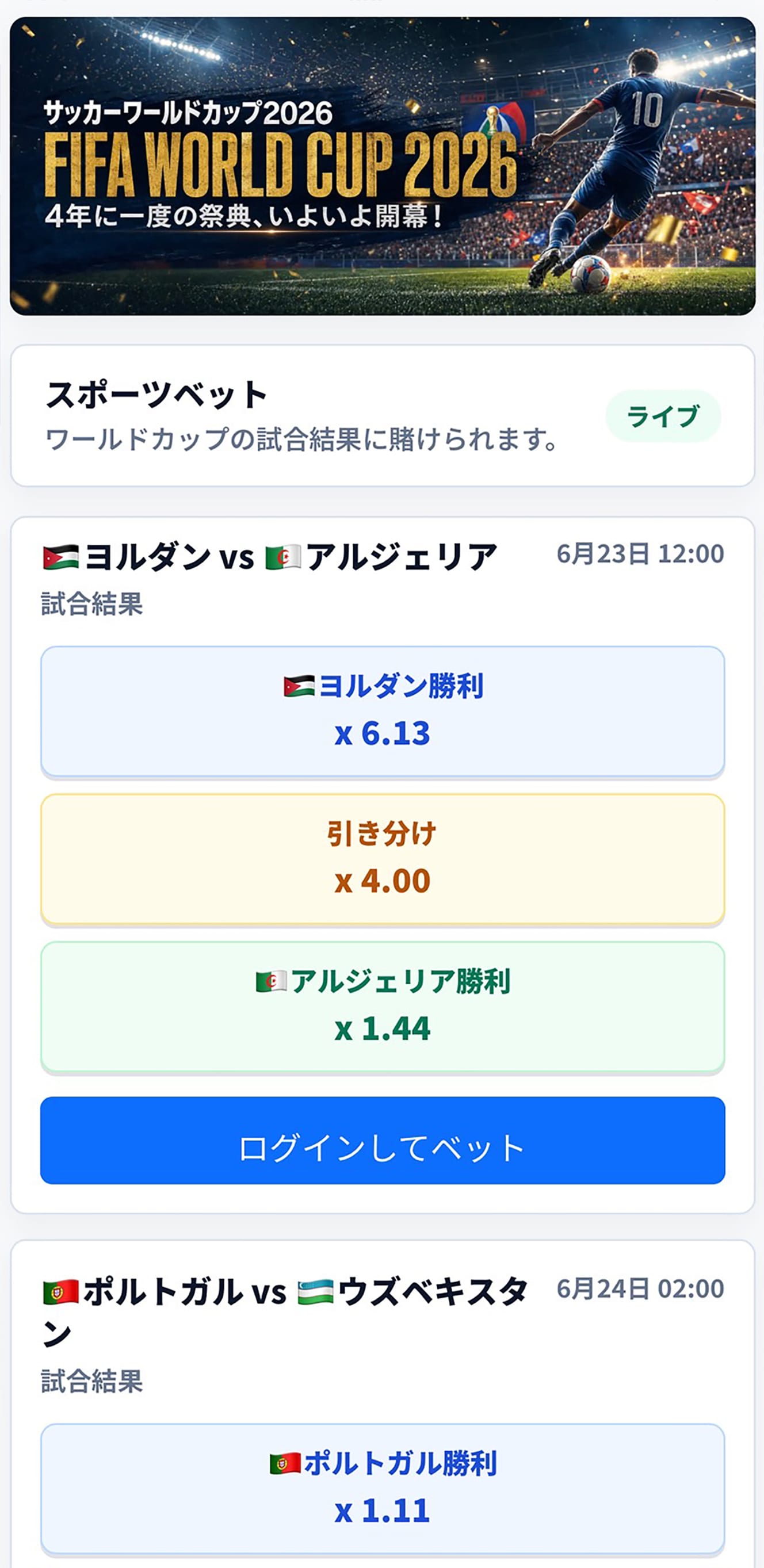
The third photo is a screenshot of the special page that appeared on the aforementioned site during the North/Central American World Cup. A long list of matches is displayed, each with odds for the possible outcomes. At the top is the message, “You can bet on the results of World Cup matches.” In Japan, too, the World Cup was being offered as a betting opportunity.
In Japan, gambling is prohibited in principle, and online sports betting is no exception. Yet in reality, enforcement has been slow to progress. In addition to the high level of anonymity, since everything can be completed using a single smartphone, another factor making enforcement difficult is the use of a three-party system, in which the operator and payment provider are separated.
“The operators issue points that can only be used within the site, and users purchase those points to gamble. On its own, this is no different from a legal amusement casino. However, online sports betting points can generally be exchanged for cash or cryptocurrency through designated payment operators.
By preventing the operator and customer from dealing directly with each other and instead routing the money through a third party, they are attempting to slip through the gaps in the law.” (Journalist familiar with the online gambling industry)
Ichiro Tanioka, president of Osaka University of Commerce and a specialist in casino research, explains:
“The three-party system, in which dedicated points are issued and users exchange them for cash or other assets at a separate location, is clearly illegal because it violates Articles 185 and 186 of the Penal Code, which cover gambling offenses.
“Even if a third party other than the user and the establishment is inserted and the route to cashing out is deliberately made indirect, the issued points are still judged to go beyond things provided for temporary amusement, as stipulated under the gambling offenses. The establishment could potentially face charges for habitual gambling, while users could potentially be charged with simple gambling.”

Sports betting operator “X” says, “Our customer base tripled”
“FRIDAY” succeeded in making contact with sports betting operator “X,” which produced the flyer mentioned at the beginning of the article. “X” is based in Shinjuku, Tokyo, and reportedly has around 5,000 users per month, making it a mid-sized operator within the industry.
“We launched around the time of the previous World Cup. Until then, we mainly focused on casino games, but for the World Cup, we spent several million yen creating a dedicated betting page. Our customer base increased by about three times. In terms of money, I guess we made around ¥1.3 billion in a single month.”
The “X” website can reportedly only be accessed by scanning the QR code printed on the aforementioned flyer. Normally, the company places flyers in closed locations such as illegal internet casino establishments, but during the World Cup, it actively solicited new customers.
“We sent a sales team to sports bars run by acquaintances and handed out flyers to people who looked interested. Until then, our customers had mainly been salaried workers in their 30s and 40s, but the number of people in their 20s and customers in their 60s increased considerably. Older people have money, so they tend to bet larger amounts. Being able to bring them into the fold was a big deal for us.”
Does the operator recognize that it is taking money from users through illegal activities? When confronted directly with the heart of the issue, the response was remarkably brazen.
“We don’t think of them as people we’re taking advantage of. We consider them our customers, first and foremost. Besides, we’re not the only ones doing this.”
There appeared to be no sense of guilt whatsoever about engaging in criminal activity.
According to the journalist quoted earlier, “Since the World Cup, more than 100 online sports betting sites have been identified in Japan.” The darkness is gradually eating away at Japan.
From the September 11–18, 2026 combined issue of “FRIDAY.”

PHOTO: Jiji Press (5th photo)