Lotte’s Naoya Masuda Hits 250 Saves After a Long, Grueling Road From Unknown to Greatness


A journey of a man who wasn’t a baseball elite
“More than anything, I was relieved. I desperately held back the tears because I didn’t want to cry. I had caused trouble for the team on the way to reaching this milestone.”
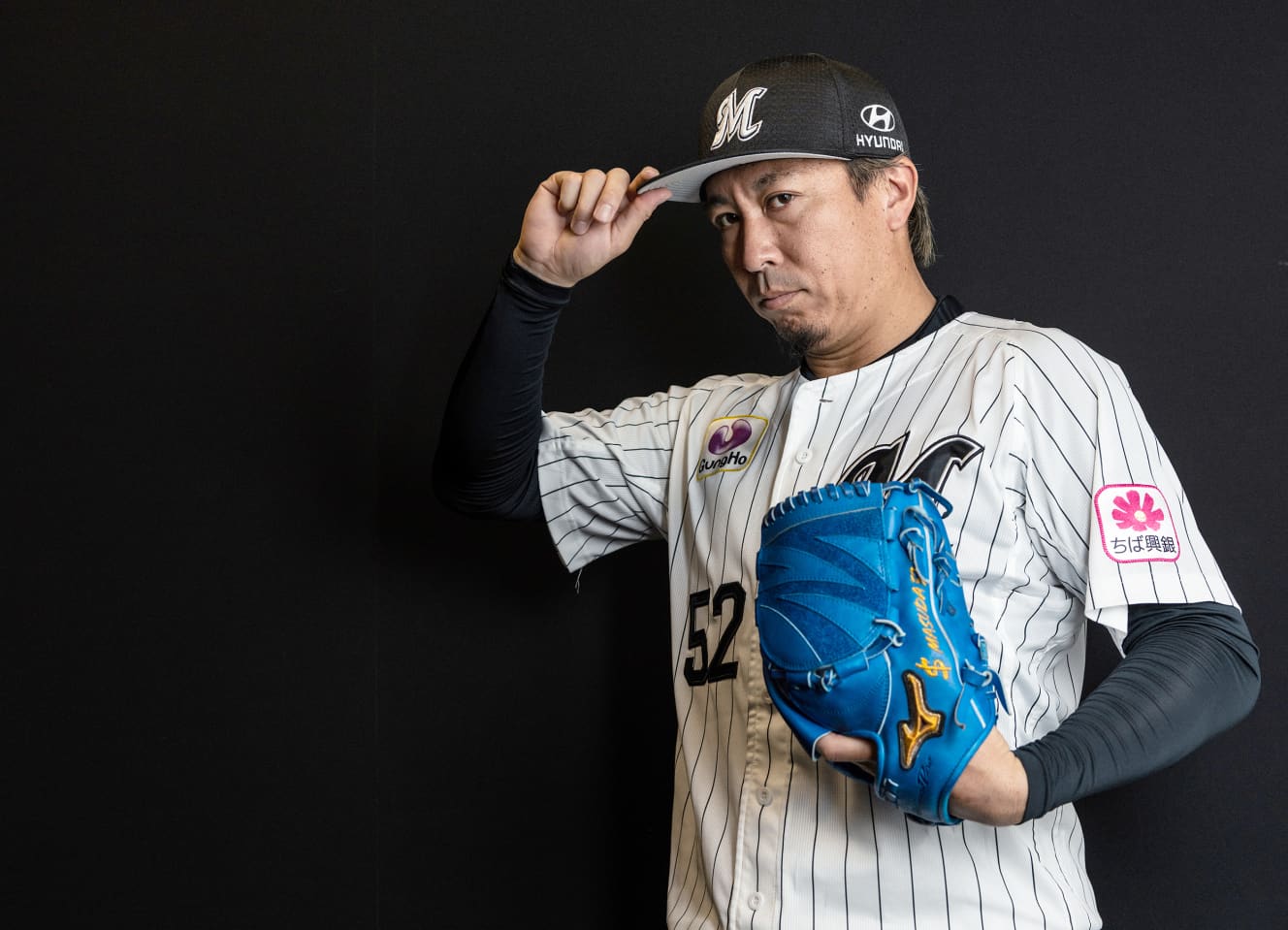
Naoya Masuda, 36, of the Chiba Lotte Marines, looks back on the moment he recorded his 250th career save, the milestone required for induction into the Meikyukai, on August 4 against the Seibu Lions.
Five pitchers have reached 250 career saves, including former Chunichi Dragons pitcher Hitoki Iwase and former Yakult Swallows pitcher Shingo Takatsu. However, Masuda took the longest to reach the milestone, doing so in his 795th game. He struggled last season, managing just five saves amid injury problems. Masuda continues:
“I really should have achieved it last year. But when I look back, what comes to mind are mostly the games where I failed to protect the lead. What kept me going when I felt like giving up was the support of the fans and my family. I’m truly grateful to my wife and children, who have always stood by me no matter what situation I was in.”
Masuda was not a baseball elite. He entered the professional ranks as a late-round draft pick from a university that was little known nationwide. Even when faced with disappointment, he gritted his teeth and persevered, ultimately achieving the historic milestone after overcoming numerous hardships.
“I never went to Koshien during high school (at Municipal Wakayama Commercial High School). On top of that, I had a heart condition. I wanted to be a pitcher, but because of the physical strain it could put on my body, I was a reserve infielder. I didn’t seriously start thinking about becoming a professional until I was in university (Kwansei International University), after my condition had improved and I had gained confidence as a pitcher. In the spring of my sophomore year, we played in the All-Japan University Baseball Championship, and in the semifinals, I was able to shut down powerhouse Hosei University with fastballs at 147–148 km/h. Then, in the spring of my senior year, I posted a 0.75 ERA, the best in the Hanshin University League.”
Masuda was selected by Lotte in the 2011 autumn draft. However, he was the fourth and lowest-ranked pick among the team’s selections. The other three—Takahiro Fujioka, Yuhei Nakagoushiro, and Daichi Suzuki—were all members of the Japan collegiate national team.
“A lot of media gathered for the rookies’ joint voluntary training, but they only interviewed the top three picks. Nobody came over to me. After practice, the three of them were approached by fans asking for autographs, while I would immediately ride my bicycle alone from Urawa in Saitama (where Lotte’s farm team stadium is located) back to the dormitory.
I knew there was nothing I could do about it because I was an unknown player, but I still felt frustrated. I didn’t want to fail to produce results and have people think, ‘As expected, Masuda was the only one who didn’t make it.’ I didn’t want to lose to myself—not to my fellow draft picks, but to myself.”
“Don’t hang your head and walk off!”
Masuda quietly devoted himself to his training. On the days when he ran the most, he covered 10 kilometers. He would run more than 100 kilometers over two weeks without taking a single day off.
“It gives me confidence because I can tell myself, ‘I’m capable of handling this much.’ Technically, it was a huge help to learn the shuuto from coach Takashi Nishimoto, who was with the team at the time. It allowed me to attack right-handed batters on the inside. Even an elite hitter isn’t going to have an easy time hitting if you keep attacking the inside of the plate.”
His hard work was recognized, and in his first season (2012), Masuda was entrusted with duties as both a setup man and closer. He pitched in four consecutive games from the very start of the season, helping the team win all four. Over roughly two months through May, he recorded 14 holds.
“The coach would tell me, ‘You’re going in,’ and I’d take the mound, then come back saying, ‘I’m back.’ It was just a repetition of that. I was completely focused, simply throwing the ball into the catcher’s mitt. In the end, that worked in my favor. Because I wasn’t thinking about unnecessary things, I didn’t put extra tension into my body and was able to throw with everything I had.”
On July 18 of that year, during a game against the Rakuten Eagles, an “incident” occurred that would prompt Masuda to grow mentally.
“I was taken out after putting two runners on without getting a single out. I must have been feeling down after failing to hold the lead. Saburo-san (the current manager) got angry with me. He said, ‘The fielders are always watching your back. Don’t show a weak attitude. Even if you get hit, don’t hang your head and walk off! You’re pitching as a representative of the team, so carry yourself with pride and confidence!’
“Saburo-san’s words really got through to me. From then on, I vowed that no matter how discouraged or disappointed I was, I would never show weakness on the field.”
He also made a conscious effort not to bring the gloomy atmosphere of a poor outing home with him. In the opening series against the SoftBank Hawks in March 2021, Masuda gave up walk-off hits in consecutive games. The team suffered three straight losses to open the season.
“I was really frustrated. We flew from Fukuoka, where we had been playing on the road, back to Chiba, and I drove home from the airport. But I really didn’t want to see my family while I was still feeling so down. I wanted to switch gears, so instead of parking the car and going inside, I stayed in the car. I must have been there for three or four hours. By the time I finally went inside the house, the date had already changed.
“But it’s precisely because I was able to overcome these bitter experiences that I was able to perform afterward. When things don’t go well, it’s easy to become negative. But you can’t produce good results with a negative mindset. I’ve continued pitching with the belief that, ‘It’s okay. Everything I’ve done up until now has been right.’”


From the September 11 & 18, 2026, combined issue of “FRIDAY”
PHOTO: Hiroyuki Komatsu