Tatsuya Imai Struggles On, Seiya Suzuki Shines… A Thorough Analysis Using the Latest Metrics! [Report Card for Japanese Major Leaguers]
[Part 2] Suzuki Is on Par with Hideki Matsui in His Prime; Tomoyuki Sugano of the Rockies Has Notched 12 Wins…


Japanese players have been making a remarkable impact in Major League Baseball this year. While talk shows feature the Samurai’s spectacular home runs and strikeouts day after day, their true ability cannot be measured by those highlights alone.
FRIDAY, in collaboration with Hiroshi Miyashita, an analyst at “DELTA Co., Ltd.”—a company specializing in baseball data analysis and operations—has thoroughly examined the statistics of Japanese Major Leaguers using the latest metrics.Eliminating subjective judgment and using evaluation criteria that go beyond traditional metrics like “batting average” and “wins,” we have created a “report card” rated from S to D to reveal the “true value of the Samurai players” (comments below are from Mr. Miyashita).
Seiya’s Performance Rivaled That of Matsui at His Peak
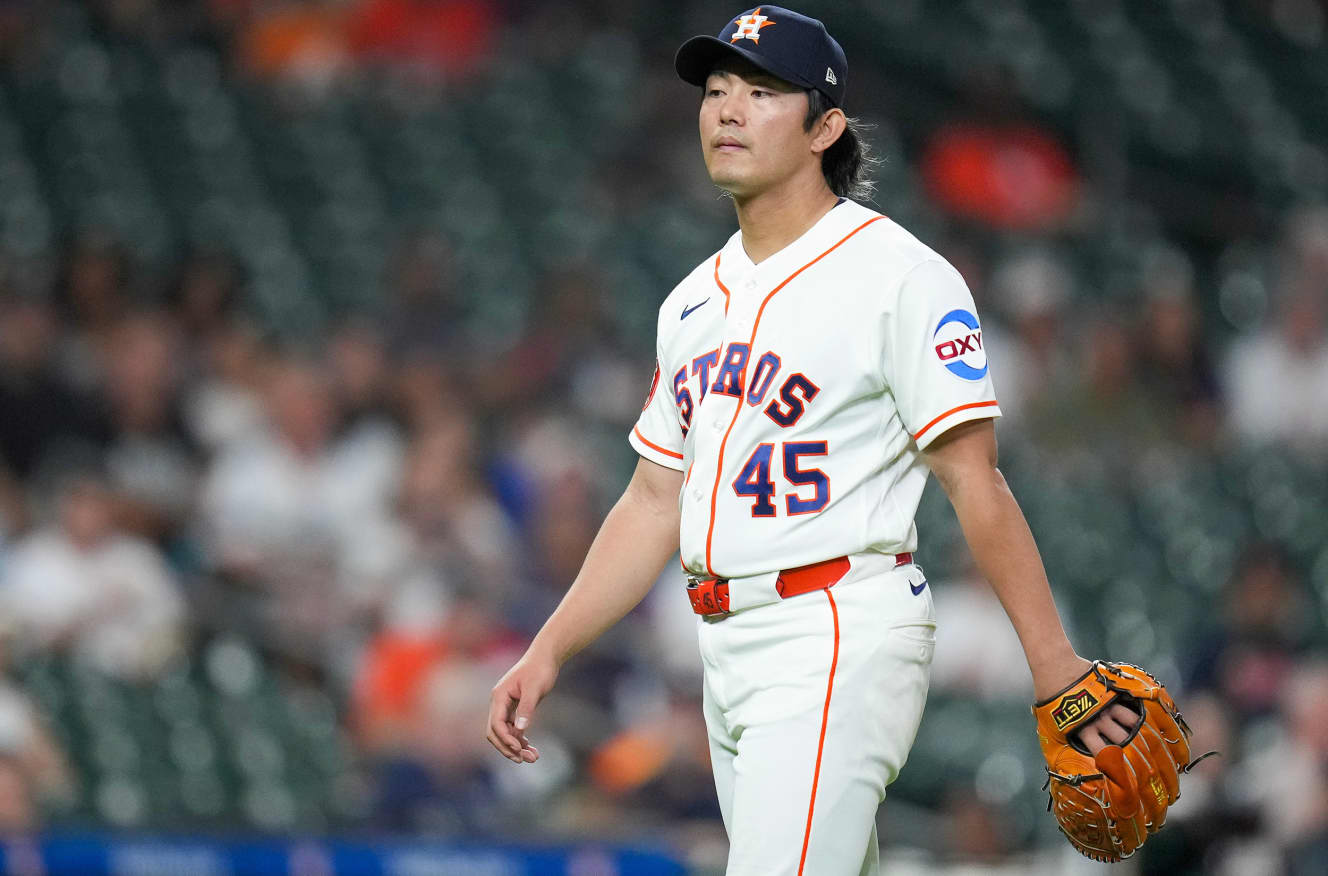
Tatsuya Imai (28) [Astros]
Overall Rating: C−
Astros rookie pitcher Tatsuya Imai (28) received a C rating.
“The issue is clear: control, above all else. His BB% (the ratio of walks to batters faced) is 14.6, which is among the worst in the league.In fact, his strikeout ability remains unchanged from his days in Japan; his K% (strikeouts per batter faced) is 27.6, well above the league average. His Whiff%—which measures the rate of swings and misses—is 32.2, one of the best in the league.
“If he had just one more breaking ball he could use to get ahead in the count, he still has plenty of potential to break out.”
Seiya Suzuki (32) [Cubs]
Overall Rating: A

Let’s turn our attention to the Cubs’ Seiya Suzuki (32). The Samurai Japan slugger, who has hit 22 home runs and posted an OPS of .840 so far this season, also earned an A rating.
“He struggled in May, batting in the .100s due in part to injuries, but he has now regained his usual consistency.In particular, his wRC+ (a metric that measures the number of runs a batter generates, with the league average set at 100) stands at 133. This is close to Ichiro’s career high and on par with Hideki Matsui at his peak.”
Shota Imanaga (32) [Cubs]
Overall Rating: C

Teammate Shota Imanaga (32) received a C rating. With 8 wins and a 3.78 ERA so far, he seems to be struggling, but…
“His Chase% (the percentage of pitches outside the strike zone that batters swing at) is very high at 35.1, and his BB% is quite low at 5.7. His control remains solid.However, his HR/FB Rate (the percentage of fly balls that result in home runs) has worsened to 16%, which is 2.4% higher than last year. He’s unluckily giving up more home runs than he did last year.”
Challenges Facing a Struggling Chiga
Tomoyuki Sugano (36) [Rockies]
Overall Rating: D

Conversely, Tomoyuki Sugano (36) of the Rockies, who has racked up 12 wins so far, received a surprising D. It seems he is “overrated.”
“His K% is 13.8, among the lowest in the league, and his HR/9 (home runs allowed per nine innings) is 1.92, also among the worst in the league. Even considering that his home stadium is the high-altitude Coors Field, it’s hard to call him a good pitcher based on these numbers alone.Nevertheless, the reason he’s holding down a spot in the rotation is likely because his technical skills—such as pitch selection in tight situations and his ability to outmaneuver batters—are second to none. If there’s one positive statistic to highlight, it’s his BB%: at 5.4, it’s lower than Imanaga’s and ranks among the best in the majors.”
Yusei Kikuchi (35) [Angels]
Overall Rating: D

Yusei Kikuchi (35) of the Angels, who was highly regarded for his ability as one of the league’s premier “inning eaters,” has made only eight starts this season without a win due to inflammation in his left shoulder that began in April. With an ERA in the 6.00 range and a lackluster performance, he receives a D rating.
Masahiro Yoshida (33) [Red Sox]
Overall Rating: C

“Masanao Yoshida (33) of the Red Sox has rebounded from last year’s slump and, despite limited playing time, has posted a strikeout rate of 11.1%, one of the lowest in the league.His wRC+ of 108 isn’t bad either, but since he’s expected to be sidelined for an extended period due to a left hamstring injury, he receives a C rating.”
Yuki Matsui (30) [Padres]
Overall Rating: C+

Finally, let’s analyze two relief pitchers. The Padres’ Yuki Matsui (30) suffered a left adductor injury in February, but since returning in early May, he has shown consistent pitching, particularly with a Hard Hit%(the percentage of hard-hit balls traveling 95 mph or more, approximately 153 km/h) at 28.7 and a Whiff% of 35.4—both among the league’s best. His ERA is also a career-high 2.13.Although he has yet to make many appearances in crucial situations, he received a C+ rating.
Kodai Senga (33) [Mets]
Overall Rating: D

“Kodai Senga (33) of the Mets was in terrible form as a starter, with a 0-9 record and an ERA in the 7.00s, and was moved to the bullpen midway through the season. Given this, we have no choice but to give him a D rating.
On the other hand, while concerns about his control remain, his average fastball velocity has increased by 1 mile per hour since moving to the bullpen, and his K-BB% in August rose by more than 5 points compared to July.His challenge moving forward is to revive his signature forkball. Compared to his prime, many of his pitches have been drifting toward a sinker trajectory, making it easier for opposing batters to read them. However, since the transition, the vertical movement of his forkball has gradually improved, returning to its former form.”
With the decisive month of September finally upon us, who among the Samurai will put on a spectacular performance and cause the metrics discussed so far to skyrocket?
From the September 11 & 18, 2026, combined issue of *FRIDAY*
PHOTO: AFLO