One Year After Opening, Junglia Okinawa Still Faces Ride Closures and a Growing Local Divide


In the first part of this report, we looked at how “Junglia Okinawa,” now marking its first anniversary, has worked to address the complaints that piled up soon after opening, including the waits are too long and it’s too hot (read the first part here).
However, while waiting times for attractions have been dramatically reduced, attendance has fallen to less than half of what it was when the park first opened. With only a limited number of air-conditioned rest areas, the grueling experience of walking around the park in the middle of summer remains very much a reality.
So, how much more enjoyable have the attractions themselves become? When a “FRIDAY” reporter actually walked around the park, a different problem emerged—one that had little to do with waiting times.
As the waiting-time problem improves, a new problem emerges: You can’t even ride the attractions!
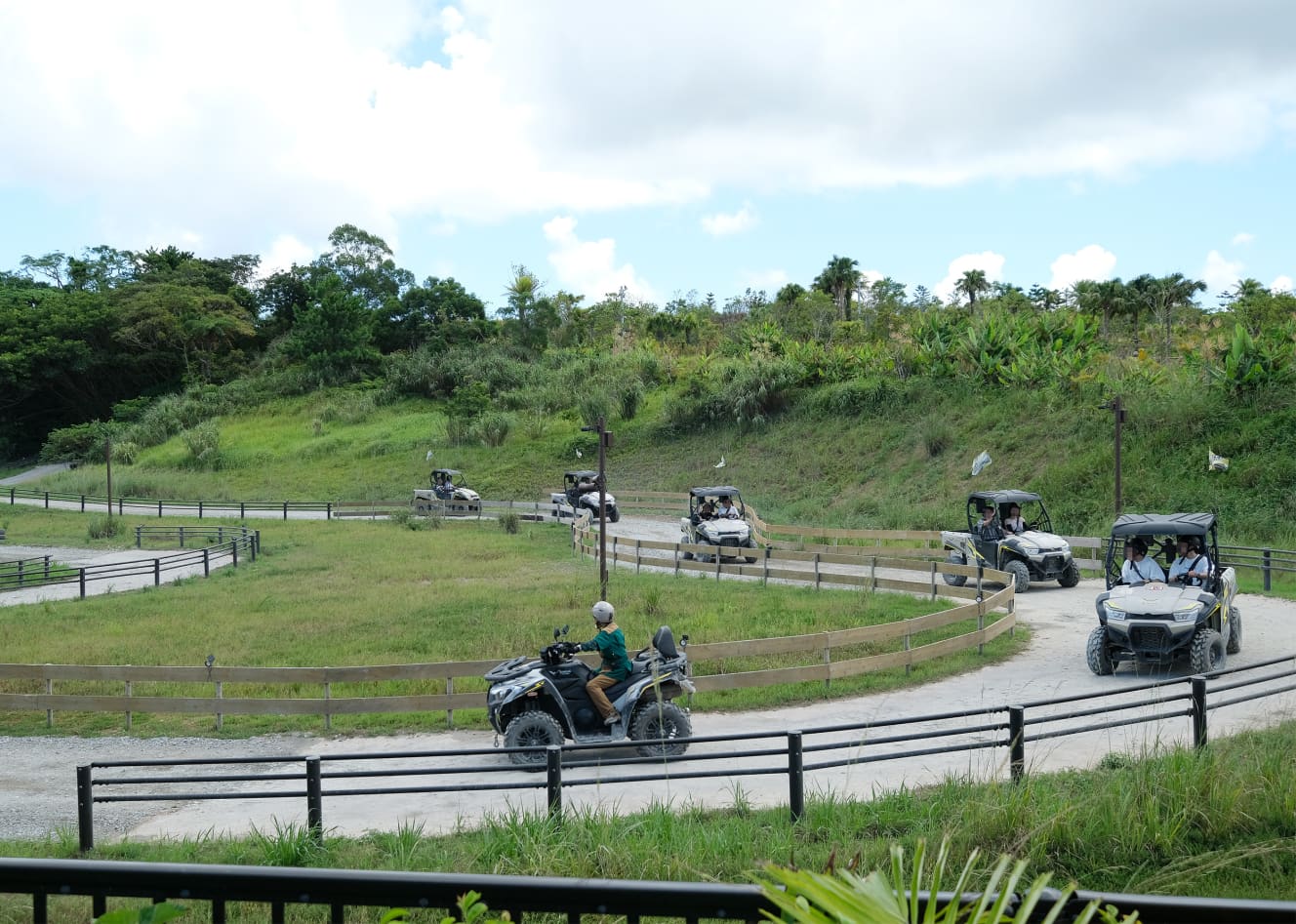
On the other hand, the long waits for attractions had improved dramatically. Whereas three- to five-hour waits were once commonplace, the maximum wait now appeared to be around one hour, with most attractions accommodating visitors within 30 minutes. “Dinosaur Safari,” one of the park’s signature attractions, where visitors ride an off-road vehicle through an area inhabited by dinosaurs, took only about 20 minutes to experience.
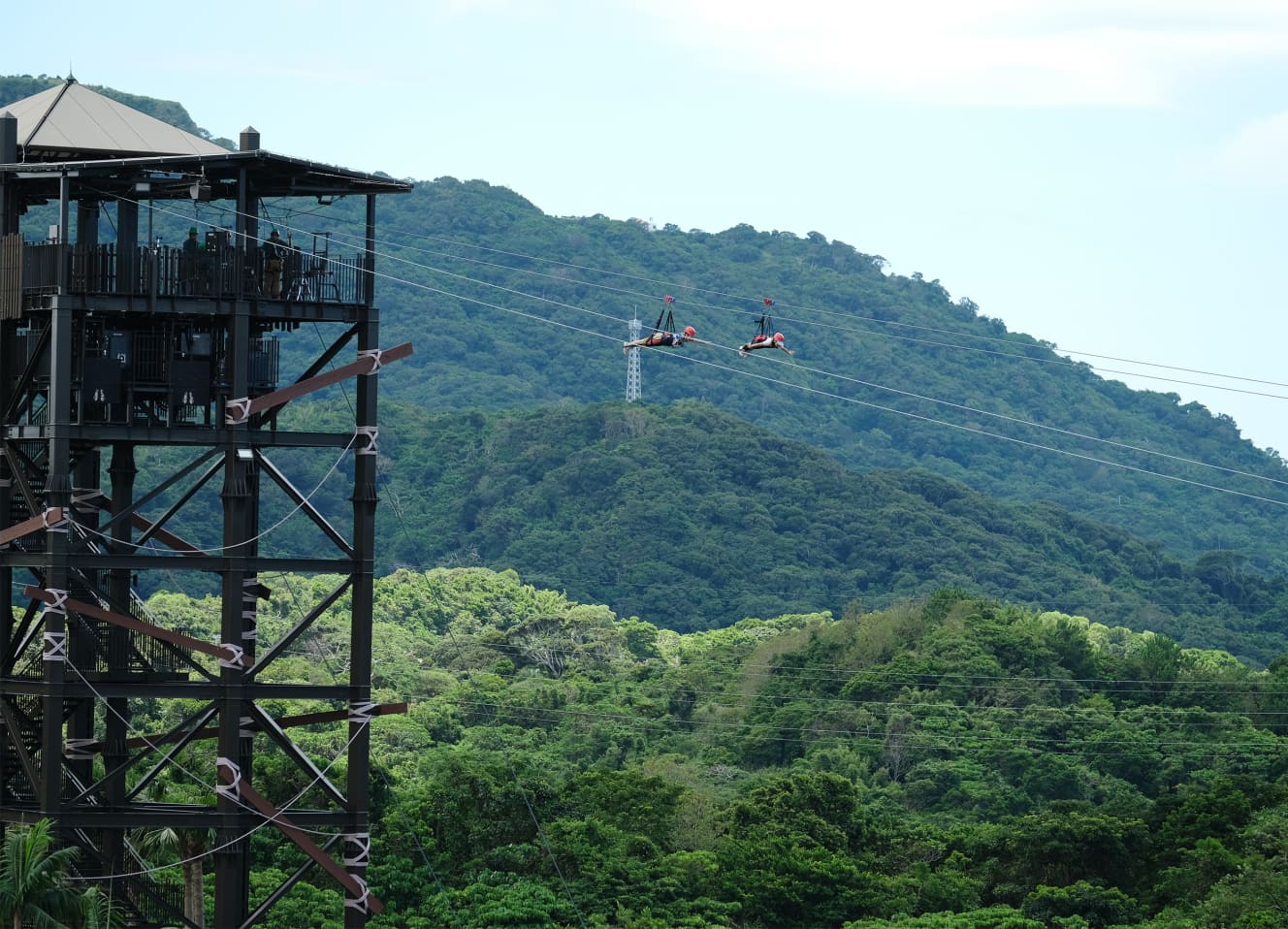
But the joy was short-lived. The reporter soon ran into another problem. Four attractions, including “Horizon Balloon,” a popular signature attraction featuring a ride in a hot-air balloon, were either suspended or still preparing to open, making them unavailable. Four of the harness-based, interactive attractions were operating, but access was by lottery. The reporter entered the lottery twice for “Sky Phoenix,” the giant zipline, but lost both times. Of the park’s 16 interactive attractions in total, half were not even accessible by simply waiting in line.
You can ride without entering the lottery if you purchase a paid pass, but as a rookie reporter, I simply couldn’t afford to spend around ¥7,000 on travel, another ¥6,930 for an unlimited ride pass, and then roughly ¥2,000 per attraction on top of that.
Let’s talk about food costs, too. At lunchtime, after making it to the restaurant on the verge of heatstroke, the reporter arrived at the aforementioned “Panorama Dining,” the only indoor restaurant in the park. I made a reservation on the spot and, 15 minutes later, finally stepped inside the air-conditioned restaurant. I could feel my drained energy slowly returning.
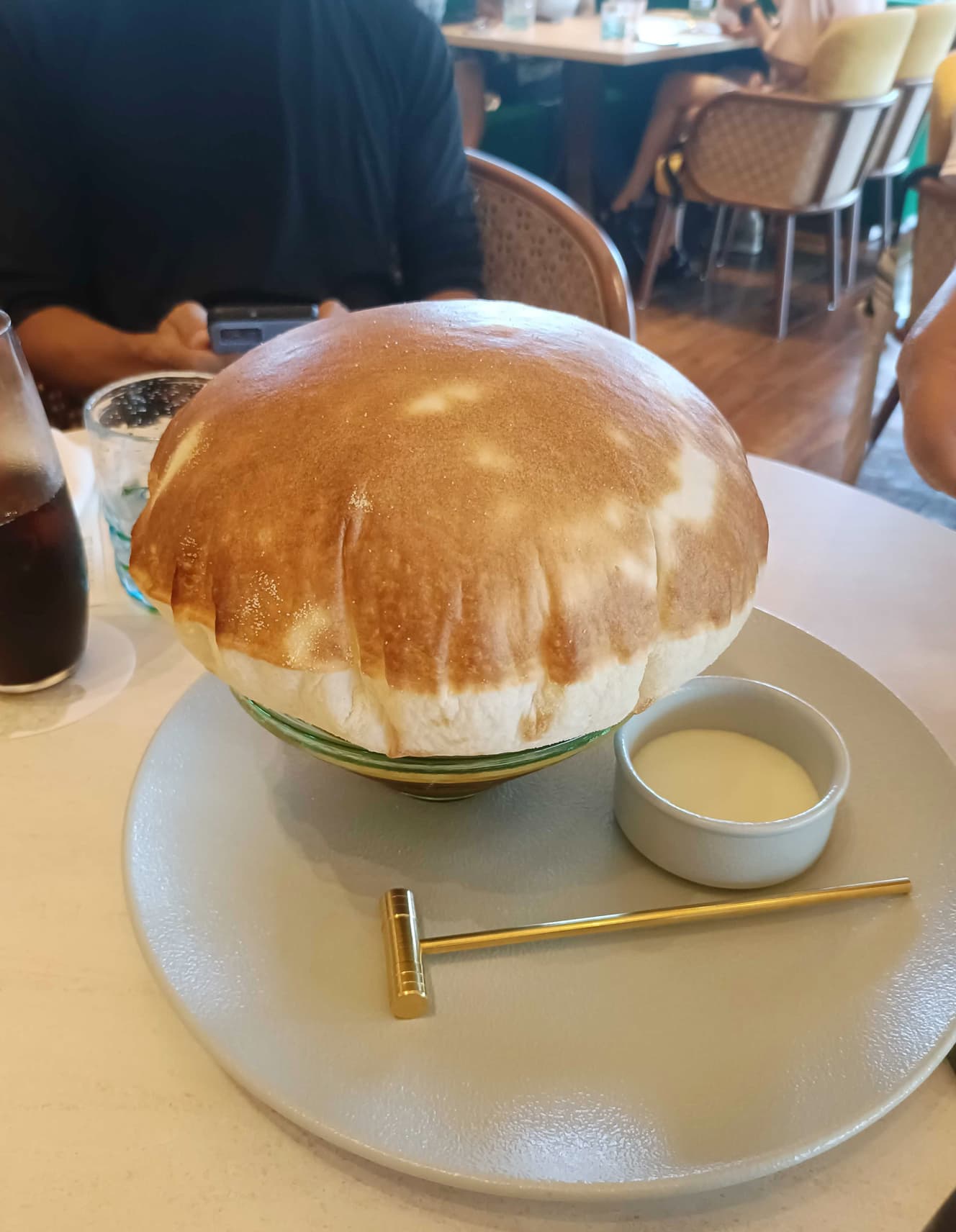
Once seated, the waiter recommended ¥7,000 and ¥9,000 set menus, which I politely declined. Instead, I ordered the “JUNGLIA Balloon,” a pot pie modeled after the hot-air balloon that serves as a symbol of the park. It was a modest 15 centimeters in diameter, but the price was a hefty ¥2,800. Looking over the menu, I saw dish after dish priced in the ¥2,000-to-¥3,000 range.
Ten minutes later, the pot pie arrived. Hidden beneath the fluffy pastry crust was a rich beef stew. The portion was a little small for a reporter in his 20s, but it was delicious.
After walking around in the scorching heat and losing two lottery attempts for attractions, the thing that lifted the reporter’s spirits was the warm hospitality of the park’s staff. While visitors waited to use the facilities, the cast members entertained them with quizzes and quick gags so they wouldn’t get bored. Their hospitality brought a smile to the reporter’s face.
One male employee proudly said, “The motivation among our frontline cast members is extremely high.” According to him, this was partly due to a change in how “Katana Inc.,” the company that spearheaded the park’s launch, was involved in its operations. The employee continued:
“When we first opened, people with experience operating USJ who had been brought in by Katana were giving instructions. But their leadership was too strong, and frontline employees’ opinions were often ignored, so quite a few staff members were dissatisfied.
But after about a year since opening, they stopped getting involved in frontline operations as much. Mr. Morioka (Tsuyoshi, 53), the CEO of Katana, didn’t even attend the park’s first-anniversary event. More part-time workers have also been promoted to full-time positions, and management has started listening to opinions from the frontline. Everyone is working with a lot more energy.”
I spoke with several employees, and many of them were positive, giving the impression that they were determined to change the park’s difficult circumstances. They also said they had a secret weapon for getting through this year’s brutal summer heat.
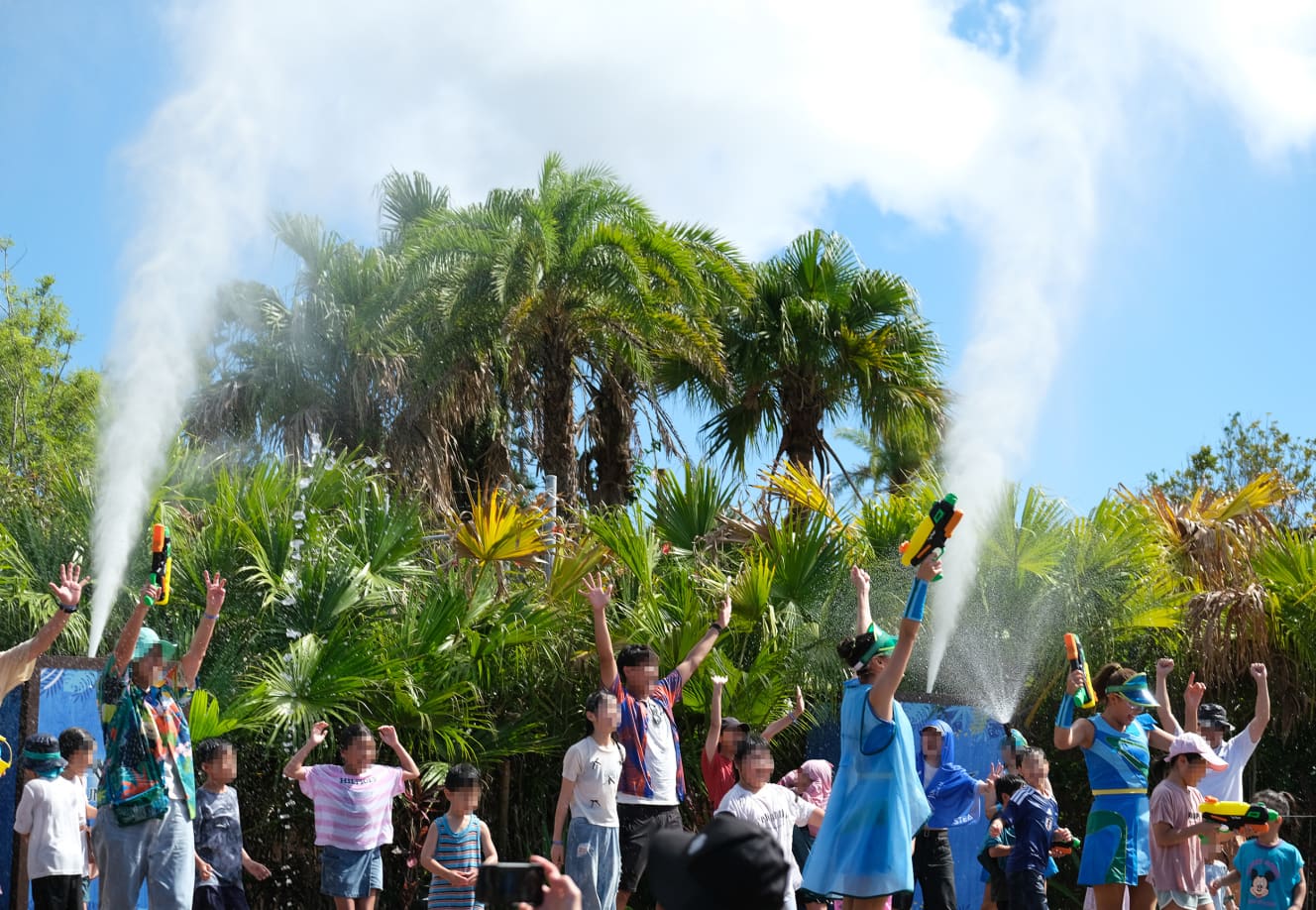
“It’s called the ‘Summer Soaking Wet Operation!’ Water Rangers armed with water guns cool down guests, while the ‘Squall Dance’ gets everyone excited as they dance and get soaked. If you’re going to sweat anyway, you might as well get completely drenched and have fun!” —Same employee
Once an hour, giant columns of water erupted from various locations throughout the park, followed by dance shows where guests and staff danced together while getting soaked. The reporter also experienced it, as described at the beginning of this article. Honestly, the effect was questionable, but the enthusiasm among the frontline staff determined to beat the heat was very real.
The reporter continued walking around the park afterward and managed to experience a total of three attractions. At 5 p.m., when the park closed, I left Junglia.
The growing rift with local residents
Another issue surrounding Junglia that has been widely reported by various media outlets since its opening is the friction with the local community. I spoke to various local residents, including hotel staff and city hall officials in Nago, but almost everyone responded coldly, saying, “I haven’t been there even once.”
One restaurant owner in Nago expressed disappointment: “Honestly, the number of customers we’re getting is below what we expected. I think people who go to Junglia are so exhausted afterward that they don’t bother going into the city to have drinks.” The expected benefits to the local economy did not appear to be reaching the community.
If anything, some nearby residents even said that “Junglia’s presence is threatening the daily lives of local residents.”
“The roads around here have a speed limit of 40 km/h, but quite a few visitors drive at over 60 km/h. There have been more rear-end collisions at intersections near Junglia, and residents are frightened. Even when we ask Junglia to take measures, they just brush us off by saying, ‘That’s the city government’s job.’”
As I walked through Nakayama Ward in Nago, which borders Junglia, I was approached by a man in his 70s who identified himself as the chairman of the local senior citizens’ association.
“There are many bitter melon and coffee plantations in Nakayama, and we draw water from the Nishiyabugawa River, which runs through the area. But there are times when the water volume drops to less than half. In June, a local spring that had been used for nearly 60 years stopped flowing. In April, we submitted a request to Nago City for an investigation into changes in groundwater, spring water, and the natural water cycle, and discussions began in the city council in June.”
The chairman took a critical view of the “Summer Soaking Wet Operation,” which uses large amounts of groundwater. However, Japan Entertainment, the company operating Junglia, responded as follows:
“It is clear from geological and hydrological structures, as well as various survey data, that there is no causal relationship between our water pumping operations and the decrease in the water volume of the Nishiyabugawa River. Furthermore, the water volume of the Nishiyabugawa River has already recovered to approximately its previous level due to rainfall and other factors.
“At the same time, we recognize that it is extremely important to carefully explain the situation to local residents in order to dispel their concerns and misunderstandings.”
One year after opening, improvements could be seen, but challenges both inside and outside the park remained. The hurdles Junglia must overcome to become one of Japan’s leading theme parks remain high—and there are still many of them.
From the September 4, 2026 issue of “FRIDAY.”
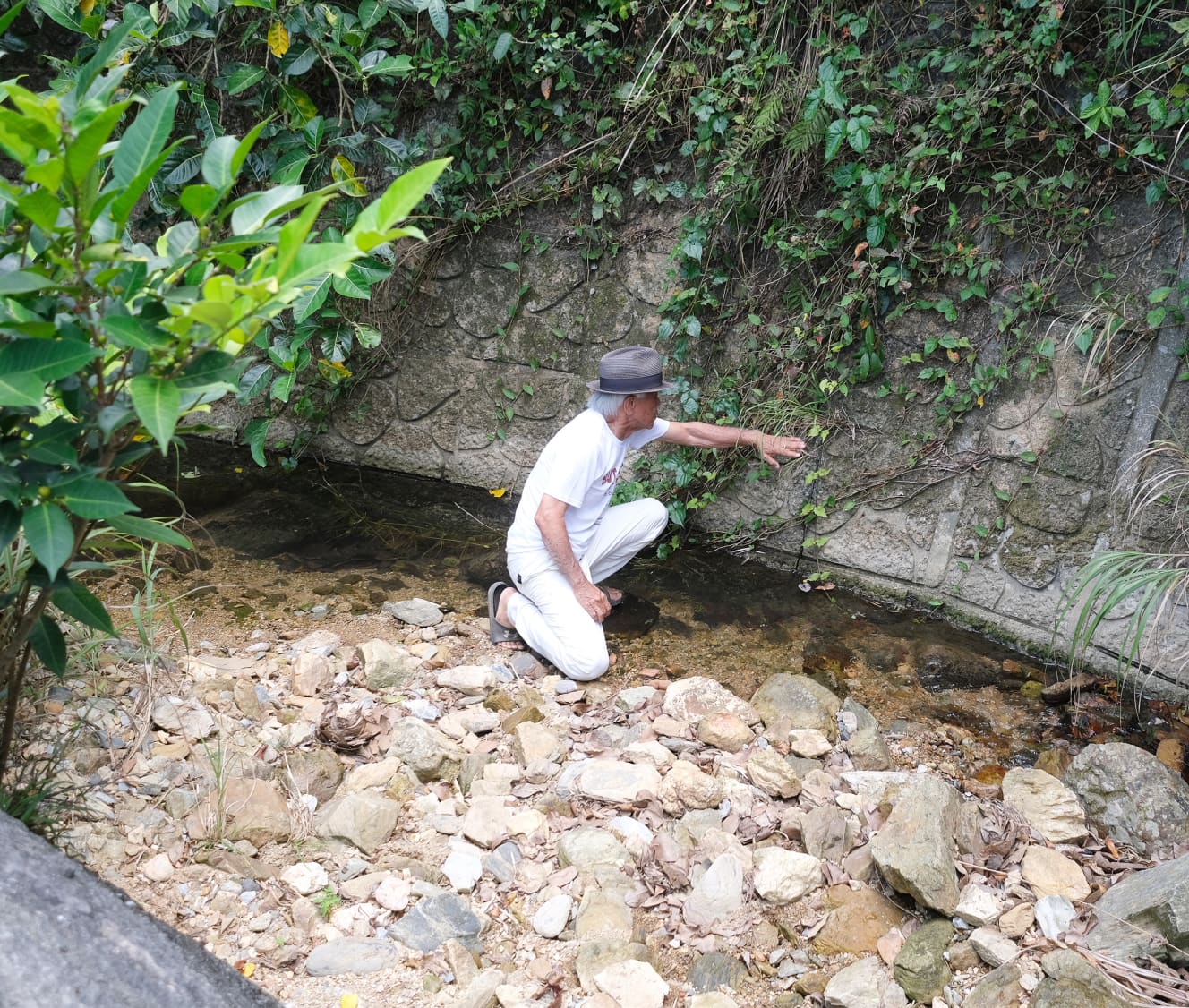
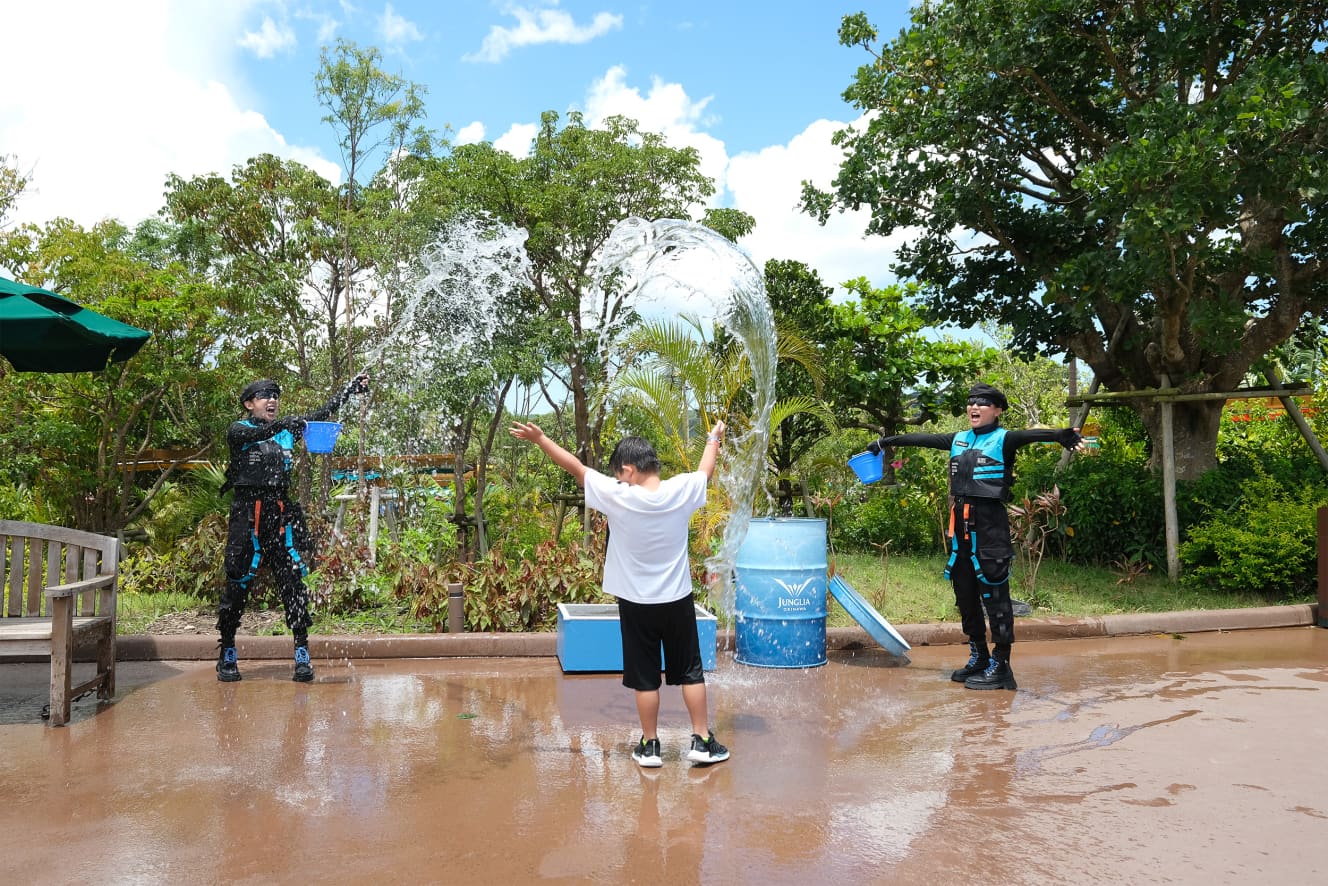
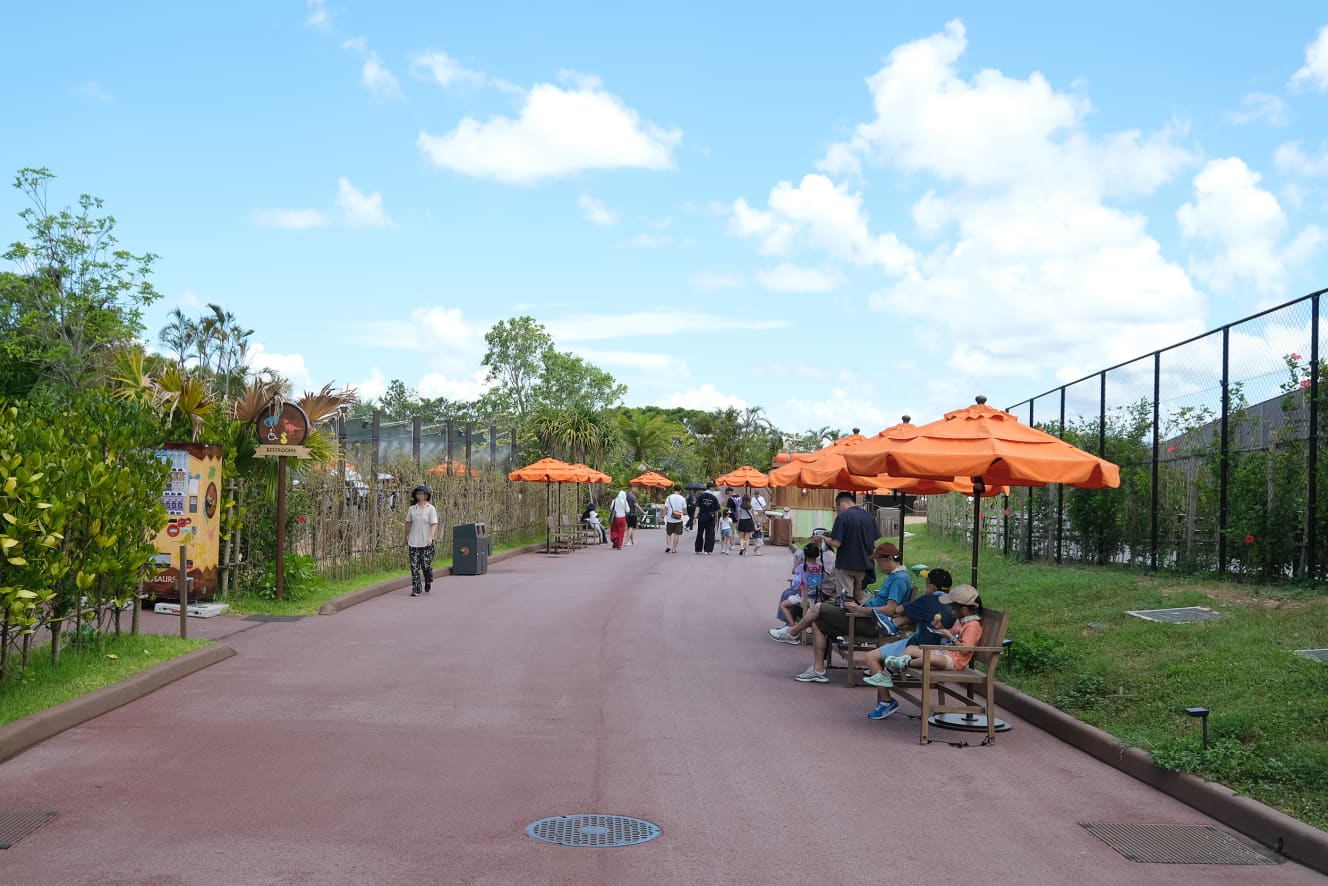
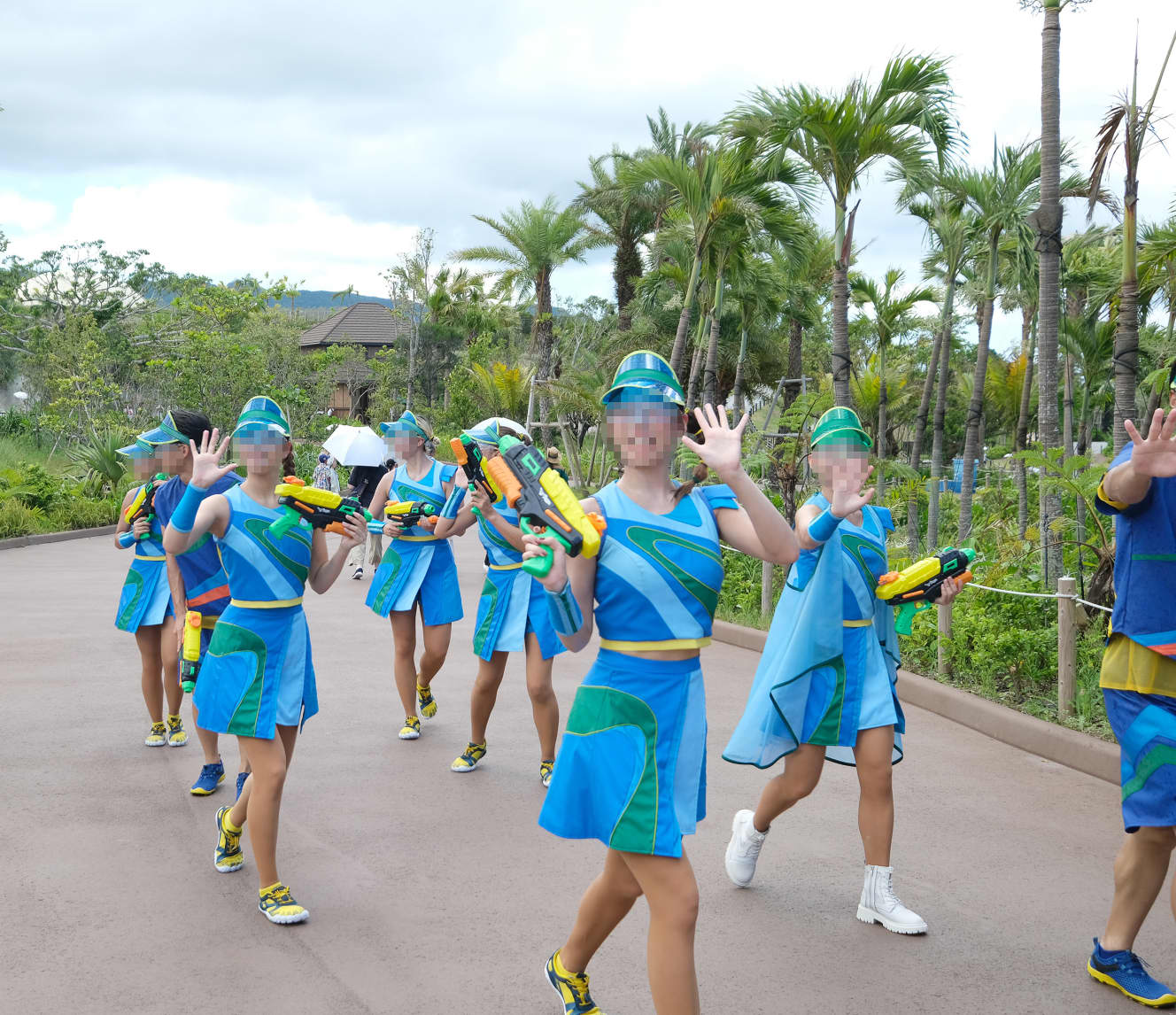

PHOTO: Fumio Kuroda (except for waiting lines and food)