One Year After Opening, Junglia Okinawa Struggles as Visitors Drop by Half


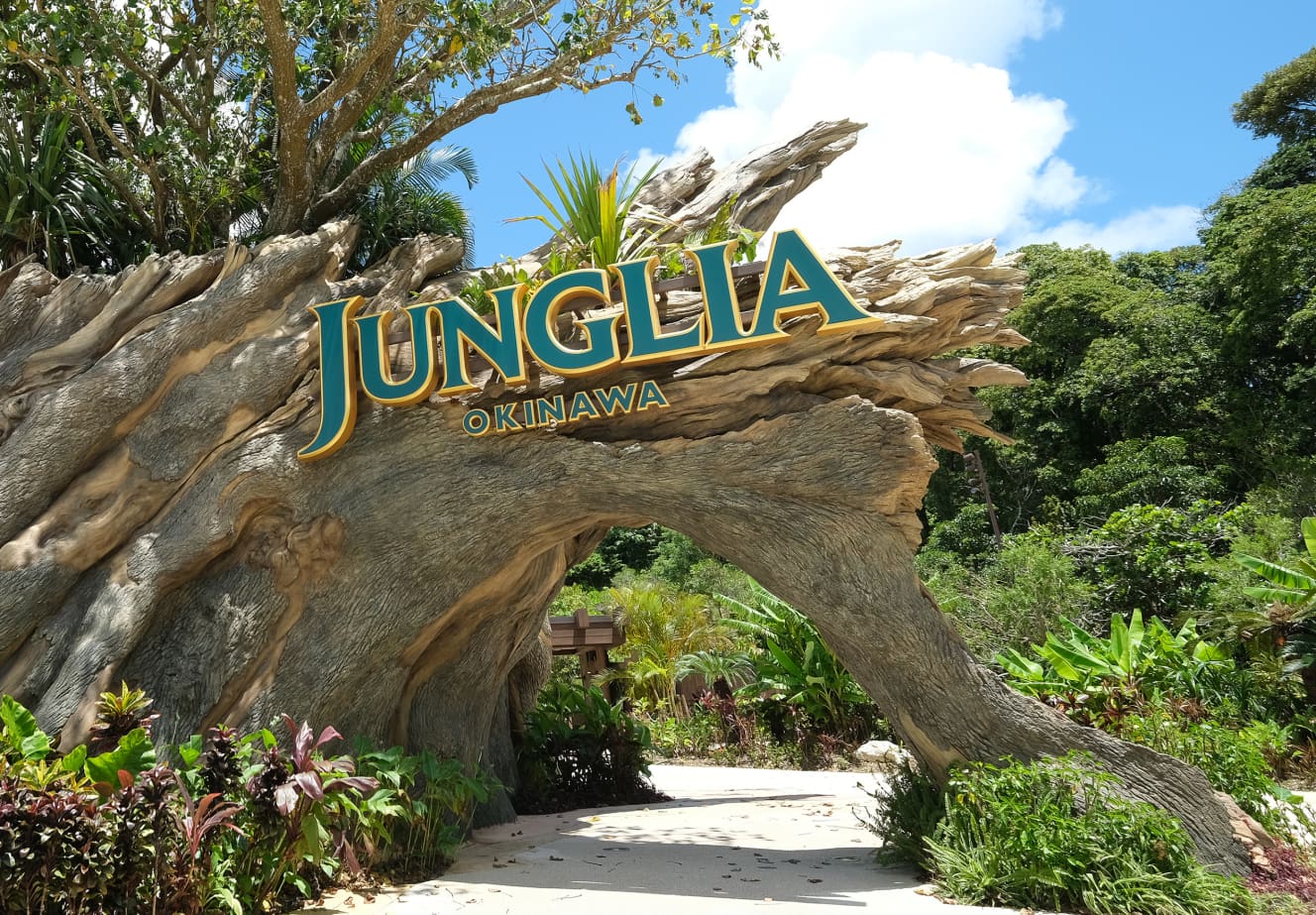
Only three attractions were rideable, while the heat problem remains
Pssshhhhhhh…
Lukewarm water sprayed across my face. Under the scorching Okinawan sun, FRIDAY reporter Iwata found himself surrounded by two “Water Rangers” wielding absurdly large water guns that looked like rifles.
Apparently, this was part of the park’s measures to combat the extreme heat. It felt refreshing at first, but as time passed, my clothes became soaked and increasingly uncomfortable. As Iwata looked bewildered, thinking, “This isn’t quite what I expected,” the smiling Rangers led him deeper into the park.
It has now been one year since “Junglia Okinawa” opened. While attendance has surpassed one million visitors, the new theme park has faced criticism over long lines for attractions caused by poor crowd management, high prices, and inadequate measures against the heat. To see for myself how the controversial new theme park is doing now, I, Iwata—a young reporter in my early 20s—headed to the site to experience it from the perspective of today’s younger generation.
I arrived at Junglia around noon one day in late July. It was right in the middle of summer vacation, yet the parking lot wasn’t even 40 percent full. When the park first opened, reservations were required and parking in the on-site lot cost a flat ¥2,000. Now, parking is free for Okinawa residents. Visitors from outside the prefecture still have to pay, but they can park without a reservation. Even so, I was told that being “40 percent full” was actually considered unusually busy for the park these days.
“When we first opened, we had around 5,000 visitors a day, but now it’s just under 2,000—less than half. Still, today is relatively good. During the rainy season, the weather would change suddenly, and the park was practically deserted.” —Male employee
I immediately bought the ¥6,930 “1-Day Ticket,” which provides unlimited access to the park for the day. Since it was summer vacation, there were plenty of families with children. But everyone seemed to be having their energy drained by the heat, and there were many children whining and begging for drinking water. Their parents tried to calm them down, while elderly visitors sitting on benches in the shade were drenched in sweat.
Thin fabric sunshades had been installed over the queues for the attractions, but the intense sunlight still poured through the gaps, making it essential to carry a parasol.
“We’ve strengthened our heat countermeasures by offering parasol rentals, adding more rest areas, and installing mist fans. However, it’s not easy to build indoor facilities with air conditioning. The park is designed around the premise that visitors will be walking around a large outdoor area, so we feel there are limits to how much shade we can create in the park.” —Another male employee
The vast park covers an area equivalent to 13 Tokyo Domes, yet there are only three air-conditioned rest areas. Two of them are makeshift facilities, with few signs to guide visitors, making them difficult to find in the first place. As a result, crowds flock to the park’s only indoor restaurant, “Panorama Dining,” but because of the congestion, only guests with reservations are allowed in. Desperate for water and searching for a vending machine, the reporter couldn’t find one anywhere and was ultimately saved by a ¥300 bottle of water sold at a food truck.
Although waiting times have improved, the park now faces new problems, including attraction shutdowns, an issue surrounding a lottery system, and ongoing friction with local residents. See the follow-up article for more details.
From the September 4, 2026 issue of “FRIDAY.”

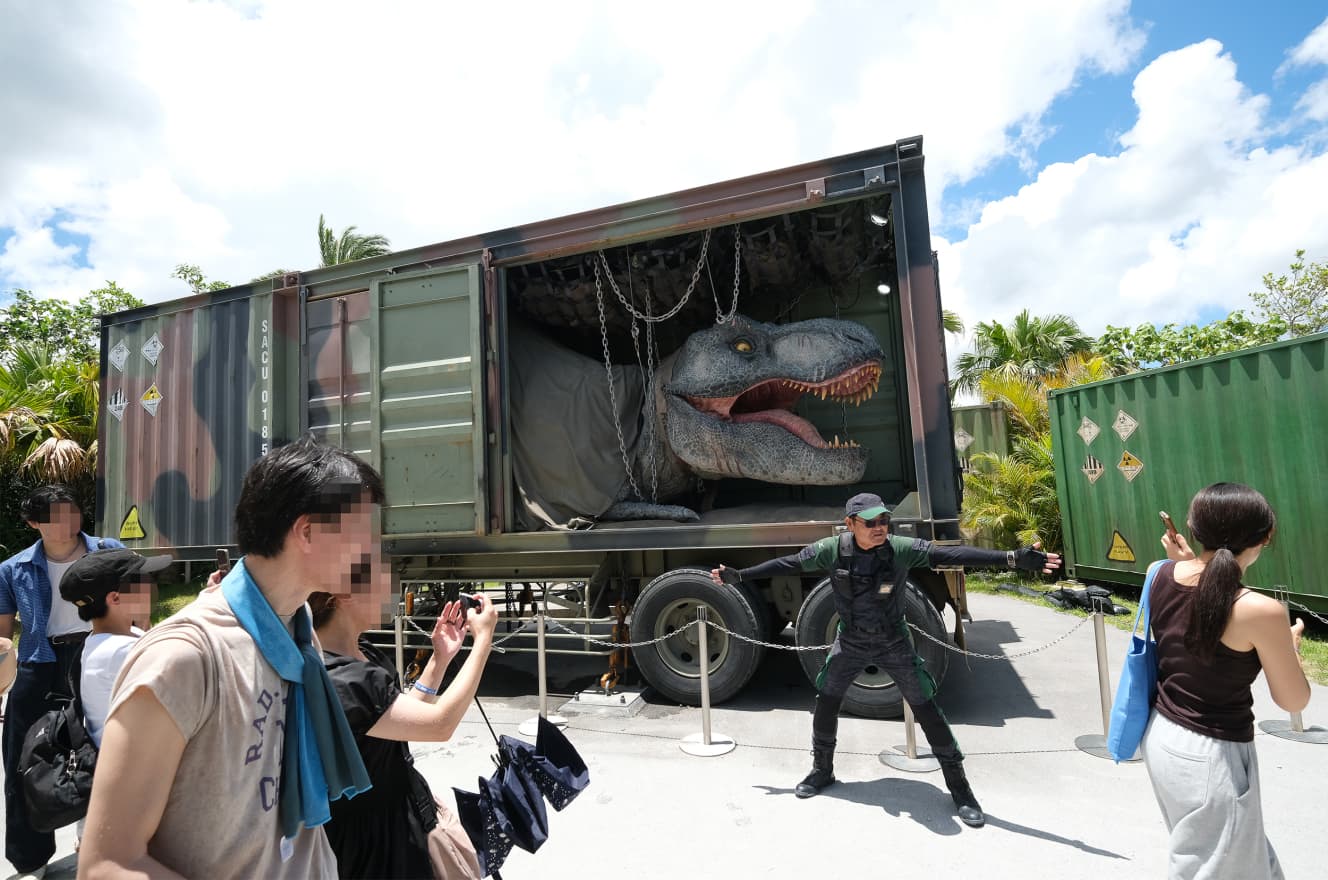
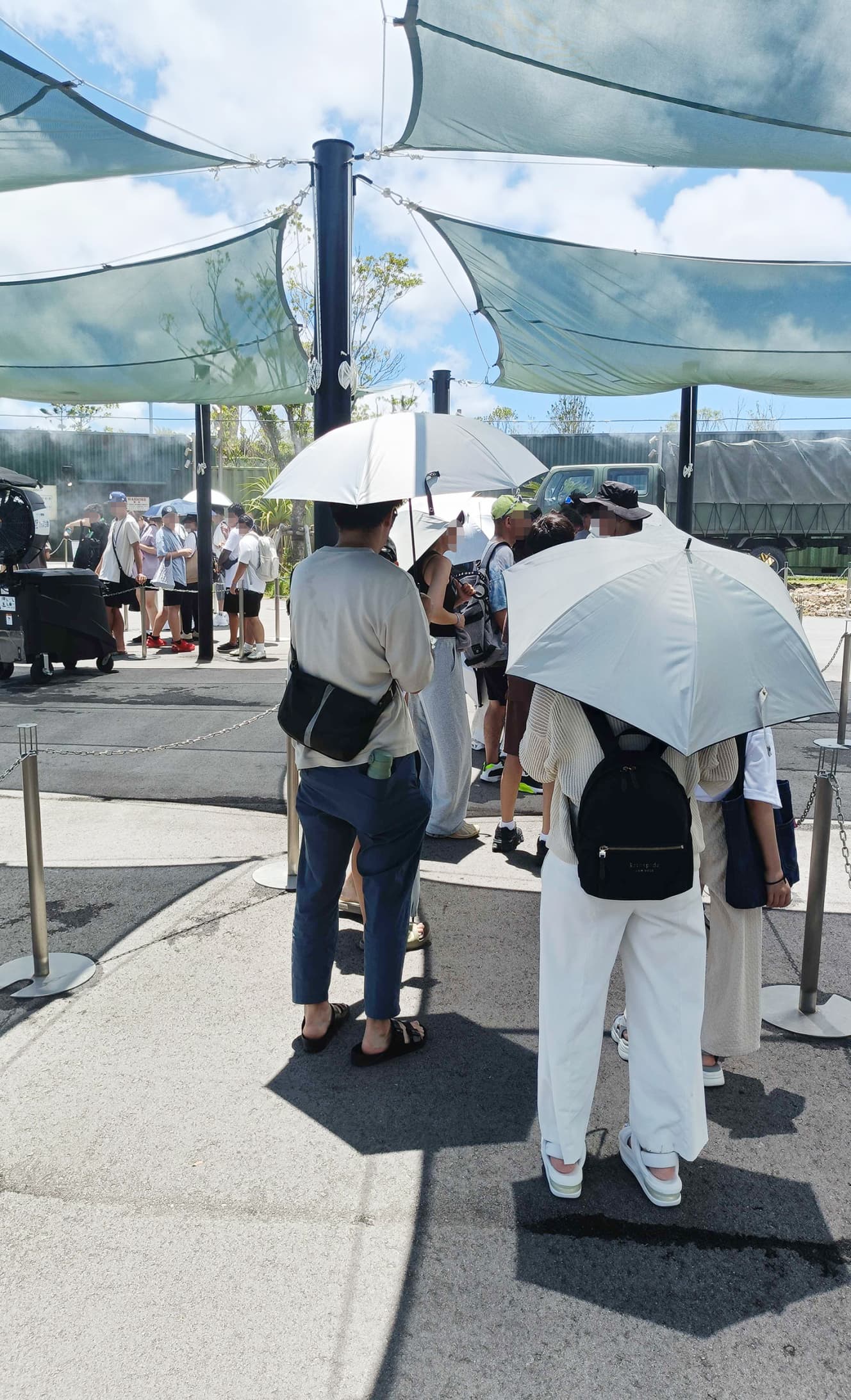

PHOTO: Fumio Kuroda (except for waiting lines and food)