[Playback ’96] From an 83% Approval Rating to… Governor Yasuo Tanaka’s Defeat in the Nagano Prefectural Election: The “Tears” Witnessed by This Magazine


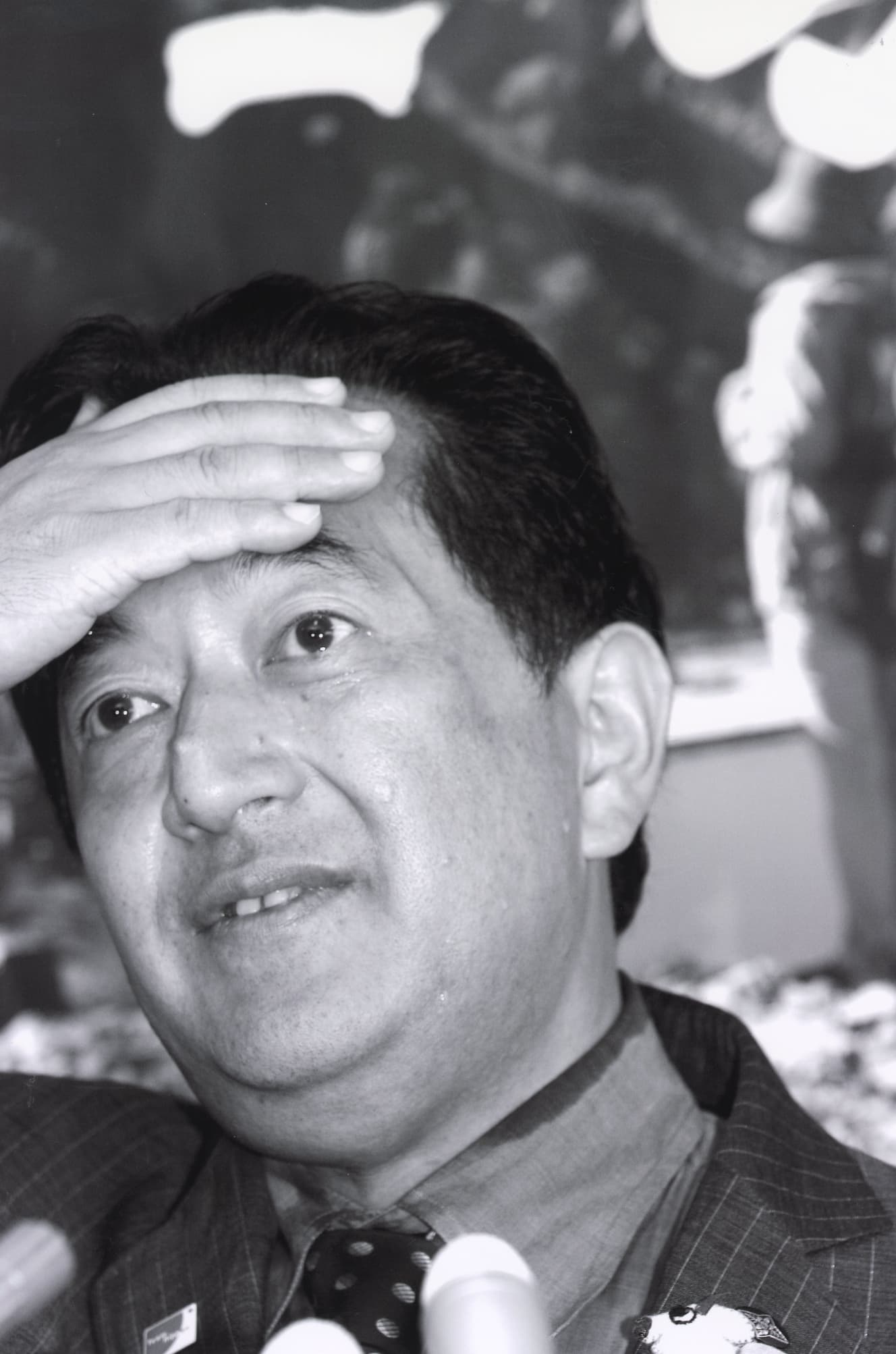
The Nagano Prefectural Governor’s Election That Captured the Nation’s Attention
What was *FRIDAY* reporting 10, 20, and 30 years ago? We take a look back at the topics that made headlines at the time in [Playback Friday].This time, we feature the August 12, 2006, issue —“Report on the Nagano Prefectural Governor’s Election: The Key Lies Not Only in ‘Anti-Dam’ but Also in ‘Media Selection’—Yasuo Tanaka: ‘Tears Over the “NO!” of 1.8 Million Prefectural Residents’—The Backstory of the Defeat.”
Yasuo Tanaka (70) took office as Governor of Nagano Prefecture in October 2000 and attracted nationwide attention by rolling out a series of innovative policies, such as a glass-walled governor’s office, a “No to Dams” declaration, and a pledge to abolish the press club system.Although he was once forced out of office by a no-confidence resolution from the prefectural assembly, which opposed his “anti-dam” stance, he made a comeback in the subsequent gubernatorial election by securing overwhelming support from the prefectural residents.
However, over the course of the following four years, doubts and criticism regarding Tanaka’s methods gradually grew louder, and he ultimately lost the 2006 gubernatorial election in which he sought a third term.An article in the magazine *FRIDAY* at the time delved into the “behind-the-scenes” story of the election (quotes in 《》 are taken from past articles; titles reflect those at the time).
“I imagine all of you (reporters) are expecting me to shed tears (over my defeat), but I will not shed any. Even if you ask me, ‘Do you have any regrets?,’ there is no satisfactory answer that would meet your expectations.”
August 7, at the press conference room inside the Nagano Prefectural Government Building. He had lost the Nagano gubernatorial election (held August 6), in which the six-year tenure of the Tanaka administration was put to the test.Governor Yasuo Tanaka (then 50), whose dream of a third term had been shattered, displayed his characteristic defiant “Yasshi style” and made no admission of defeat whatsoever. However, tears glistened faintly in his eyes—this magazine did not miss that moment.》
The election results were devastating. Hitoshi Murai (then 69), a former member of the House of Representatives, won with 612,725 votes. Tanaka received 534,229 votes—a figure far short of the 820,000 votes he had secured in the 2002 re-election campaign.According to a survey by a local newspaper, 30 percent of voters who had supported Mr. Tanaka in the previous election had switched their vote to Mr. Murai. This starkly illustrated the decline of Mr. Tanaka, who had boasted an approval rating of 87 percent immediately after taking office for his first term.
Mr. Tanaka’s supporters stated , “We lost to the organizational strength of the Murai camp, which received backing from the LDP and Komeito, as well as the media’s negative campaign.” However, it seems those factors alone were not the only reasons he had completely lost the support of the prefecture’s residents. The article pointed out the following:
“Many observers point out that what cornered Mr. Tanaka more than anything else this time was the split within his supporters’ association.Of the six senior supporters who had asked Mr. Tanaka to run six years ago, only two remained. Minoru Kayano, the former chairman of Hachijuni Bank and Mr. Tanaka’s most influential backer, published “anti-Tanaka” opinion ads in two local newspapers before the election and switched his allegiance to the Murai camp.
One prefectural assembly member pointed out, “Over the past six years, Tanaka’s political tactics have reached their limit.” He stated that the two major missteps were the “anti-dam declaration,” which amounted to nothing more than a publicity stunt, and his strategy toward the media.
“Whether dealing with the prefectural assembly or the media, Mr. Tanaka has employed a strategy of boosting his own standing by creating a ‘point of confrontation’ (a target for attack). In his feud with the prefectural assembly, he continued to play the role of ‘poor Governor Tanaka being bullied,’ but even the prefectural residents must have finally grown tired of it.”
In June, he singled out Nagano Asahi Broadcasting—which had aired a news segment scrutinizing his administration—in the assembly, accusing it of “fabricated reporting.”His tendency to categorize local media reporters as either allies or enemies and confront them head-on led some to liken him to the “Emperor’s New Clothes”—a figure who had forgotten his role as a governor constantly subject to criticism and scrutiny. Consequently, he lost the support of the prefectural residents much sooner than expected.
Theatrical Politics That Showcased a “Fighting Spirit”
When he first took office as governor, Mr. Tanaka criticized the prefecture’s previous administration as “backroom politics” and adopted a confrontational stance against the assembly that had supported it, earning him enthusiastic support from independent voters. His “No Dams” declaration was emblematic of this approach.Taking into account the environmental impact and the enormous construction costs, he reviewed the prefecture’s dam construction plans and halted work on eight sites, including those already under construction.The sudden halt to construction provoked fierce backlash from the prefectural assembly, leading—as mentioned earlier—to a motion of no confidence against Mr. Tanaka. From the outside, he appeared to be a hero fighting against the “conservative faction” that was colluding with major construction firms and clinging to vested interests.
The same was true of his “anti-press club” declaration, intended to provide equal coverage opportunities to media outlets other than the major mainstream media. He was praised by freelance journalists, foreign media, and magazine publishers. However, this created a significant rift with media outlets belonging to traditional press clubs—such as newspapers and television stations—and led to a negative campaign against him.
It wasn’t just the people who were cast as “villains”; Mr. Tanaka’s top-down approach—which proceeded without laying the groundwork with the city council or local municipalities—also drew criticism from various quarters, including the city council, local governments, and industry groups, who labeled it “self-righteous,” causing his support to dwindle.Furthermore, in July of that year, a large-scale mudslide disaster occurred in Okaya City within the prefecture. While the “anti-dam” movement was not the direct cause of the disaster, there is no doubt that it created a “headwind” for Tanaka.
Mr. Tanaka, who had formed the “New Party Japan” the previous year, ran in the proportional representation bloc of the July 2007 House of Councillors election and was elected.He switched parties and ran in the House of Representatives election in August 2009, winning a seat. Although he worked in a parliamentary group with the Democratic Party of Japan and the New People’s Party, among others, he lost his seat in the December 2012 election. The New Party Japan was dissolved in 2015.
Even so, Mr. Tanaka’s passion for politics does not seem to have faded. He ran for mayor of Yokohama in 2021 and 2025, but lost both times.
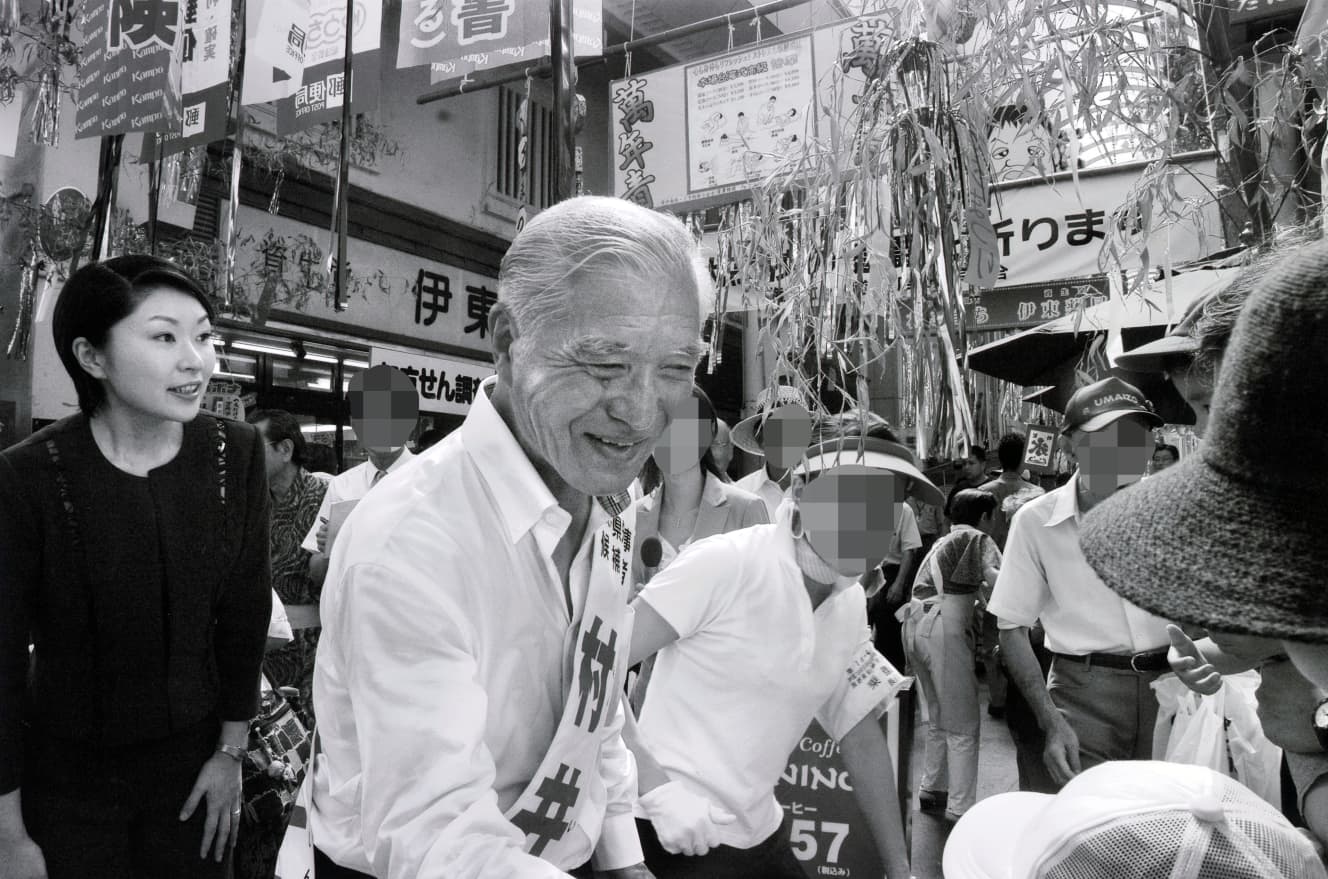
PHOTO: Masatoshi Okauchi