They Stopped Speed Work to Host a “Bodybuilding Competition”!? Sendai Ikuei Even Has Its First “Female Player”… This Is High School Baseball in the Reiwa Era!
Koshien’s Legendary Managers Discuss “What’s Happening in High School Baseball Right Now” (Part 2)… A First-Time Manager Hosts a “Bodybuilding Competition”; Sendai Ikuei Welcomes Its First “Female Manager and Student Coach”


In Reiwa-era high school baseball, the schools that attract promising middle school players determine the competitive landscape several years down the line, and the team that wins the scouting battle goes on to conquer Koshien.
“If things continue this way, high school baseball will decline” (Shiro Mabuchi, Head Coach, Meitoku Gijuku, Kochi)
He sounds the alarm about the overheated scouting culture in high school baseball.
Junior high school students in the Reiwa era choose where to continue their education not only based on how easy it is to reach Koshien, but also on whether the environment will allow them to grow the most. In addition to the size of the playing field, the availability of indoor practice facilities, and the quality of training equipment, the number of students per dorm room is also a key factor.
[Click here for Part 1] The Veteran Coach of Meitoku Gijuku in Kochi: “High School Baseball Is Becoming Less Exciting” – Overheated Scouting and Shifting Perspectives
Saunas Over Endless Running
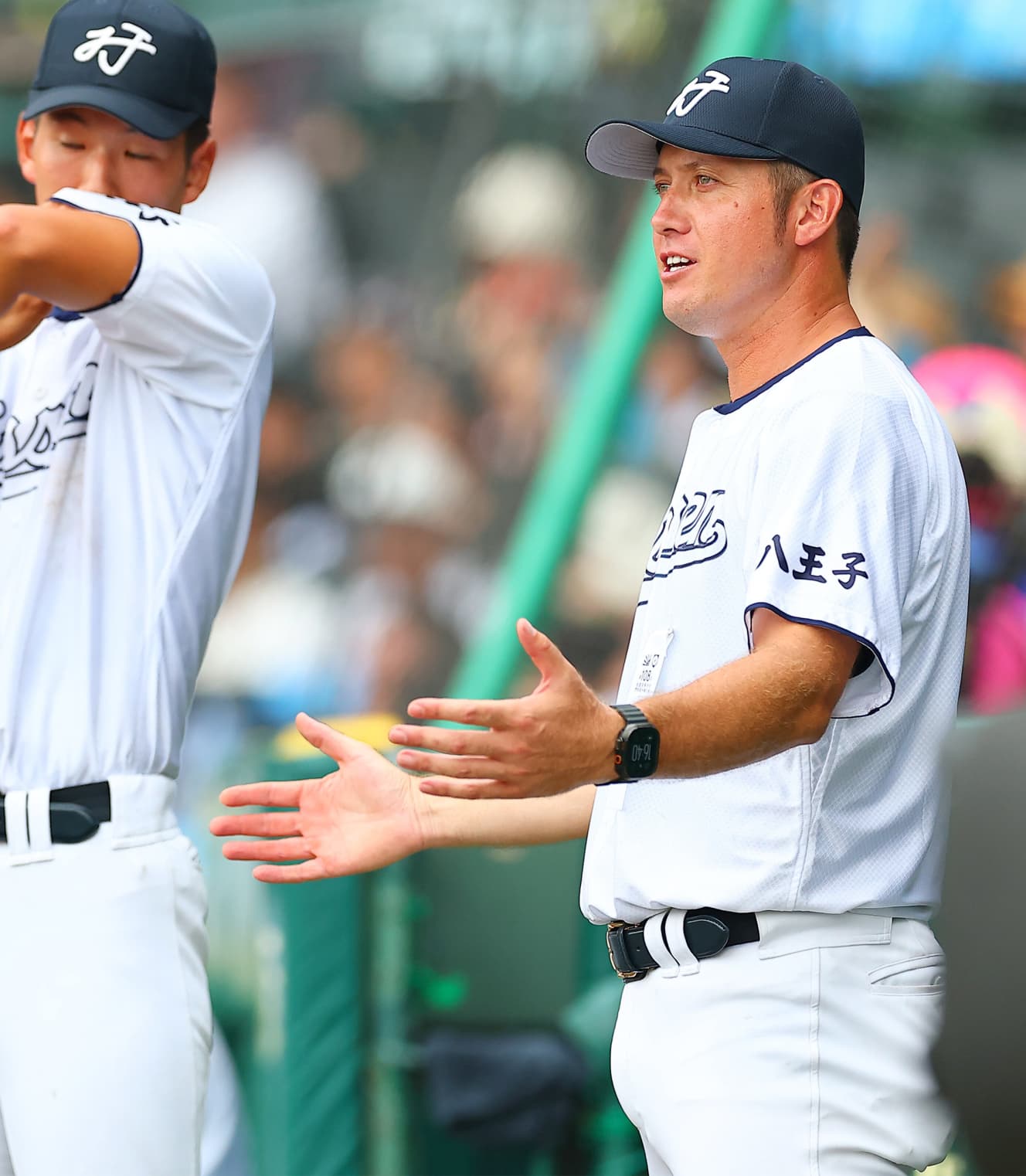
While some schools enjoy privileged facilities, others—such as Hachioji Jissen, which won the West Tokyo Tournament—have baseball teams that can only use a field the size of an infield. Nobuo Onda (60), the team captain at that school, says:
“Unlike the (powerhouse) girls’ volleyball team, the baseball team isn’t designated as a priority club, and we’re limited to just two hours of practice. We can’t even do outfield drills properly, and on weekdays, we can only do individual practice. Team practices and game simulations take place on weekends or during away games, where we travel on a bus that I drive.”
Head Coach Robert Kawamoto (40) is a journeyman who, after graduating from the school and attending Asia University, signed a minor league contract with the Dodgers and played in independent leagues after returning to Japan. Robert adopted a unique approach to building the team’s strength.
“Robert (a former pitcher) absolutely hates long-distance running. Even when he makes the players run during practice, it’s limited to short sprints. For summer stamina training, we use the sauna to open up the pores and increase blood flow… In short, we’re taking an approach that doesn’t rely on sheer grit,” said Onda.
The manager, affectionately called “Robert-san” by his players, primarily has them do weight training during the winter and sets specific weight goals for the “BIG 3” exercises—the bench press, squat, and deadlift.Last winter, he organized a bodybuilding competition as a platform to showcase their results. Robert explains his goal:
“I wanted to raise their awareness of training and have them experience what it’s like to be watched by others. The one who shone the brightest at that bodybuilding competition was Kaneko.”
Yuki Kaneko, who had been left off the roster until last fall, recorded the team’s best numbers in the “Big Three” and earned a spot on the roster for his final summer.In his Koshien debut against Naruto Uzushio (Tokushima), he came in as a pinch hitter in the ninth inning with the score 0–1. He hit a game-tying single, forcing the game into a tiebreaker. He proved to the coach and his teammates that hard work pays off.
“He’s incredibly strong physically. The ball flies even without swinging with full force. I just told him to ‘keep it compact,’ and he hit it to right-center field (the opposite field),”

Quantifying and Analyzing Abilities
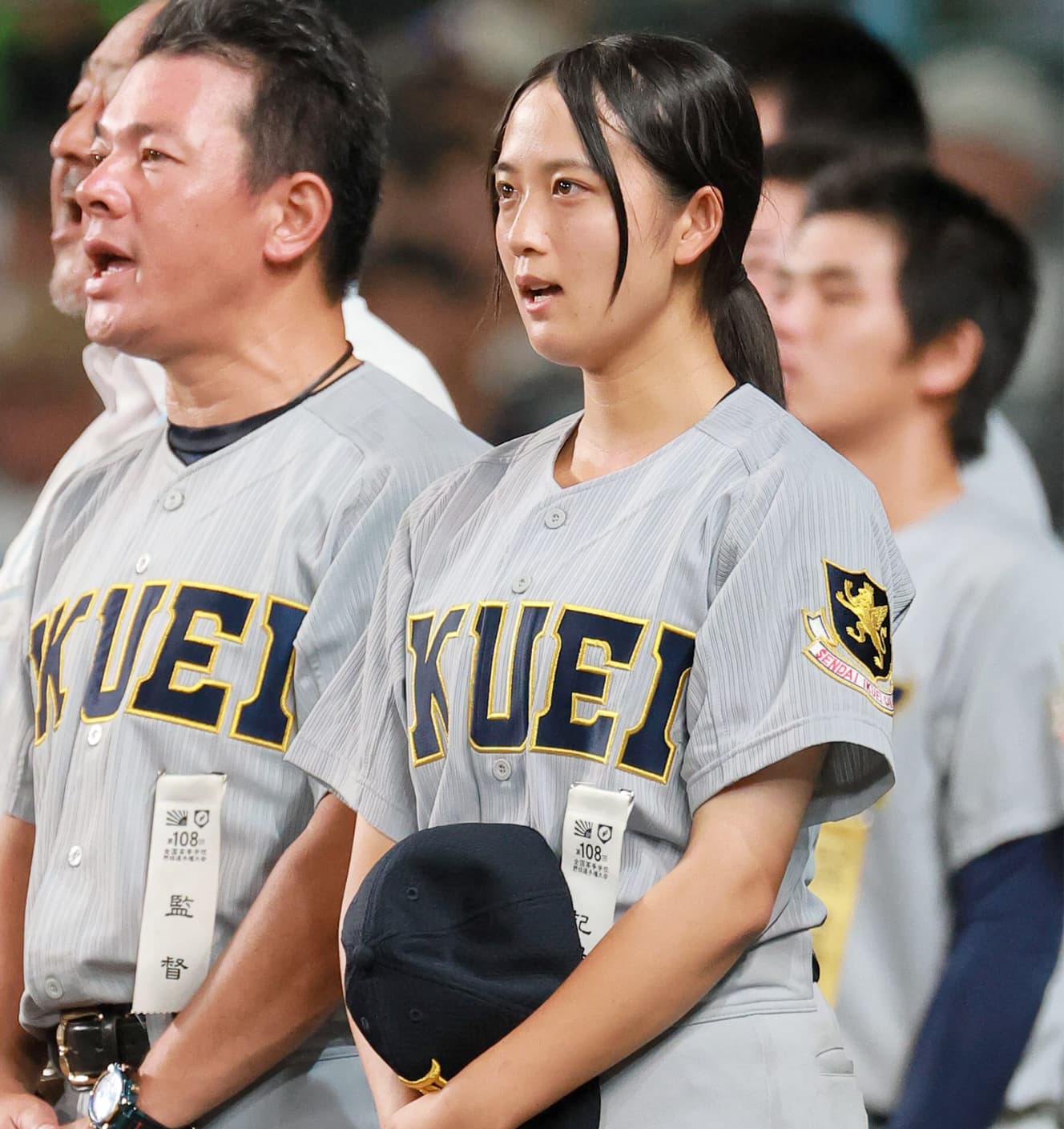
This summer, Yotsuhada Hoshi—the female manager and student coach for Sendai Ikuei High School—made her debut at the opening game and brought a breath of fresh air to Koshien Stadium. From the very first game, she took her place on the bench wearing the same uniform as the players, but her role goes beyond that of a scorekeeper.
“During the game, I relay information—such as the opposing pitcher’s pitch selection patterns—to the players heading up to bat. If the opposing pitcher is replaced, I’ll say something like, ‘This pitcher is X△ km/h faster than the previous one’… I make sure to be prepared so I can answer any questions Coach Wataru Sue (43) might ask.”
Her father, Takanori, played for the Yomiuri Giants and the Seibu Lions. She attended the same high school as her father and became the first female member in the school’s history to join the baseball team. Aiming to reach Koshien—where her father once played—alongside her teammates, she sometimes has to say things that might make the players dislike her.
Sue, who served as a ground manager during his high school days and is now an information technology teacher, excels at quantifying and analyzing baseball performance metrics, and has applied this expertise to the team’s internal competition—which he proudly calls “Japan’s fiercest competition.” Hoshi also takes on the role of an analyst.
“For pitchers, it’s my job to provide basic statistics like strike percentage and ERA; for batters, in addition to batting average and on-base percentage, Coach Sue places great importance on the ‘advancing runners rate.’ Essentially, it’s about whether a batter was able to help runners advance. In the ‘competition to be number one in Japan,’ I believe these metrics are a means of visualizing and quantifying performance.”
She isn’t thinking about life after graduation or her future career just yet. The only thing on her mind was winning her second Koshien championship since the summer of ’22.
This is high school baseball in the Reiwa era. An increasing number of schools are investing massive amounts of money to upgrade their fields and indoor practice facilities and provide dormitories with private rooms. As times change, the training methods, dorm life, and tactics of high school baseball players are undergoing diverse transformations.
From the September 4, 2026 issue of *FRIDAY*
Reporting and Text: Yuji Yanagawa (Nonfiction Writer) PHOTO: Kyodo News / AFLO