Skipping Meals Can Be Dangerous: Hairdresser Rushed to the Hospital After Eating Due to Refeeding Syndrome


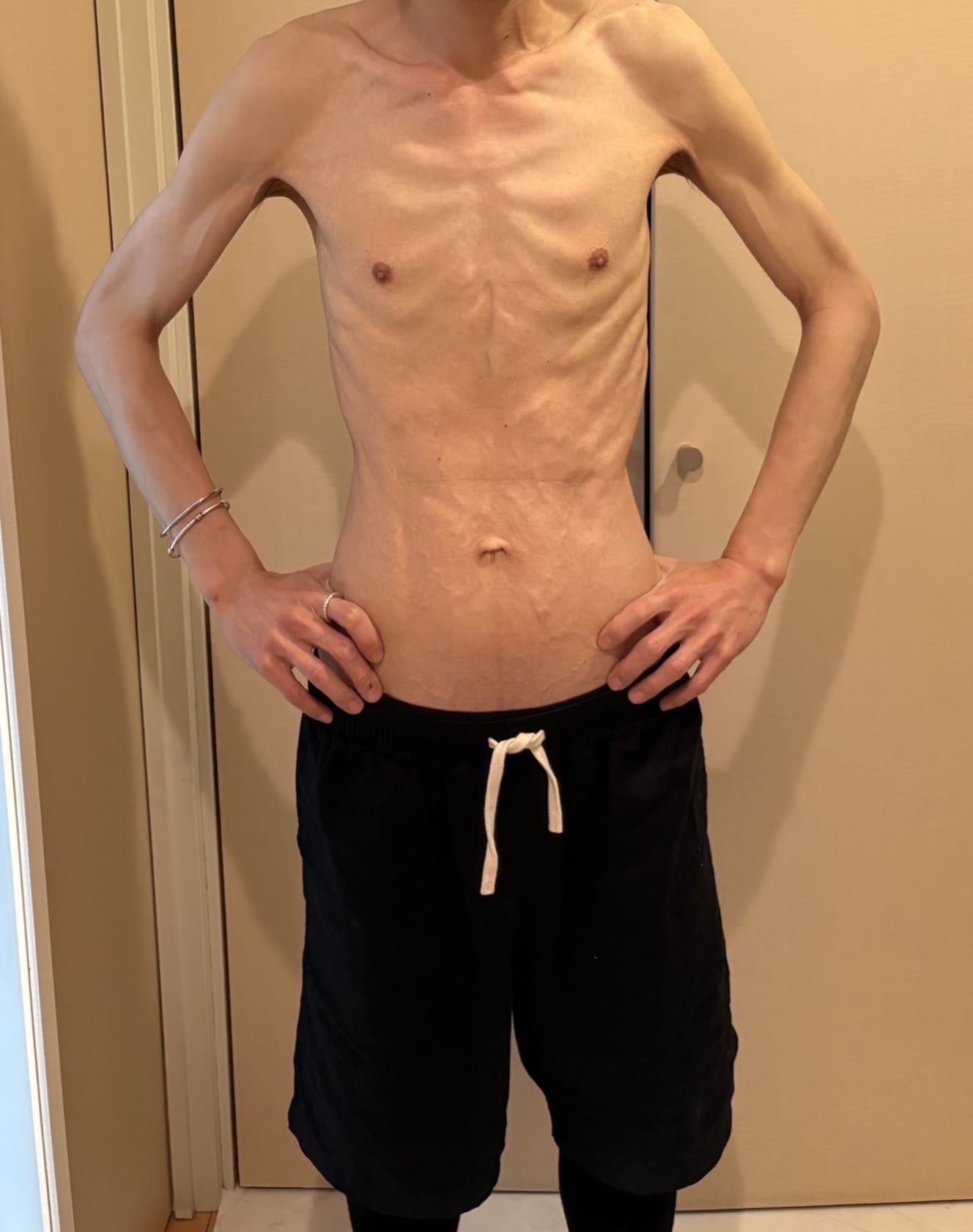
“Everything in front of me went white. After that, I don’t remember anything.”
When she came to, I (38) was lying in a hospital bed. Her family told her that she had suddenly lost consciousness and had been taken to the hospital by ambulance.
Just before she collapsed, I had been sitting around the dining table with her family. She was back at her parents’ home for the first time in a while and ate more than usual. That was all. So why did simply eating result in her being rushed to the hospital?
It has been some time since skipping meals due to being busy or feeling it was too much trouble came to be called “food cancellation” or the “food cancellation community.” Phrases such as “I canceled a meal again today” and “I was so busy I only ate one meal today” can sometimes become a form of self-deprecating humor or a funny story.
However, when food cancellation becomes part of everyday life, it can pose a medical risk.
When inadequate food intake continues for a prolonged period, malnutrition can progress without the person realizing it. If malnutrition becomes severe, the very ordinary act of eating a proper meal after a long period of inadequate intake can cause significant harm to the body.
“Maybe I don’t need to eat today.” Became normal
I works as a manager at a beauty salon in one of Tokyo’s most upscale areas. While working on the salon floor as a hairstylist, she is also responsible for running the store and training staff. It is a position with considerable responsibility. Because of the nature of her work, it was not unusual for her to be unable to eat at a set time.
“Being a hairstylist isn’t the kind of job where you can just say, ‘It’s lunchtime, so I’m going to take a break.’ If appointments are back-to-back, you can’t eat, and even if you have a little free time, there’s always so much to do. Before I knew it, it would be evening, and sometimes I wouldn’t be able to eat anything until the salon closed.”
As “I was too busy to eat today” was repeated, I’s perception gradually changed.
“Little by little, even when I got hungry, I started thinking, ‘Well, I guess it’s okay.’ It’s not that I had no appetite. I could eat if I wanted to. But I had simply gotten used to not eating.”
She skipped one meal. Then it became two. Before long, not eating had become the norm. I had always been naturally slim, but her weight dropped further due to food cancellation, leaving her at 170 cm and 45 kg. Her BMI was approximately 15.6, which falls into the underweight category.
Those around her noticed the changes before she did.
“Regular customers started worrying about me, saying things like, ‘Have you lost even more weight?’ and ‘Are you eating properly?’ Some people even brought me food as gifts.”
Yet even the food people kindly brought her sometimes went uneaten because she was too busy to find the time.
“I knew I was thin myself. But because I was able to work normally, I didn’t think I was in such a dangerous condition.”
Before long, even her emaciated body had become normal to her.
Dr. Tetsuya Kubota, director of Kubota Clinic Matsudo Goko, who specializes in nutritional therapy, warns of the dangers.
“When people hear the term malnutrition, they may imagine someone who has become unable to eat and is bedridden. However, malnutrition can progress even in people who continue to work and go about their daily lives normally. People who have been eating too little for a prolonged period, or whose weight has fallen and BMI has decreased, need to be cautious. Being able to work normally does not necessarily mean that everything is fine.”
“I ate quite a lot at my parents’ home for the first time in a while.”
One day, after living this way for some time, I returned to her parents’ home. Her family, whom she had not seen in a while, said the same thing they always did.
“Are you eating properly?”
At work, whenever she thought it was time to eat, an appointment or some other task would come up. But this day was different. She had the day off. Her family was there, and a feast was spread out in front of her.
“I think I let my guard down because I was at my parents’ home. I was with my family, saying, ‘This is delicious,’ and I ended up eating quite a lot.”
After the meal, she was talking with her older sister.
“We talked about how things were going and about the family. Up until then, everything was normal.”
Suddenly, everything in front of her went white.
“I remember thinking, ‘Huh?’”
That was where her memory ended. She lost consciousness, and her family called an ambulance.
“I could understand if I had collapsed because I was malnourished from not eating. But that day, I had actually eaten properly.”
I regained consciousness in the hospital. The doctor told her that she had a condition with an unfamiliar name: refeeding syndrome.

Refeeding syndrome is a condition that occurs when a person who has not been getting sufficient nutrition for a prolonged period begins taking in nutrients again, causing significant changes in the balance of electrolytes and fluids in the body.
“When a person continues to be unable to consume enough food, the body tries to sustain itself using as little energy as possible. Since carbohydrates alone are not enough to provide the energy needed, the body begins using stored fat and protein as well.
If a meal containing carbohydrates is then suddenly introduced, blood glucose levels rise and insulin is released. As a result, phosphorus, potassium, magnesium and other substances are taken from the bloodstream into cells along with glucose, causing their levels in the blood to become depleted” (Dr. Kubota, quoted above).
Dr. Kubota goes on to explain that phosphorus is particularly important.
“Phosphorus is a component needed to produce ATP (adenosine triphosphate), which cells require to generate energy. If phosphorus levels suddenly become severely depleted, muscles, the heart and other organs can no longer function adequately. Mild cases can cause fatigue and muscle weakness, while severe cases can lead to impaired consciousness, arrhythmia, heart failure and respiratory failure, and can even become life-threatening. In other words, for someone suffering from severe malnutrition, eating a lot does not necessarily mean they will become healthy again.”
Food is supposed to give the body strength, but taking in a large amount too suddenly can actually place a burden on the body.

Extremely thin, yet with fatty liver
There was another thing that came as a shock. I was diagnosed with fatty liver.
“The doctor told me, ‘You also have fatty liver,’ and I was shocked. I mean, I’m 170 cm tall and weigh 45 kg. I thought, ‘How can I have fatty liver when I’m this thin?’”
Fatty liver is strongly associated with obesity, overeating, and excessive alcohol consumption, but “I don’t drink alcohol or sugary drinks. I hardly eat junk food either” (I).
Her doctor explained that it was fatty liver caused by malnutrition.
“When the body continues to be unable to obtain enough energy from food, it breaks down stored fat and tries to use it as energy. The free fatty acids produced in this process are transported through the bloodstream to the liver.
Normally, fat that enters the liver is either used as energy or converted into triglycerides and transported out of the liver in the form of ‘VLDL (very-low-density lipoprotein).’ However, when malnutrition causes a deficiency of protein and other nutrients, the liver’s ability to transport fat out of the liver can decline” (Dr. Kubota).
For I, this was just as shocking as being rushed to the hospital.
The doctor recommended that she be hospitalized for nutritional management. However, I had responsibilities as a manager.
“I was told that it would be better to be hospitalized and undergo dietary treatment. But I also have work, so after consulting with my doctor, I decided to continue treatment at home.”
When malnutrition has progressed to the point where there is a risk of refeeding syndrome, suddenly increasing food intake on one’s own can be dangerous.
“For people at high risk of refeeding syndrome, we don’t immediately return them to a normal amount of food. Instead, we gradually increase their nutritional intake while monitoring their physical condition. During this process, blood tests are used to check phosphorus, potassium, and magnesium levels.
Vitamin B1 (thiamine) is necessary for carbohydrate metabolism, so thiamine may also be supplemented in patients at high risk. In severe cases, patients are hospitalized and nutritional management is carried out while monitoring their heart and other conditions” (Dr. Kubota).
It is not as simple as saying, “If you eat a lot, you’ll get better quickly.”
Of course, skipping a single meal does not immediately cause refeeding syndrome. However, Dr. Kubota warns about the “food cancellation community.”
“I feel that the term ‘food cancellation community’ has a somewhat lighthearted ring to it. People who are unknowingly suffering from prolonged malnutrition need to be careful. ‘Not eating’ is dangerous, but when the body has gone without food for a long time, even ‘eating’ may need to be approached with caution.
If you’ve reached the point where ‘I’ve gotten used to not eating lately’ feels normal, I would like you to take a moment to reassess your weight, eating habits, and nutritional status.”
In order to regain her health, I has been reassessing her lifestyle and continuing treatment by eating regular meals under her doctor’s guidance.
While you may think, “I’m fine even if I don’t eat,” your body may quietly be becoming malnourished. For people who have made “food cancellation” part of their everyday lives, I’s experience is by no means someone else’s problem.