What Is the World’s Best Mapo Tofu? One Man’s Answer After Eating It Across 21 Countries


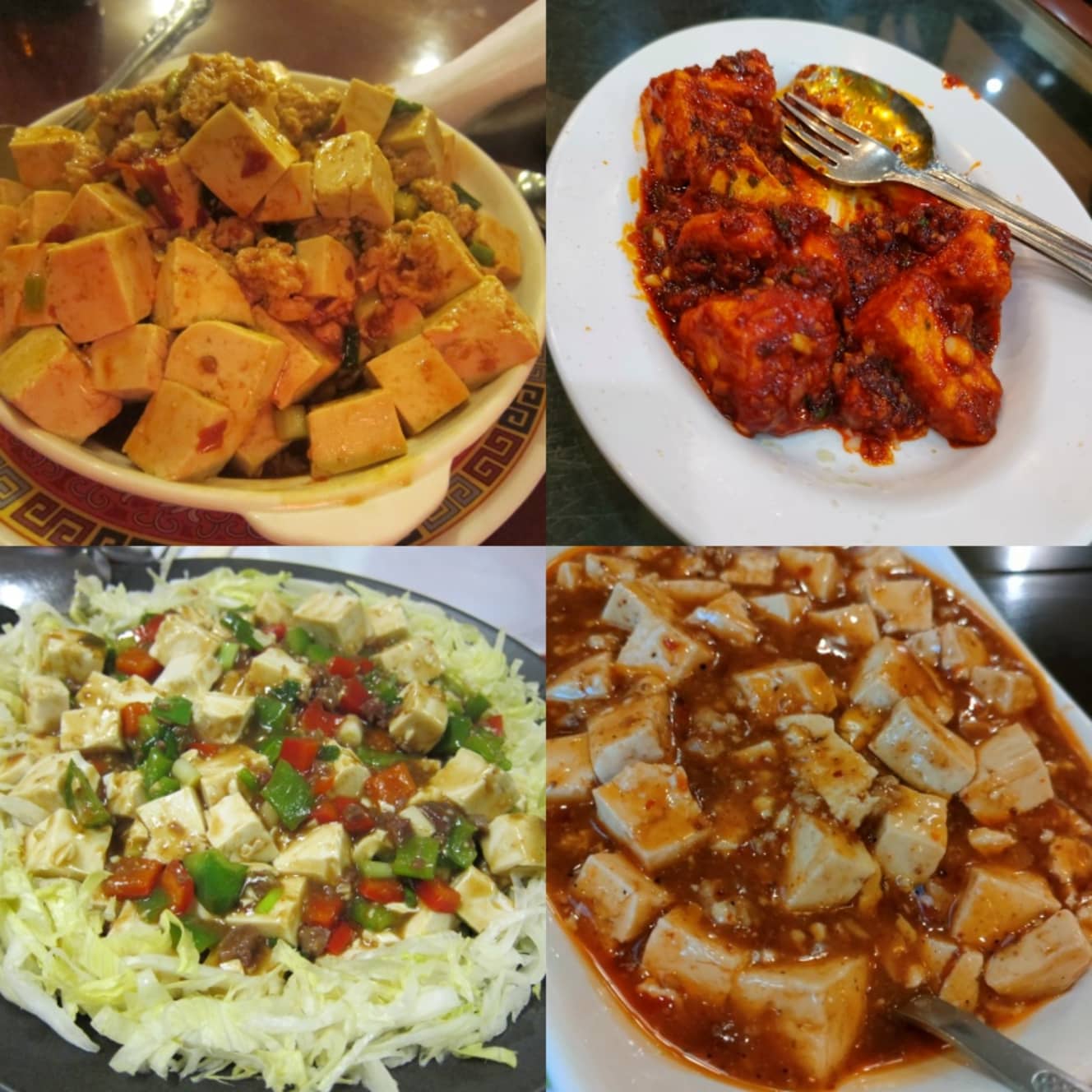
The man who eats Mapo Tofu wherever he goes in the world
“No matter where I go overseas, I always end up looking for Chinese food especially mapo tofu.”
So passionately speaks Yoichi Arashi (56), who has a deep love for mapo tofu.
It has been 35 years since he first began traveling around the world like a backpacker, camera in hand, wanting to see the world for himself. From Europe, Asia, Africa, and Central and South America, Arashi has visited a total of 94 countries. He is now active as a travel writer.
His latest book is not “Mahjong Wanderings,” but “Mapo Tofu Wanderings” (Sangyo Henshu Center). It is a collection of his experiences in 21 countries and 25 locations, where he would seek out Chinese restaurants wherever he went and fill his stomach.
“I’d been thinking about turning it into a book someday, but I couldn’t get the proposal approved for quite a while (laughs). It finally came to fruition.” (Arashi; same below)
Eating mapo tofu in China or elsewhere in Asia is one thing, but why eat it in countries across Europe, Africa, and Central and South America? Isn’t part of a travel writer’s job to eat the local foods unique to the places they visit and introduce them to their readers? It does feel like he’s breaking the rules a little.
“Of course, I eat the local food too, but sometimes it doesn’t suit my palate or it’s too heavy for my stomach, and eating nothing but that can be tough. When that happens, there aren’t many Japanese restaurants, and even when there are, they’re often expensive and the food doesn’t suit Japanese tastes. So I inevitably find myself looking for cheap and convenient Chinese restaurants.
I’ve especially loved mapo tofu since I was in Japan. At neighborhood set-meal restaurants, I’d order mapo tofu set meals, and even at ramen shops, I’d have mapo ramen. As I started posting information about the local mapo tofu on X, people around me came to recognize me as the guy who eats mapo tofu wherever he goes in the world, and they started teasing me about it. These days, when I talk about it on YouTube or at events, people seem to find it surprisingly entertaining (laughs).
I don’t realize it myself, but apparently I get so passionate when talking about Chinese food and mapo tofu overseas that people find it amusing. But it’s not just me. I think other travel writers also eat Chinese food when they travel overseas, rather than eating only the local cuisine. They just don’t make a big deal about it (laughs).”
The unexpected country where he ate the best Mapo Tofu
According to Arashi, “Chinese people have immigrated to all corners of the world, and in the face of adversity, they worked harder than the locals. Once they saved up some money, they opened restaurants, which were relatively easy to get started, and put down roots in those places. Then, as more similar restaurants opened around them, they would move farther away and open another one, spreading from place to place. Their vitality is incredible.” Thus, Chinese restaurants can be found virtually anywhere in the world.
For example, in Lima, Peru, he says there was an area filled almost entirely with signs for Chinese restaurants and chifa, Peruvian eateries serving Chinese-style cuisine. The people traveling with Arashi were reportedly completely put off when they saw how excited he became at the sight, telling him, “Let’s eat some local food.” This upside-down situation is one of the episodes introduced in “Mapo Tofu Wanderings.”
The book also features a superb dish at a restaurant in Bucharest, Romania, frequented by virtually all Japanese expatriates; another dish in Tana, Madagascar, that provided a moment of relief after a day spent riding a van known as a taxi-brousse, carrying more than twice its intended capacity for over 12 hours along unpaved roads; and yet another dish in San Pedro Sula, Honduras, where he had to undergo a body check to enter the restaurant amid some of the world’s worst security conditions. The book is filled with stories of encounters with various kinds of mapo tofu and Chinese restaurants around the world.
Readers will have to pick up the book to learn the details, but these dishes of mapo tofu sometimes became a source of healing for Arashi during his stressful travels, while at other times, they became the exact opposite—a landmine that did not suit his palate at all. It seems that factors beyond the pure taste itself also play a role.
“I don’t know whether the taste I experienced in a particular place would feel the same if I ate it in Japan. The environment and circumstances in which I ate it, as well as my physical condition at the time, probably became spices of their own, forming part of my memory of the taste.”
A book that chronicles his encounters with mapo tofu in each place and at each moment is, in its own right, a fine travelogue. And after visiting Chinese restaurants in countries around the world for many years and continuing to eat mapo tofu, Arashi says he has also noticed certain changes in it.
Some restaurants have evolved to the point that they no longer suit Japanese tastes
“In the past, Chinese restaurants were everywhere and you couldn’t really go wrong with them. But they’ve changed quite a bit over the past 10 to 15 years. One reason is that management has been passed down to a new generation, and there are also more cases of people running Chinese restaurants as businesses targeting inbound tourists. Some of these restaurants have undergone bizarre evolutions to cater to tourists or local customers, and as a result, there are more places that don’t suit Japanese tastes.”
However, unlike in the past, it seems that if you search on your smartphone and gather information such as reviews, you should be able to avoid ending up at a bad restaurant.
“I do a thorough search. But I still end up making mistakes. Reviews from local customers and white tourists aren’t very reliable. One way to identify restaurants that are unlikely to disappoint is to check whether the owner or employees are Chinese, and whether there are Chinese or other Asian customers among the patrons.”
Arashi says that not only when he is overseas, but “even when I’m in Japan, if I walk into a restaurant and they have mapo tofu, I’ll at least give it a try and investigate.” Moreover, “when I first started traveling abroad and was living in London, a Chinese person taught me about it,” and he also makes mapo tofu himself. Incidentally, he says, “When it comes to mapo tofu sauce mix, Marumiya is still the best!”
His love of mapo tofu has grown to such an extent that he appeared as a guest on the radio program hosted by Kintaro Tamabukuro, who appears as a black belt on the popular BS-TBS program “Let’s Drink at a Machu-Chuka Restaurant,” where he talked about his passion for it. Even so, Arashi’s love of mapo tofu shows no signs of stopping.
“I’m going to keep eating mapo tofu in countries all around the world. It’s my mission, after all!”
And so, with Arashi once again speaking so passionately, his journey in pursuit of mapo tofu will undoubtedly continue.


