Is a Used Home the Smartest Choice After 40? How One Couple Started a Two-Location Life With a ¥5.2 Million House
Escaping Tokyo… The Story of a Couple in Their 50s and Their “5.2 Million Yen Home” [Part 2]


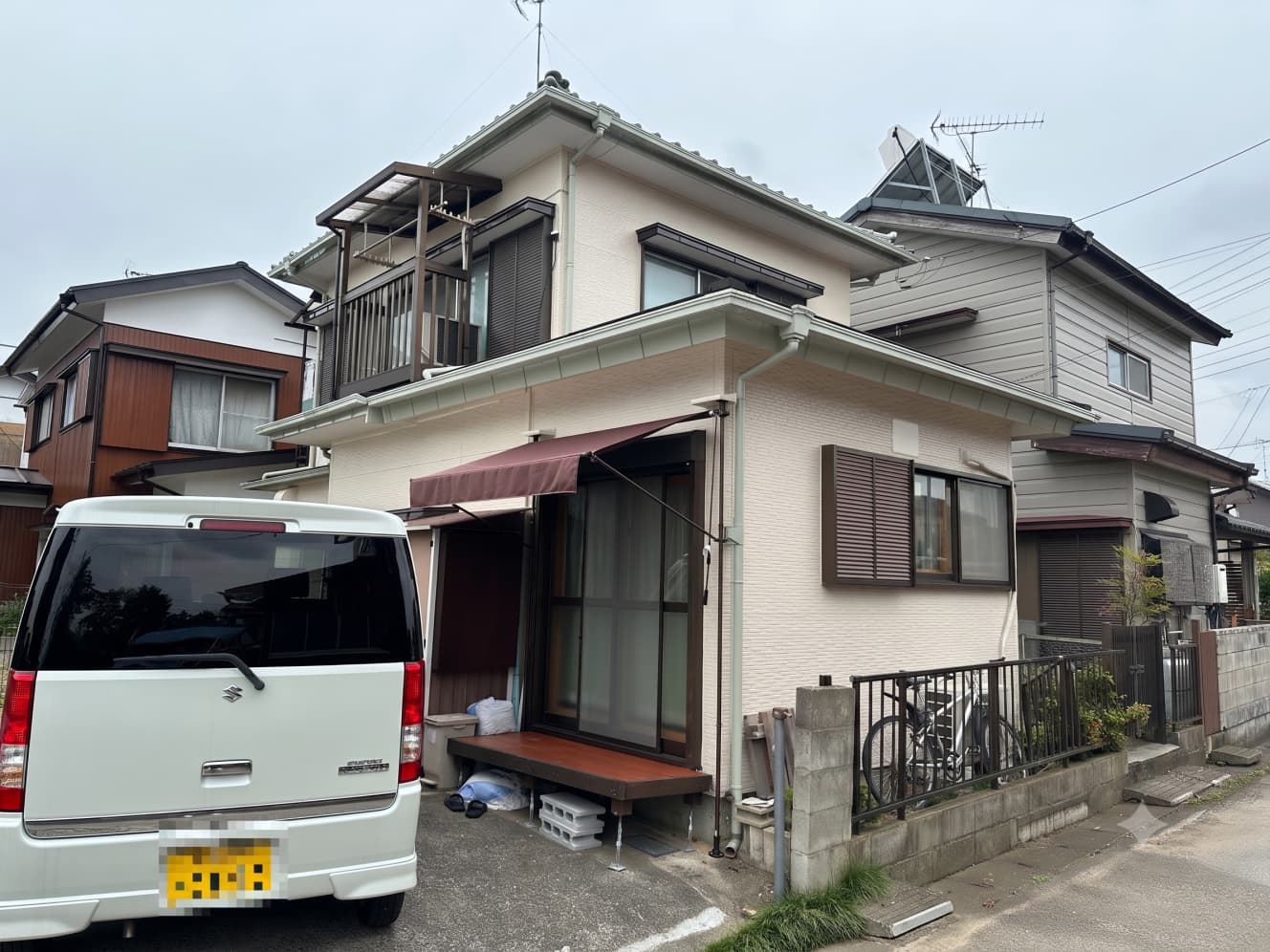
A couple in their 50s, Tomoyuki (57) and his wife Hisako (54), who gave up on soaring rents in Tokyo and purchased a 50-year-old, ¥5.2 million used house in Ichihara City, Chiba Prefecture.
In the first part, we followed their journey from searching for a property to making the purchase.
In the second part, we explore why they deliberately chose to take out a mortgage instead of paying in full, the challenges unique to an older home, and the realities of starting a new life in the community.
The unexpected reason they deliberately took out a mortgage
The couple initially planned to pay the purchase price entirely in cash. However, while consulting financial institutions and considering their financial plan, they decided to deliberately use a home loan.
They had enough money to pay in full. Even so, Tomoyuki chose to take out a mortgage. He borrowed ¥6 million, with a friend’s advice that it’s better to keep some cash on hand becoming the deciding factor. The interest rate is fixed at approximately 1%, with a 10-year repayment period. Annual repayments are around ¥600,000, or roughly ¥50,000 per month.
“I thought I’d take advantage of these last days of low interest rates. I couldn’t do something scary like a variable rate, so I chose a fixed rate.” (Tomoyuki, hereafter)
They also rented a new studio apartment in Tokyo. The rent is ¥75,000 a month. It is used as a place to stay in Tokyo on days when work, drinks, or other commitments run late.
“If I try to get back to Ichihara from Tokyo, I have to leave Tokyo by 9:30 p.m. to catch the last train. Even then, I wouldn’t get home until just before midnight. The thought of having to wake up early the next morning and commute from there is unbearable.”
The ¥50,000 monthly mortgage payment plus the ¥75,000 rent for the Tokyo apartment comes to ¥125,000. Even so, it is cheaper than the ¥165,000 they previously paid out of pocket.
“The premise was that, in total, we absolutely had to keep it cheaper than what we were paying in rent before.”
Unexpected! The reality of ¥1.8 million in repair costs
At the time of handover, the wall coverings and first-floor flooring had already been replaced. A new toilet and washbasin had also been installed. What they paid for themselves included about ¥300,000 for interior windows (double-glazed windows), after using a subsidy, as well as ¥500,000 for a used car to transport building materials.
“Excluding the interior windows, I don’t think everything we spent at the time of purchase, including the car, even came to ¥1 million.”
Property taxes are just over ¥10,000 a year. The neighborhood association charges ¥800 a year for garbage management, and there is no garbage-duty rotation.
There were also unexpected expenses. About a year after purchasing the house (quite recently), they discovered a roof leak and spent approximately ¥1 million on repairs. Moisture rising from beneath the floor was also much worse than expected, requiring another ¥800,000 for floor renovations. With an older house, problems that were invisible at the time of purchase can sometimes emerge only after you start living there.
The purchase price was ¥5.2 million, but the expenses did not end there. It is necessary to keep funds available in case problems are discovered later. In the end, the decision not to pay the entire purchase price in cash proved useful because it left them with funds available for repairs.
There is also no sewer connection. The toilet uses a septic tank. Under Japan’s Johkasou Law, even household septic tanks require maintenance inspections at least once every four months, cleaning at least once a year, and a separate statutory inspection once a year. Maintenance costs about ¥35,000 annually.
“Maintenance costs are higher than I expected. But the hardest thing would be being told after we moved in, ‘The sewer system has finally been installed.’ The cost of connecting to it would be entirely our responsibility, and it would be incredibly expensive.”
The house is 50 years old. It was built before the current earthquake-resistance standards system introduced in 1981.
“They tell us we can get a subsidy if we reinforce the house against earthquakes, but it would cost around ¥3 million. At that point, I think it might be better to move somewhere else. Honestly, that worries me.”
The house survived the Great East Japan Earthquake. However, he himself does not know whether that can really be considered reassurance. If the house were to collapse, it could also damage neighboring properties. Most of the houses around them are similarly old.
“I wonder whether surviving an earthquake once means it’s safe, or whether surviving once means it’s actually dangerous.”
That said, this does not mean the entire area is dangerous. The condition of each house varies depending on its age, structure, ground conditions, history of repairs, and other factors. What concerns the couple is how they will maintain this particular house going forward.
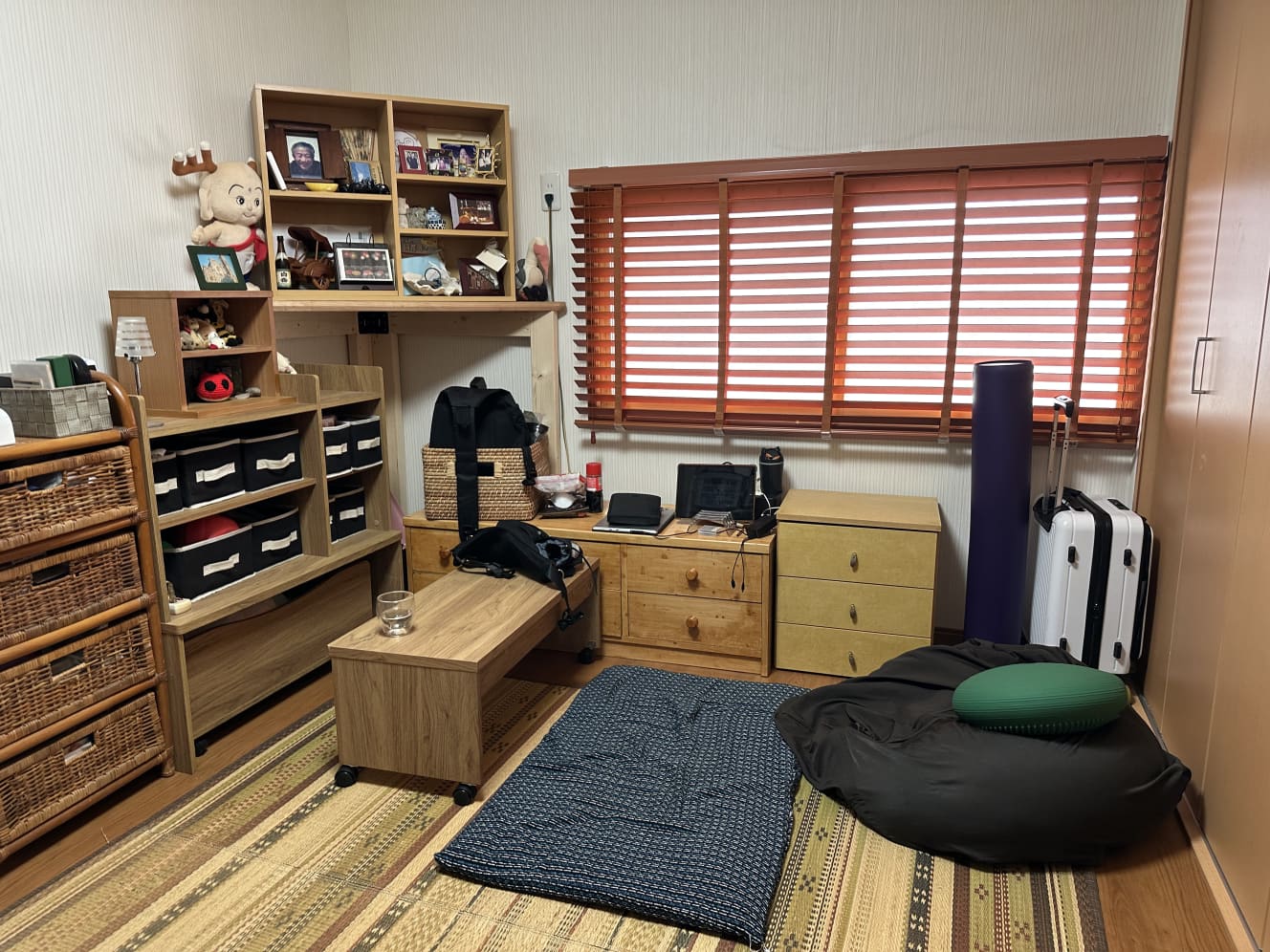
They cut costs wherever they can. When they converted the Japanese-style room on the second floor into a Western-style room, they transported the six tatami mats themselves to a waste disposal facility. They disposed of other items at the same time, bringing the total cost to around ¥3,000.
“If we had hired a contractor, it would have cost tens of thousands of yen.”
Cutting costs! Getting by with DIY
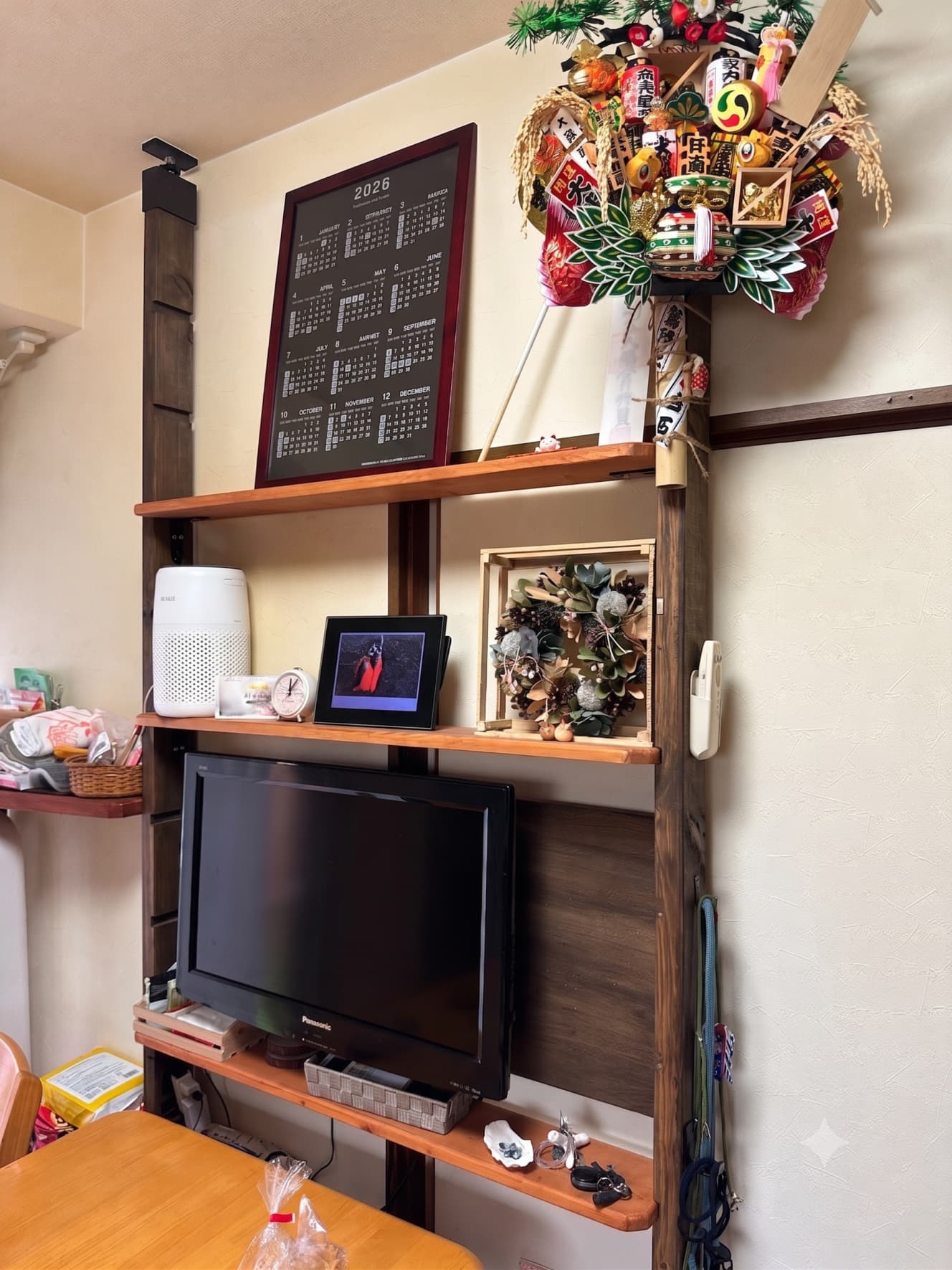
The reason they have managed to keep costs down is that Tomoyuki has handled most of the renovations and DIY work himself. During the six months between purchasing the house and moving in, he traveled from Tokyo every weekend, built eight storage shelves, and installed wooden flooring. Since moving in, he has also built a wooden deck, a storage shed, and raised beds for their home garden. He is currently working on changing the position of a door.
“The only things we hired professionals for were installing the interior windows and the air conditioner. You can find instructions for pretty much everything else on YouTube.”
Separating the work he can do himself from the work that needs to be left to professionals is the key to keeping costs down while living in an older home.
They have been able to redesign both their storage and the flow of the house. Hisako has watched him work.
“I’ve come to realize that people shouldn’t just put up with things. When you put up with something, you stop thinking of ways to improve it. He doesn’t put up with things, so if he decides he wants wooden flooring, he’ll stubbornly make it happen.”
“At 77, I’m the youngest” — The neighborhood situation
One concern when moving to a new area is getting along with the neighbors. Neither of the couple is originally from the area, and they had no acquaintances there before moving. Before relocating, they consulted someone familiar with the neighborhood. The answer was unexpected.
“They told us, ‘You don’t have to join the neighborhood association.’”
Later, someone from the neighborhood association came to visit. The couple intended to say that they would pay the membership fee but might not be able to help with association activities. But the man beat them to it.
“He said, ‘Oh, you don’t have to join anymore.’ Then the old man said, ‘I’m 77, but I’m actually the youngest person in the neighborhood association right now.’”
Now, they simply pay ¥800 once a year for garbage management.
The neighborhood was developed during the Showa era as a residential area for people commuting to Tokyo. The residents from that time have grown older, while their children have not returned.
The relationships among neighbors are fairly relaxed. When scaffolding was put up for roof repairs, an elderly woman across the street remarked, “Why are you replacing all that? My house is 70 years old.”
“When I’m working outside in the morning, someone will call out, ‘Good morning,’ or ‘What are you making?’ or ‘I used to be a carpenter.’ I’m thinking, ‘I want to finish this today,’ while I listen, but I suppose that’s how you get to know people.”

The sense of security they gained by sharing vegetables
Tomoyuki built a small deck by the first-floor window so that neighborhood cats could easily climb up.
“You couldn’t do that in an apartment building, could you? If a cat suddenly appeared on the fourth floor, it would be like seeing a ghost. I think it’s something you can only do with a detached house in the suburbs.” (Hisako, hereafter)
A pheasant runs through the area in front of the station. Neighbors bring over cucumbers.
“Someone will say, ‘We have way too many cucumbers. Would you like some?’ and give us some. Then we’ll say, ‘We have some tomatoes growing. Would you like some?’ and give them away. Those kinds of exchanges make me feel at ease.”
Hisako says that, amid the continuing depreciation of the yen, she has put a small amount of money into foreign-currency savings because of concerns about the future.
“But once I started growing tomatoes, I somehow felt a little more at ease. Even if it’s only a little, being able to grow something ourselves and eat it made me realize how important that is.”
For people over 40, is used the best answer?
Tomoyuki still checks property websites almost every day. It isn’t for his next home. He says there are already quite a few people making a side business out of buying vacant houses, renovating them themselves, and renting them out.
“The vacant-house problem can’t be solved by local governments and the national government alone, so the private sector has to get involved.” (Tomoyuki, hereafter)
There are reasons vacant houses remain standing. Land with a house on it is eligible for certain reductions in property taxes, while demolishing the house and leaving the land vacant can increase the tax burden. Demolition itself can also cost around ¥3 million.
“From the owner’s perspective, it’s actually better to just leave it alone.”
However, under the revised Vacant Houses Act that took effect in December 2023, tax benefits can be removed if a vacant house deemed inadequately managed receives an official recommendation. The cost of leaving such properties unattended is beginning to rise.
What would have happened if they had stayed in Tokyo? Tomoyuki reflects.
“I think elderly people in the Tokyo metropolitan area have it tough. If you’re an elderly person living alone in a rental, it must be difficult to survive on a pension alone.”
They chose this house with their later years in mind as well. Apparently, the previous owners were also an elderly couple without children, and there are handrails throughout the bathroom. If they eventually become unable to climb the stairs, they can simply stop using the second floor and live entirely on the first floor.
“It’s just the right size for us. Basically, we’re not going to leave here anymore.”
Finally, I asked, “Is there anything you absolutely want people to know?”
“Don’t buy a new house. You can make things work. When you’re young, buying new is probably fine. But if you’re in your 40s or 50s and can’t take out a 25-year mortgage, you’re definitely better off buying a used house.
You’re not going to buy a grave anymore, either, are you? If that’s the case, think of a house in the same way.”
A house isn’t something you necessarily have to buy or rent. You can receive one because there are too many, or buy one at a price that feels almost like receiving it. Outside the assumption that “buying a house means spending tens of millions of yen,” there are 9 million vacant houses.

Reporting and Text: Wakako Ta