Why Are More Women Turning to Male Escort Services? Housewives and Office Workers Reveal What Really Happens


Now numbering 400 to 500 establishments nationwide
“More and more people are using services for women these days. Clients range from people in their 20s to those in their 50s and 60s. From office workers to housewives, it really is a broad range of women.”
So says Keiko Momojiri, the manager of the Shin-Okubo branch of OASIS, a service catering to women. According to her, the number of users is growing, and the demographic of female clients is becoming increasingly diverse.
“A little while ago, we organized a dating event where clients could meet a therapist—what would be called a ‘cast member’ in services aimed at men—for two hours for ¥10,000. It was something like a rental boyfriend experience, and it proved extremely popular. Recently, by emphasizing not just the sexual aspect but also emotional comfort and hospitality, we’ve been able to reach a wider range of customers.
It’s not quite like paid drinking companionship, but we get calls saying things like, ‘I’d like to have drinks with a handsome guy—is there anyone available?’ Today, too, someone has booked one of our therapists for a 90-minute, dinner-only appointment at a high-end restaurant in Ginza,” Momojiri says.
As of July 21, the women’s-services information site Kaikan listed 381 establishments and 5,570 therapists—more than double the 167 establishments and 2,417 therapists listed in 2022. Moreover, these figures do not include the industry’s largest operators, known as the “Base-affiliated” groups, such as Himitsu Kichi Group and OASIS. Including them, the actual number of establishments is believed to be around 400 to 500 nationwide, with roughly 7,000 therapists.
What are women looking for when they use these services? We spoke with Rino (a pseudonym), a woman in her late 40s who has been a client for three years. A part-time-working housewife, Rino’s two children are already grown, and she now lives alone with her husband, who is in his late 50s. She has a modest, gentle demeanor and says that she was once quite a frequent user.
“Things have calmed down a little now, but last year there were months when I used the service several times. I spent quite a bit of money, including on overnight trips. But my whole life—including my work—became much more positive and cheerful. Both mentally and physically, I felt much more at ease, and I had fewer worries and concerns.”
Clients use these services in many different ways: some go only on dates, some only receive sensual massages at hotels, and others combine both.
In Rino’s case, she often chooses a 180-minute treatment plus date package, perhaps having tea after a session. It typically costs around ¥30,000 to ¥40,000, and she says she does not consider it cheating. So what is it about these services that she finds comforting?
“The therapists listen to anything, so I can talk about all sorts of things—from trivial matters to more serious ones. I never really had anyone I could open up to completely.
There are things I can’t talk about precisely because my husband is my husband. And even with female friends, you can have casual conversations, but there are areas you can’t easily delve into. Right now, therapists are really the only people I can completely bare myself to emotionally,” says Rino.
The risk of becoming hooked
Even though they are paying for the service, could clients develop romantic feelings for therapists who are so attentive and emotionally supportive? Kumi (a pseudonym), an office worker in her early 30s who uses the service about once a month, explains.
“When women feel emotionally and physically comforted, they can naturally start developing feelings for the other person. Then you start wondering things like, ‘Who is he seeing right now?’ and it leaves you feeling unsettled.
In my case, whenever that happened, I would switch to a different therapist—a practice sometimes called ‘making the rounds.’ As a result, I’ve ended up booking nearly 30 different therapists so far. But recently, I’ve finally learned how to keep things in perspective and enjoy the relationship for what it is.”
In the world of services catering to women, when a client develops genuine romantic feelings for a therapist, it is referred to as becoming hooked or falling down the rabbit hole. A few years ago, when women’s services began receiving media attention and the number of establishments rapidly increased, there was controversy over unscrupulous therapists who deliberately encouraged clients to become emotionally attached and spend large sums of money.
This is a darker side of the industry, whose positive aspects tend to receive the most attention—but has the situation become cleaner today?
Emi, who runs a company that trains therapists in service and customer care, says, “It still happens.”
“The people who spend money that way tend to be, for example, wealthy executives’ wives. They might book someone for an entire day and spend several hundred thousand yen. There are more young clients now, but since it costs money, I’d say the main customer base is still people in their 40s and 50s.
On the other hand, some female clients are seeking pleasure, while others simply want someone to sleep beside them, or just want to show off by walking around with an attractive man. People really use these services in all kinds of ways.”
Women’s services have continued to gain recognition, with the subject becoming the basis for a terrestrial TV drama last year and being featured by influencers and YouTubers. However, the industry still faces no shortage of challenges, including the problem of unscrupulous therapists. As awareness grows, the women’s-services industry may still have a long way to go before it truly matures.
From the August 7/14, 2026 combined issue of “FRIDAY”
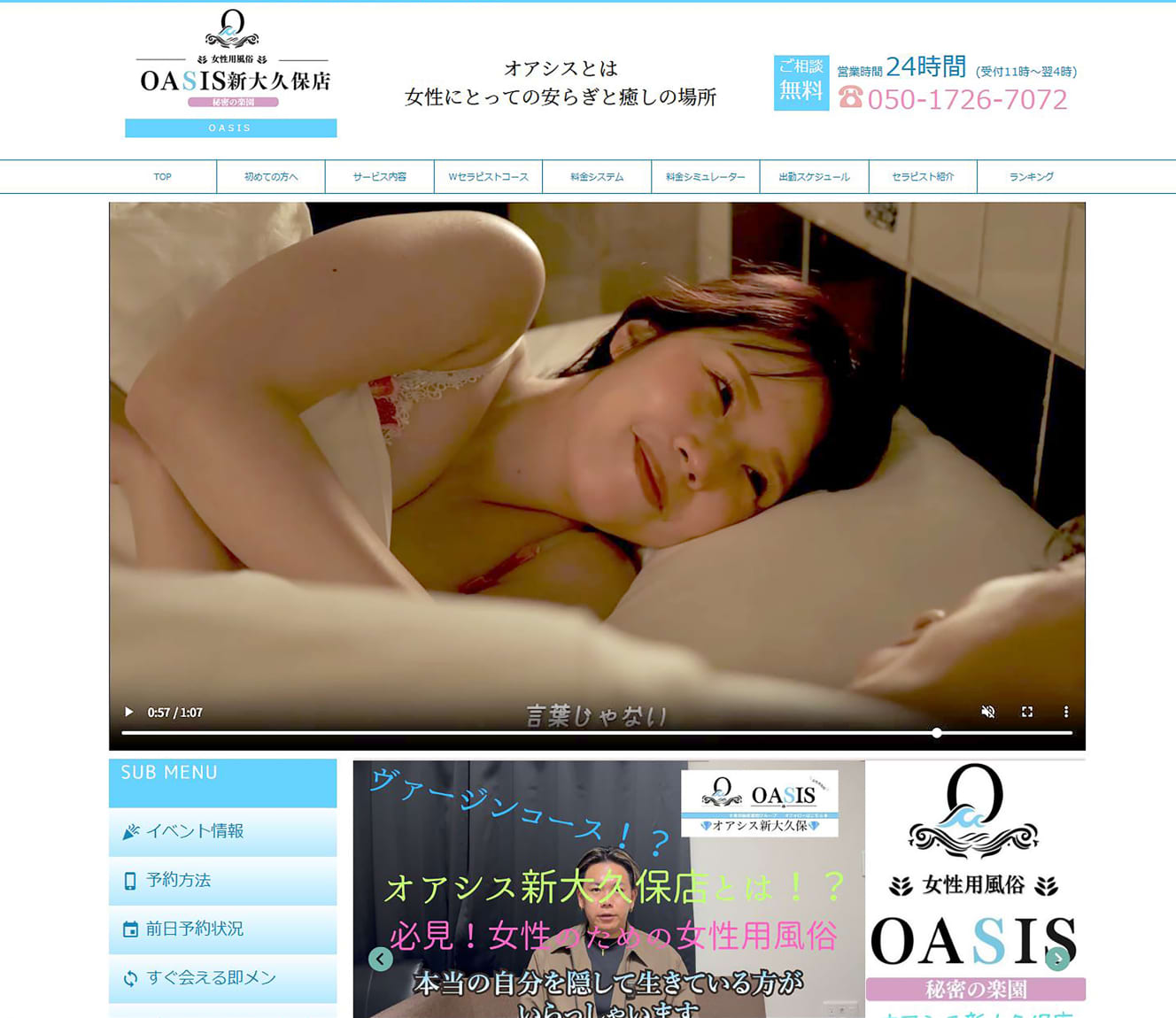
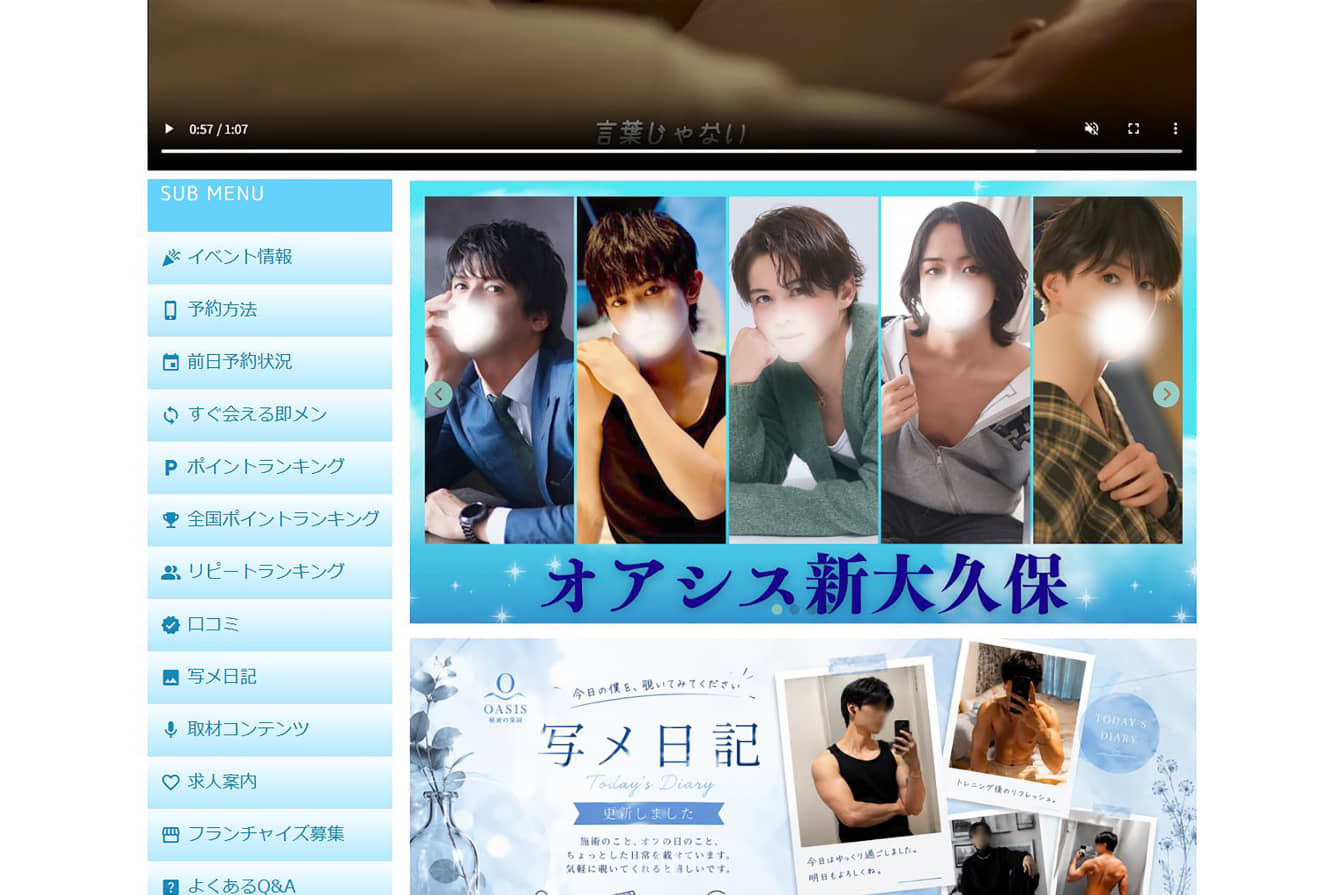
PHOTO: Takehiko Kohiyama