“Don’t Come Into Show Business”: Yutaka Mizutani’s Warning to Daughter Shuri About the Industry’s Brutal Highs and Lows


〈While Yutaka Mizutani (74) boasts a career spanning 60 years as an actor, he has also spent more than a decade pursuing a career as a film director. As his fourth directorial film, “Piccola felicità” (“A Little Happiness”), in which he took on five roles—conceiving the project, directing, writing the screenplay, producing, and starring—is being released nationwide, he spoke passionately about the appeal of directing.〉
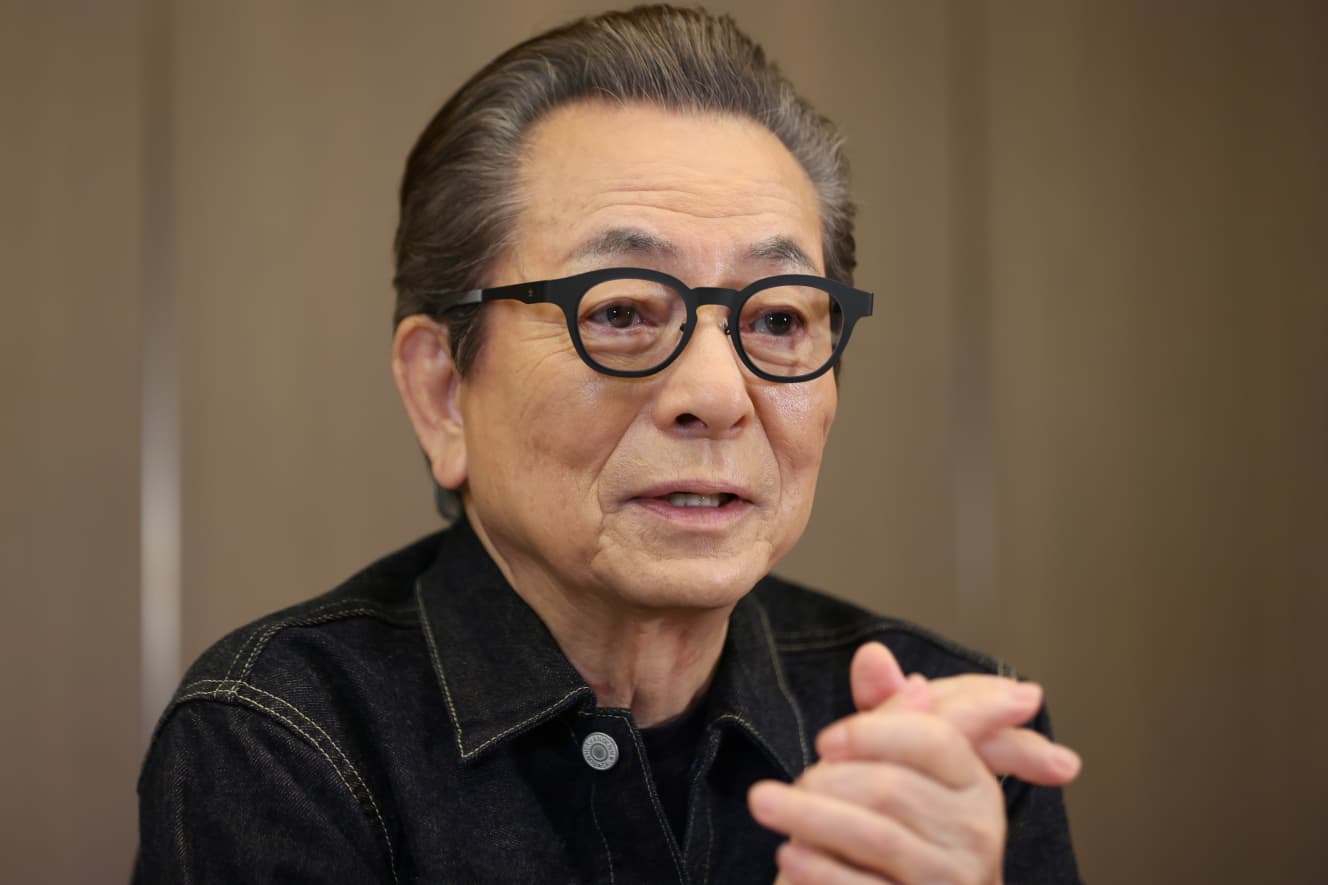
The resolve to go from actor to film director
“Once I decide to do something, I’ll keep doing it for the rest of my life.”
Mizutani made the decision to commit himself to becoming a film director about 10 years ago, when he was given the opportunity to direct his first film. In fact, he had received offers to direct films even before then, but he had turned them all down.
“I think the people who offered me those opportunities probably did so because I was already well known as an actor. But if I became a director for that reason, wouldn’t it be disrespectful to those who had been directing films all along, as well as those who were working hard to become directors? To me, being a director is a title worthy of that much respect. So if I was going to do it, I felt I needed to be prepared to carry that title for the rest of my life.”
His directorial debut, “TAP—THE LAST SHOW”— (2017), was not a project he initially intended to direct himself. However, he had been holding onto the concept for a film centered on tap dancing since his 20s.
“I must have been about 23 when I came up with a story about a young man with an extraordinary talent for tap dancing. I wondered if there was some way to bring it to life, and I even spoke with directors Kon Ichikawa and Kazuhiko Hasegawa about it. But it never came to fruition.”
Even so, he refused to give up. He repeatedly revised the project and continued making the case for its appeal. After 40 years, the story was finally brought to the screen.
“I was no longer at an age where I could play a young man myself, so I changed the protagonist into a former tap dancer who had suffered a setback. During one of the meetings, the producer told me, ‘There’s no one who can direct this except Mizutani.’ Actually, I had already begun to think that I might end up directing it myself. After all, I knew this project better than anyone. That was the moment I made up my mind to pursue it as a director.”
He says that if he were going to bring his project to the screen, he had decided from the beginning that it would be a film rather than a television production. The reason stems from his own experiences. Mizutani moved from Hokkaido to Tachikawa, Tokyo, when he was in the second grade of elementary school. With a U.S. military base nearby, he grew up surrounded by American culture and was particularly influenced by American films.
“When I was a high school student and had just begun appearing in films as an actor, I watched the American New Cinema classic ‘Bonnie and Clyde’ at a movie theater in Tachikawa. I was fascinated by how cool the couple heading toward destruction was. Maybe it was because I, too, had a desire to destroy something.”
Mizutani became a regular moviegoer, taking notice of Dustin Hoffman’s performance in “Midnight Cowboy” and idolizing Paul Newman in “Butch Cassidy and the Sundance Kid.”
“While watching a movie, I can forget all my worries and fatigue and completely immerse myself in that world. Of course, television dramas can do the same, but television is something you watch at home. For me, simply going to a movie theater was something special and exciting in itself. That’s why I wanted audiences to experience a special world as well.”
The culmination of that vision is the 24-minute tap-dancing show that serves as the film’s climax. This, too, was inspired by the stage production “Peter Pan,” which he saw on the U.S. West Coast when he was in his 20s.
“I was so overwhelmed by the dancing of the lead actress, Sandy Duncan, that I couldn’t stop crying. I wanted to present a show that would allow people to experience that same emotion. It’s difficult to evaluate my own work, but there’s no doubt that I used everything I had to create it. Being able to turn 40 years of thoughts and aspirations into a tangible work made me feel that I could finally move forward.”
The filming set as a training ground
Mizutani himself has been remarkably prolific, directing four films in less than a decade, but he remains enthusiastic, saying, “I’m still a young director.” He says he has already begun to envision his next project.
In 2023, he also returned to the stage for the first time in 23 years in “Kaettekita My Brother.” In addition, filming for the television drama “Aibou,” which celebrated its 26th anniversary this year, takes seven months out of every year, making for an extremely demanding schedule. When asked how he maintains his health amid such a busy life, he gave an unexpected answer.
“I haven’t done any kind of physical training for decades.”
When he was in his 20s, he neglected an injured shoulder because of his youth, and the injury eventually became a chronic problem. He found that strenuous training actually caused the pain to flare up. While searching for a solution, a comment from a trainer changed Mizutani’s outlook.
“The trainer told me, ‘If you have enough stamina and strength to live your daily life normally, you’re already perfectly healthy, so I don’t think you need to put your body through anything more than that.’ It really made sense to me. So I don’t do anything special, but I do take care because leg strength tends to decline easily. That said, I’m always walking around on filming sets, so I suppose I naturally stay in shape.”
Mizutani said this with a smile before briskly walking off to his next set. There was a quiet confidence in his stride—a confidence he had clearly earned as a director.


Interview and Text: Akinori Nakagawa PHOTO: Takehiko Kohiyama