From ¥500,000-a-Day Gains to Crushing Losses: How a Mom Investor Built a ¥500 Million Fortune


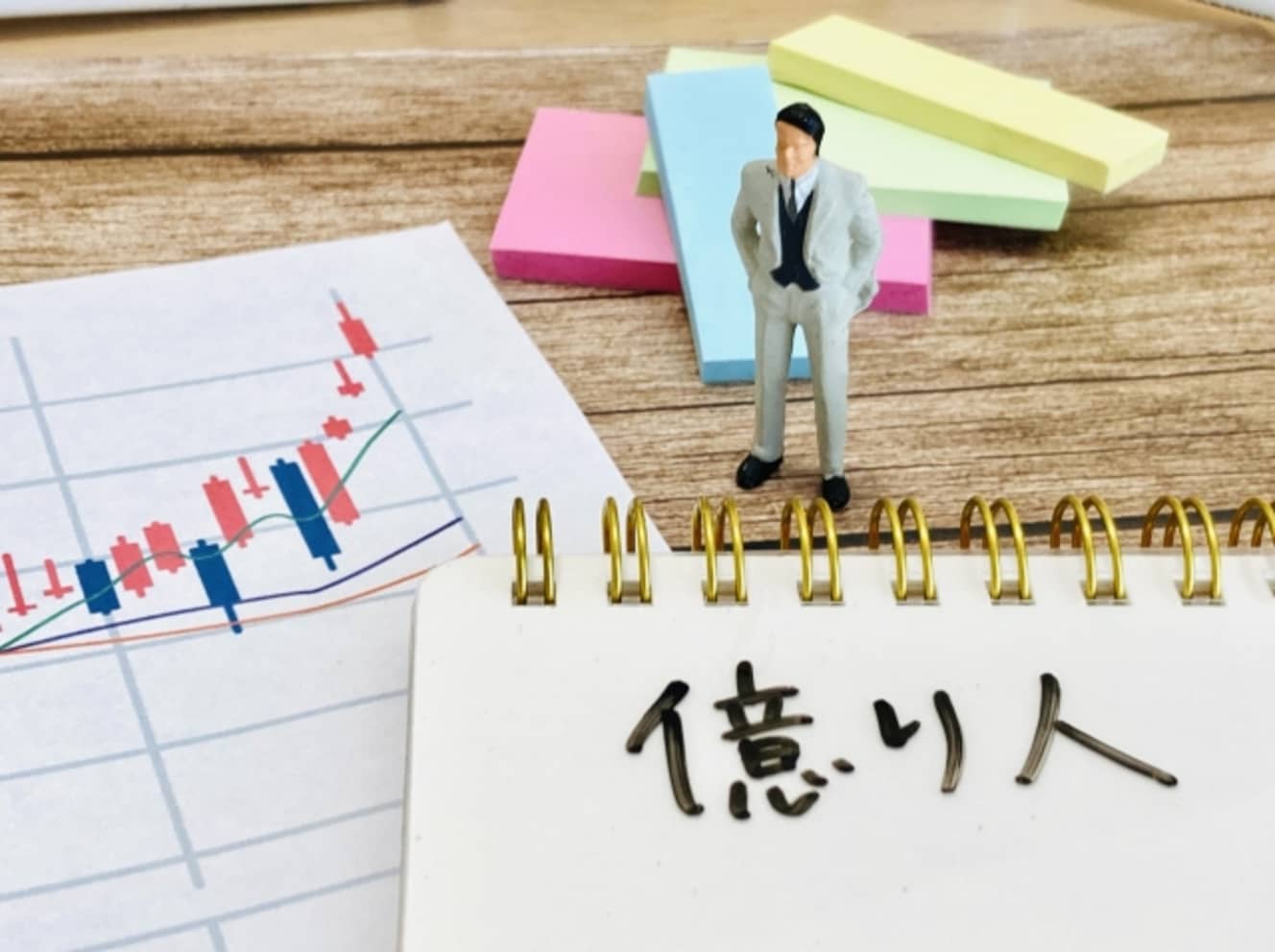
Choruko, the featured investor in this article, is a part-time investor who made headlines after becoming a billionaire in yen while on maternity leave. Those with experience in stock investing might assume that, given how quickly she achieved this during her maternity leave, she succeeded through day trading or swing trading. In fact, it was day trading that first helped her build assets worth ¥100 million.
That might make you think, “That sounds difficult to replicate.” But that’s not necessarily the case. After becoming a billionaire in yen and experiencing numerous failures, the swing-trading approach she eventually developed is considered exceptionally highly reproducible among chart-based investment methods. First, let’s briefly look back at her investment journey before exploring her strategy.
【Profile: Choruko】
After majoring in pharmacy at university, Choruko joined a foreign pharmaceutical company as an MR (medical representative). She later worked in public relations at a listed company before becoming independent. She currently runs a PR support business, providing corporate PR and IR services, while also investing in stocks as a part-time investor. She is a mother of two. She began investing seriously in stocks in 2019 and had already accumulated ¥100 million in assets by January 2021. After experiencing several ups and downs, she established her own style of swing trading large-cap stocks using the “Sakata Five Methods.” As of 2026, her assets have surpassed ¥500 million. She is the author of “How a Mom Investor Saved ¥100 Million in Stocks During Maternity Leave” (Diamond, Inc.). She has also appeared in various money magazines and economic programs.

Why she focused on technical analysis
Her initial capital of ¥15.84 million came from selling shares of Oriental Land Company. She began by studying money and investment magazines, making a list of the stocks they recommended and monitoring their daily price movements. On her days off, she attended events for individual investors, gathering information and learning different investment methods.
After building up this knowledge and experience, Choruko decided to use technical analysis. This is an investment method that analyzes charts showing historical movements in stock prices and indices to predict future price movements. By contrast, fundamental analysis involves analyzing the national economy and economic conditions, as well as a company’s performance and financial position. Choruko determined that technical analysis suited her better.
“I intuitively felt that it suited me. When you’re a beginner, rather than trying this and that, it’s important to narrow your focus to one method so you can eliminate uncertainty. You should try to find what suits you as quickly as possible. There is no single right answer when it comes to investing.” — Choruko, as quoted below
The secret to day trading that earned ¥500,000 a day
The following year, in 2019, Choruko began maternity leave for her first child and entered the stock market in earnest. The first company she set her sights on was Tokyo Electron, a global leader in semiconductor manufacturing equipment. At the time, Tokyo Electron’s dividend yield was above 5%. Semiconductor market conditions had deteriorated from the latter half of 2018 due to the U.S.-China trade tensions, causing the stock to come under heavy selling pressure.
However, taking into account expectations that market conditions would recover from the latter half of 2019, as well as the rule of thumb that stock prices tend to rise ahead of the House of Councillors election, she invested all of her investment capital in Tokyo Electron shares. What’s more, she used margin trading by putting the cash-purchased shares up as collateral.
“At the time, the stock was trading at around ¥18,000, and its price would fluctuate by about ¥500 to ¥1,000 in a single day. The price moved easily, so I thought it was well suited to day trading.”
Her day-trading strategy was based on technical analysis, using the candlesticks, arguably the most common type of stock-price chart. When the stock price fell, she would enter a position if a bullish candle or lower shadow, both considered signs of a rebound, appeared on the one-minute chart. It was a simple and straightforward strategy.
However, before trading, she never neglected thorough preparation: checking the previous day’s U.S. market, examining the correlation between foreign exchange rates and Nikkei 225 futures, using that information to anticipate where the Nikkei 225 might settle that day, and checking the target stock’s trend on a daily chart.
After becoming a billionaire in yen, however, she shifted her focus toward trading emerging growth stocks—and suffered a painful setback. When she concentrated her investment in AI inside Inc., the stock plunged following selling after its earnings announcement, resulting in a ¥24 million loss in a single day.
“In reality, the market had already priced in a very strong earnings result, but I failed to take that into account and was focused solely on making profits. I think my thinking had become that of a complete gambler, with absolutely no basis for my decisions.”
¥500 million in assets! The large-cap swing trading strategy
Choruko’s stock-investing journey began with day trading a single stock. Today, her trading style is swing trading large-cap stocks, in which she holds positions for anywhere from several days to several weeks.
“My basic strategy is to buy large-cap stocks only when they are cheap. I deliberately stay out of the market most of the time, then buy when stock prices fall and sell when they rebound. I started to really develop this approach in 2022, and I felt that I had reached a point where I could reproduce the parts of my trading that had previously depended on luck. Being able to steadily grow my assets even when technology stocks were trending downward gave me a great deal of confidence.”

Having broken away from her former gambler-like approach, Choruko established a large-cap swing-trading strategythat allowed her to generate profits steadily and grow her assets beyond ¥500 million. The paid “FRIDAY Subscription” provides a detailed look at how to use the highly accessible “Sakata Five Methods” and four bottoming-out signals, as well as the three stocks she is currently focusing on by name, given the present market environment.
Reporting and Text: Kenji Matsuoka
Money writer and financial planner. After working as a market analyst at a securities firm, he became independent in 1996. He writes articles on finance and asset management, primarily for business and economic magazines.His books include *The First-Year Guide to Robo-Advisor Investing* and *Easy to Understand with Plenty of Illustrations! The Definitive Guide to Making Money with Cashless Payments*. ■X (formerly Twitter) → @1847mattsuu
PHOTO: Mayumi Abe