A Quiet Chiba Neighborhood Has Japan’s Fastest-Rising Land Prices—Here’s What’s Driving the Surge


Next to Chiba’s Futako-Tamagawa
Did you know that attention is currently focused on the area around Hatsuishi Station in Nagareyama, Chiba Prefecture?
Recently, the nationwide official road land prices were announced. These are the assessed value per square meter of land along roads in a given area, and are used as a basis for calculating taxes. The highest figure was ¥53.36 million along Ginza Chuo-dori in Ginza 5-chome, Chuo Ward, Tokyo, up 11.0% from the previous year.
Some areas have recorded their highest increases since the bubble era. The district with the highest increase in the top road land price was Hakuba Village in Nagano Prefecture, at 32.7%. Hakuba, famous as a ski resort, has seen land prices rise as demand for vacation homes and other properties from foreign buyers has increased due to inbound tourism. However, within the Tokyo metropolitan area—including Tokyo, Kanagawa, Chiba, and Saitama prefectures—the highest average increase for residential land was 5.0% in Nagareyama, Chiba.
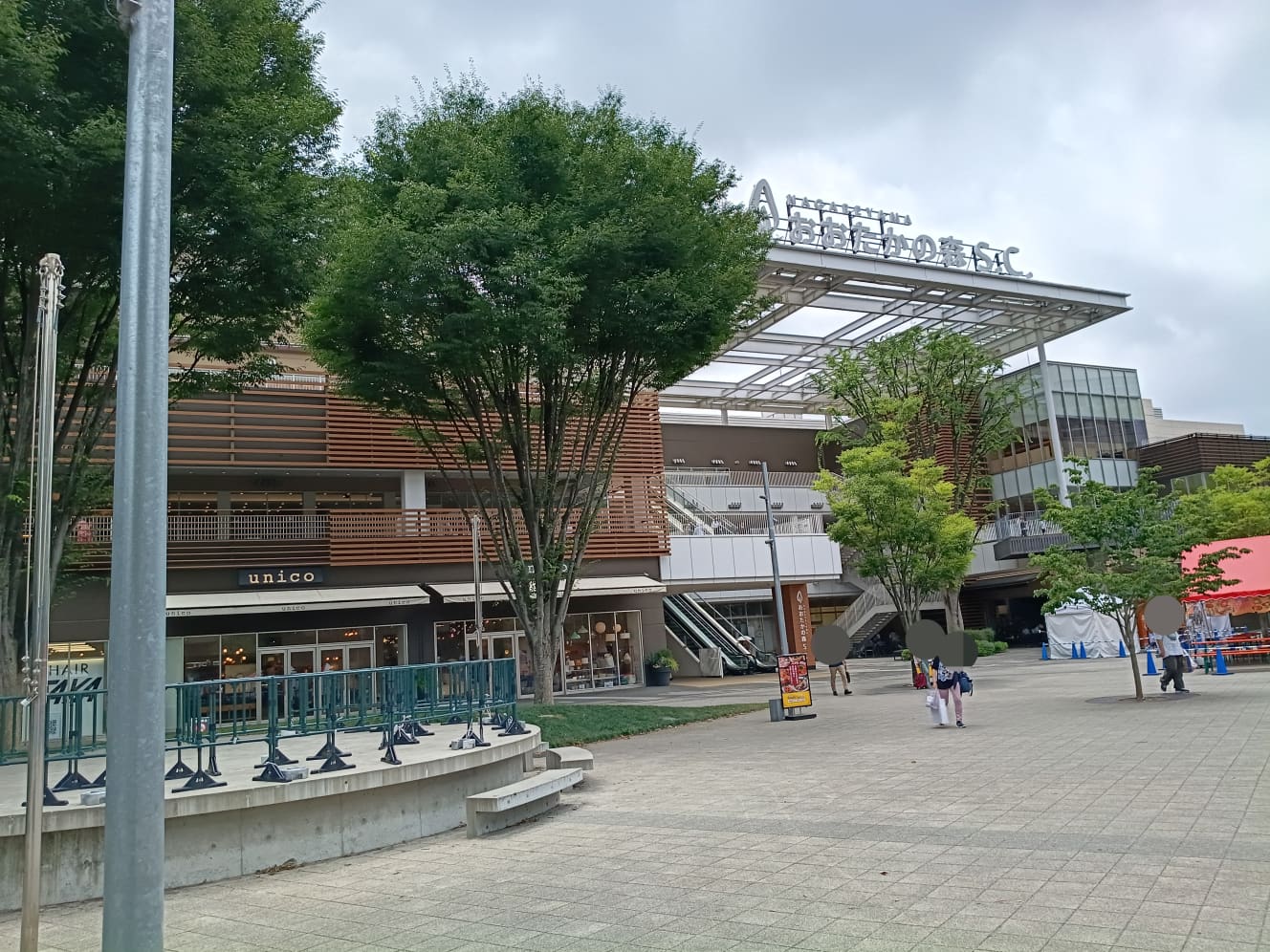
Nagareyama has become increasingly popular in recent years, with its convenient access to central Tokyo and extensive childcare support, leading to population growth. The area around Nagareyama-Otakanomori Station (Tsukuba Express and Tobu Urban Park Line) is particularly popular. The station is home to Nagareyama Otakanomori S.C., part of the Takashimaya S.C. group, and has been dubbed “Chiba’s Futako-Tamagawa.”
“Futako-Tamagawa” refers to the Futako-Tamagawa area of Setagaya Ward. The “Tamagawa Takashimaya S.C. in Futako-Tamagawa” is famous as a shopping center favored by affluent shoppers. Today, development in the Nagareyama-Otakanomori area is progressing at a pace that is beginning to rival it. A woman in her 30s who lives about a 10-minute walk from the station told us:
“We moved here three years ago. It takes about 15 minutes by rapid train to Kitasenju Station (Adachi Ward), and less than 30 minutes to Akihabara Station (Chiyoda Ward). Everything we need is available around the station, so we don’t need to use a car to go shopping. There are also plenty of daycare centers, and shuttle buses come to the station to pick up the children. There’s lots of nature just a short distance away, too, and the neighborhood is peaceful, so I think it’s well suited to dual-income families raising children.”
She explained why the area has become so popular.
However, as land prices have risen in recent years, housing prices have also soared. As a result, prospective homebuyers who can no longer afford the Nagareyama-Otakanomori area have turned their attention to the next station along the Tobu Urban Park Line: Hatsuishi Station. According to this year’s official road land price announcement, the Higashi-Hatsuishi area around Hatsuishi Station in Nagareyama recorded the highest point-by-point increase in residential land prices in the Tokyo metropolitan area, at 16.1%.
“One possible reason for the rise in land prices in the Higashi-Hatsuishi area is the impact of a large-scale condominium currently under construction by Mitsui Fudosan Residential (hereafter, Mitsui), which is scheduled for completion in late February 2028.”
So says housing journalist Yumi Fukuoka.
Properties sell put immediately
“The property is a six-minute walk from Hatsuishi Station and a 12-minute walk from Nagareyama-Otakanomori Station. Although Hatsuishi Station is technically the nearest station, Mitsui is marketing it as a ‘Nagareyama-Otakanomori property.’ As a result, it has attracted interest from a much wider area, which appears to be driving up land prices in the Higashi-Hatsuishi area as well.
Development around popular stations has already reached saturation point, and as the wave of development gradually spreads to the next station, and then the one after that, a previously quiet neighborhood with little going on can suddenly experience a surge in land prices. People often say that the area one station away from a major terminal station is the sweet spot for real estate, and this seems to be another example of that positive cycle.”
Indeed, when we visited the area, the surroundings of Hatsuishi Station had the kind of scenery one might expect around a small station on a local railway line. In stark contrast to Nagareyama-Otakanomori Station, exiting through the west ticket gate reveals little more than a modest shopping street lined with a single supermarket, a convenience store, izakayas, and other small establishments.
A man in his 60s who has lived in the area for more than 20 years expressed his surprise at the surge in land prices:
“I don’t think it used to be particularly expensive. Prices started rising after the Tsukuba Express opened, but even then, this was still the countryside. I was really surprised when I saw the news. It’s true that the number of people and children has increased. The roads have also started getting congested recently. The Hatsuishi area is a convenient place. You can walk to the neighboring Nagareyama-Otakanomori Station, and it takes less than 10 minutes by car. It’s a quiet, relaxed, pleasant neighborhood. It’s an easy place for older people to live. So honestly, I’m worried that having more people around will make the area crowded and noisy.”
He seemed somewhat perplexed by the growing attention being directed toward the Hatsuishi area.
We also spoke with a local real estate agent.
“Two years ago, land located five minutes from the station was selling for about ¥800,000 per tsubo, but last year it rose to ¥1 million per tsubo. The east side of Hatsuishi Station became more convenient after a ticket gate was opened there last year, so prices have been rising. Even properties seven or eight minutes from the station now cost around ¥1 million per tsubo. It certainly isn’t cheap, but there aren’t many properties coming onto the market in the first place, so when one does appear, it tends to sell immediately.
Compared with Nagareyama-Otakanomori, buyers can get more spacious land at a relatively lower price, which is probably why the Hatsuishi area has become increasingly popular. Depending on the builder, buying a 40-tsubo plot and building a 30-tsubo house would cost around ¥80 million to ¥90 million in total. In Nagareyama-Otakanomori, the price would unquestionably exceed ¥100 million. If you can keep the budget down and still be within about a 20-minute walk of Nagareyama-Otakanomori Station, it’s easy to understand why people would want to live in the Hatsuishi area.”
“It won’t change dramatically”
If that is the case, will development in the Hatsuishi area accelerate rapidly in the years ahead?
“Land is designated according to what are known as zoning districts. These establish broad land-use purposes for urban areas, such as residential, commercial, and industrial use. Once a zoning designation is assigned, the types of buildings that can be constructed are determined and restricted according to the intended use. In other words, zoning largely determines the face of a neighborhood.
The Hatsuishi area consists only of neighborhood commercial districts and ‘Category 1 medium-to-high-rise residential districts.’ The neighborhood commercial district is limited to the existing shopping street in front of the station, so the number of shops won’t increase enough to turn it into a much larger shopping district. The Category 1 medium-to-high-rise residential districts also have restrictions on what kinds of buildings can be constructed, so the area is unlikely to change dramatically. Therefore, I don’t think it will develop into a commercial city like the Nagareyama-Otakanomori area.” (The real estate agent quoted above)
In other words, the changes residents fear are unlikely to occur.
“An area where development is likely to progress even further than Hatsuishi is Edogawadai Station (Tobu Urban Park Line), the station next to Hatsuishi. Redevelopment is currently underway around the station, so this area could change considerably.
Another area I would be watching most closely is around Kashiwanoha Campus Station (Tsukuba Express), next to Nagareyama-Otakanomori Station. It already has a university campus, a cancer center, and a Mitsui shopping complex, and the streetscape is already quite attractive. However, land readjustment has not yet been completed. I think it will become extremely popular in the future.” (The real estate agent quoted above)
Nagareyama has transformed into one of the hottest spots in the region, and its momentum looks likely to grow even stronger in the years ahead.


Reporting, Text, and Photos: Hiroyuki Sasaki