Space Investing Comes to Japan’s New NISA—But Experts Say the Fund May Not Live Up to Its Name


Unusual! A Space Fund Added to the NISA
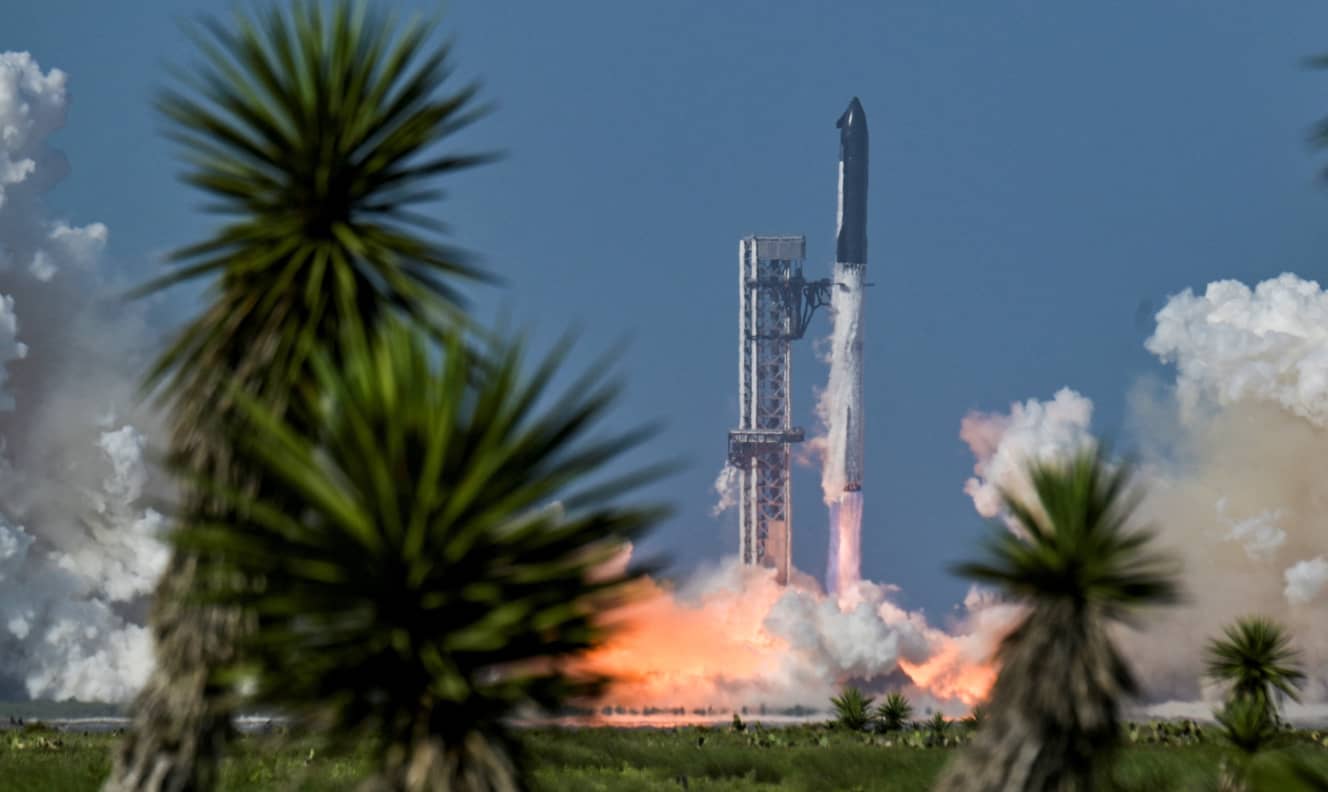
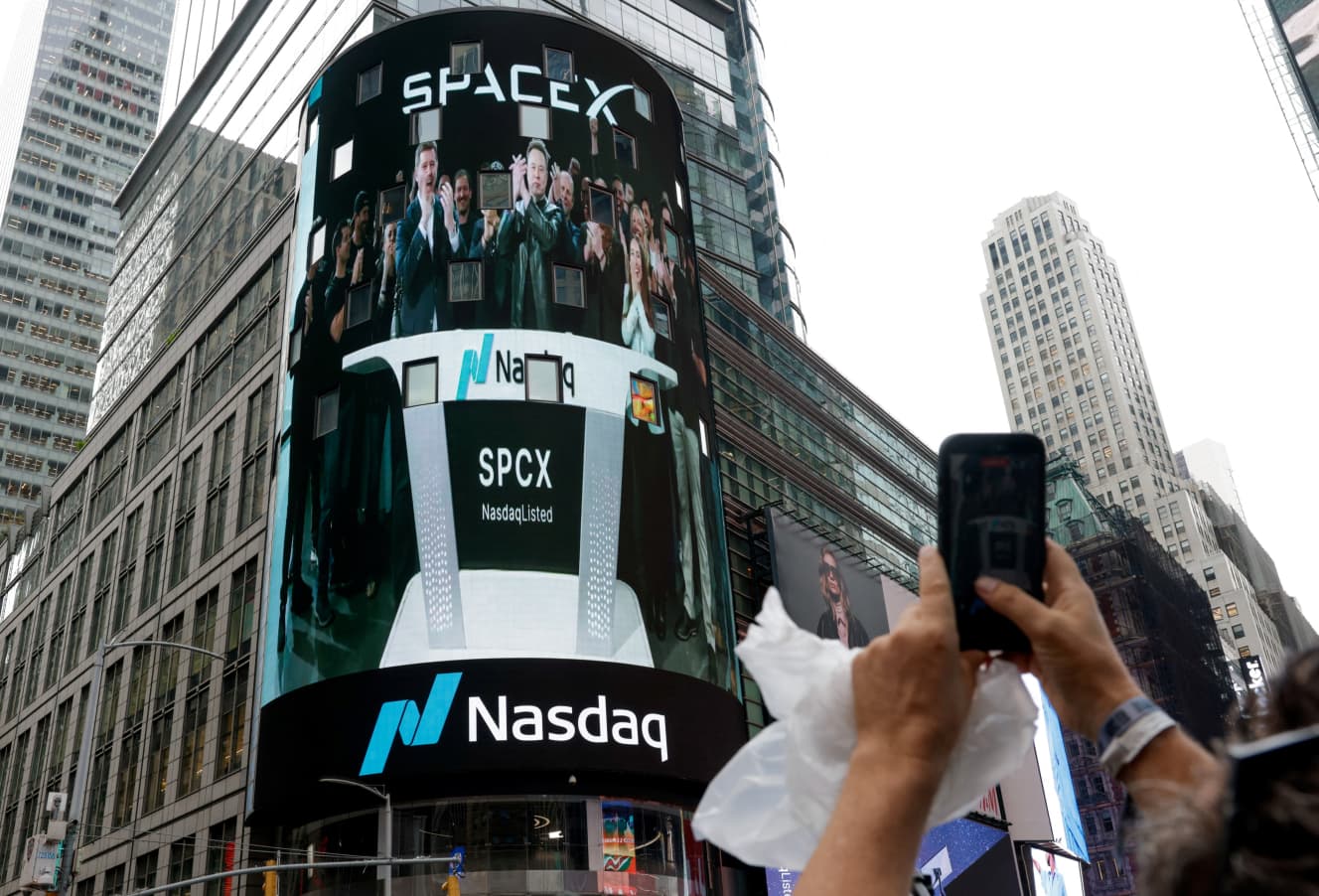
SpaceX, the company led by American entrepreneur Elon Musk and known for its Starlink satellite internet business, made its long-awaited debut on the Nasdaq on June 12. Its market capitalization soared to approximately ¥320 trillion, nearly three times Japan’s national budget of about ¥122 trillion. The stock market was swept up in unprecedented excitement.
Space development was once pursued primarily as a national endeavor, but it is now transforming into a massive business increasingly driven by private companies. Space-related news is being reported almost daily, and space-development stocks are also attracting investors’ attention as next-generation growth stocks.
Amid this growing momentum, the first space-related stock index fund was added to the “Tsumitate Investment” (regular investment) category of the new NISA. The fund is SMT MIRAIndex Space, managed by Sumitomo Mitsui Trust Asset Management.
The products eligible for the new NISA’s Tsumitate Investment category are limited to investment trusts and ETFs that meet the Financial Services Agency’s strict criteria. The fact that the FSA effectively gives its seal of approval to products deemed suitable for long-term, systematic investment is significant. For that very reason, theme-based funds focused on specific industries or trends and subject to sharp price fluctuations have generally been excluded. Yet now, a high-risk theme fund focused on space has suddenly appeared among the eligible products.
SMT MIRAIndex Space became eligible for the NISA Tsumitate Investment category on June 18, just six days after SpaceX made its Nasdaq debut.
Why space for the NISA now?
“I think SpaceX’s listing is a major factor. Sumitomo Mitsui Trust Asset Management probably saw this as an opportunity and pushed the Financial Services Agency to approve it at this particular time.”
That is the analysis of Kenji Matsuoka, a financial planner and former securities-company employee.
“According to the fund’s prospectus, management of this space fund began in December 2019. Sumitomo Mitsui Trust initially set an ambitious fundraising target of ¥50 billion.
But when you look at the actual results, even after six years, the fund had failed to attract even ¥5 billion in net assets, only recently reaching the ¥7-billion range. The fund’s addition to the NISA Tsumitate Investment category this time makes it look as though the asset manager is opportunistically trying to capitalize on all the public attention surrounding space.”
SpaceX’s Nasdaq debut sent investors around the world into a frenzy. In Japan, too, the excitement was particularly intense among individual investors, with more than ¥1 trillion in buy orders flooding in—far exceeding the roughly ¥300–400 billion allocation earmarked for Japanese investors.
It is understandable that an asset-management company would want to capitalize on such an opportunity. The real question, however, is the Financial Services Agency’s decision. Why did it choose to make this underperforming investment trust (Matsuoka’s words) eligible for the NISA Tsumitate Investment category now?
“The Financial Services Agency may have seen the excitement surrounding SpaceX’s stock-market debut and concluded that space-related stocks were gaining popularity among the public, prompting it to rush through the approval process. If that is what happened, then the Financial Services Agency has seriously misunderstood the situation.”
A Case of False Advertising? The Trap of SpaceX’s Absence
So, what exactly is the misunderstanding?
“SpaceX may have a strong image as a space-related company, but it is an AI company. Elon Musk himself has boasted that he will launch communications satellites and build massive AI data centers in space.
This is immediately apparent from SpaceX’s prospectus, which can be found on the official website of Mizuho Securities, the only Japanese financial institution serving as a lead underwriter. No less than about 76% of its recent capital investment is in the AI field, while space-related and communications businesses account for only around the remaining 20%. You could say it is essentially an AI company going all-in on the field.”
Surely the Financial Services Agency was not unaware that SpaceX’s core business is AI infrastructure rather than space development.
There is another fact that makes one scratch one’s head. The name of “SpaceX,” the very company one would expect to see, is nowhere to be found on the list of holdings in “SMT MIRAIndex Space.”
And there is a reason for that. This space-themed fund mechanically selects stocks based on data such as past sales performance and trading volume. As a result, SpaceX, which has only just gone public and lacks sufficient track-record data, is automatically excluded.
“Looking at the fund’s sales materials, many of the top 10 holdings as of the end of May are solid American defense and capital-goods companies, including Curtiss-Wright, which manufactures aircraft components, and Lockheed Martin, a long-established defense contractor.
In other words, there is a major disconnect between the fund’s theme and what it actually contains. Investors may think they are investing in cutting-edge space businesses, but in reality, they end up buying traditional defense stocks and aircraft-parts manufacturers.”
The fact that the fund is essentially all name, no substance is enough to undermine its credibility, but Matsuoka also takes issue with its trust fee and investment performance.
“This fund claims to be based on a smart beta—a clever proprietary index consisting of the top 50 space-related companies worldwide in terms of asset efficiency, designed to outperform the market average. In reality, however, its performance has lagged behind the S&P 500 and All Country, which are benchmarks for the overall market.
On top of that, its trust fee is high at 0.77%. If that is the case, it makes more sense to simply buy the S&P 500 or All Country, which have better performance and lower fees.”
A Professional Warning! Why Theme Funds Are a No-Go
As mentioned earlier, “SMT MIRAIndex Space” is a theme fund. These are investment trusts that include stocks based on themes attracting public attention. While their investment targets are easy to understand, they are also known for their high level of risk.
“Among financial professionals, there is a common understanding that theme funds are basically not recommended. The biggest reason is that they are prone to making investors buy at the top.
The reason asset management companies launch theme funds in the first place is that the themes are attracting public attention and are therefore easy to sell. But by the time something is making headlines, various positive factors have already been priced into the stocks held by the fund, and in many cases, they have already reached high valuations.
That is why I suspect Sumitomo Mitsui Trust’s space fund could also end up being a classic case of investors buying at the top.”
Matsuoka also warns against being overly optimistic about the space business simply because it is regarded as a promising growth industry.
“For example, some people envision a scenario in which an influx of capital from major corporations causes the stock prices of space-related companies as a whole to surge. But that is a major misconception. In reality, the space industry has yet to progress beyond communications satellites. Related companies may benefit to some extent, but there is not enough impact to dramatically boost the fund’s performance.”
▼Kenji Matsuoka — Money writer and financial planner. After working as a market analyst at a securities firm, he became independent in 1996. He writes primarily about finance and asset management for business and economic magazines. His books include “The First-Year Textbook for Robo-Advisor Investing and The Definitive Guide to Getting the Most Out of Cashless Payments: Explained with Abundant Illustrations.”
Reporting and Text: Sayuri Saito PHOTO: Afro