Seven of Kanto’s Most Notorious Yakuza Groups Gather in Shin-Yokohama—What Was Behind the Meeting?


Okinawa’s hardline Yakuza Group pays a visit
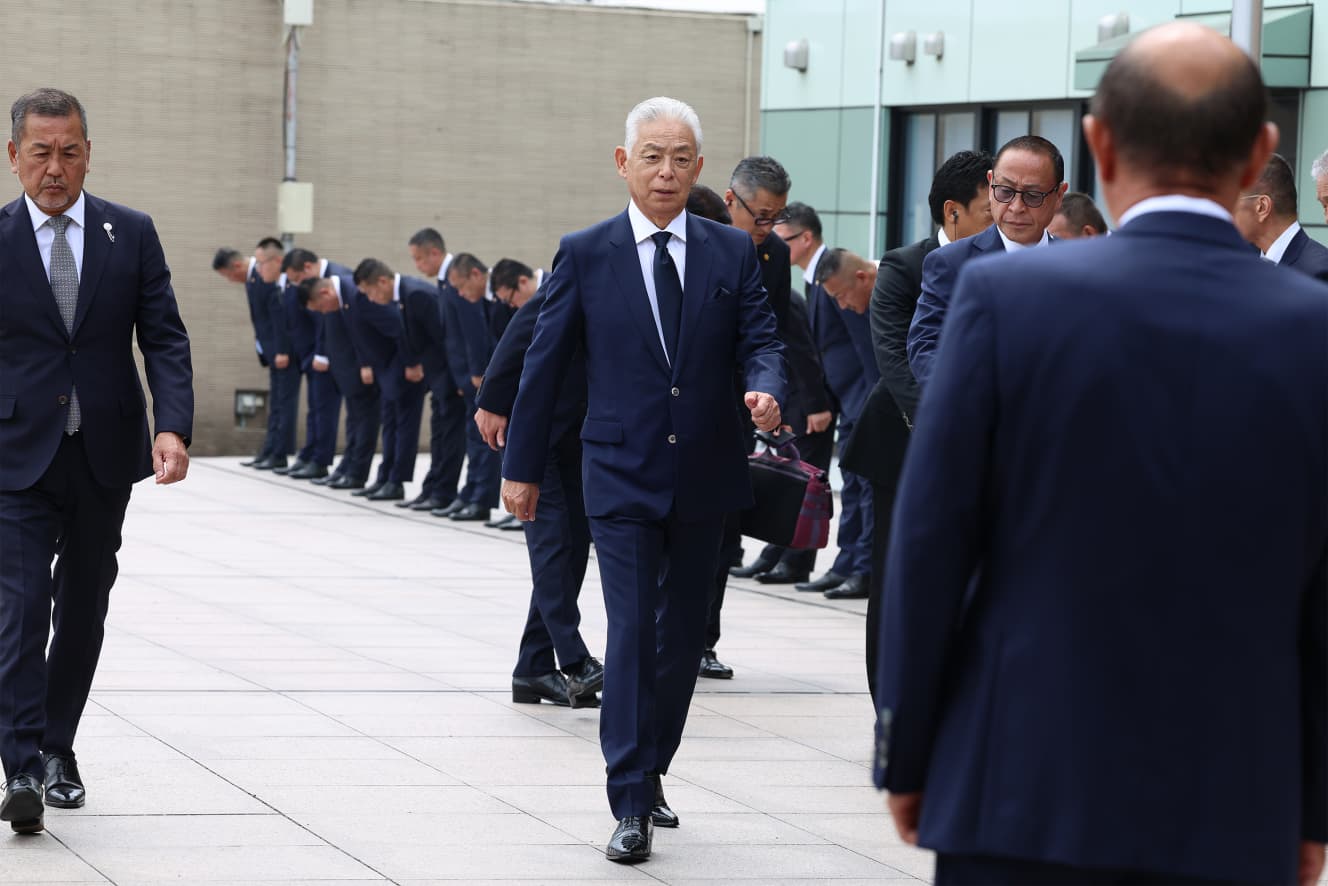
In mid-July, Yokohama, Kanagawa Prefecture, experienced three consecutive days of midsummer days, with temperatures exceeding 30°C (86°F). At Inagawa Kaikan, the operational base of the designated organized crime group Inagawa-kai on the outskirts of the city, several dozen members dressed in suits and ties had been lined up since early morning. The hall’s iron doors were closed, making it impossible to see inside from outside, but from time to time, voices practicing greetings such as “Thank you for your hard work!” echoed onto the main street as members rehearsed how to welcome senior leaders from other organizations who were due to arrive.
“The chairman has arrived!”
Shortly after 10 a.m., a particularly loud voice rang out. Stepping out of the rear seat of a Toyota Century in front of the hall was Inagawa-kai chairman Kazuya Uchibori. After bowing to approximately 20 investigators from the Tokyo Metropolitan Police Department, Kanagawa Prefectural Police, Ibaraki Prefectural Police, and other agencies who were stationed in front of the hall, he walked through the iron doors with a stern expression.
Under the scorching sun, where simply standing outside was enough to make shirts cling to sweaty skin, the members remained lined up without moving even after Chairman Uchibori arrived. They were waiting to welcome senior leaders from other organizations as they arrived one after another. What exactly was taking place that day?
“Hideji Chinen, the third-generation chairman of the designated organized crime group Asahiryu-kai, known as a hardline organization in Okinawa Prefecture, had come to pay courtesy visits to organizations throughout the Kanto region to announce his succession. In April this year, Asahiryu-kai’s second-generation chairman Makoto Itokazu died unexpectedly in a fire, and the third-generation leadership under Chairman Chinen had only just been established in June.
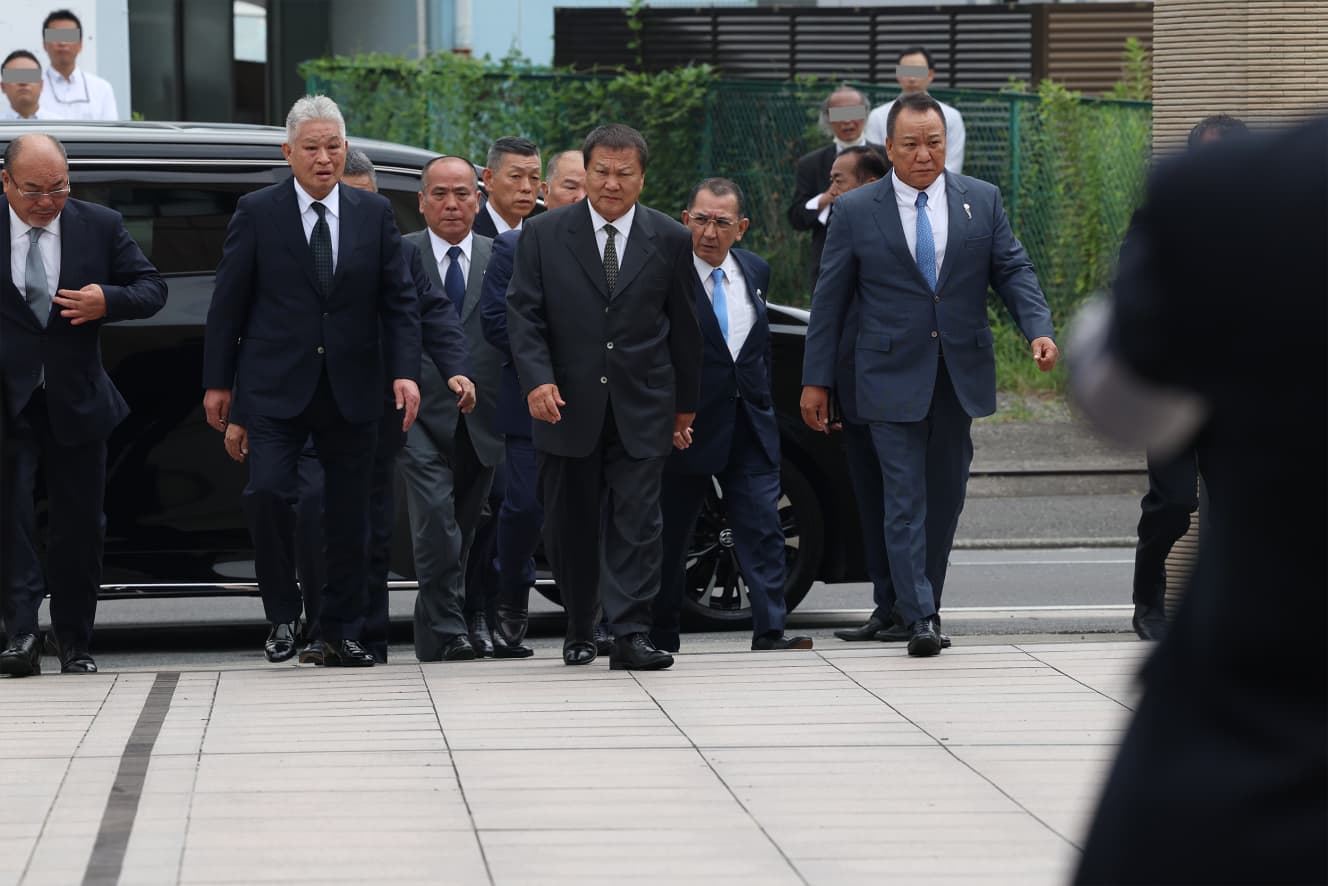
The venue for the gathering was Inagawa Kaikan. The organizations that came to welcome him and celebrate his succession were the various groups belonging to the ‘Kanto Fellowship.’ After the host, Inagawa-kai chairman Kazuya Uchibori, arrived, the leaders or senior-most executives of seven organizations attended, in the following order: Matsuba-kai, Tosei-kai, Sumiyoshi-kai, Kyokuto-kai, Kanto Sekine-gumi, and Soai-kai. I understand that the previous day, Asahiryu-kai had also visited an organization under the Hirodo-kai in Aichi Prefecture to pay its respects to the Sixth Yamaguchi-gumi. Kokusuikai also participates in the ‘Kanto Fellowship,’ but it is a secondary organization of the Sixth Yamaguchi-gumi. Perhaps because the Sixth Yamaguchi-gumi had received the greeting the previous day, it did not attend.” (A journalist familiar with the yakuza world)
Shortly before 11:30 a.m., soon after representatives of all seven organizations had assembled, a convoy of Inagawa-kai vehicles that had gone to Haneda Airport to pick up Chairman Chinen arrived. Six senior executives, including Chairman Chinen, stepped out. Amid even louder calls of “Thank you for your hard work!”, the gathering to celebrate his succession began at around 11:40 a.m.
A photographer who had been covering the event on the grounds of the hall described what he saw inside.
“Before Chairman Uchibori arrived, members were carrying trays topped with cut melon into the hall. After Chairman Chinen arrived, boxed sekihan lunches were also distributed to the members who had been standing in formation, and a Japanese flag was displayed at the hall. It really gave the impression of a celebration. We were not allowed inside the building, so we do not know the details, but after the gathering ended, Chairman Uchibori emerged with Chairman Chinen and saw off the Asahiryu-kai delegation, including Chairman Chinen, while smiling and talking with them.”
At around 12:20 p.m., the Asahiryu-kai convoy left the hall. The convoys of the seven participating organizations then departed one after another, and by 12:30 p.m., the gathering had concluded without incident.
The substance of Inagawa-kai’s intentions
Even so, it can be described as an unusual development for top figures from all the organizations in the “Kanto Fellowship” to gather for a courtesy visit marking the succession of leadership at a single organization. It suggests that the respective interests of the Sixth Yamaguchi-gumi and Inagawa-kai, which served as the host on this occasion, overlapped. The journalist quoted earlier explains:
“Within the Sixth Yamaguchi-gumi, its No. 2, wakagashira Teruaki Takeuchi (66), has been putting into practice the ‘peaceful coexistence within the yakuza world’ advocated by boss Shinobu Tsukasa (84). Its relationship with Asahiryu-kai can also be described as favorable, as demonstrated by the attendance of Takeuchi and other senior executives at a memorial service for second-generation chairman Makoto Itokazu.
Takeuchi and Chairman Uchibori have exchanged a ‘gobu no kyodai-zake,’ a brotherhood sake ceremony signifying an equal standing. By gathering the various organizations of the ‘Kanto Fellowship’ at its own headquarters for Asahiryu-kai’s succession greeting, Inagawa-kai may have intended to accelerate the Sixth Yamaguchi-gumi’s policy of peaceful coexistence. At the same time, for Inagawa-kai, the event also served to demonstrate its influence in the Kanto region to the new Asahiryu-kai.”
Inagawa-kai has also taken a central role in major developments in the past.
“Last April, the Sixth Yamaguchi-gumi submitted a written pledge to the Hyogo Prefectural Police declaring an end to the conflict, although the declaration was unilateral. Chairman Uchibori was also the one who traveled around the country to friendly organizations of the Sixth Yamaguchi-gumi, carrying a request calling for an end to the conflict and seeking their support before the pledge was submitted.
This is not the first time Inagawa-kai has taken the lead when a major shift was taking place. As the leadership under Wakagashira Takeuchi becomes increasingly solid, there is no doubt that the presence of Inagawa-kai under Chairman Uchibori will continue to grow.” (Same source)
On April 7 of last year, the day the pledge was submitted to the police authorities, a meeting had already been held between the “Big Three”—Sixth Yamaguchi-gumi wakagashira Kiyoshi Takayama (78 at present; his title at the time), Sumiyoshi-kai chairman Shuji Ogawa, and Inagawa-kai chairman Kazuya Uchibori—to discuss bringing an end to the conflict with the Kobe Yamaguchi-gumi. That meeting was also held at Inagawa Kaikan. It is said that the Sixth Yamaguchi-gumi side agreed to a request prepared by Chairman Uchibori at that meeting, and subsequently shifted course after reaching a consensus toward ending the conflict.
Meanwhile, the triple designation of the Sixth Yamaguchi-gumi, the Kobe Yamaguchi-gumi, Ikeda-gumi, and Kizuna-kai as designated organized crime groups subject to specified conflict restrictions has yet to be lifted. Amid the ominous stalemate that continues, the Sixth Yamaguchi-gumi’s diplomatic strategy of peaceful coexistence is moving forward. Within that strategy, Inagawa-kai’s role appears to be growing increasingly significant.
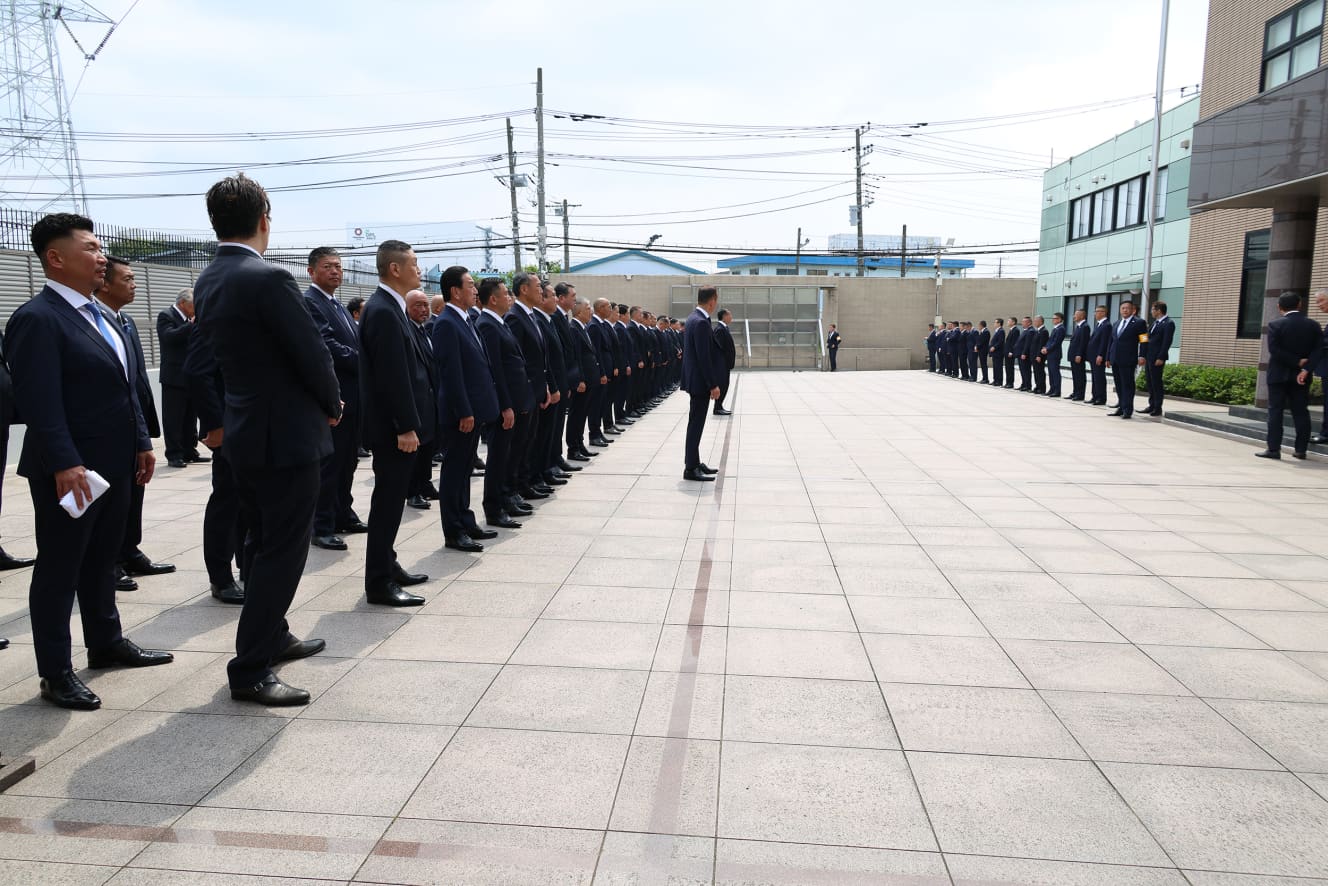
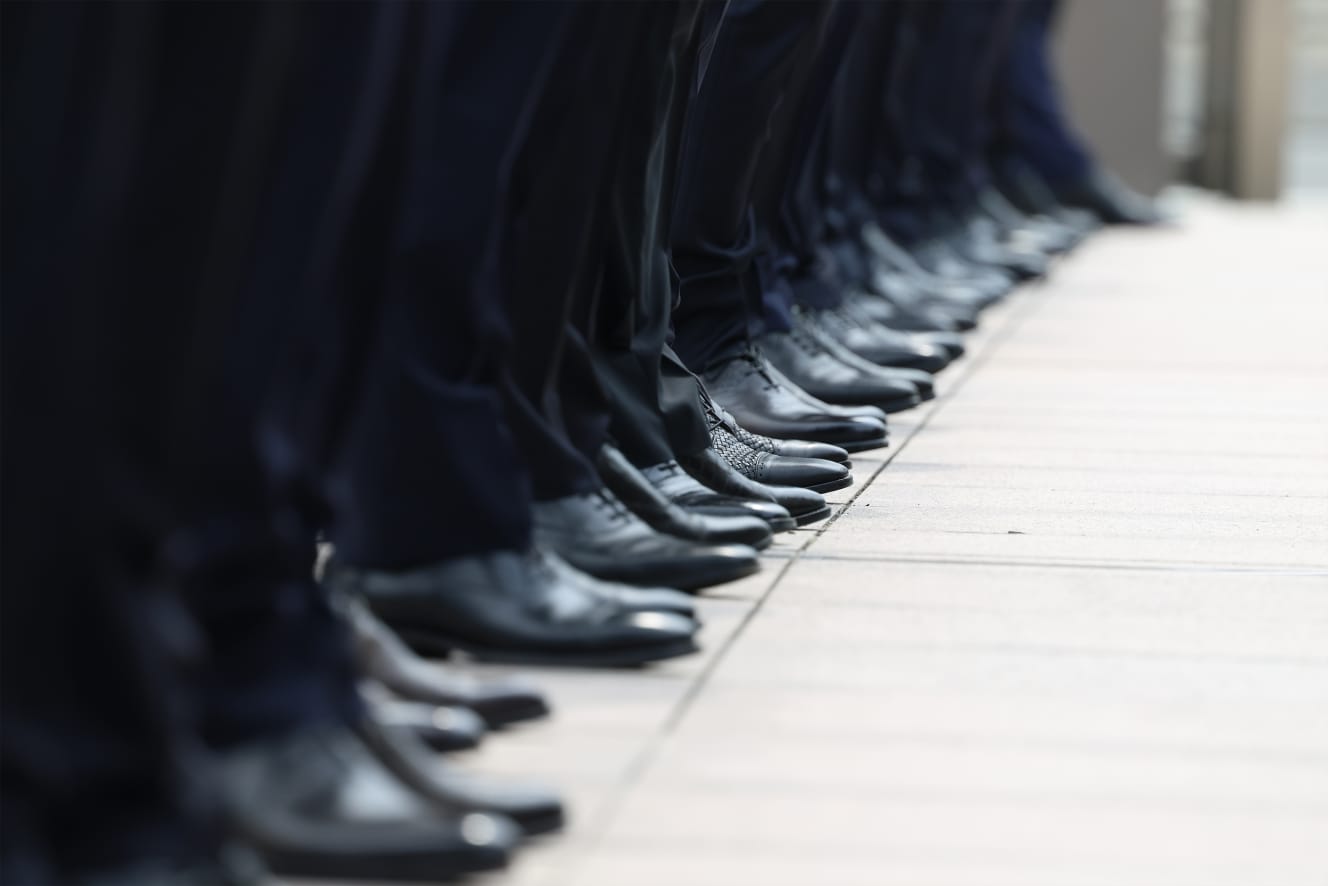
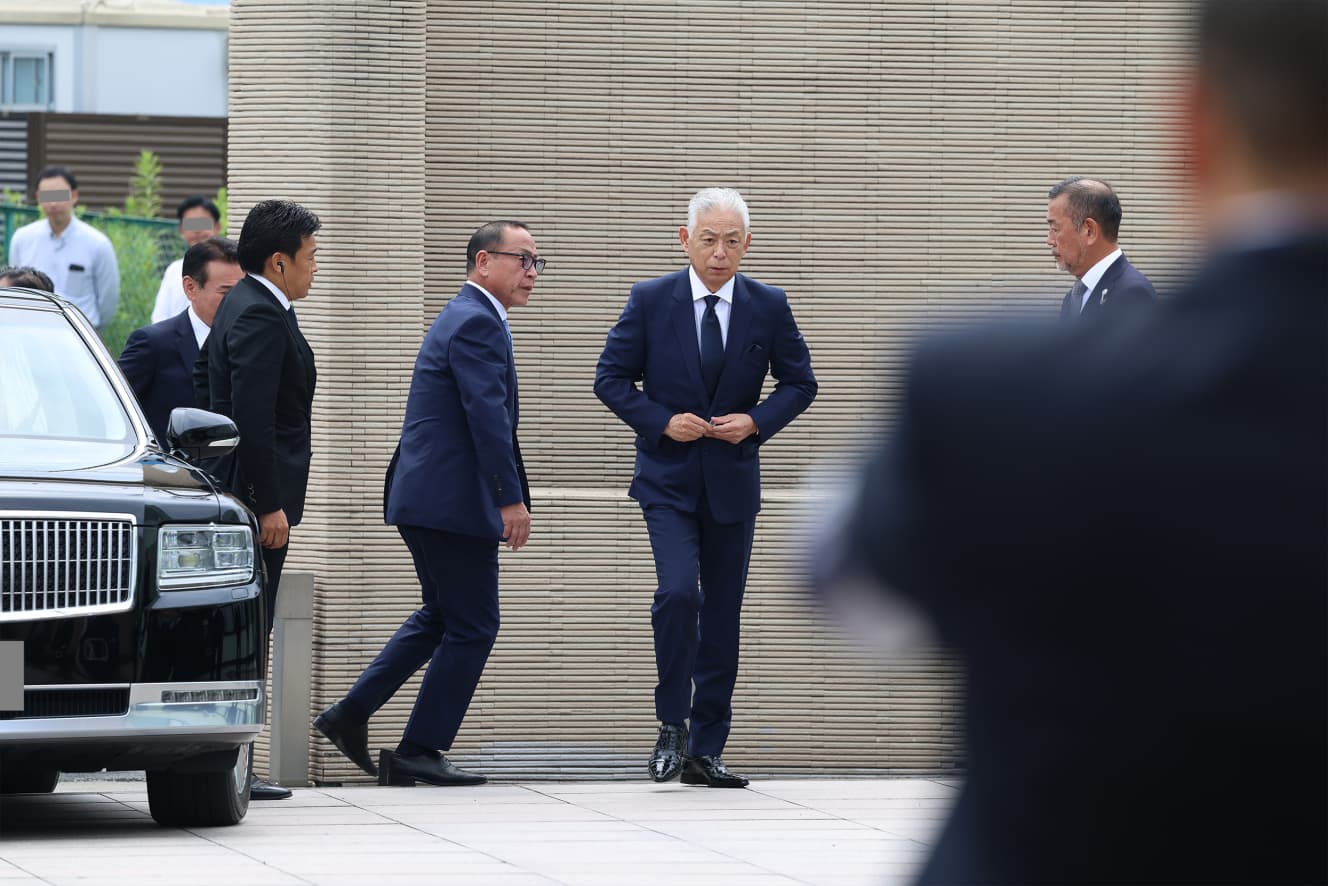
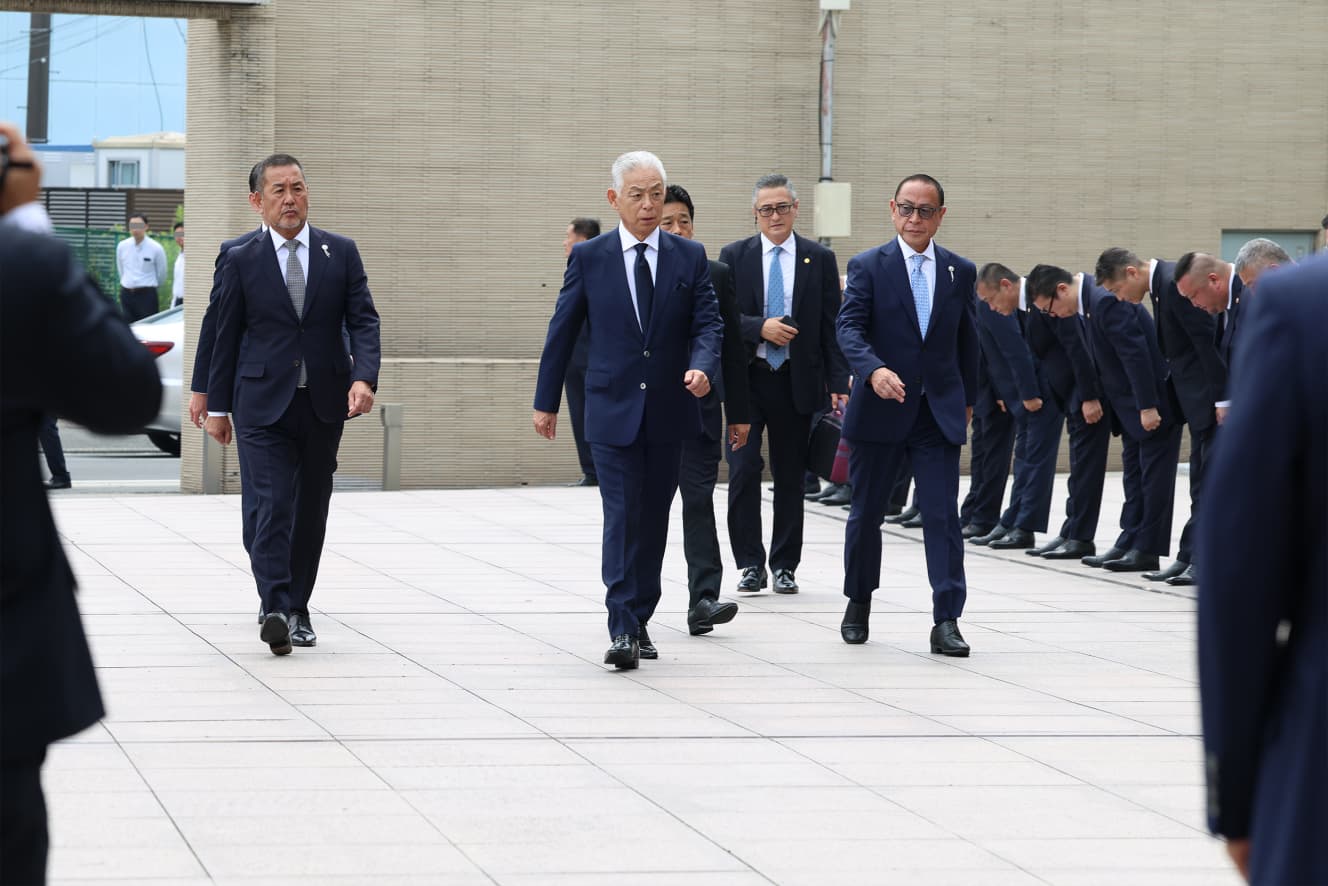
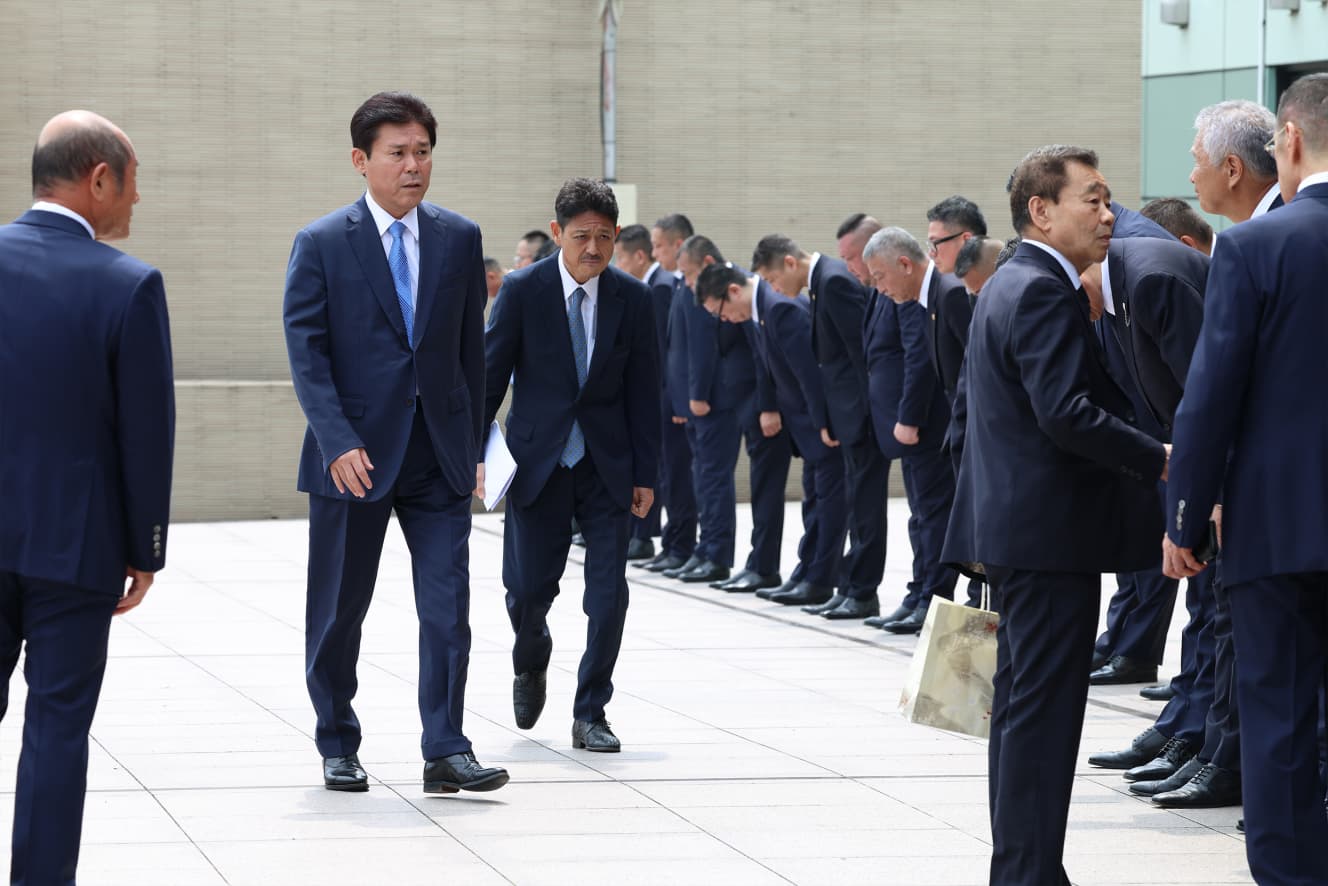
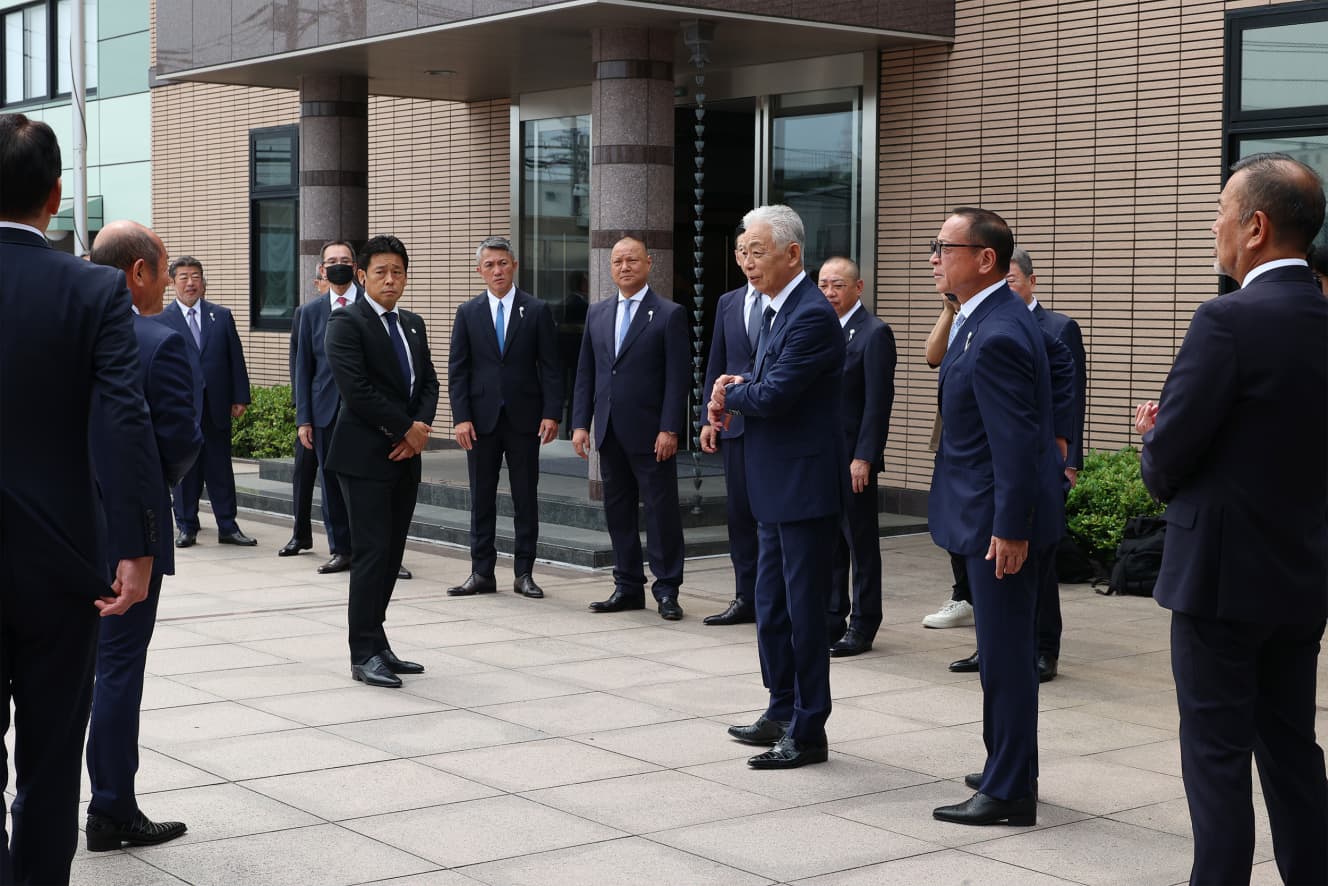
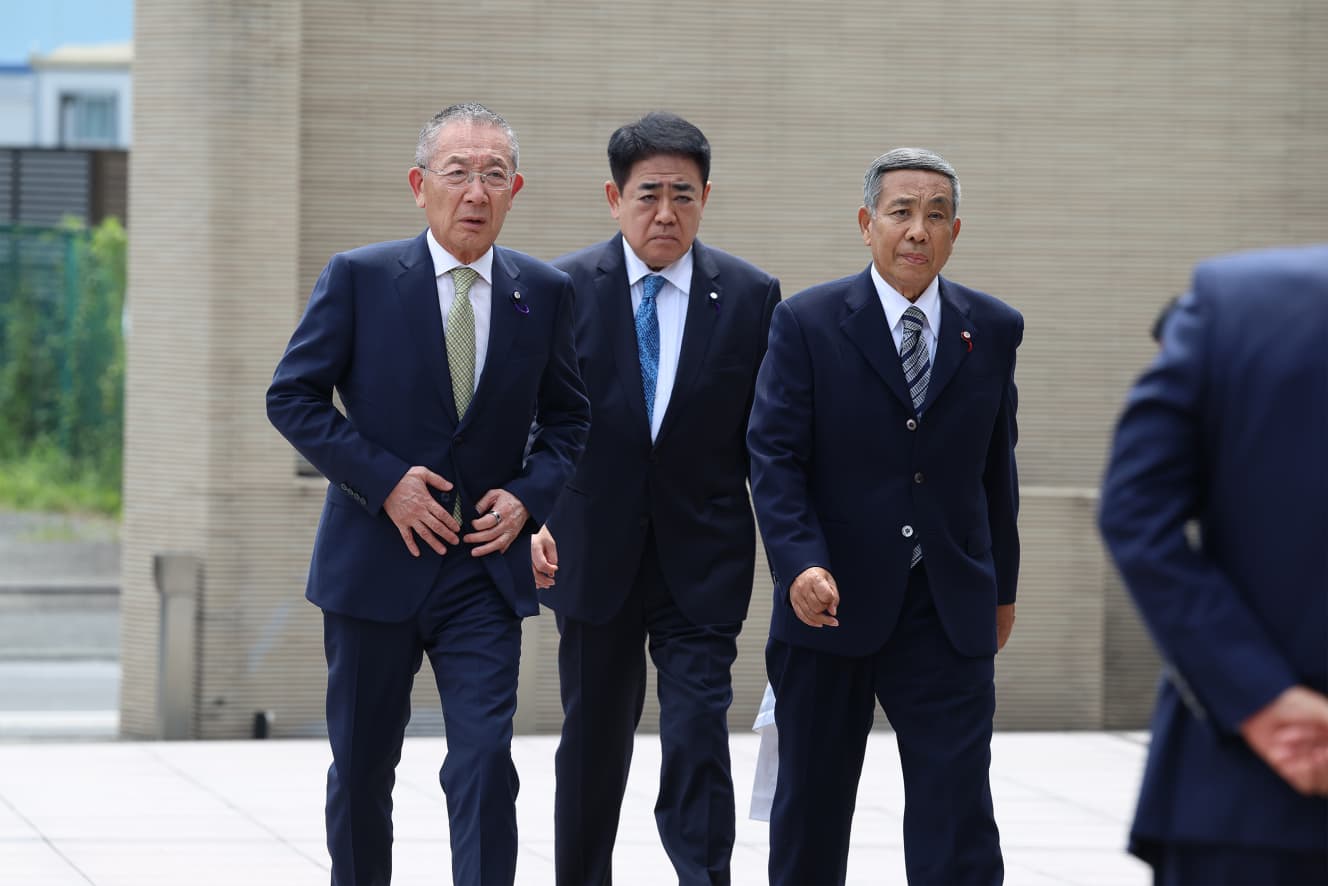
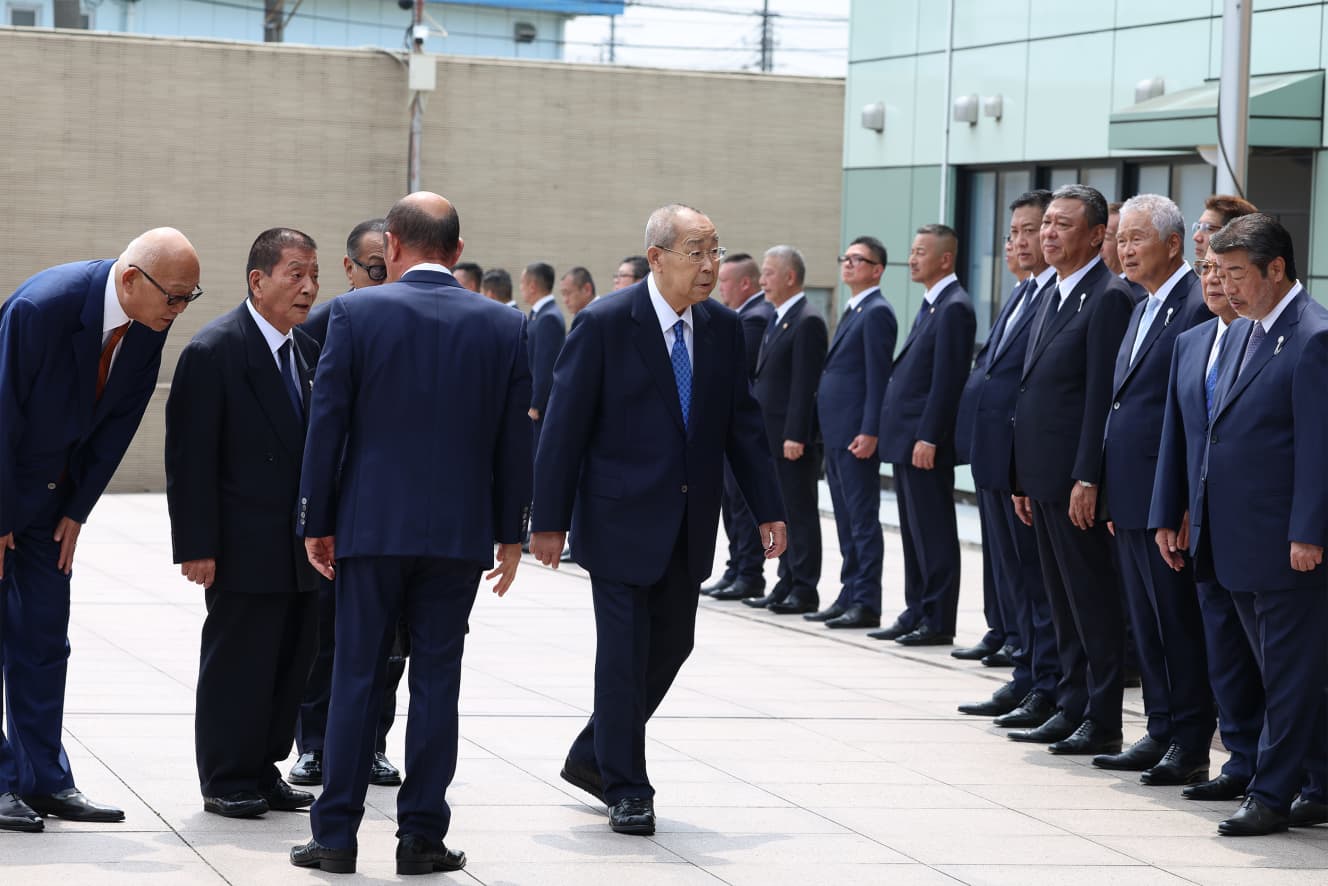
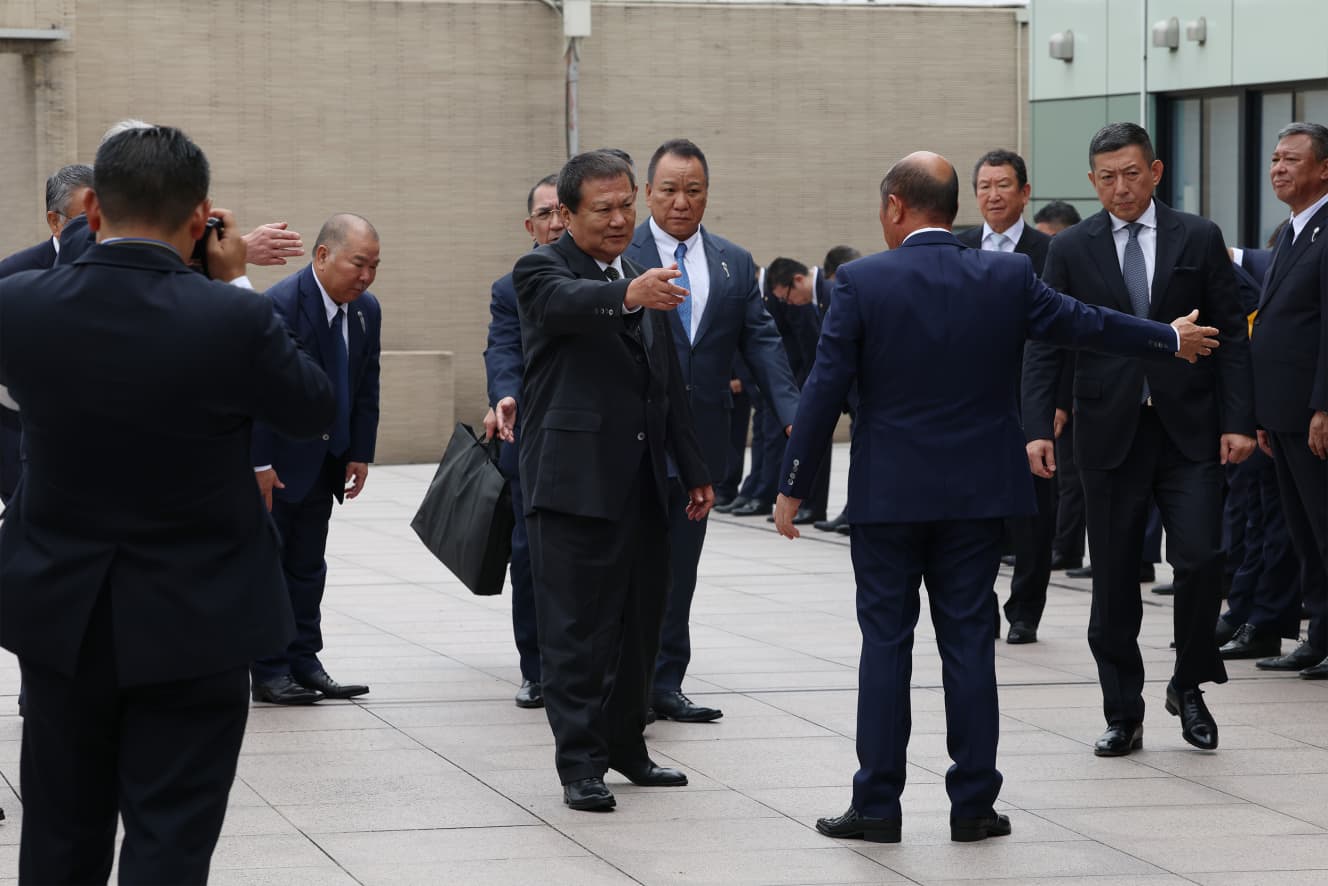
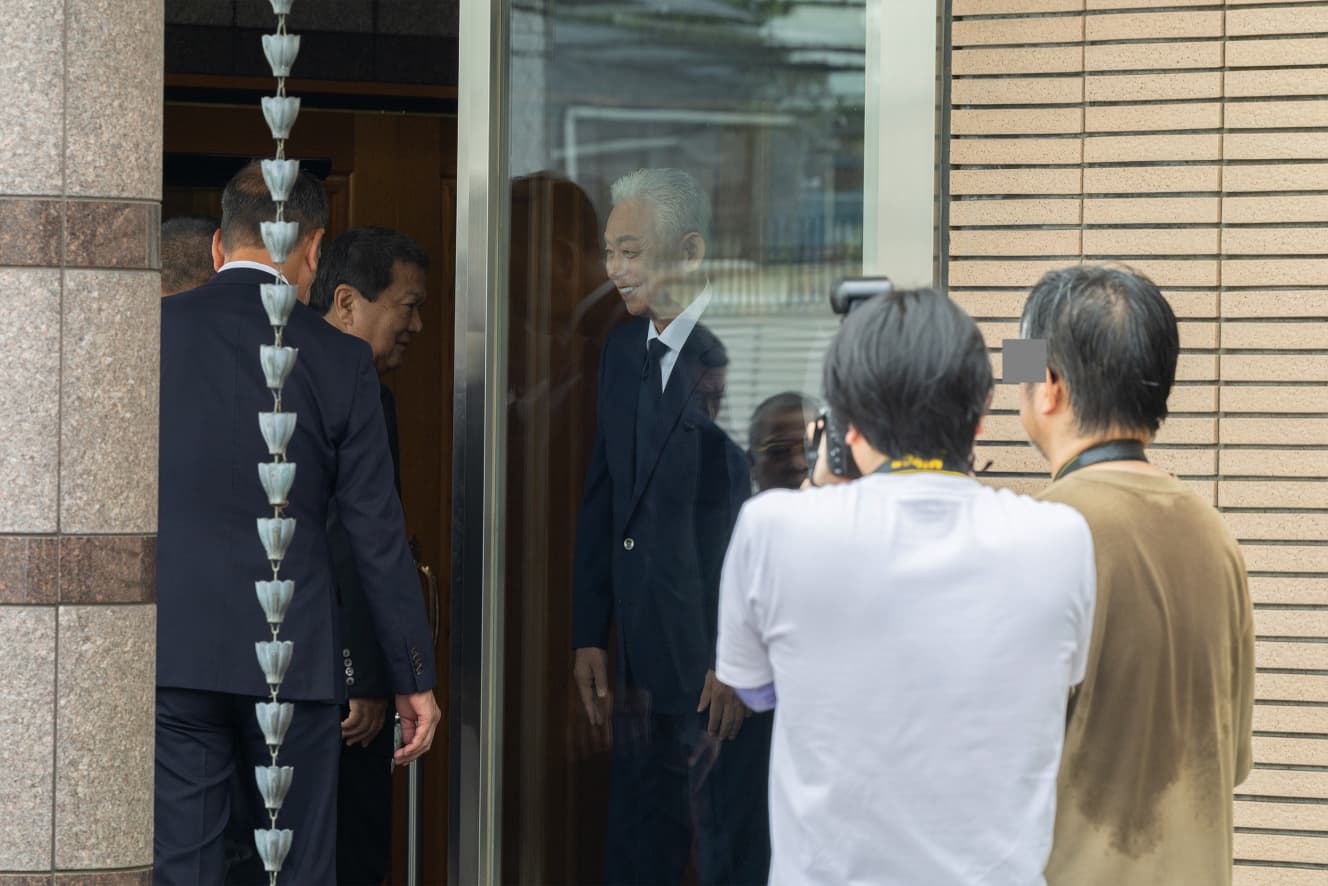
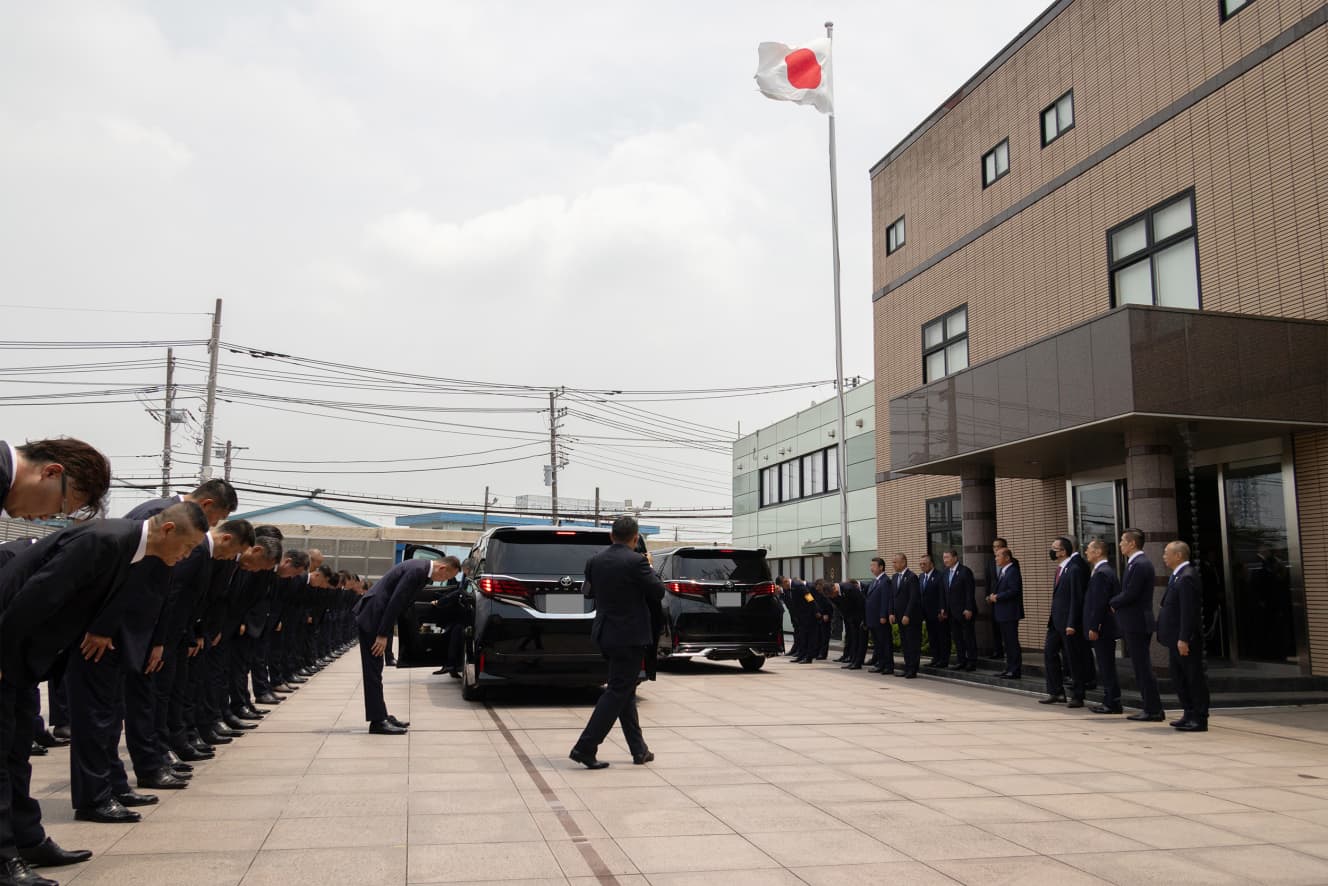
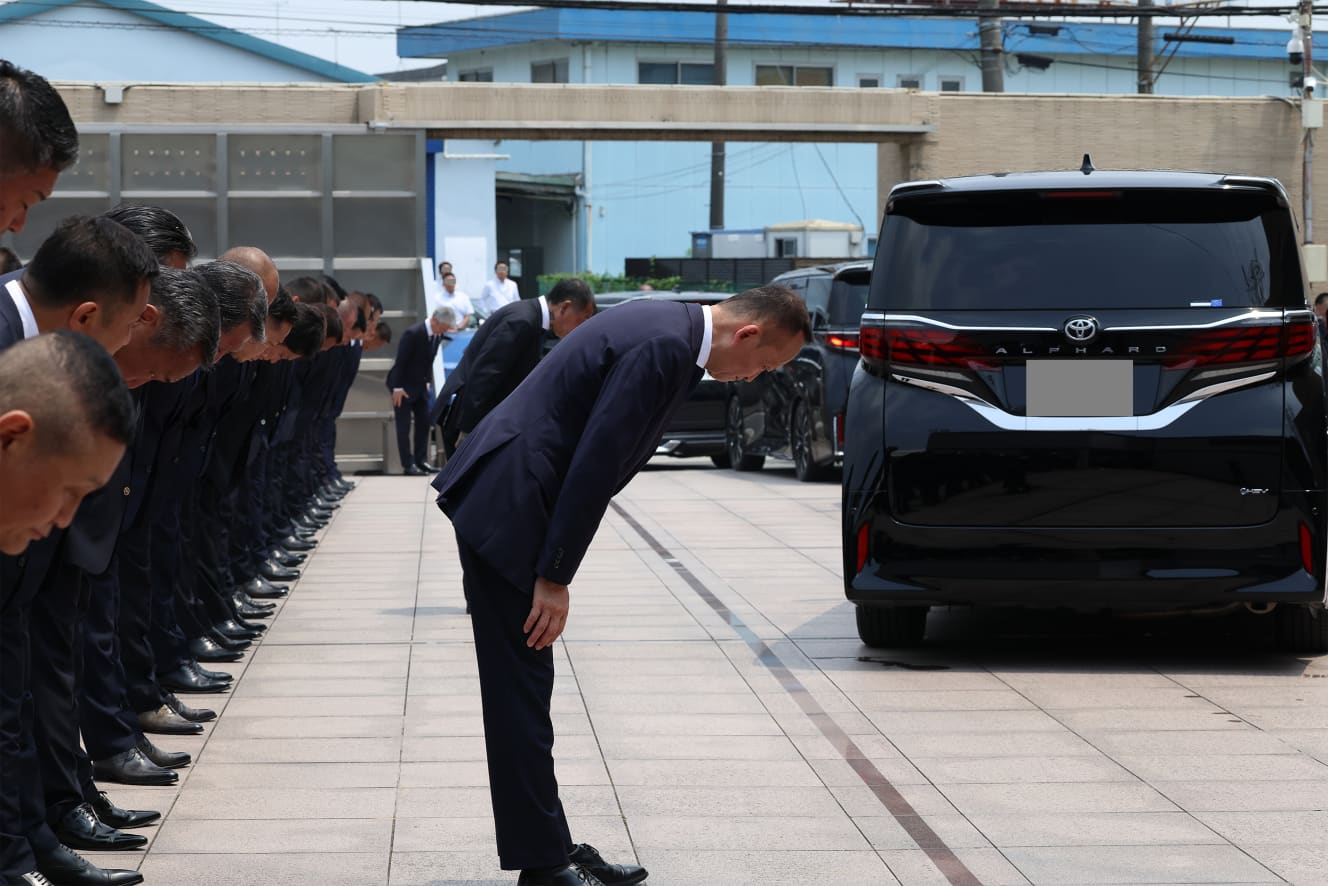
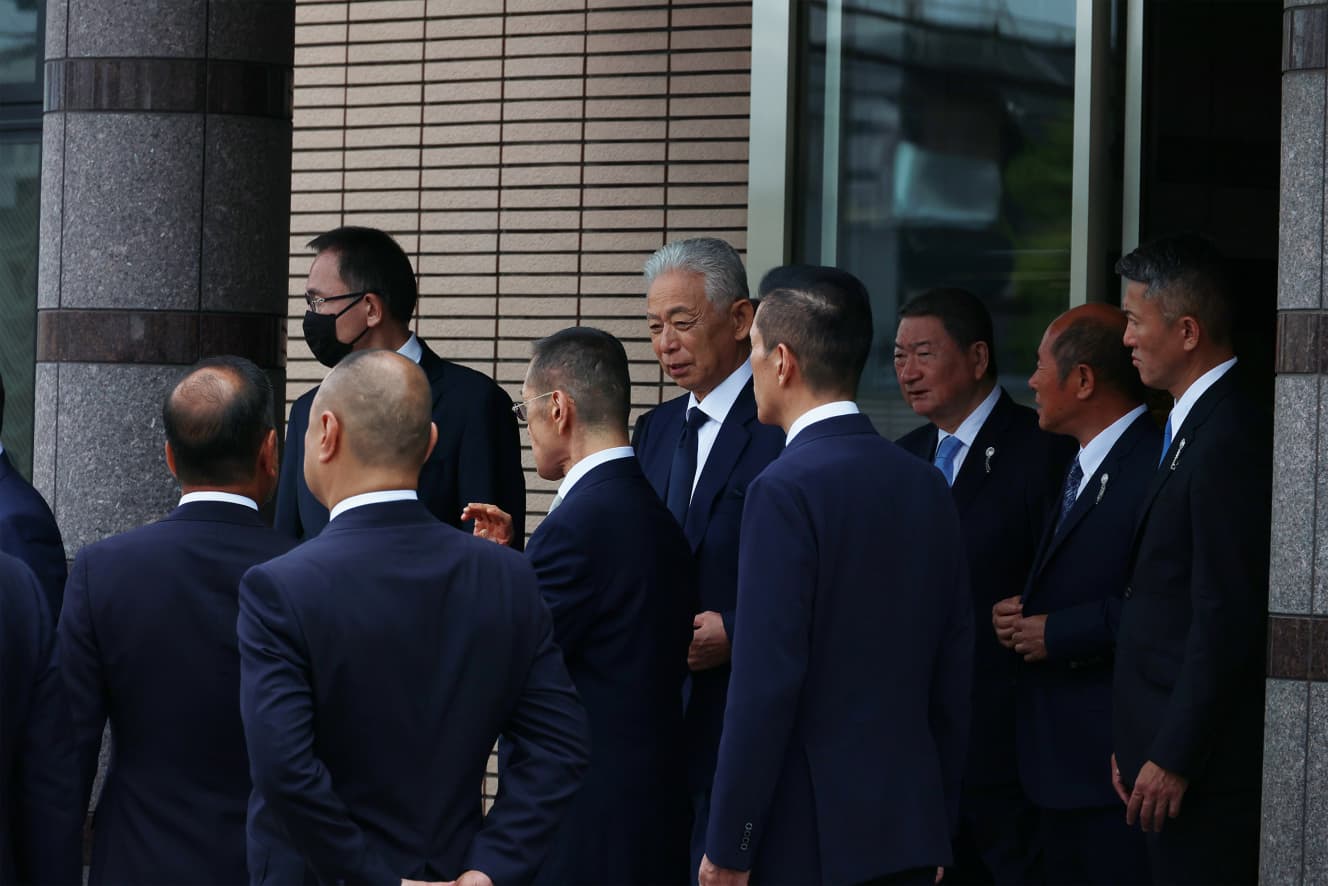
PHOTO: Kazuhiko Nakamura