Inside the Luffy Group—The Women Behind the Criminal Network Linked to ¥6 Billion in Losses
Art Students, Sex Workers, Daughters of Prominent Families… The True Faces of the Female Fraudsters Who Rose to Power


 The site of the robbery-murder case that occurred in Komae, Tokyo, in January 2023. A 90-year-old woman who lived in this house at the time lost her life.
Fewer than 20 women
The series of wide-area robberies carried out by the “Luffy Group” between 2022 and 2023 shocked Japan. Even more than four years after the incidents occurred, fraud and robbery schemes using the “dark part-time jobs” (yami baito) system created by the group continue to occur.
The special fraud organization led by Yuki Watanabe (38, ages are given as of the time of arrest; references to defendants and prisoners are omitted), who is considered to have been the predecessor of the Luffy Group, is believed to have had as many as 200 members at its peak. Among them were female fraudsters.
Tomonobu Kojima (45), one of the highest-ranking members of the Luffy Group, stated the following with certainty to this writer in an interview room at the Tokyo Detention Center.
“Women are better suited for fraud. The targets of scam calls are often elderly men, and they tend to let their guard down more easily when the person on the other end is a young woman. In our group, there were almost no callers (members who make fraudulent calls to victims) whose monthly earnings (fraud proceeds) were less than 10 million yen. When we found a good target who seemed likely to fall for the scam, it was not unusual to intentionally switch the call over to a female caller.”
He continued:
“Almost all of the women who worked as ‘female callers’ in the organization had boyfriends. Executives used their money to make Filipino women their mistresses or romantic partners. However, the lower-level male members had neither money nor the ability to speak English, so they approached women within the organization instead. They were treated favorably simply because they were women.”
Fewer than 20 women belonged to the Luffy Group. How did these women of Luffy become fraudsters and go on to steal enormous sums of money? Based on the contents of the author’s new book, “Luffy Behind Bars: Those Who Created Dark Part-Time Jobs” (Kodansha), released on June 24, this article traces the first halves of their lives.
The female callers came from a variety of backgrounds, including art college students, daughters of prestigious families, and sex workers. Some applied thinking they were signing up for resort jobs, while others were sold to the organization for just 500,000 yen after being unable to pay off debts from host club tabs. The common factor among them was that they joined these dark part-time jobs because they wanted money for entertainment or because they were burdened by debt.
Female callers were highly valued within the Luffy Group. As Kojima explained, one reason was that they were effective when making calls to elderly victims. The second reason was that the group’s leader, Watanabe, had a strong interest in women. After creating multiple mistresses in the Philippines, where the crimes were orchestrated, Watanabe was not satisfied and devised a “harem plan” to specifically recruit female callers. Although the plan ultimately failed, during the process Watanabe skillfully made use of the women in the organization.
Pawns who protected the excecutives
For example, Chiaki Shibata (29), who was arrested in November 2019 on suspicion of theft related to a series of special fraud cases, was also Watanabe’s mistress. On seven separate occasions, she transported cash obtained through fraud in Japan—approximately 300 million yen in total—packed into suitcases and carried it to the Philippines. Behind her willingness to take on such dangerous work were her romantic feelings toward the boss.
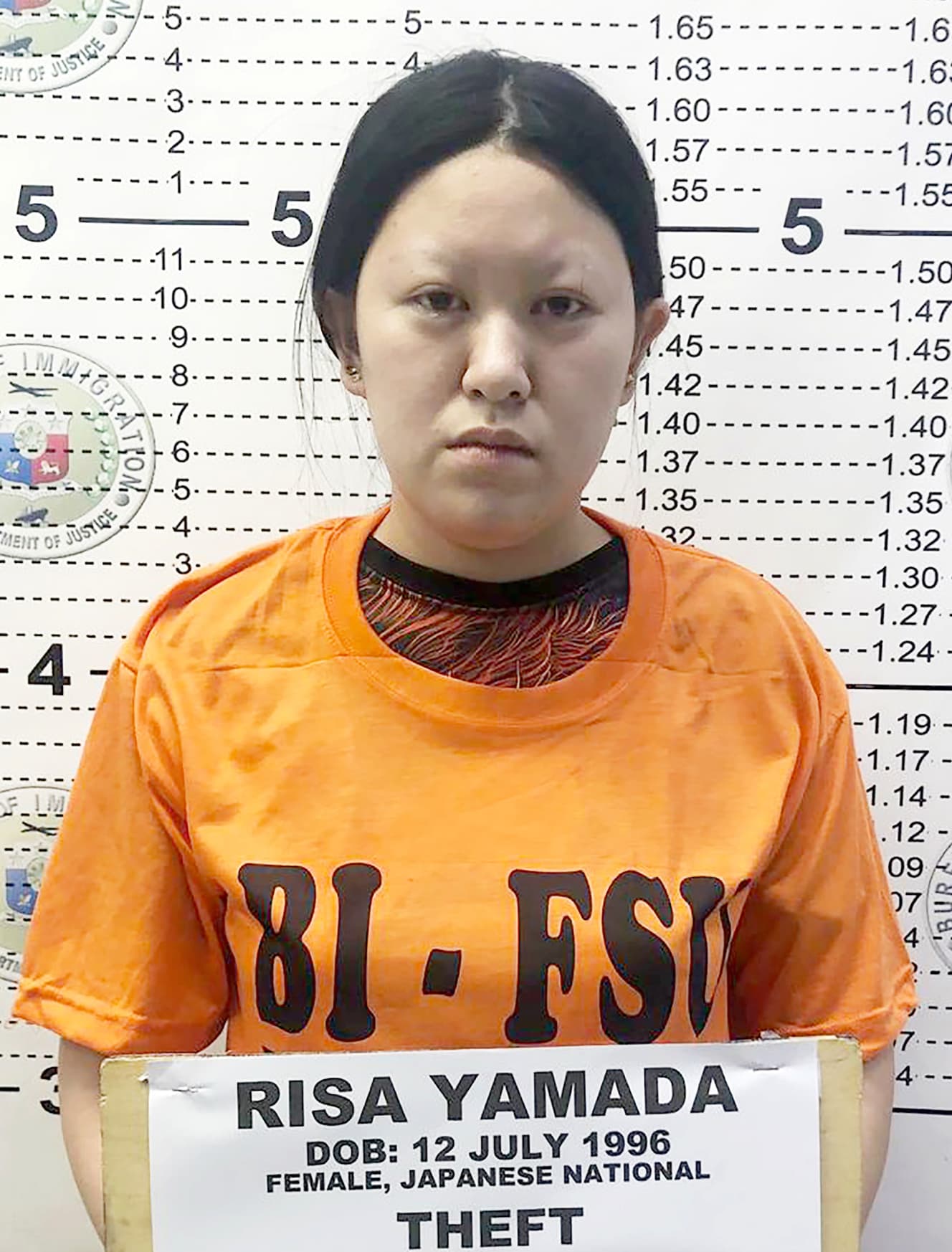
The author conducted repeated interviews with Risa Yamada (26), who claimed to be a legendary caller after defrauding victims of approximately 600 million yen within the organization. Yamada, who had transitioned from working in the sex industry to becoming a scam caller, was also devoted to Watanabe and the other executives. During a meeting with the author, Yamada confessed, “I also had feelings of wanting to protect the executives.” Among the more than 400 letters Yamada wrote was the following passage:
“〈The executives treated me very kindly, and whenever I achieved good numbers, they praised me a lot. I had never experienced anything like that in my life, so I was truly happy. I thought of Watanabe-san as the greatest boss in Japan.〉”
From an outside perspective, it was obvious that Yamada was nothing more than a disposable pawn to the executives. Yet she continued to view them as companions.
Taking advantage of her desire for recognition, the executives even ordered Yamada to conduct espionage activities against rival organizations. In fact, Yamada infiltrated “JP Dragon” (a Japanese criminal organization based in the Philippines), which was hostile to Watanabe’s group, and became romantically involved with one of its executives. She reportedly extracted information through private conversations and fed it back to the organization. Yamada continued working desperately for the boss she idolized.



Two beautiful female fraudsters
Among the women involved in the organization, two in particular drew attention because of their appearances. One was Haruna Terashima (27), who was dubbed one of the beautiful women of the Luffy gang and compared online to Nami from the popular manga “One Piece.” The other was Hitomi Kumai (25), who had led a glamorous life, attending a prestigious art university and participating in beauty pageants.
Terashima, who was from Nagano Prefecture, was reportedly raised in an educational family—both her grandfather and father were teachers. After entering a prestigious private high school, she dropped out. She later worked at cabaret clubs in Tokyo before joining Watanabe’s organization. Once assigned to a team called “ST Box,” she was immediately given special treatment and affectionately called “Hime” (“Princess”). Her sales from fraud schemes were also high, and she was said to have been an object of envy among those around her.
Kumai had a grandfather who served as a prefectural assembly member in Kochi, and she was raised in what was considered a prominent family in her hometown of Mitaka, Tokyo. After taking the university entrance exams twice unsuccessfully, she entered Tama Art University but later dropped out. Through a dark-job recruiter, she traveled to the Philippines to work as a ‘kakeko’—a person responsible for making fraudulent phone calls to victims.
Like Yamada, one of her strengths was that she generated some of the highest earnings within the organization. While many kakeko believed that successfully carrying out even one case per month was enough, Kumai managed multiple successful cases monthly and was even said to have pulled off fraud schemes worth around 50 million yen, according to Kojima. She was also treated favorably because of her looks. Kumai became romantically involved with Kairi Fujita (24), who later became the leader (hakucho) of the “A Box” team, and became pregnant while in the Philippines. After being forcibly deported to Japan, she gave birth to her child while in detention.
From Yamada’s comments, it is clear that complicated emotions likely existed among the women in the group.
“Kumai was always putting on a ‘feminine’ act and getting attention from everyone around her. Whenever something happened, she would cry immediately and rely on the men. The reason she was able to continue working as a ‘kakeko’ was because A Box was lenient. It looked like she knew how to win over the team leader who had money.”
Within the organization, couples continued to form, and members repeatedly became involved in romantic and sexual relationships. Yamada sarcastically described the atmosphere, where men’s and women’s desires became intertwined, as like a dating reality show for a fraud group. She then told the writer, almost proudly:
“I brought in more money than Kumai and Terashima, and I’ve also slept with more men in the organization.”
However, Kojima revealed that the only one who never got a boyfriend was Yamada.
Yamada was indicted on charges including theft related to special fraud schemes and received a prison sentence of four years and two months. She remains incarcerated and is scheduled to be released in the autumn of next year. Among the women of Luffy, some have already left prison and begun rebuilding their lives in society. Most of the female fraudsters who shook the nation are expected to complete their sentences by next year.




From the July 17 & 24, 2026, combined issue of “FRIDAY”
Reporting and Text: Shimei Kurita (Nonfiction Writer) PHOTO: Kyodo News (Komae Crime Scene) / Shinji Hasuo (Watanabe, Kojima)