While the police are stepping up their crackdown in earnest… the “fake Manjaro” that’s all the rage in China has made its way to Japan!


Despite the police launching a full-scale crackdown, reports of health risks are emerging!
“Lose weight just by pressing a button”—with this catchphrase, “Manjaro” has become a massive craze, especially among young women. Although it was originally developed as a treatment for type 2 diabetes, beauty clinics and other facilities have begun prescribing it for weight loss, capitalizing on its appetite-suppressing effects.
Although this is so-called “off-label use,” its convenience—simply pressing the device against the abdomen or thighs to inject the solution into the body and lose weight—has led to an explosive increase in users.
Amid this “boom,” Ms. A, a female office worker in her 30s living in Tokyo, found herself caught up in a problem involving Manjaro.
“I started using Manjaro last October and lost more than 3 kg in three months.I was so happy to see results that I increased the dosage from 5 mg to 7.5 mg starting in the fourth month… but about a week after I started the higher dose, my appetite—which had been suppressed—came back. Not only that, but I couldn’t feel satisfied unless I was eating sweets all day long.
I rebounded right before my eyes and was back to my original weight in less than a month. What was even harder to deal with was the fatigue and drowsiness. I couldn’t even focus on my work.”
Unable to bear it any longer, she rushed to the hospital and had a blood test, which resulted in a diagnosis of “hyperglycemia.” The doctor advised her to cut back on excessive carbohydrate intake and engage in moderate exercise.
At that time, Ms. A didn’t tell the doctor she was using Manjaro. She felt a sense of “guilt.”
“Actually, the Manjaro I was using was something I bought on ‘Xiaohongshu (Red),’ a Chinese social media platform. I vaguely knew it was being sold illegally, but it was about 20 percent cheaper than buying it at a beauty clinic, and since it was mailed right to my home without needing a doctor’s consultation, I just couldn’t resist the convenience…
On ‘Xiaohongshu,’ they explained that ‘since it’s a personal import from China, it’s legal even without a doctor’s examination,’ but it arrived via Yu-Pack, not international mail. I was completely duped…” (Ms. A)
Manjaro is classified as a prescription drug and must normally be prescribed following a doctor’s examination. Illegal distribution—such as purchasing it without going through a clinic, as Ms. A did—is rampant and has become a social problem.
On June 2 of this year, the Osaka Prefectural Police referred three men and women in their 20s and 30s—residents of Osaka and Nara prefectures—to prosecutors on suspicion of violating the Pharmaceutical and Medical Devices Act.One is suspected of selling Manjaro to two women without a license via social media, while the other two are suspected of storing Manjaro at their homes for the purpose of unauthorized sale.
While the police have launched a full-scale crackdown, posts offering to trade Manjaro illegally can still be found sporadically on social media. The Ministry of Health, Labor and Welfare and the Tokyo Metropolitan Government’s Bureau of Health and Medical Care have issued warnings and requested that social media platforms remove such posts, but these efforts have not yielded significant results.
There are also accounts of people who “were rushed to the hospital after experiencing impaired consciousness.”
Self-administering prescription drugs without a doctor’s guidance carries inherent risks of abuse and side effects. However, the cause of Ms. A’s health problems lay elsewhere.
“My symptoms were exactly the same as those listed in the warning on the beauty clinic’s website under ‘Symptoms that may occur if Manjaro is abruptly discontinued.’ I thought, ‘If that’s the case, what is this (7.5 mg) Manjaro I’m using now?’ and began gathering information in the Manjaro community on ‘Xiaohongshu.’
There, I found several posts from people like me who had purchased the drug from unauthorized sellers, saying they’d ‘been sold a fake.’ Some shared experiences like ‘I broke out in a rash all over my body’ or ‘I lost consciousness and was rushed to the hospital.’
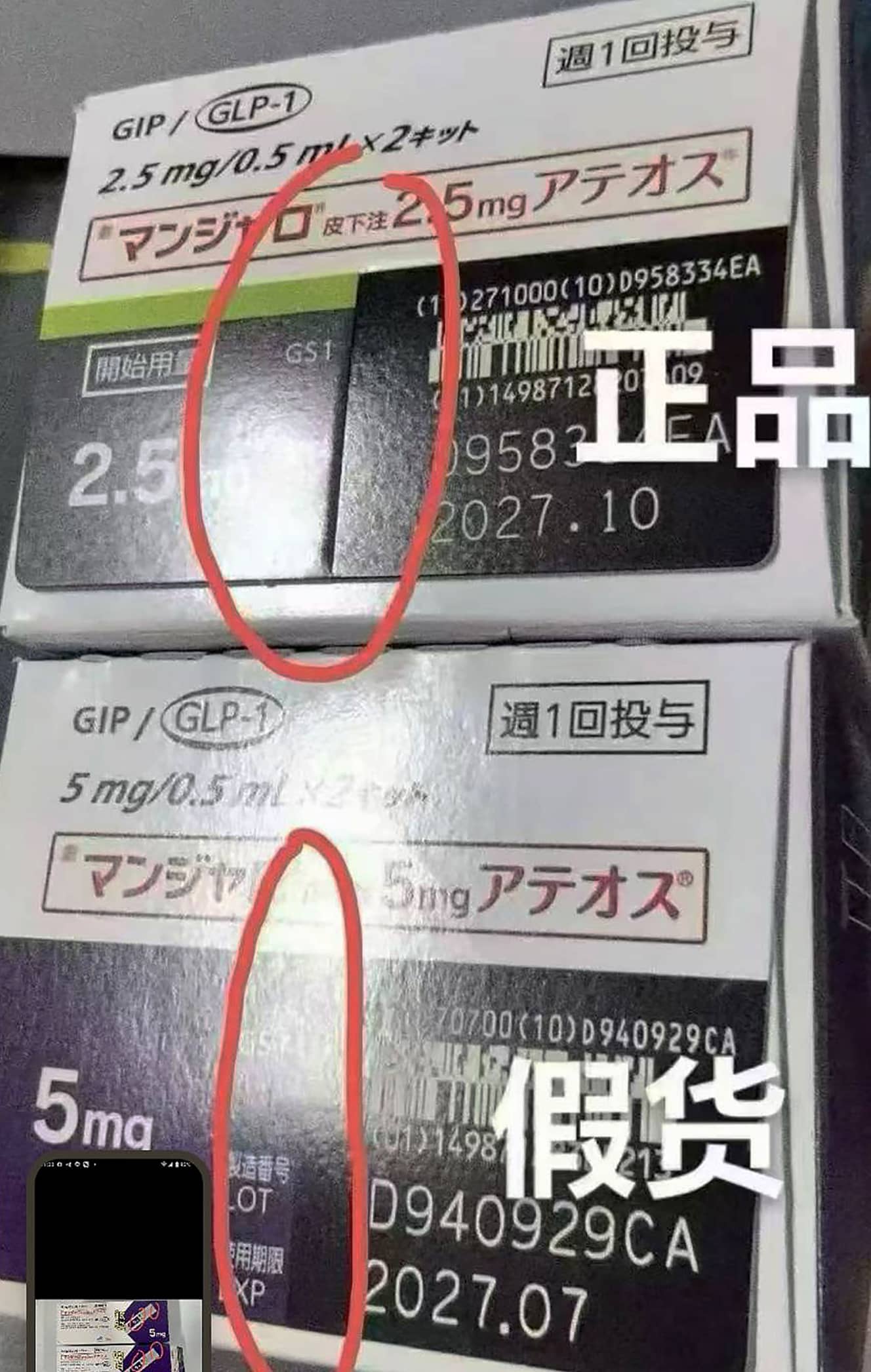
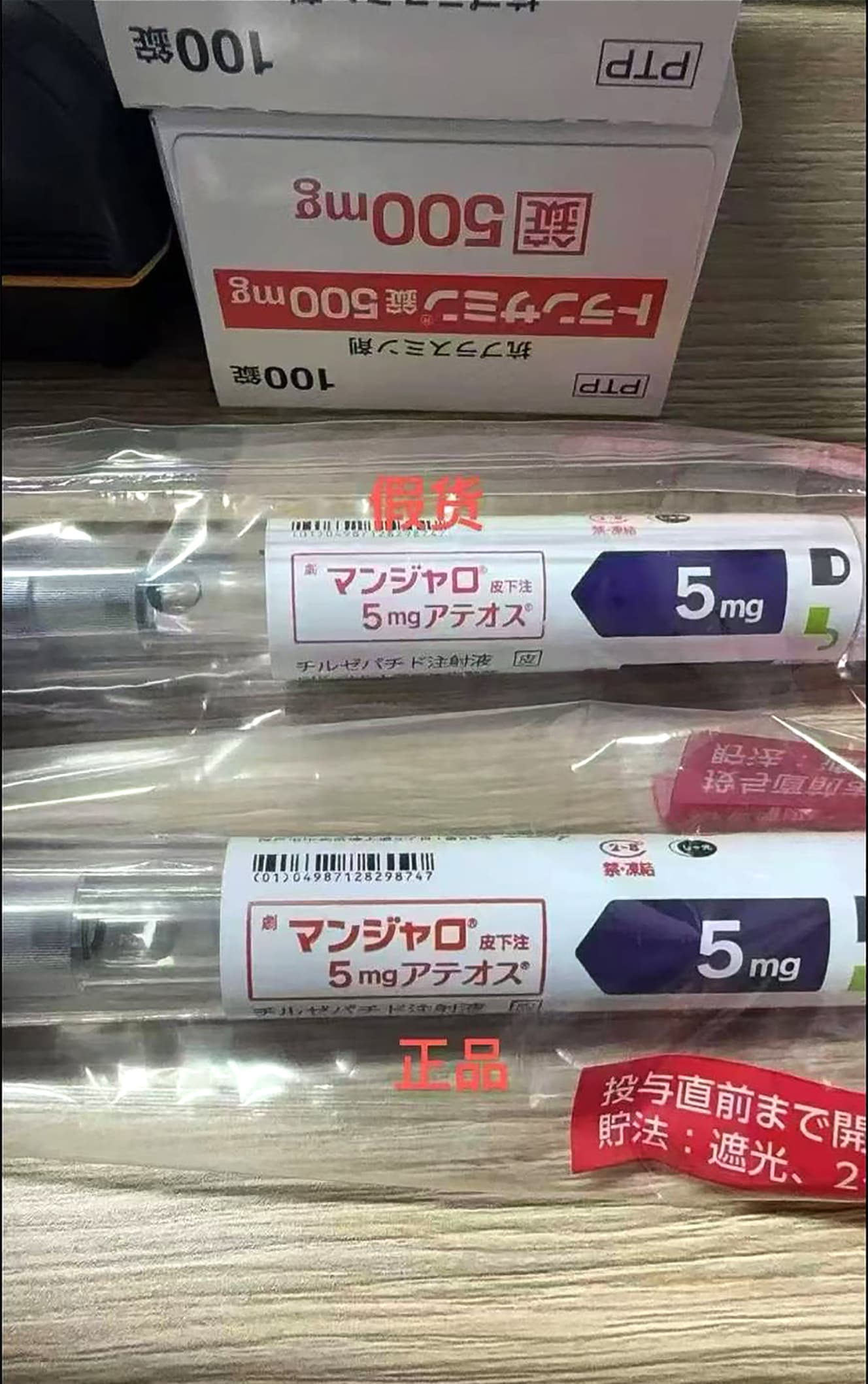
“Manjaro is all the rage in China right now, and since counterfeit versions are circulating, there were also several posts with photos explaining how to spot the fakes,” said Ms. A.
The photo above shows some of those posts. The genuine Manjaro and the suspected counterfeit are shown side by side, but at first glance, it’s impossible to tell them apart.
Mr. A later obtained genuine Manjaro from a cosmetic clinic, and his weight began to drop again.
Overseas, there have already been numerous incidents involving “fake Manjaro” originating from China.
“In April of this year, two men were arrested in Gurugram, a city near the Indian capital of Delhi, for manufacturing and selling counterfeit Manjaro using raw materials sourced from China. According to the local newspaper *The Times of India*, the suspects were selling the counterfeit Manjaro under the claim that it was ‘Made in Japan.’
Last May, a woman died after taking counterfeit Manjaro at a beauty salon in Manchester, England. An investigative report by the local television station “ITV” revealed that one of the sources of the counterfeit Manjaro flowing into the UK is Shenzhen, Guangdong Province, China.“Counterfeit Manjaro, which had previously been prevalent within China, is now circulating globally via social media and black-market dealers,” said a reporter for a medical industry publication.
According to Eli Lilly, the major pharmaceutical company and official manufacturer of Manjaro, the contents of counterfeit Manjaro products identified so far have not only consisted of ingredients with no therapeutic effect—such as “sugar alcohols (a type of artificially produced sweetener)”—but have also, in some cases, “been confirmed to contain bacteria capable of causing infectious diseases and high concentrations of impurities.”
Dangerous “counterfeit Manjaro” products, which pose a risk of health hazards, are beginning to make their way into Japan via Chinese social media platforms. It would be a complete waste to ruin your health while dieting for wellness or beauty purposes. You must absolutely avoid engaging in illegal private sales.
From the July 17 & 24, 2026, combined issue of *FRIDAY*
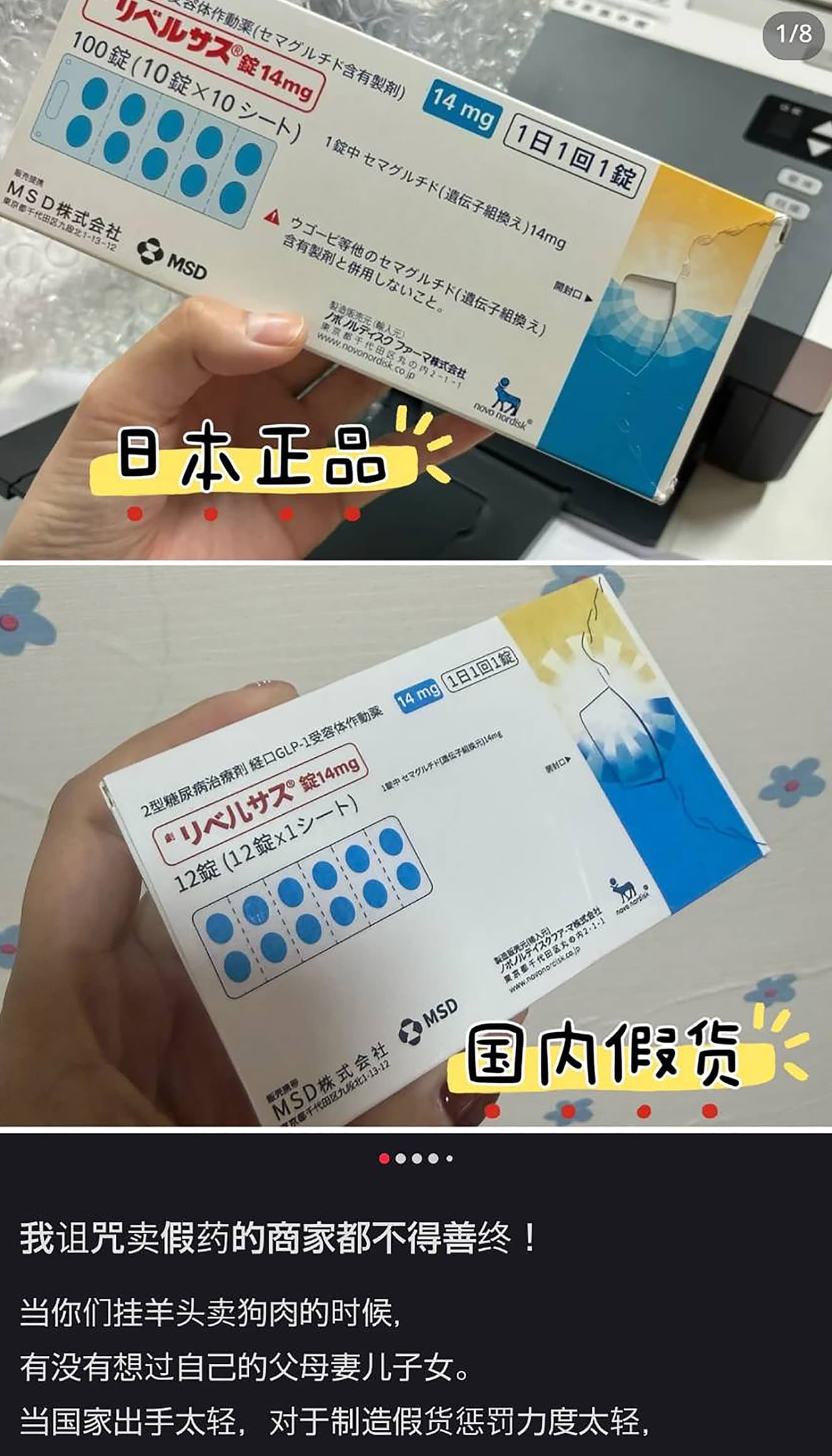

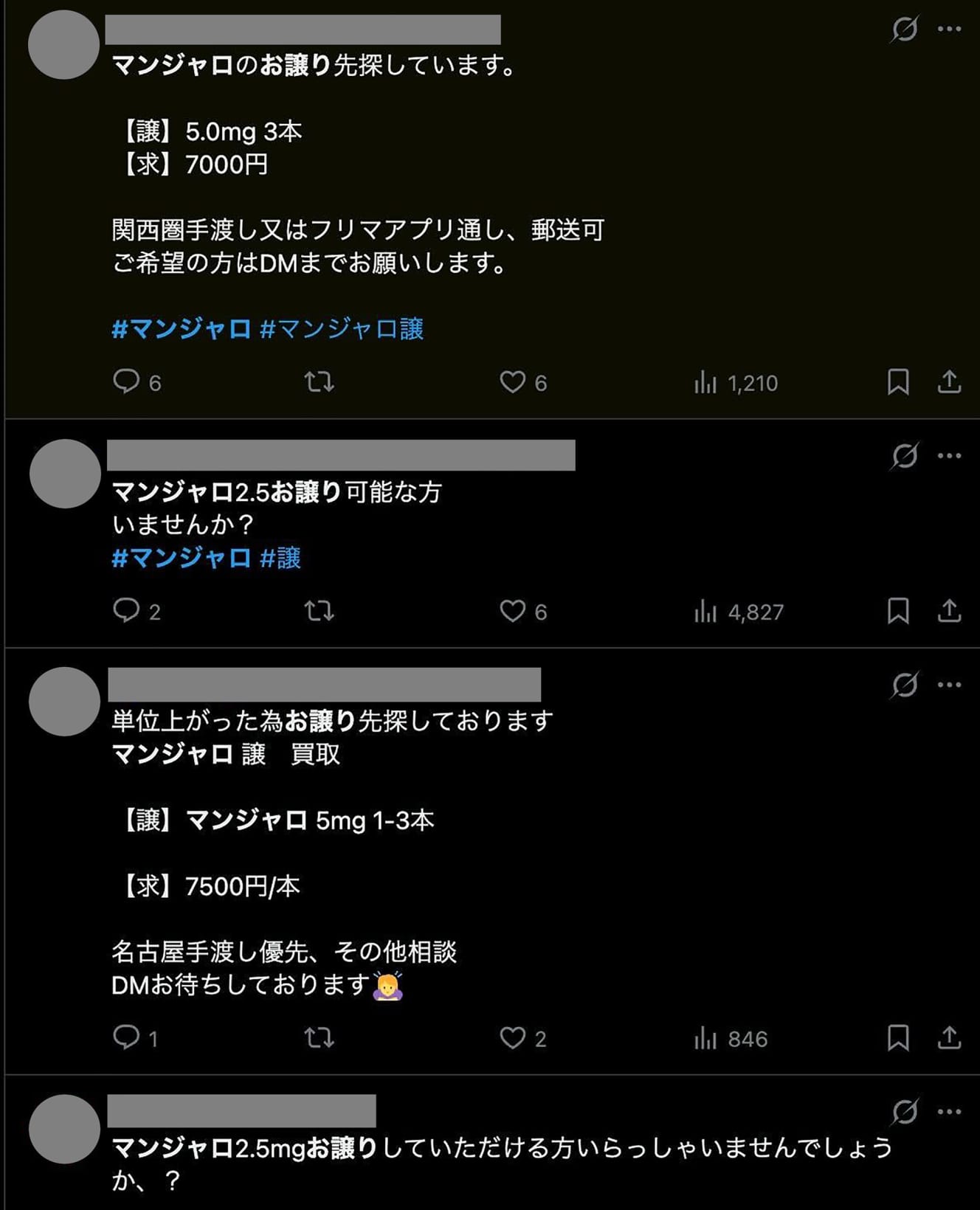
PHOTO: Jiji Press (Health, Labor, and Welfare Minister Kenichiro Ueno)