Should Sex Buyers Face Criminal Penalties? Rethinking Japan’s 70-Year-Old Anti-Prostitution Law
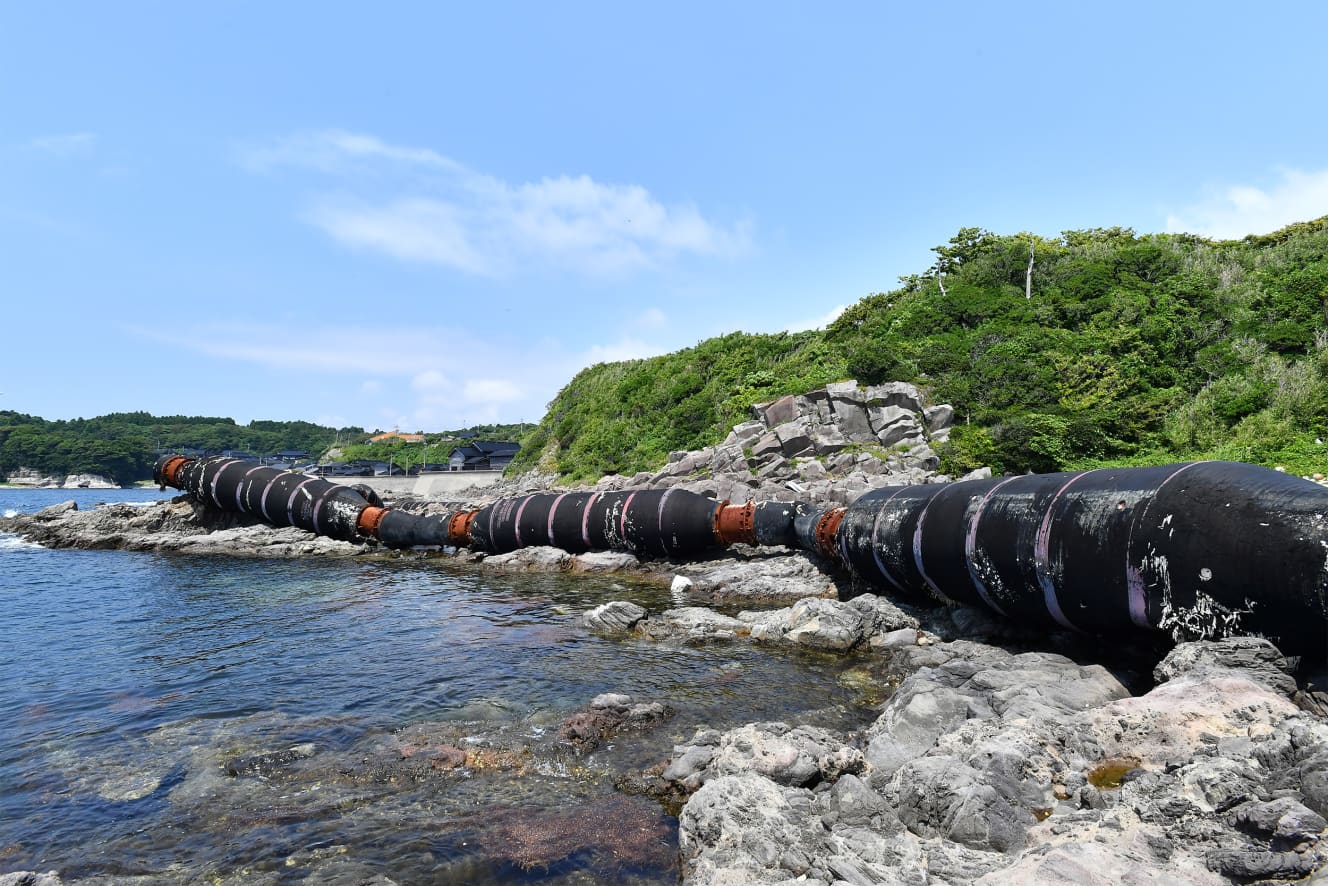
A town of 17,000 people was thrown into chaos by a 150-meter-long, 300-metric-ton “black serpent” that suddenly appeared on shore


An unprecedented washed-up object
“There have always been many things washed ashore, such as wooden boats and fishing equipment, but this was on a completely different scale. The area was filled with an unpleasant, strange smell of sediment mixed with rust. This rocky shoreline is a hidden spot where people can catch bigfin reef squid from spring through summer, but fishing has now been prohibited.”
—Local resident
“Have you ever seen garbage this enormous? It suddenly appeared near our homes one day. It’s nothing but unsettling. It has already been six months since it washed ashore, and I heard that a large amount of taxpayer money will be used for its disposal. It’s extremely frustrating.”
—Man in his 60s who lives locally
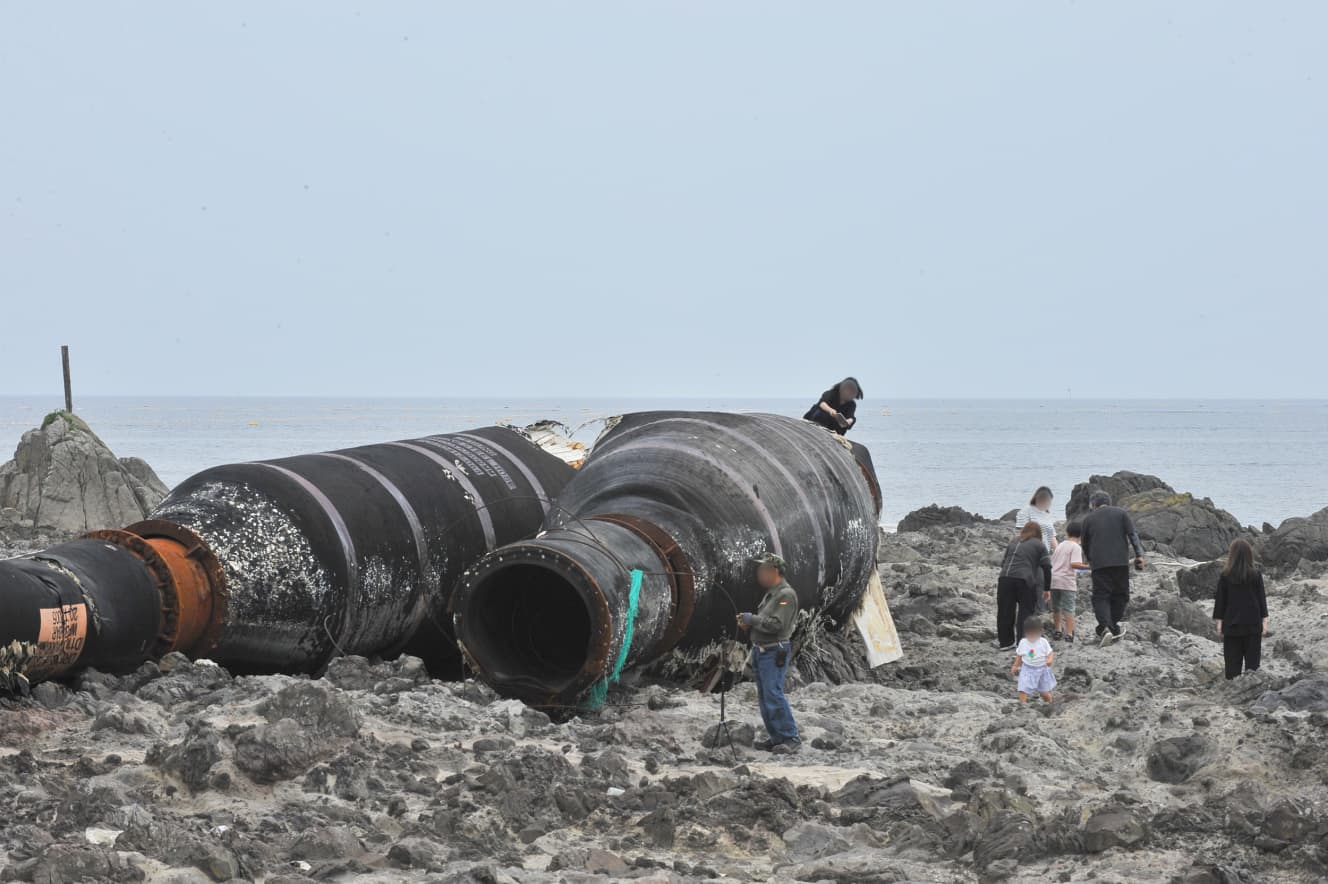
On December 25 last year, a black giant serpent measuring 150 meters long, up to 2 meters in diameter, and estimated to weigh 300 tons washed ashore in Shika Town, Ishikawa Prefecture—a small port town in the Hokuriku region with a population of about 17,000. The object is believed to be a dredging hose manufactured by China’s ZEBUNG company, a type of hose used to remove sediment from the seabed and riverbeds.
While local residents expressed confusion and concern, many visitors came daily simply to see the enormous hose. A FRIDAY reporter visited the site several times in early June and counted around 40 people there regardless of the day of the week. The area had effectively become a tourist attraction, creating a chaotic scene with couples walking along the back of the giant serpent and families expressing surprise, saying, “It’s more impressive than I imagined.”
The Noto Peninsula is known as a place where various types of marine debris wash ashore. Garbage carried by the Tsushima Warm Current from the East China Sea is pushed by seasonal winds blowing from the Asian continent and becomes trapped along the peninsula. Shika Town, located in the central part of the Noto Peninsula, is therefore particularly prone to receiving washed-up debris.
Because winter seas are rough, no removal work could be carried out immediately, and preparations for transportation began instead. The actual removal operation finally started on June 24, six months after the hose arrived.
“The giant hose was cut into sections no longer than 12 meters using a cutting machine. A crane ship lifted the pieces, and they were transported by trailer from the fishing port to a recycling facility about two hours away one way. The trucks had to make many trips.”
—Person in charge of the removal operation
The work was completed in two days, but the estimated cost has reached approximately 50 million yen.
However, this does not mean the problem has been solved. Marine researcher and Democratic Party for the People member of the House of Councillors Yoshihiko Yamada, who inspected the site, explained:
“As far as I know, this hose is the largest piece of washed-up debris ever found in Japan. In recent years, the Noto Peninsula, including Shika Town, has faced increasingly serious problems with foreign marine debris. We cannot rule out the possibility that difficult-to-remove debris like this hose could wash ashore again.”
Residents remain anxious, fearing the arrival of a second giant serpent.



From the July 17 & 24, 2026, combined issue of “FRIDAY”
PHOTO: Junpei Kōta