A Long-Haired Woman’s Ghost? Kansai’s Top Crime Scene Cleaner Shares a Spine-Chilling Story


Not an ordinary property
Kansai Clean Service handles everything from cleaning so-called “stigmatized properties” (homes where deaths or other incidents have occurred) and organizing the belongings of the deceased to clearing out severe hoarder houses that are nearly impossible to clean. Its employees routinely face grueling conditions—rooms filled with foul odors and bodily fluids, or mountains of garbage that seem endless no matter how much is thrown away. Along the way, they have also experienced chilling encounters that defy explanation.
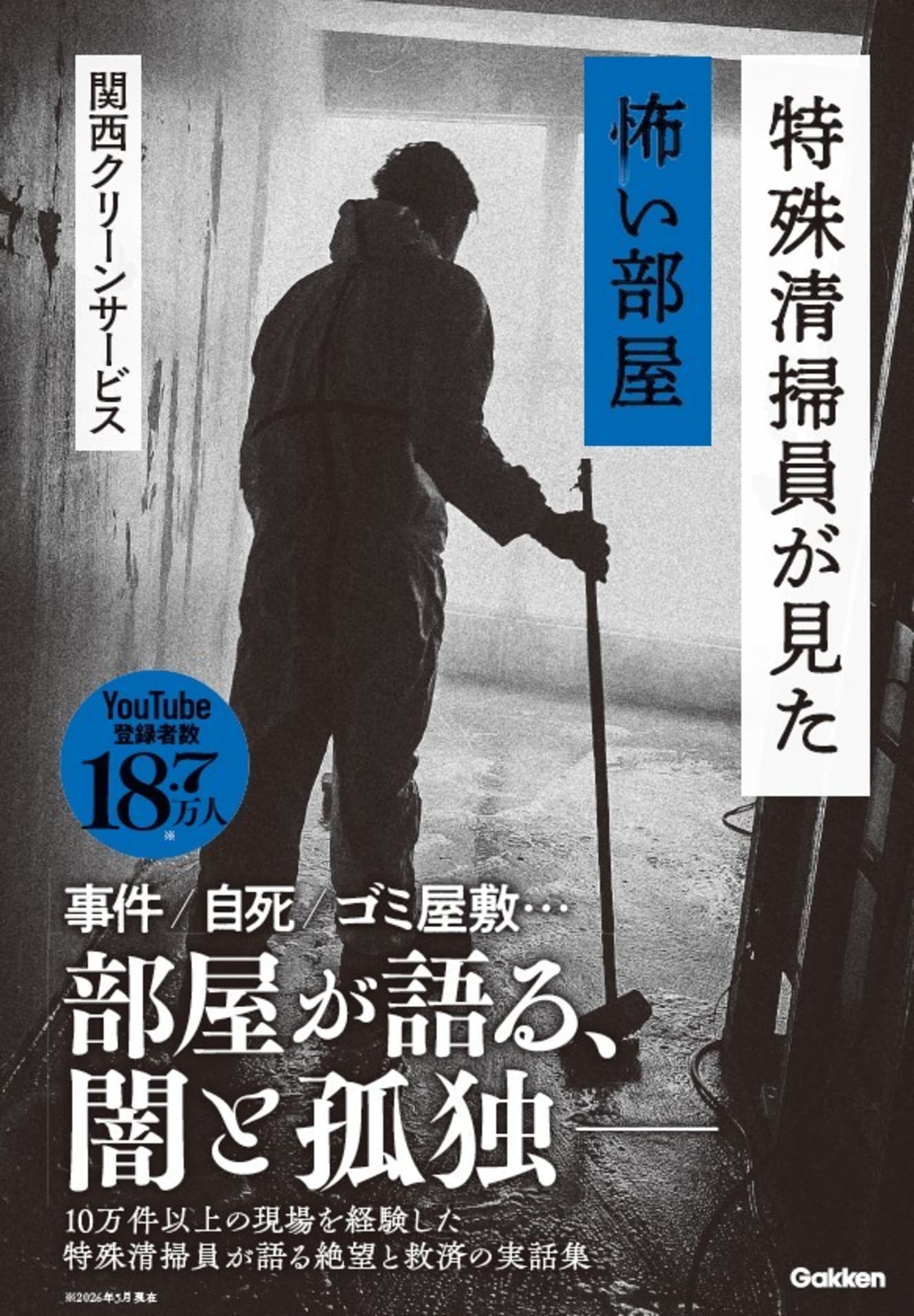
The following is an excerpt, edited for clarity, from “The Scary Rooms Seen by Special Cleanup Workers” (Gakken), released on July 2.
Click here to purchase “The Scary Rooms Seen by Special Cleanup Workers!”
One day, a mother and daughter visited the company.
They explained that they had inherited a property in Osaka Prefecture. It had come to them through a distant relative’s estate after one relative after another had formally renounced the inheritance, causing ownership to pass to them automatically. By that point, the house had been sitting vacant for more than 20 years.
From time to time, the authorities received reports that homeless people were living there, or complaints that stray cats were coming and going. The local government had also contacted them repeatedly, urging them to do something about the property. Their reason for visiting was simple: they wanted to dispose of it.
Ordinarily, this would have been a matter for a local real estate agency.
But the very fact that they had come to Kansai Clean Service instead made it easy to suspect that this was no ordinary property.
“Why did you come to us?” they asked.
The mother and daughter lowered their voices before answering.
“Something appears in that house.”
They said they had visited the property several times, and every time they did, they encountered the ghost of a woman with long hair.
Neither the mother nor the daughter considered themselves spiritually sensitive, yet both claimed to have seen the exact same woman.
Just a week earlier, they had gone to the house to check on the belongings inside. When they peered through the window, they once again saw the woman’s ghost.
Too frightened to enter, they turned around and went home.
On the way back, they were involved in a car accident.
Twenty-four names in a single family altar
Whether it had anything to do with the ghost, they could not say.
“It’s just too creepy. We don’t want anything more to do with it. Please, somehow get rid of it.”
That was the mother and daughter’s plea.
The company decided to inspect the property together with them.
It was a two-story wooden house built in a row-house style, about 50 years old. Although the mother and daughter came as far as the front of the house, they were too frightened to go inside.
The interior was in the condition of a hoarder house. No one was supposed to have lived there for more than 20 years, yet some of the trash looked far too recent to have been left there two decades earlier. Since there had been reports that homeless people had been staying in the house, that may have explained it.
Then something caught their attention.
Several memorial portraits were hanging on the wall.
There were eight of them in total.
Kamezawa photographed them with his smartphone and showed the pictures to the mother and daughter, who were waiting outside.
“Do you know any of these people?”
“No. We don’t recognize any of them.”
There was also an old Buddhist family altar (butsudan). Judging by its appearance, it seemed to date back to the early Showa era.
In front of the altar were several “kakocho” (memorial registers) scattered about. A “kakocho” is a ledger recording the names and dates of death of deceased family members. It serves as a record of those enshrined in the family altar. About the size of a person’s hand and folded accordion-style, each register stretched to roughly three meters (10 feet) when fully opened.
There were three of them.
Together, they contained the names of about 24 people.
Kamezawa had never seen a single family altar dedicated to 24 individuals. Normally, even seven would be considered the upper limit.
After inspecting the entire house and confirming that nothing unusual had occurred, he called to the mother and daughter waiting outside.
“It’s all right. You can come in now.”
They cautiously entered the house and examined the memorial registers.
They said they did not recognize a single name.
No one saw a ghost that day.
But from that very day, the mother became bedridden.
Her health deteriorated to the point where she could no longer get out of bed.
“There’s definitely something wrong with that house.”
That was what the mother and daughter concluded.
“We don’t care if we have to sell it cheaply. We’d even give it away. We just want to get rid of it.”
They wanted to part with the property as quickly as possible.
Kansai Clean Service ultimately decided to purchase it.
In the follow-up article, “Both the Seller and the Buyer Met Mysterious Deaths Kansai’s No. 1 Special Cleaning Company Reveals a Paranormal Mystery Full of Unanswered Questions,” the company describes in detail the chilling experiences the clients went through.
Photo: Courtesy of Kansai Clean Service