They Didn’t Defeat Brazil—They Changed the Way the World Sees Japan Football


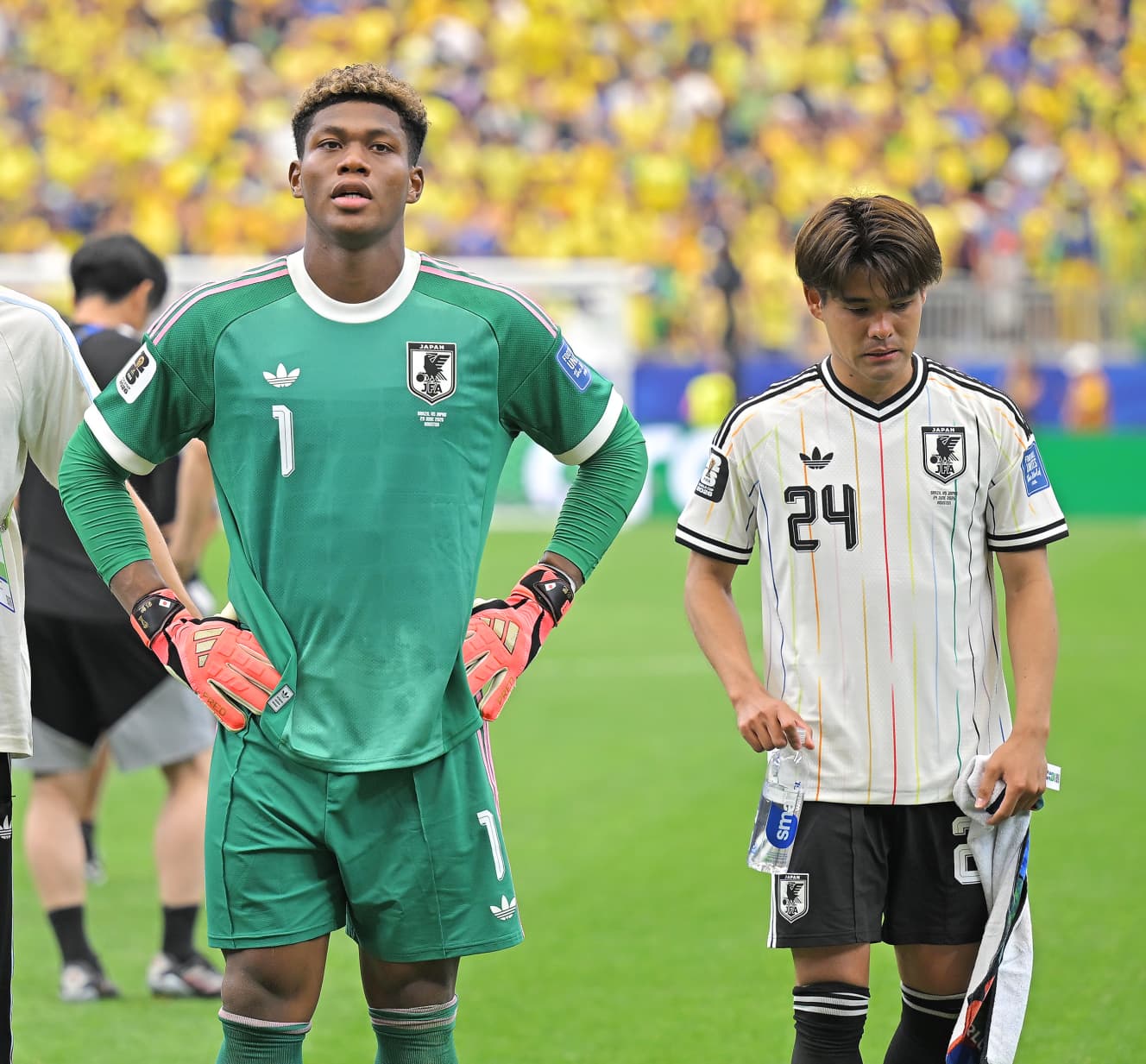
Zion Suzuki and Kishu Sano made rapid growth during the tournament
In the Round of 32 at the North and Central America World Cup, where they entered the match undefeated, the strongest-ever Samurai Blue took the lead against football powerhouse Brazil with an opening goal and went into halftime ahead. However, they conceded a comeback goal in stoppage time, bringing the Moriyasu Japan’s challenge to an end.
Even so, they went toe-to-toe with FIFA-ranked No. 8 Netherlands, crushed Tunisia with four goals, and pushed Brazil to the brink, surprising the world time and again.
The end of one journey becomes the first step toward the next challenge. Soccer commentator Sergio Echigo said he saw hope for four years from now in the blue wave that swept across North and Central America. The player he praised most was goalkeeper Zion Suzuki (23).
“Even when facing Brazil at full strength head-on, his performance never dropped. In fact, he produced one miraculous save after another. He seemed to have broken through another barrier both technically and mentally in these high-pressure moments. He has become a player who can truly be called world-class.”
His ability has also been recognized by one of the world’s top five goalkeepers. Sports writer Yusuke Mimura, who covered the tournament on-site, revealed a behind-the-scenes story involving Brazil goalkeeper Alisson Becker (33) and Suzuki.
“Before the match began, Alisson deliberately waited until Japan had finished warming up, then approached Suzuki and said, ‘I’ve been watching your performances in your league last season. Let’s have a good game.’
Suzuki made 12 saves from shots inside the penalty area during the group stage. That was the second-highest number among the 32 teams that advanced to the knockout stage. The goalkeeper position has now become one of Japan’s strongest areas.”
There was another hope”who left a powerful impression. That was midfielder Kishu Sano (25), the dynamo who scored an incredible long-range strike after intercepting a pass against Brazil.
“His greatest weapon, his sharp reading of the game, was on full display throughout the tournament. Supporting his anticipation skills is his high level of analysis. Normally, coaches analyze opponents and communicate their characteristics to players, but Sano does the opposite. Before matches, he personally reviews as much footage as possible. Then, by listening to the coaches’ analysis afterward, he works to deepen his understanding.
He was already known for his ability to win the ball back, but when I interviewed him in May this year, he said, ‘Over the past year, my goal has been to improve my passing and shooting accuracy during attacking situations.’ His sharp anticipation and improved attacking ability came together in his spectacular goal against Brazil. He has developed into a player who can be trusted to lead Japan’s midfield for the next decade,” said Mimura.
Keito Nakamura (25), who scored the equalizer against the Netherlands, was selected for the group-stage Best XI chosen by data site “Opta.” Sergio Echigo urged the new generation of Samurai Blue, centered around these players.
“We must not forget the reality that they lost without even reaching the Round of 16, let alone achieving their stated goal of winning the championship. The players must feel genuine frustration. Throw your excuses into the trash! Become beasts hungry for victory! Whether Japan can become a truly elite nation begins today, at this very moment.”
Until the day they stand at the top of the world, there is no intention of stopping their progress.
From the July 17 & 24, 2026, combined issue of “FRIDAY”
PHOTO: JMPA