Japan and the World Face Extreme Weather Risks as a Powerful El Niño Threat Emerges


The newsletter (dated June 18) of the “Tokyo Marine Research Institute,” a think tank operated by the Tokyo Marine Group that conducts research across a wide range of fields including global natural disasters and social risks, reported:
“Predictions have emerged that this year could become a Super El Niño year. This is an extremely rare climate phenomenon that has occurred only a handful of times over the past several decades.”
The term abnormal weather, referring to events such as once-in-several-decades heavy rainfall or heavy snowfall, has become familiar. Even so, on a global scale, there is now growing concern that the effects of climate change may become stronger than usual from this summer through autumn. The “El Niño phenomenon,” which tends to trigger abnormal weather patterns, is occurring, and combined with rising sea surface temperatures, there are concerns that its effects could become stronger than ever before.
Toward extreme heat, the collapse of the cool summer experience rule
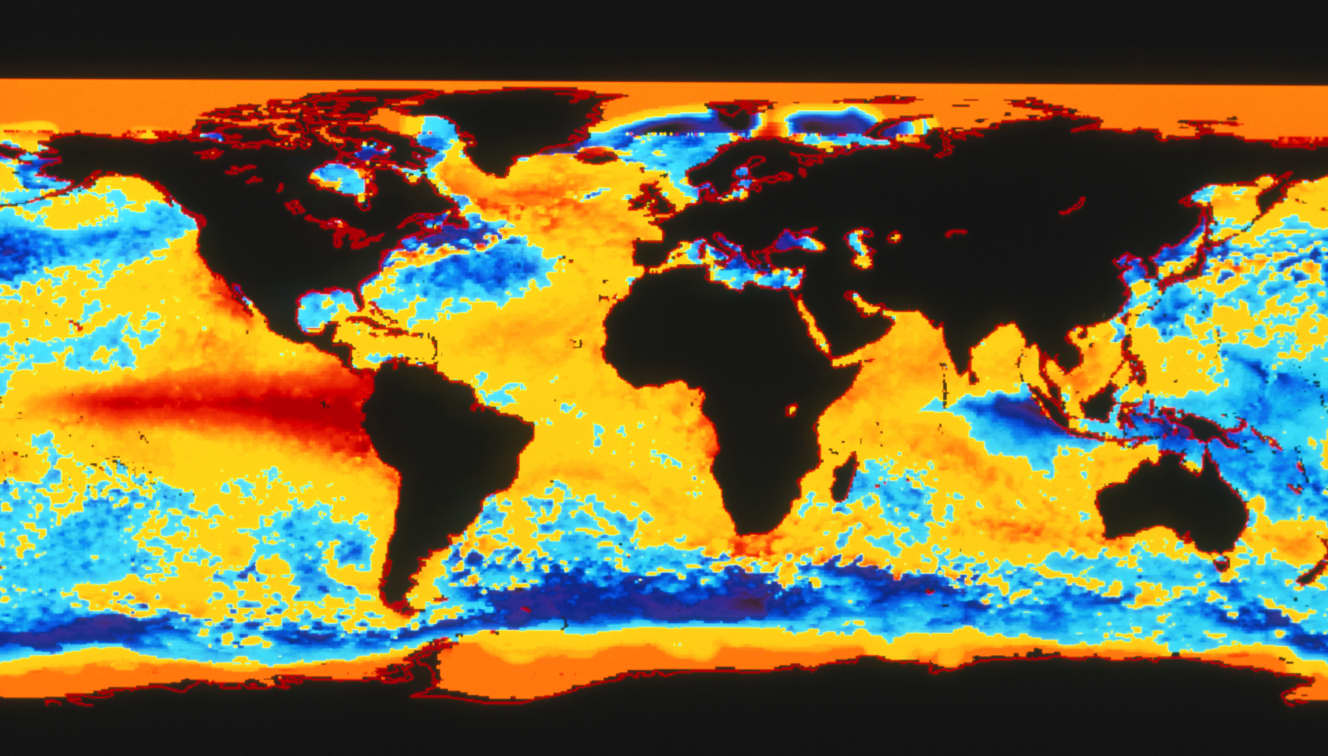
First, what exactly is El Niño? It refers to a phenomenon in which sea surface temperatures in the equatorial Pacific region, from around the International Date Line to the coast of South America (off Peru), become higher than average and continue for around a year.
In past El Niño events, while sea surface temperatures rose in the eastern Pacific, they tended to fall in the western Pacific. As a result, the Pacific high-pressure system near Japan weakened, and El Niño was considered likely to bring cooler summers.
However, this year appears to be different. Regarding Japan’s weather this summer, a representative from the Japan Meteorological Agency’s Weather Information Division predicts:
“July and August will be hot.”
This is because the Pacific high-pressure system is expected to extend toward Japan.
Takuro Okamoto, chief researcher at the Tokyo Marine Research Institute, also says:
“Past data can no longer be applied.”
“El Niño is a global-scale phenomenon, but the past rule of thumb that when El Niño occurs, Japan experiences cool summers and warm winters is no longer holding true. What happens with El Niño in an era of global warming? There are still many things we do not know, but there is a possibility that weather patterns will become more extreme—for example, areas that receive rainfall may experience even heavier rainfall.”
Caution needed in Autumn too! The threat of powerful typhoons
According to an announcement by the Japan Meteorological Agency on June 10, El Niño had already developed this spring and is expected to continue until autumn. Furthermore, sea surface temperatures are likely to remain above the average baseline, and the difference is predicted to exceed 2°C as autumn approaches.
The U.S. National Oceanic and Atmospheric Administration (NOAA) also announced on June 11 local time that there is a 63% chance that sea surface temperatures in the Pacific observation region will rise more than 2°C above average. In that case, it is expected to become a very strong El Niño.
Incidentally, there is no clear definition of “Super El Niño,” and a representative from the Japan Meteorological Agency’s Weather Information Division explained that:
“It is not a term officially announced by the Japan Meteorological Agency.”
The troublesome factor is that global warming has also caused sea surface temperatures around Japan to tend to rise. In past El Niño events, there have been five recorded cases where sea surface temperatures exceeded the average baseline by more than 2°C. Of those, increases exceeding 3°C occurred during the El Niño events from spring 1982 to autumn 1983 and from spring 1997 to summer 1998. In 1982, sea surface temperatures were high in the eastern Pacific and low in the western Pacific.
However, this year’s El Niño appears to be developing differently from previous ones. Okamoto warns:
“As of May this year, sea surface temperatures in the western Pacific have risen, and they have not decreased even around Japan. When sea surface temperatures are high, typhoons tend to gain more energy. This requires attention.
When El Niño occurs, typhoons tend to form farther southeast, allowing them to travel over warm ocean waters for a longer period and become more powerful. During a Super El Niño, there is a possibility that particularly strong typhoons may develop.”
A representative from the Japan Meteorological Agency also pointed out:
“When El Niño occurs, typhoons tend to develop over a longer period of time before reaching Japan.”
Moreover, the period requiring caution is not limited to summer. Okamoto continued:
“When sea surface temperatures are high, humidity in the air increases, and temperatures also rise. The amount of water vapor that can be stored increases. This makes it easier for cumulonimbus clouds to form and increases the likelihood of heavy rainfall. If Super El Niño continues until autumn as predicted, close attention will also be necessary regarding typhoon activity from October onward.”
Companies hit ddirectly! A chain reaction of unexpected risks
In addition to stronger typhoons and heavy rainfall, damage from hail and lightning has also been increasing. How should we prepare for natural disasters?
In May this year, the Japan Meteorological Agency announced new disaster prevention weather information, showing the level of danger corresponding to five warning levels, as well as the actions that should be taken, such as evacuation.
Okamoto emphasizes that having the right mindset on a daily basis is important.
“It is important to carefully monitor the information released by the Japan Meteorological Agency and understand its contents. For example, if disaster prevention weather information reaches Level 4, you should consider evacuating.”
It is of course essential for individuals to prepare in order to protect their lives and property, but those involved in agriculture or business need to be even more cautious. For example, farmers who have built greenhouses must take measures such as strengthening them against strong winds.
Even if a company’s own factory is located in an area marked as safe on a hazard map, there is no guarantee of safety. This is because there is a risk that supply chains for procuring raw materials and parts could be disrupted if business partners suffer disaster damage.
“Companies need to prepare alternatives in case suppliers are affected by disasters and create thorough disaster preparedness plans in advance.”
Japan faces direct impact! The ominous signs of a serious food crisis
However, the situation cannot be overcome through the measures of individual companies alone. This is where the true threat of a Super El Niño lies.
According to a report by the “Nikkei” newspaper dated June 25, Asian countries have already begun taking measures against a Super El Niño. As the phenomenon is expected to bring abnormal weather conditions around the world—including droughts, heavy rainfall, and extreme heat—India has halted sugar exports in anticipation of reduced rainfall. China has reportedly increased its coal reserves in preparation for rising electricity demand caused by high temperatures.
Combined with global warming, extreme weather events are becoming more severe across Asian countries. While some regions may experience heavier rainfall, others may face more severe droughts than before. Okamoto points out the impact on global supply chains.
“In the past, there have been periods when droughts became severe in places such as Australia. The impact on the growth of grains such as corn and other agricultural crops cannot be ignored.”
Japan relies heavily on imports for much of its food supply. El Niño is a global phenomenon, and if it develops into a “Super El Niño,” its effects will not remain limited to Japan.
Worldwide severe droughts and abnormal weather events could eventually lead directly to soaring prices and serious shortages of imported food in Japan.
Modern Japan—and the world—must confront harsh climate changes that spread and compound on a global scale.
Reporting and Text: Hideki Asai PHOTO: Aflo