“Will the traditions of Ise Grand Shrine be lost?”… Why the “Great Bonfire,” an 80-Year-Old New Year’s Eve Tradition, Is Under Fire | FRIDAY DIGITAL

“Will the traditions of Ise Grand Shrine be lost?”… Why the “Great Bonfire,” an 80-Year-Old New Year’s Eve Tradition, Is Under Fire

  • Share on Twitter
  • Share on LINE
Ise Grand Shrine boasts over 7 million visitors annually. To carry out its numerous events, cooperation from other organizations is essential.

Did they raise a large sum of money using the shrine’s name!?

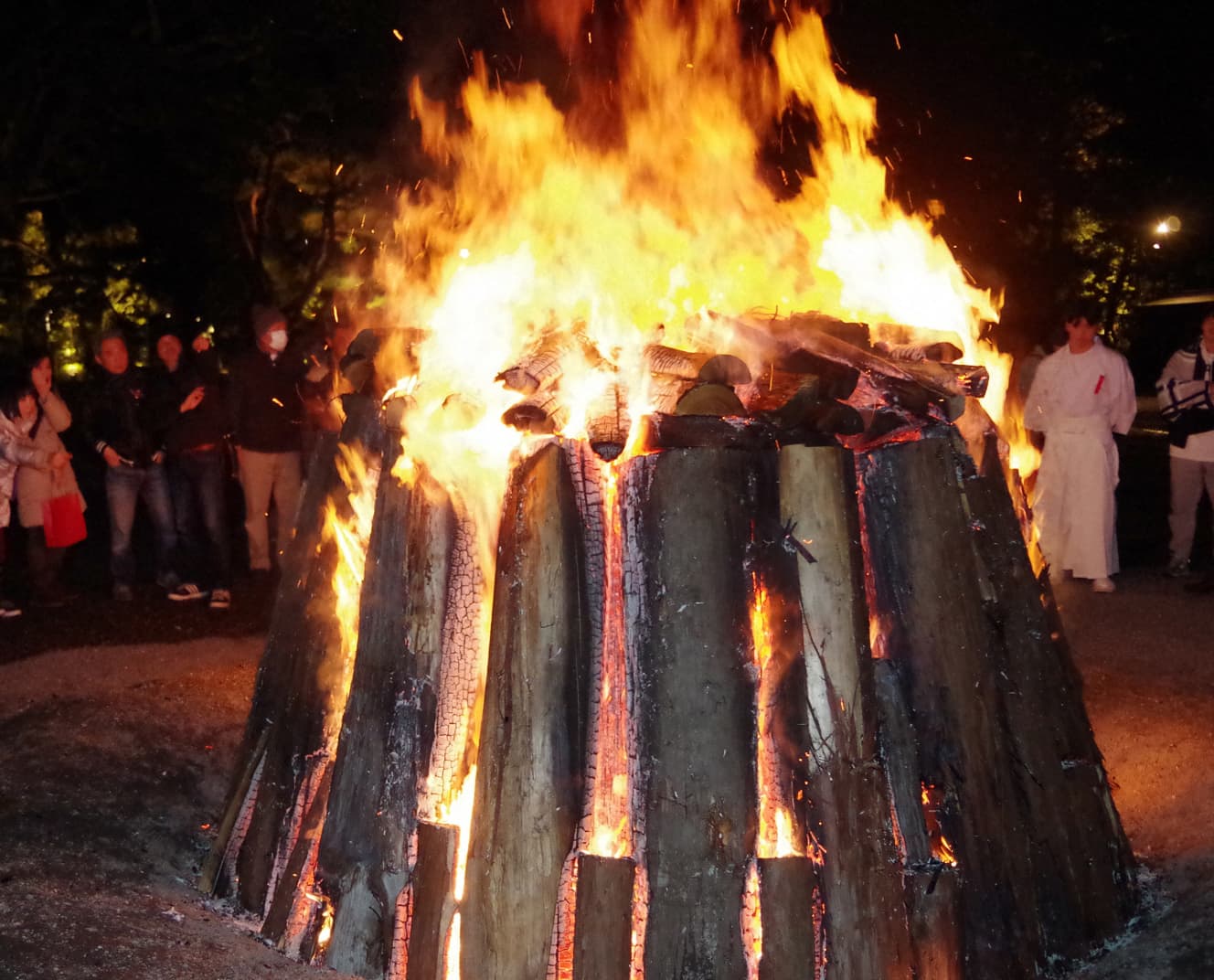
Ise Grand Shrine is the head shrine of all Shinto shrines. While as many as 1,500 rituals are held there annually, the “Great Bonfire” is the largest of them all. On New Year’s Eve, 15 bonfires—both large and small—made from sacred trees are lit to welcome the new year.

However, it is reported that a bitter battle over 10 million yen is raging within the organization responsible for managing this traditional event. The organization in question is the public interest incorporated association “Nippon Seishinkai.” It has been in charge of on-site operations for the event since the first “Great Bonfire” in 1945.

Mr. Keishun Inoue, former representative director of the Japan Seishinkai and currently a director, reveals the inside story.

“The ‘Great Bonfire’ is one of Ise Grand Shrine’s largest events. On New Year’s Eve, we have dispatched 120 people from our association to handle practical tasks such as tending the fire. Participants are selected from among our members. While I cannot go into detail, the work also includes tasks in the ‘Abyss’—the innermost part of the shrine, accessible only to Shinto priests.

Because it offers such a valuable experience, there are many applicants. Every year, we set aside a general quota of about a dozen spots for non-members. We do this in the hope that this experience will encourage them to become members. The participation fee is 15,000 yen for members and 30,000 yen for non-members.”

The trouble began after Ise City Councilmember Hirofumi Ohno joined the association. Councilmember Ohno joined the Seishinkai in 2021. Two years later, an unprecedented scandal erupted.

“It all started with an inquiry from a non-member participant. The complaint stated, ‘When I participated on New Year’s Eve 2023, I paid Mr. Ohno a staggering 550,000 yen as a participation fee, just as he demanded.’

That’s more than 15 times the usual fee—I couldn’t believe my ears at first. Mr. Ohno had been recruiting participants on his own under the guise of a ‘special quota’ and setting exorbitant participation fees of 550,000 yen for men and 330,000 yen for women. What’s more, the payment was to be transferred to Mr. Ohno’s personal bank account. I was so stunned I was speechless.”

Minoru Okuyama, an auditor for Seishinkai, continued.

“As soon as we were notified, we interviewed Mr. Ohno himself, but he insisted, ‘I have the tacit approval of the (then) representative director.’ That representative director was in his 80s—an elderly man—and it was unclear to what extent he understood the situation, so the credibility of his statements was also questionable.To begin with, there’s no way a decision involving such a large sum of money should have been made without going through the board of directors.

The biggest problem of all was that the money was transferred to a personal account. Why wasn’t it deposited into Aoshinkai’s account? Since that representative director also offered to step down due to his advanced age, Mr. Inoue assumed the position of representative director starting in June 2024.“I reported the situation to the Cabinet Office, the overseeing government agency, and also conveyed the details to the Ise Grand Shrine Public Relations Office.”

One of the “large bonfires” lit from New Year’s Eve through New Year’s Day. Locally, it is also known as “Dondo-bi.”

Despite it being a commemorative year, the event was scaled back to a modest affair with fewer bonfires than usual.

According to documents submitted to the Cabinet Office in April of this year by Director Inoue and Auditor Okuyama, City Councilmember Ohno collected 12.1 million yen in participation fees from 22 men and 5.28 million yen from 16 women.However, only 4.83 million yen was deposited into the Seishinkai account, and the difference of 12.55 million yen remains unaccounted for. Auditor Okuyama laments:

“Mr. Ohno probably found us, who were persistently pursuing the matter, to be a nuisance. In January ’25, a board meeting was held in Mr. Inoue’s absence, and Mr. Ohno was appointed representative director. Mr. Inoue was removed from his position as representative.”

Upon receiving reports of the trouble, the public relations office of Ise Grand Shrine issued a notice last May stating, “The Seishinkai will not be allowed to participate in this year’s ‘Great Bonfire’ at the end of the year.” In December of the same year, the Cabinet Office sent a notice requesting the submission of an inventory of assets for fiscal year ’24, as well as measures to prevent recurrence based on a clarification of governance issues.

However, Representative Director Ohno, a city council member, failed to submit the requested documents, prompting the Cabinet Office to issue an order in February of this year demanding their submission. If the organization fails to comply, its designation as a public interest incorporated association will be revoked.

“FY ’25 marks the 80th anniversary of the ‘Great Bonfire.’ At this milestone, we were barred from participating by the Shrine, so we were unable to take part. On the day of the event, staff from the Ise Grand Shrine Forestry Department conducted the ceremony in our place, but I hear it was a modest affair with fewer bonfires than usual,” said Director Inoue.

As the representative director, what are your thoughts on this dire situation? Below is a Q&A with City Council Member Ohno.

◎Reason for Designating a Personal Bank Account as the Payment Destination

“Regarding the participation fee for the special category—which was separate from general participation—I did not decide this on my own. It was decided by four of us—the then-chairman, one director, one auditor, and myself—and we solicited participants based on that decision (omitted),The collection and management of participation fees were carried out in accordance with the operational structure and practical circumstances at the time, and there is absolutely no truth to the claim that this was done for the purpose of personal misappropriation or embezzlement (omitted). Upon instruction from the Chairman at the time (omitted), I was advised to have payments deposited into a personal bank account, and I followed those instructions.”

◎ Regarding the whereabouts of the “unaccounted-for funds”

“The actual number of participants was 13 men × 550,000 yen = 7,150,000 yen and 8 women × 330,000 yen = 2,640,000 yen, for a total of 9,790,000 yen.Furthermore, the amount I deposited into the Seishinkai account was 7,348,000 yen (omitted). Regarding the difference, I agreed with the management at the time that 25% would be my personal commission for sales (omitted), and I recognize this as legitimate compensation.”

◎Views on being denied participation by Ise Grand Shrine at the “Great Bonfire” in ’25

“This is not a problem that began during my tenure; it is the result of various factors that have accumulated over time.”

◎ Reasons for not complying with the Cabinet Office’s recommendations and orders

“I have been hindered by some board members (omitted), and we are currently in a situation where we cannot even comply with the requirement to submit the seals of all board members necessary for filing documents.”

When asked about the circumstances leading to the disciplinary action against Seishinkai, Ise Grand Shrine replied, “We will refrain from commenting.”

Auditor Okuyama is outraged.

“The number of participants and the amount of money we reported to the Cabinet Office were the very figures that Mr. Ohno himself reported to the Seishinkai. I don’t understand why they’ve come up with completely different numbers this time. If the money were truly legitimate, would their explanations keep changing like this? It’s truly frustrating to think that the traditions of Ise Grand Shrine might be destroyed over something like this.”

The “flame of tradition” is now a candle in the wind.

From the June 26 & July 3, 2026, combined issue of *FRIDAY*

A LINE message sent by City Councilmember Ohno to those wishing to participate in the “Great Bonfire.” The bank account details listed at the bottom specify his personal account. The message also includes phrases such as “special perks available only here” to justify the high participation fee.
  • PHOTO Aflo (Photos 1 and 2)

Photo Gallery3 total

Related Articles